This image is a visual for a blog that explained about sea water treatment process and benefit.

Seawater Reverse Osmosis System: Slash Your Plant OPEX

Why a Seawater Reverse Osmosis System Dictates Your Profit Margin

Many coastal plant managers treat their monthly water utility bill as a fixed operational penalty. However, accepting aggressively high energy costs is a massive management mistake. Therefore, understanding the core mechanics of a seawater reverse osmosis system is mandatory for protecting your profit margins. Without a highly optimized desalination skid, your high-pressure pumps will quietly consume massive amounts of electrical power. Consequently, your cost per cubic meter of fresh water will skyrocket before you even realize a problem exists.

On the factory floor, operators monitor the differential pressure across the membrane array daily. Every single particle of marine biofouling that slips past the pretreatment stage forces the main pump to work harder. As a result, the system demands significantly more kilowatt-hours just to push raw seawater through the fouled polyamide layers. Thus, an outdated or poorly maintained setup quickly transforms your water supply into a severe financial liability.

Energy Recovery Devices: The Heart of SWRO Efficiency

A modern seawater reverse osmosis system relies entirely on advanced pressure management to maintain financial viability. For example, processing raw seawater requires immense hydraulic force to overcome natural osmotic pressure. Specifically, feed pumps often operate at sixty to eighty bar of pressure continuously. Without specialized mechanical intervention, dumping the concentrated brine reject means losing all that expensive kinetic energy.

Smart facility managers never waste this stored hydraulic energy. Instead, they install advanced Energy Recovery Devices (ERD) on the reject line. Consequently, an isobaric ERD captures the extreme pressure from the brine and transfers it directly to the incoming feed water. Because of this physical transfer, the main high-pressure pump requires drastically less electricity to reach its target setpoint. Ultimately, this single engineering upgrade can slash your specific energy consumption by up to fifty percent. For deeper context on isobaric thermodynamics, operators frequently review the ScienceDirect research on seawater desalination to validate mechanical efficiency claims.

Evaluating Thermal vs. Membrane Desalination Technologies

Historically, heavy industries relied exclusively on thermal desalination methods like Multi-Stage Flash (MSF) distillation. However, boiling millions of liters of seawater demands an enormous, constant supply of cheap thermal energy. Therefore, MSF is only economically viable if your facility sits directly next to a massive power plant with excess waste heat. Today, advanced membrane technology has completely disrupted this old, inefficient industrial paradigm.

Membrane-based separation simply outmaneuvers thermal evaporation in almost every commercial metric available. First, a skid-mounted RO setup requires a fraction of the physical footprint of an MSF evaporator building. Second, routine maintenance involves swapping out modular membrane elements rather than repairing massive, corroded heat exchangers. Furthermore, you can instantly track performance degradation through digital flow and conductivity sensors. To optimize this monitoring process, you should study our guide on understanding TDS parameters as a key metric for daily operations.

Feed Water Pretreatment: Defending Your RO Membranes

Coastal feed water is notoriously volatile and heavily loaded with aggressive marine organisms. When organic matter strikes the main separation elements, biological fouling happens almost instantly. As a result, a thick, sticky biofilm suffocates the lead membrane surface and completely blocks the feed channels. Therefore, a robust pretreatment strategy forms the absolute foundation of your entire desalination project.

Industrial operators must deploy precise chemical dosing and precision ultrafiltration before the high-pressure stage. For instance, hollow-fiber ultrafiltration modules physically block suspended solids and microorganisms from reaching the delicate polyamide layers. Additionally, technicians must calibrate antiscalant injection rates accurately to prevent hard sulfate scaling. Otherwise, catastrophic membrane failure will quickly force an expensive emergency plant shutdown. You can read our proven tactics for overcoming scaling and fouling to secure your pretreatment line.

Achieving 24/7 Technical Reliability in Coastal Plants

Facility directors demand absolute certainty that their industrial water supply will never fail during peak production hours. Indeed, achieving 24/7 technical reliability requires disciplined engineering and relentless, uncompromising maintenance routines. Therefore, running a highly efficient seawater desalination plant delivers concrete financial and operational advantages to your bottom line. Here is a breakdown of the exact business benefits you gain from a meticulously engineered facility:

  • Continuous OPEX Reduction: Slashing daily high-pressure electrical loads by integrating advanced isobaric energy recovery technology.
  • Absolute Asset Protection: Extending the functional lifespan of imported membrane elements to a full five-year cycle through optimal pretreatment.
  • Strict Environmental Compliance: Managing brine discharge accurately to avoid massive ecological penalties from local marine authorities.
  • Targeted ROI Windows: Upgrading to modern SWRO architecture generally delivers a full capital investment breakeven within eighteen to twenty-four months.

Please note that actual financial payback speed always depends on your local electricity tariffs and seasonal feed water quality fluctuations. To establish baseline quality targets, engineers often align their product water metrics with the WHO global drinking water quality guidelines. Furthermore, consulting the U.S. EPA commercial water management framework helps standardize these utility efficiency protocols.

Long-Term Strategic Partnership with PT. Gapura Liqua Solutions

Designing a heavy-duty desalination facility requires decades of practical, hands-on mechanical engineering experience. Therefore, PT. Gapura Liqua Solutions (GLS) provides the technical authority to build, optimize, and maintain your industrial water infrastructure. We know exactly how a minor instrument calibration error can quietly ruin your quarterly operational budget. Consequently, our field engineers conduct rigorous system audits to identify and eliminate hidden electrical inefficiencies immediately.

Our dedicated internal teams manage everything from initial skid fabrication to long-term operational maintenance contracts. As proof of our heavy-duty execution capability, please review the latest GLS industrial SWRO project update on LinkedIn. Do not let an outdated water treatment setup drain your facility’s profitability any longer. Contact our expert process engineers today to schedule a comprehensive technical evaluation of your current utility system. A properly calibrated seawater reverse osmosis system guarantees absolute uptime for your heavy industrial operations.

FAQ Seawater Reverse Osmosis System

What is the standard operating pressure for a seawater reverse osmosis system?

Engineers typically operate SWRO high-pressure pumps between sixty and eighty bar. This massive hydraulic force is strictly necessary to overcome the natural osmotic pressure of highly concentrated marine feed water and force fresh water through the membrane pores.

How does an energy recovery device reduce desalination utility costs?

An energy recovery device captures the extreme kinetic pressure from the outgoing reject brine stream. It directly transfers this mechanical force to the incoming raw seawater, which significantly reduces the electrical load demanded by the primary high-pressure pump.

Why is biofouling a critical threat to coastal desalination plants?

Marine feed water contains aggressive organic matter that rapidly multiplies on the polyamide membrane surface. This thick biological slime blocks hydraulic flow channels completely, causing severe pressure drops and forcing emergency chemical circulation cleaning procedures.

What is the typical capital payback period for an SWRO efficiency upgrade?

Plant managers usually achieve a full return on their capital expenditure within an eighteen to twenty-four month operational window. However, this financial recovery speed relies heavily on stable regional electricity tariffs and proper daily maintenance discipline.

Why is membrane technology replacing older thermal distillation methods?

Membrane separation consumes significantly less energy than boiling millions of liters of seawater. Furthermore, modular RO skids require vastly smaller physical footprints and provide superior operational flexibility compared to massive, heavily corroded thermal evaporation heat exchangers.

Follow us on Social Media

Facebook Gapura Liqua Solutions Instagram Gapura Liqua Solutions LinkedIn Gapura Liqua Solutions
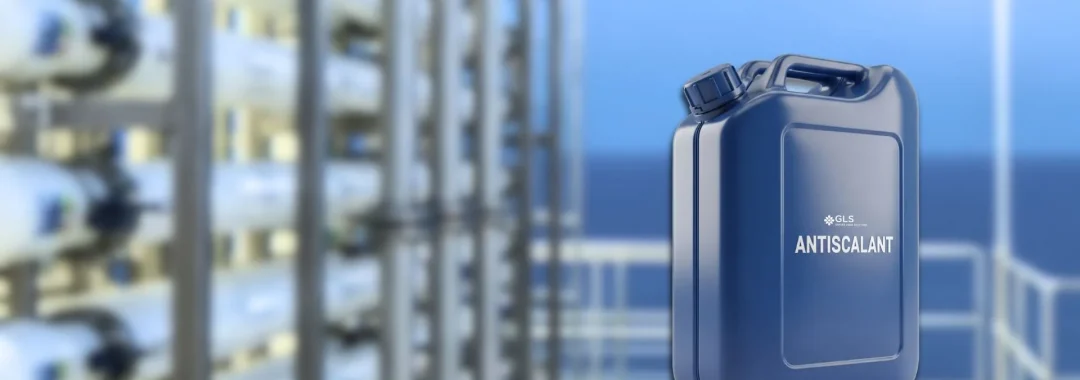
A blue jerrycan of GLS Antiscalant, representing the best RO membrane antiscalant, positioned in front of a blurred reverse osmosis water treatment plant.

Best RO Membrane Antiscalant: Slash OPEX & Stop Scaling

Why Selecting the Best RO Membrane Antiscalant Drives Factory Profitability

Plant managers often treat chemical dosing as a secondary operational priority. However, the high-pressure pump always consumes the largest portion of your daily utility budget. Therefore, securing the best ro membrane antiscalant directly controls your facility’s energy consumption. Without a precise chemical barrier, dissolved minerals rapidly crystallize onto the delicate membrane surface. Consequently, the feed pressure must increase significantly to push raw water through the blocked microscopic pores. As a result, utilizing a cheap chemical substitute ultimately inflates your monthly electricity invoice.

Inside the pressure vessel, raw water crosses a strict semi-permeable boundary. Meanwhile, heavy metals and complex salts remain trapped inside the concentrated brine stream. If your chemical injection rate falls below the optimal threshold, calcium carbonate scale forms immediately. Thus, sharp solid crystals permanently scratch the expensive polyamide rejection layer. Furthermore, unchecked silica precipitation can completely cement the tail elements within a matter of days.

The Hidden Cost of Calcium Carbonate and Silica Scaling

Finding the exact dosing ratio requires rigorous feed water laboratory analysis. For example, a heavy sulfate scaling environment demands a highly specific polymer blend compared to standard calcium scaling. Therefore, operators must run continuous titrations on the incoming well water. Specifically, tracking the differential pressure across each stage provides the earliest mechanical warning signs. Consequently, you can execute a clean-in-place (CIP) protocol before the blockage hardens completely. Review our field manual on overcoming scaling and fouling for detailed CIP intervention tactics.

Evaluating Chemical Injection Systems for Industrial Utilities

Many shift supervisors mistakenly assume that fully opening the chemical dosing valve prevents all fouling. Sadly, this reckless operational strategy damages the fragile separation elements severely. Overdosing synthetic polymer dispersants directly creates a highly sticky biological fouling layer. In fact, this dark organic biomass is significantly harder to wash away than standard white mineral scale.

Conversely, intentional underdosing permits free molecules to form sharp crystals inside the piping. Practically, the ideal dosage for brackish water facilities usually sits around two to five milligrams per liter. Meanwhile, seawater desalination plants occasionally demand up to ten milligrams to match tropical ocean temperatures. Therefore, operators must track these visual signs of chemical failure through daily utility panel data logging.

Procedures for Dosing Pump Calibration

Physical symptoms of excessive chemical additives always begin with a sharp differential pressure spike at the lead membrane element. Alternatively, a severe lack of medication immediately strikes and destroys the membrane array at the rear high-pressure row. Therefore, mechanics must execute routine cylinder draw-down tests on the factory floor weekly. Through this specific test, technicians can perfectly match the electronic screen monitor with the actual daily droplet rate. Ensure your facility managers consult the fundamental guidelines in the ScienceDirect antiscalant research to verify manufacturer saturation limits.

Environmental Compliance and Brine Reject Management

Every single gram of utility additive ultimately exits through the highly concentrated factory reject brine line. However, environmental inspection agencies enforce maximum daily organic compound discharge limits into public waterways. Therefore, utility department heads must calculate this chemical accumulation accurately. If a factory utilizes cheap phosphonate-based protection agents, the phosphate levels at the final discharge point will inevitably explode.

Consequently, companies risk operational freezes due to violating regional liquid waste quality indexes. Thus, leading multinational manufacturing sectors aggressively adopt green, phosphate-free additive agents today. Although the metric retail price consumes a slightly higher initial budget, avoiding environmental fines makes it a mandatory capital protection strategy. Furthermore, commercial pollution limits must align with the WHO global water quality standards alongside local government regulations. Additionally, explore our procedure for effectively lowering influent TDS in heavy industrial wastewater.

Achieving 24/7 Technical Reliability Without Unplanned Downtime

Massive manufacturing stability relies entirely on uninterrupted utility water supplies. Indeed, securing this pure flow requires strict synchronization of precise mechanical calculations. Therefore, optimizing the best ro membrane antiscalant dosage builds an absolute protection net for your production lines. Here is a detailed breakdown of the compounding economic benefits following a thorough facility calibration audit:

  • Continuous OPEX Reduction: Slashing high-compression electrical power loads because water passes through the system without hydraulic resistance.
  • Regulatory Audit Compliance: Eliminating ecological penalty risks from discharging toxic active polymer concentrates into open aquatic ecosystems.
  • Industrial Asset Protection: Extending the expensive replacement schedule for filter module cartridges to a standard five-year continuous lifespan.
  • Accumulated ROI Targets: Chemical audits typically generate a full capital investment breakeven point within an eighteen to twenty-four month operational window.

Please note that this capital recovery acceleration depends heavily on raw well water stability. Additionally, your specific regional baseline industrial electricity tariff structure dictates the final calculation.

Strategic Long-Term Partnership with PT. Gapura Liqua Solutions

Finding the best ro membrane antiscalant and balancing membrane lifespan requires immense field expertise. Therefore, PT. Gapura Liqua Solutions (GLS) provides proven heavy-duty engineering experience to restructure your factory’s utility efficiency. We understand that every single percentage of saved compression power directly increases your annual profit margin. Consequently, you must never delay inspecting the reliability of your chemical pump calibration to protect your assets tomorrow. Review our baseline definitions in the understanding feed water TDS parameters guide to begin your operational audit.

Our dedicated internal process engineers expertly handle complex chemical washing synchronizations for large industrial plants. As concrete proof of our heavy-duty structural execution capabilities, please inspect the latest GLS industrial SWRO project portfolio on LinkedIn. Do not let your entire production operation paralyze simply because a technician miscalculated the acid dosing rate. Contact the GLS system design team immediately to schedule a comprehensive calibration audit for your industrial facility.

How do engineers calculate the daily antiscalant chemical dosage?

Engineers multiply the total raw water feed rate by the recommended concentration ratio published in the chemical manufacturer’s manual. Afterwards, technicians divide this daily grammage figure by the liquid tank dilution factor before programming the digital dosing panel.

What is the direct impact of overdosing polymer antiscalant compounds?

Excessive protective organic molecules react to form a biological slime layer exactly on the front feed elements. Consequently, this highly sticky flow-destroying layer blocks water pressure drastically and proves exponentially harder to flush during circulation cleaning.

Why does the raw water TDS measurement affect the factory injection rate?

Heavier total dissolved solids within a base feed fluid cause suspended calcium deposits to harden significantly faster. Mechanically, this reality requires a proportional increase in inhibitor dosage to break the fast bonding reaction on the polyamide surface.

What are the visual symptoms of dangerous underdosing on an RO skid?

Allowing calcium sulfate scaling to precipitate without active chemical resistance immediately blocks the final rear-pressure membrane filters. Technicians must record any steep spikes in differential pressure monitoring across this tail module in the daily operational logbook.

What is the estimated capital payback period for optimizing chemical injection?

Intelligent daily pump supply calibration typically guarantees a capital investment return within an eighteen to twenty-four month timeframe. However, this cash recovery speed logically depends on the specific chemical volatility of your water source and local energy tariffs.

Follow us on Social Media

Facebook Gapura Liqua Solutions Instagram Gapura Liqua Solutions LinkedIn Gapura Liqua Solutions