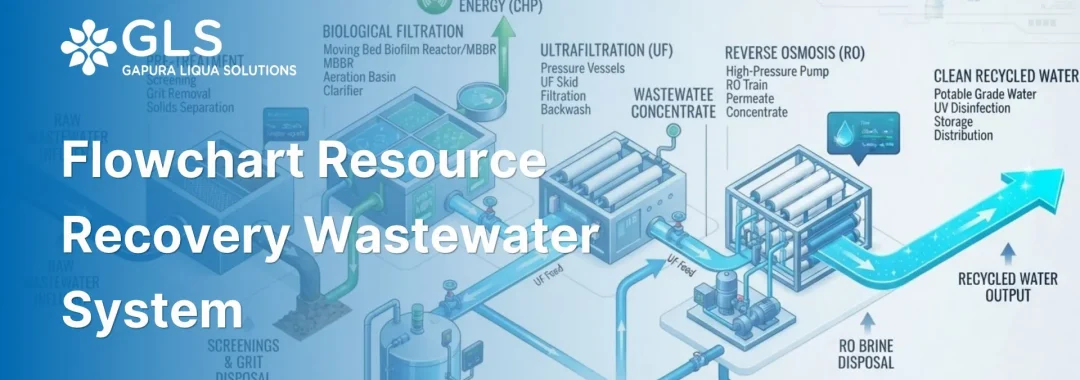
Optimizing Industrial Utilities: flowchart resource recovery wastewater
Industrial wastewater is no longer viewed merely as a waste stream. Modern manufacturing facilities transform industrial effluent into valuable reusable water. Understanding a flowchart resource recovery wastewater process is key to achieving circular utility management. By implementing advanced treatment steps, industries reduce raw water demand significantly. Furthermore, recovered resources improve overall facility sustainability and operational efficiency.
Core Stages in Resource Recovery Wastewater Treatment
A comprehensive resource recovery system follows a structured, multi-stage process flow. Each stage targets specific contaminants to ensure maximum water purity.
Primary Pre-Treatment and Equalization
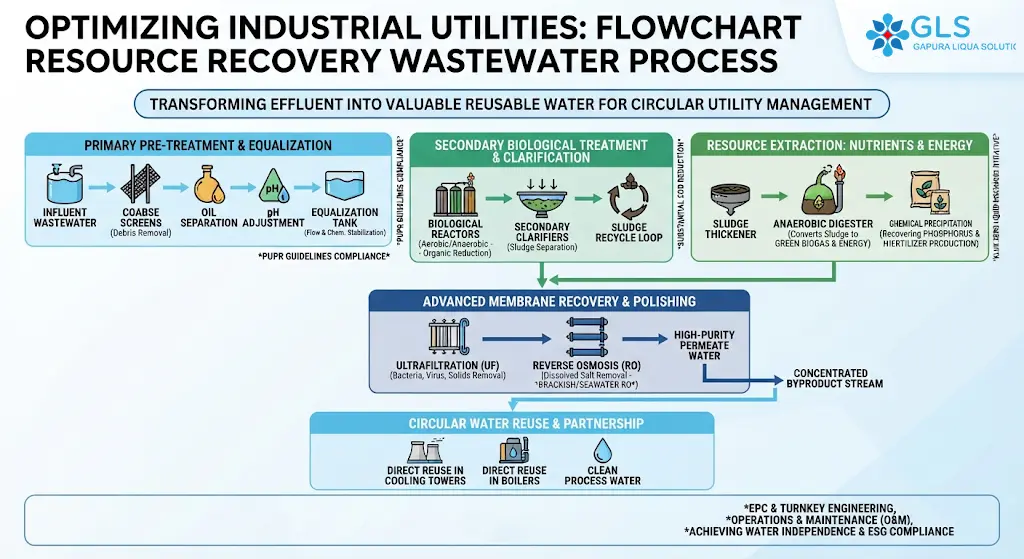
The process begins with influent wastewater entering the equalization tank. Coarse screens remove large debris and suspended solid matter. Next, pH adjustment and oil separation protect downstream treatment equipment. Guidelines from the Ministry of Public Works and Public Housing (PUPR) highlight the role of robust pre-treatment. Proper equalization prevents flow surges and stabilizes chemical composition.
Secondary Biological Treatment and Clarification
Equalized wastewater proceeds to biological treatment units for organic reduction. Microorganisms decompose dissolved organic matter in aerobic or anaerobic reactors. Subsequently, secondary clarifiers separate biological sludge from the treated effluent. This biological step substantially lowers Chemical Oxygen Demand (COD) levels. Consequently, the stream becomes suitable for high-recovery membrane filtration.
Advanced Membrane Recovery and Resource Extraction
To achieve industrial reuse standards, clarified water undergoes advanced polishing. High-tech membranes extract clean water while concentrating valuable byproducts.
Ultrafiltration and Reverse Osmosis Polishing
The clarified water flows into Ultrafiltration (UF) membranes. UF filters out bacteria, viruses, and remaining fine solids. Afterwards, the stream enters Reverse Osmosis (RO) systems for dissolved salt removal. Utilizing desalinasi air laut or brackish water RO technology yields high-purity permeate water. The recovered water feeds back into cooling towers and boilers directly.
Nutrient and Byproduct Extraction Systems
Beyond clean water, modern plants recover valuable nutrients and energy. Anaerobic digesters convert concentrated organic sludge into green biogas. Additionally, chemical precipitation processes recover phosphorus and nitrogen compounds for fertilizer production. Environmental frameworks from the Ministry of Environment and Forestry (KLHK) encourage such zero liquid discharge initiatives.
Partnering with PT Gapura Liqua Solutions for Circular Systems
Designing an efficient resource recovery plant requires technical expertise. Custom engineering ensures optimal recovery rates for complex industrial effluents.
Turnkey Engineering and EPC Services
As a leading pengolahan air indonesia specialist, PT. Gapura Liqua Solutions delivers complete turnkey solutions. We analyze your facility’s wastewater stream and design custom process flowcharts. Our engineering team builds reliable, high-yield EPC systems tailored to your site requirements. We ensure every installation complies with strict environmental regulations.
Long-Term Operations and Maintenance (O&M)
In addition to EPC services, we provide comprehensive O&M support. Our certified engineers monitor membrane fouling rates and optimize chemical dosing. Regular maintenance extends equipment lifespan and maintains high permeate recovery rates. Explore our latest circular water engineering projects on the PT. Gapura Liqua Solutions LinkedIn page.
Conclusion
Implementing a flowchart resource recovery wastewater system is a proven strategy for sustainable manufacturing. Transforming effluent into pure process water protects local ecosystems and reduces operating costs. With proven membrane technologies, your facility achieves water independence and ESG compliance. Partner with PT Gapura Liqua Solutions to engineer a clean, circular future for your industrial utilities.
FAQ Section
Q1: What is the main goal of a wastewater resource recovery flowchart? A: The main goal is to map out sequential treatment stages that transform industrial wastewater into reusable water, energy, and valuable byproducts like nutrients or minerals.
Q2: Can recovered wastewater be reused for high-purity industrial processes like boiler feed? A: Yes. By combining Ultrafiltration (UF) with Reverse Osmosis (RO), high-purity permeate water is produced, meeting strict standards for boiler feed and cooling tower makeup.
Q3: How does PT Gapura Liqua Solutions assist factories in implementing resource recovery? A: PT Gapura Liqua Solutions designs, builds, and maintains custom wastewater recovery systems through complete EPC and O&M services tailored to your plant’s specific effluent composition.
Follow us on Social Media


