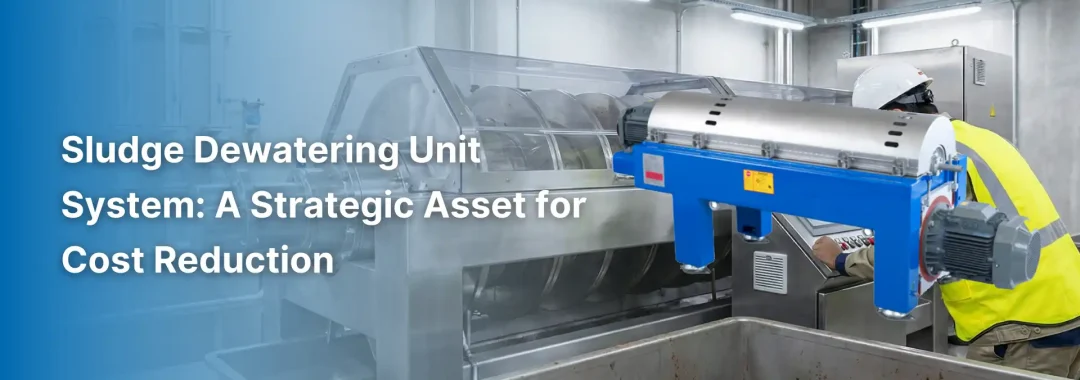
Sludge Dewatering Unit System: A Strategic Asset for Cost Reduction
For Heads of Procurement and Facilities Managers in Indonesia, the output quality of water often defines the success of a wastewater treatment plant (WWTP). However, the byproduct—sludge—presents a significant financial and logistical challenge. Therefore, implementing a robust sludge dewatering unit system represents the most effective method to control rising disposal costs. Additionally, it ensures strict environmental compliance.
PT. Gapura Liqua Solutions (GLS) recognizes that waste management directly affects a facility’s profitability. In this article, we explore why upgrading creates a smart investment for forward-thinking industries.
The Financial Urgency of an Efficient Sludge Dewatering Unit System
Industrial processes, particularly those involving advanced filtration like Reverse Osmosis Membrane pre-treatment, generate substantial amounts of liquid sludge. Typically, this sludge contains 95-99% water. Consequently, without intervention, companies pay exorbitant fees to haul and treat water that they could have separated on-site.
Transforming Liquid Waste into Solid Savings
A well-designed sludge dewatering unit system mechanically separates liquids from solids. By doing so, it significantly reduces the moisture content. As a result, the operator can slash the total volume of waste requiring disposal by up to 80%.
For instance, regarding hazardous (B3) waste, disposal sites calculate fees by weight. Thus, this reduction translates directly to the bottom line. Furthermore, the facility can often recycle the recovered water back into the plant’s headworks. This action improves the overall water balance and supports sustainability goals.
Core Technologies in a Modern Sludge Dewatering Unit System
Selecting the right technology remains crucial. Specifically, engineers must match the sludge dewatering unit system to the specific characteristics of the sludge, whether biological, chemical, or oily.
Screw Press vs. Filter Press Mechanisms
Two primary technologies dominate the market. First, many facilities favor the multi-disc screw press for its continuous, automated operation. Moreover, it offers low energy consumption. Therefore, it suits facilities with limited manpower. On the other hand, the filter press produces a “cake” with very high solid content. Consequently, managers choose it when they prioritize minimizing the absolute weight of the final waste.
Crucially, choosing the correct mechanism ensures that downstream processes run smoothly. In addition, efficient solids removal protects the integrity of other systems. For example, it contributes to stable BWRO membrane performance because it ensures the correct handling of waste streams.
Chemical Conditioning for Optimal Separation
However, mechanical force alone rarely suffices. A high-performance sludge dewatering unit system relies on precise chemical conditioning. Operators dose polymers (flocculants) to bind small particles into larger flocs that are easier to separate.
In fact, this process requires the same precision as dosing water treatment anti scalant. Incorrect chemical usage often leads to wet sludge or blinded filter cloths. Fortunately, GLS engineers specialize in optimizing this chemical regime. This expertise ensures the system runs at peak efficiency.
Why Procurement Leaders Partner with Gapura Liqua Solutions
Installing a sludge dewatering unit system represents a complex engineering task. Indeed, it involves hydraulics, electrical controls, and chemical engineering. Therefore, PT. Gapura Liqua Solutions offers a “Total Water Solutions” approach that simplifies this complexity for our clients.
- Tailored Engineering: We design systems based on your specific waste profile and space constraints.
- Operational Excellence: Additionally, we provide training and maintenance support to ensure the system delivers ROI for years to come.
- Supply Chain Reliability: Furthermore, we ensure consistent availability of polymers and spare parts. Notably, you can easily access standard components via our official Tokopedia store.
Finally, our recent LinkedIn Activity highlights our track record of successful installations and demonstrates our commitment to industrial reliability.
Conclusion
The sludge dewatering unit system acts as the unsung hero of industrial cost control. By drastically reducing waste volume, it lowers operational expenditures. Simultaneously, it simplifies regulatory compliance. Ultimately, it transforms a messy, expensive problem into a manageable, dry byproduct.
Now, PT. Gapura Liqua Solutions stands ready to help you assess your current waste handling processes. Together, we can deploy a solution that drives efficiency. So, do not let water weight drain your budget.
Are you ready to optimize your waste management? Contact Us for a Consultation
FAQ Section
Q: What is the main advantage of a screw press in a sludge dewatering unit system? A: A screw press offers continuous, automated operation with very low power consumption and noise. It is also self-cleaning, which significantly reduces the maintenance burden compared to older belt press technologies.
Q: How much volume reduction can I expect? A: Depending on the initial sludge type and the technology used, volume reduction can range from 60% to over 80%. This massive reduction drastically lowers transportation and landfill tipping fees.
Q: Does GLS provide the chemicals needed for the system? A: Yes, we supply the necessary flocculants and coagulants tailored to your specific sludge characteristics. We also assist in setting up the dosing equipment to ensure optimal cake dryness.
Q: Can this system handle oily sludge? A: Yes, specifically designed screw presses are very effective at handling oily sludge (often found in food processing or refineries) without clogging, unlike traditional filter cloths.
Follow us on Social Media


