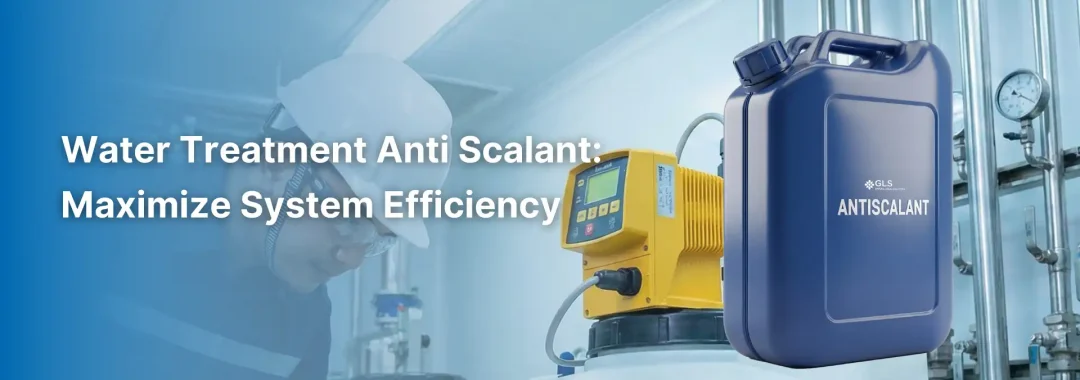
Water Treatment Anti Scalant: Maximizing Industrial Efficiency in Indonesia
For Facility Managers and Heads of Procurement across Indonesia, maintaining the longevity of industrial assets is a daily challenge. Whether operating cooling towers, boilers, or advanced desalination units, the threat of mineral deposition is constant. Implementing a robust water treatment anti scalant program is not merely a maintenance task; it is a strategic necessity to ensure operational continuity and cost control.
PT. Gapura Liqua Solutions (GLS) recognizes that in the competitive B2B landscape, unplanned downtime is unacceptable. This article explores how the correct chemical strategy protects your infrastructure and why choosing the right partner matters.
The Critical Role of Anti Scalant in Facility Management
Raw water sources in Indonesia often contain high levels of dissolved minerals, including calcium, magnesium, and silica. When water is heated in boilers or pressurized in Reverse Osmosis (RO) systems, these minerals precipitate out of the solution. Without a reliable water treatment anti scalant, these precipitates form hard scale deposits on heat transfer surfaces and membrane pores.
Understanding the Physics of Mineral Scaling
Scaling acts as an insulator. In boilers, even a thin layer of scale can drastically reduce heat transfer efficiency, forcing the system to burn more fuel to achieve the same output. In membrane systems, scale blocks the flow of water.
A high-performance water treatment anti scalant works by interfering with the crystal growth process. It utilizes mechanisms such as threshold inhibition to keep supersaturated salts dissolved in the water, allowing them to pass through the system without adhering to surfaces. This protection is vital for maintaining BWRO membrane performance over long operational periods.
The Financial Impact of Untreated Water
The cost of neglecting chemical treatment is two-fold:
- Energy Waste: Scaled systems require significantly more energy (electricity or fuel) to operate.
- Asset Depreciation: Heavy scaling can lead to overheating in boilers or irreversible fouling in membranes, necessitating expensive premature replacements.
By investing in a quality water treatment anti scalant, companies can convert unpredictable repair costs into manageable, planned operational expenses (OPEX).
Selecting the Right Water Treatment Anti Scalant
Not all chemicals are created equal. The effectiveness of a water treatment anti scalant depends heavily on the specific water chemistry of your site.
Tailoring Chemistry to Water Quality
A “one-size-fits-all” chemical often fails to address specific contaminants like silica or iron. For example, the Reverse Osmosis Membrane used in seawater desalination requires a different chemical profile than a low-pressure brackish water system.
GLS conducts thorough water analysis to recommend the precise formulation required. This ensures that the chemical acts effectively against the specific scaling potential of your feed water, aligning with the operational advantages of RO water systems designed by experts.
Dosing Precision and Monitoring
Applying the correct dosage is just as important as selecting the right chemical. Under-dosing leads to scaling, while over-dosing can be wasteful and cause bio-fouling issues. Modern dosing systems, supported by GLS technical teams, ensure that the water treatment anti scalant is injected at the optimal rate, maximizing protection while minimizing waste.
Why Procurement Leaders Partner with Gapura Liqua Solutions
In the industrial sector, supply chain reliability is paramount. PT. Gapura Liqua Solutions offers more than just products; we provide “Total Water Solutions.”
- Technical Expertise: Our engineers understand the entire water cycle, from intake to discharge.
- Availability: We ensure a steady supply of critical chemicals to prevent stock-outs. For quick procurement of standard components, you can also visit our Tokopedia store.
- Trust: We are trusted by major industries to protect their critical utilities.
You can view our latest projects and technical updates on our LinkedIn Activity, demonstrating our commitment to excellence in the field.
Conclusion
The efficiency of your plant is directly tied to the quality of your water treatment program. A superior water treatment anti scalant is the guardian of your expensive machinery, preventing the silent accumulation of scale that drains profits and energy.
PT. Gapura Liqua Solutions is ready to audit your system and provide a tailored chemical strategy that guarantees results. Don’t wait for scale to stop your production.
Are you ready to secure your facility’s efficiency? Contact Us for a Consultation
FAQ Section
Q: Can water treatment anti scalant remove existing scale? A: Generally, anti scalants are designed to prevent new scale from forming. To remove existing hard scale, an acid cleaning or specialized descaling procedure (CIP) is usually required before restarting the preventative dosing program.
Q: Is water treatment anti scalant safe for all membrane types? A: Most modern formulations are compatible with standard composite membranes. However, it is crucial to verify compatibility with your specific membrane manufacturer (e.g., cellulose acetate vs. polyamide) to avoid damage. GLS experts can assist with this verification.
Q: How do I determine the correct dosage rate? A: Dosage is calculated based on water analysis (specifically hardness, alkalinity, and silica levels), pH, temperature, and system recovery rate. GLS uses specialized software to calculate the precise dosing required to prevent scaling without wastage.
Follow us on Social Media


