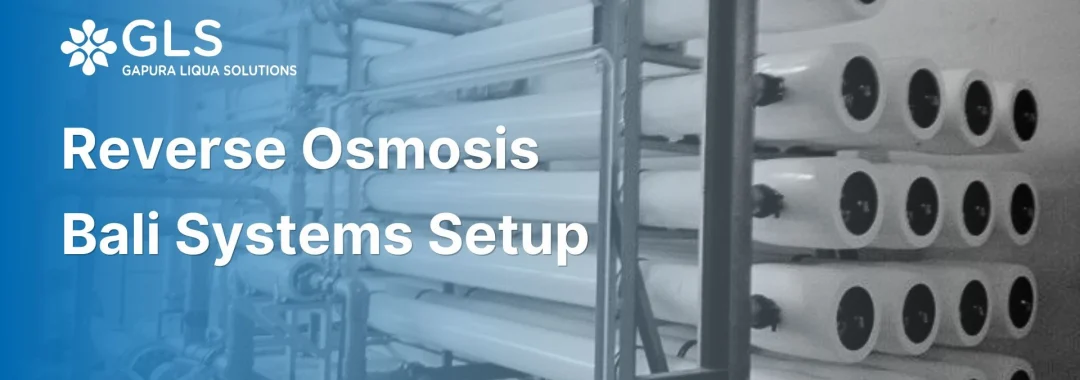
Engineers inspecting reverse osmosis bali systems for commercial water treatment

Reverse osmosis bali systems setup

Expert Water Treatment Consulting: Reverse Osmosis Bali Systems

Rapid commercial expansion and heavy tourism development place unprecedented strain on regional water reserves across Bali. Consequently, commercial resorts, industrial facilities, and municipal developments face growing challenges regarding water availability and quality. Deploying high-performance reverse osmosis bali systems provides a dependable solution to treat brackish groundwater and seawater effectively. Therefore, collaborating with an experienced water treatment consultant like PT. Gapura Liqua Solutions (GLS) empowers facility owners to secure uninterrupted water operational continuity while focusing on core business activities.

Water Supply Challenges and the Need for Reverse Osmosis Bali Systems

Bali’s unique geography and rapid tourism growth create severe water management issues. Specifically, over-pumping freshwater aquifers causes significant water table depletion across coastal districts. As a result, businesses experience seasonal supply shortages and unpredictable water chemistry.

Groundwater Salinity and Coastal Aquifer Depletion

In many coastal areas, excessive groundwater extraction leads directly to saltwater intrusion. Consequently, deep well water exhibits elevated salinity, making untreated groundwater unusable for commercial processes, laundry, or guest consumption. Installing advanced desalinasi air laut systems resolves this issue by converting seawater and brackish well water into pure potable supply.

High Mineral Content and TDS Fluctuations

Furthermore, raw water sources across Indonesia often contain high Total Dissolved Solids (TDS), silica, and hardness minerals. If left untreated, these minerals cause rapid scale formation inside cooling towers, boilers, and domestic piping networks. Therefore, proper filtration and membrane purification remain essential to protect high-value capital assets from premature corrosion and failure.

Designing Reliable Reverse Osmosis Bali Systems for Hospitality and Industry

Engineers must carefully customize reverse osmosis facilities according to site-specific feed water parameters. Because water chemistry varies greatly between coastal beaches and inland regions, standard off-the-shelf equipment rarely delivers long-term reliability.

Pretreatment Engineering and Membrane Selection

First, robust pretreatment stages serve as the front line of defense for reverse osmosis equipment. Incorporating multimedia filtration, glass media filtration, and precise antiscalant chemical dosing prevents organic fouling and mineral precipitation. Subsequently, high-rejection seawater reverse osmosis (SWRO) or brackish water reverse osmosis (BWRO) membranes strip away dissolved salts and contaminants. To learn more about modern membrane technology, read our guide on how SWRO adalah teknologi desalinasi modern.

Energy Efficiency and Operational Sustainability

Moreover, modern desalination infrastructure emphasizes energy recovery. Incorporating isobaric energy recovery devices dramatically reduces specific power consumption, making continuous desalination economically viable. Consequently, hospitality managers and plant operators lower overall operational expenditure while securing sustainable water independence.

PT. Gapura Liqua Solutions: Your End-to-End Water Treatment Consultant

Navigating complex water treatment projects requires proven technical authority and experienced project execution. PT. Gapura Liqua Solutions acts as your dedicated technical consultant and complete solution provider across Indonesia.

Comprehensive EPC and Operation Management

GLS manages the entire project lifecycle, delivering custom engineering, procurement, and construction through specialized jasa EPC water treatment. Furthermore, our long-term Operation and Maintenance (O&M) services ensure peak equipment efficiency, strict environmental compliance, and minimal downtime. For ongoing updates on industrial utility management, review this recent professional update from our network. Additionally, our engineering designs strictly adhere to international health guidelines established by the World Health Organization (WHO) and global standards set by the International Desalination Association (IDA).

Conclusion on Reverse Osmosis Bali Systems

In conclusion, overcoming local water scarcity requires proactive infrastructure investments and expert technical oversight. Implementing customized reverse osmosis bali systems guarantees continuous access to high-purity water, protecting commercial facilities against rising municipal costs and aquifer depletion. Therefore, partnering with PT. Gapura Liqua Solutions provides the technical expertise and operational security needed to sustain your long-term growth. To discuss your facility’s specific water requirements, contact us today to consult with our engineering team.

FAQ Section

Q1: Why are reverse osmosis bali systems necessary for commercial properties in Bali? A: Due to severe groundwater depletion and saltwater intrusion along coastal areas, reverse osmosis systems are essential to purify brackish well water and seawater into reliable, high-purity potable water.

    Q2: How does PT. Gapura Liqua Solutions assist commercial clients in water treatment? A: GLS acts as an end-to-end consultant and solution provider, handling feed water analysis, customized EPC system design, equipment procurement, installation, and long-term O&M services.

    Q3: What is the difference between SWRO and BWRO systems? A: Seawater Reverse Osmosis (SWRO) treats high-salinity ocean water, operating at higher pressures, whereas Brackish Water Reverse Osmosis (BWRO) treats lower-salinity groundwater or surface water with lower energy consumption.

    Follow us on Social Media for insights on Reverse osmosis bali systems

    Facebook Instagram LinkedIn
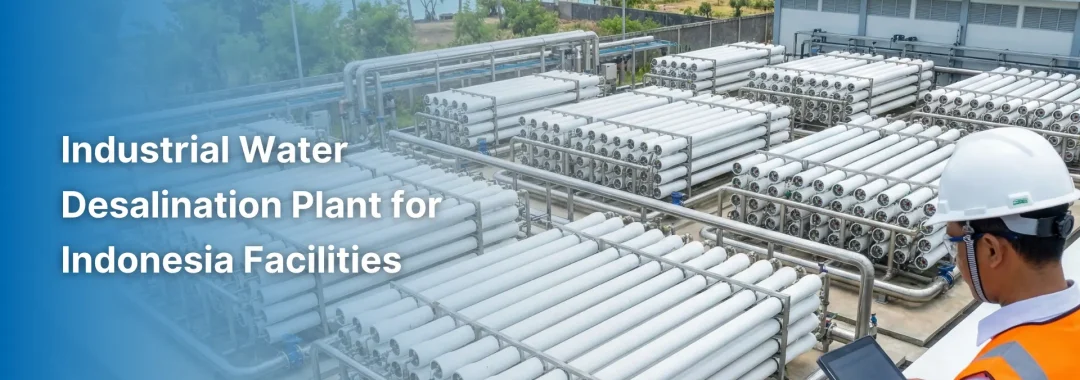
    Engineer monitoring an industrial water desalination plant system at a coastal facility in Indonesia.

    Industrial Water Desalination Plant for Indonesia Facilities

    Industrial Water Desalination Plant: Securing Business Continuity in Indonesia

    For Facilities Managers and Heads of Procurement in Indonesia, water is not merely a utility; it is the lifeblood of production. As industrial zones expand and climate patterns shift, relying solely on groundwater or municipal supplies is increasingly risky. Implementing a robust industrial water desalination plant is no longer just an option—it is a strategic necessity for safeguarding operational continuity.

    This article examines how modern desalination systems solve critical supply issues and why selecting the right engineering partner is paramount for long-term success.

    The Strategic Necessity of Desalination for Facilities

    Indonesia’s vast coastline offers abundant seawater resources, yet many industries still struggle with clean water availability. An industrial water desalination plant converts this inexhaustible resource into high-purity process water, insulating your business from drought, regulatory restrictions on groundwater extraction, and municipal supply interruptions.

    Mitigating Risks of Unreliable Water Supply

    Inconsistent water quality can wreak havoc on expensive machinery. High salinity and contaminants lead to rapid corrosion, scaling, and frequent downtime. By deploying a dedicated industrial water desalination plant, facilities gain control over their water quality parameters. This autonomy prevents unexpected production halts and protects capital assets from premature degradation, directly impacting the bottom line.

    Technical Components of an Efficient Industrial Water Desalination Plant

    Modern desalination is far more than just filtration; it is a sophisticated integration of hydraulics and chemistry. To ensure commercial viability, the system must balance output quality with energy efficiency.

    Advanced Membrane Technology and Pre-treatment

    The heart of any Seawater Reverse Osmosis (SWRO) system is the membrane. However, the lifespan of these membranes depends heavily on pre-treatment. Effective removal of suspended solids prevents fouling, which is a common cause of efficiency loss.

    At PT. Gapura Liqua Solutions (GLS), we utilize high-performance Reverse Osmosis Membrane technology designed to withstand high pressure and challenging feed water conditions. Understanding BWRO membrane performance is also critical for facilities dealing with brackish sources, ensuring that the specific rejection rates meet industrial standards.

    Energy Efficiency and Resource Recovery

    Historically, desalination was viewed as energy-intensive. Today, technologies such as Energy Recovery Devices (ERDs) have revolutionized the economics of the industrial water desalination plant. Furthermore, forward-thinking companies are now looking beyond water. Through resource recovery, brine (waste stream) can be processed to extract valuable minerals, turning waste into value.

    You can learn more about the specific advantages of RO water systems and how they contribute to a circular economy in our technical insights.

    Why Procurement Leaders Partner with Gapura Liqua Solutions

    Selecting a vendor for an industrial water desalination plant involves evaluating technical capability, local support, and long-term reliability. PT. Gapura Liqua Solutions stands out as a premier partner for Indonesian industries.

    We provide end-to-end solutions, from Engineering and Procurement to Construction and long-term Operations (EPC + O&M). Our “Total Water Solutions” approach means you can focus on your core business while we manage water availability and compliance.

    • Local Expertise: We understand the unique water chemistry of the Indonesian archipelago.
    • Supply Chain Security: We ensure the availability of critical consumables and spare parts, also accessible via our Tokopedia official store for ease of procurement.
    • Proven Track Record: Our projects demonstrate high reliability in challenging environments.

    For a glimpse into our recent project activities and industry updates, you can view our latest LinkedIn Activity.

    Conclusion

    Investing in an industrial water desalination plant is a decisive move toward operational resilience. It mitigates the risks of water scarcity and ensures that your facility meets global standards for sustainability and efficiency. However, the technology is only as good as the partner who installs and maintains it.

    PT. Gapura Liqua Solutions combines technical excellence with local understanding to deliver systems that last. We invite you to discuss your specific water requirements with our engineering team.

    Are you ready to secure your facility’s water future? Contact Us for a Consultation

    FAQ Section

    Q: What is the typical lifespan of an industrial water desalination plant? A: With proper maintenance and high-quality components, a plant can operate efficiently for over 20 years. The membranes typically require replacement every 3 to 5 years depending on the feed water quality and pre-treatment efficacy.

    Q: How does GLS handle the high energy consumption associated with desalination? A: We design our systems using advanced Energy Recovery Devices (ERDs) and high-efficiency pumps. This significantly reduces the energy footprint, making the operational costs competitive with traditional water sourcing methods.

    Q: Can the plant handle variable feed water quality, such as seasonal changes in seawater? A: Yes. Our engineering team designs the pre-treatment and SWRO systems with flexibility in mind. We analyze seasonal data to ensure the system remains stable regardless of fluctuations in turbidity or salinity.

    Q: Does GLS provide support after the installation is complete? A: Absolutely. We offer comprehensive Operation & Maintenance (O&M) contracts. Our team manages routine monitoring, chemical cleaning (CIP), and spare parts supply to ensure zero unplanned downtime.

    Follow us on Social Media

    Facebook Instagram LinkedIn
    Sea Water Treatment Solutions with advanced RO membrane system for hotels and resorts in Bali

    Reliable Sea Water Treatment Solutions for Hospitality Industry

    Reliable Sea Water Treatment Solutions for Hospitality Industry

    Running a hotel in Bali comes with unique water challenges. Many properties depend on limited freshwater sources, while demand from guests and operations continues to rise. For hotels located along the coastline, the only available alternative is seawater. However, untreated seawater contains high salinity, minerals, and impurities that damage equipment, reduce efficiency, and generate costly complaints.

    At Gapura Liqua Solutions, we provide Sea Water Treatment Solutions powered by advanced Reverse Osmosis (RO) systems. These solutions help hotels and resorts secure a consistent, cost-effective, and high-quality water supply.


    Why Sea Water Treatment Matters in Bali’s Hospitality Sector

    Rising Operational Costs

    General Managers and Chief Engineers know that water-related issues directly affect costs. Scaling in boilers, hot water systems, and laundry equipment leads to higher energy bills and premature replacement of linens. Chemical consumption also increases without effective treatment.

    Guest Satisfaction at Risk

    Guests expect clean, fresh water for showers, dining, and recreational facilities. Poor water quality creates negative reviews, impacting the reputation of hotels and resorts. Complaints about taste, odor, or hardness are common when seawater is not properly treated.

    Long-Term Equipment Damage

    High salinity and minerals in seawater accelerate corrosion and scaling inside pipes, chillers, heaters, and boilers. This leads to frequent breakdowns and unplanned maintenance costs.


    Technology Breakdown – RO Systems for Sea Water Treatment

    The backbone of effective Sea Water Treatment Solutions is the Reverse Osmosis (RO) system. This proven technology removes salt, minerals, and impurities from seawater, producing clean and safe water for hotel operations.

    Key Components of RO Systems

    • Pre-treatment: Filtration systems remove suspended solids, sand, and organic matter. Advanced media such as Activated Filter Media extend membrane life.
    • High-Pressure Pumps: Designed to push seawater through RO membranes at optimal pressure.
    • RO Membranes: Specialized membranes reject up to 99% of dissolved salts, ensuring freshwater output.
    • Post-treatment: Mineral adjustment and disinfection to deliver water suitable for human use and hotel operations.

    Benefits for Hotels

    1. Cost Reduction: Minimize chemical use, energy waste, and linen replacement.
    2. Consistent Supply: Ensure reliable water for daily operations regardless of freshwater availability.
    3. Guest Experience: Deliver clean, odor-free, and safe water across the property.
    4. Sustainability: Reduce dependency on groundwater, supporting eco-friendly hotel operations.

    Case Example – Seawater Treatment for Hotels in Bali

    Hotels near the coastlines often rely entirely on seawater. With a properly engineered RO system, seawater can be transformed into high-quality freshwater. For instance, our Hotel Water Filtration Systems have been implemented in resorts facing water shortages.

    The outcome is lower operating costs, extended equipment life, and improved guest reviews. Many hotel owners recognize seawater treatment not as an expense, but as an investment in long-term sustainability.


    Why Partner with Gapura Liqua Solutions?

    As an EPC water treatment specialist in Indonesia, Gapura Liqua Solutions provides end-to-end support:

    • Engineering: Custom RO system design tailored to your hotel’s needs.
    • Procurement: Reliable supply of membranes, pumps, and treatment chemicals.
    • Construction & Installation: Fast deployment with minimal disruption to hotel operations.
    • After-Sales Service: Ongoing support, monitoring, and maintenance.

    We understand the challenges faced by the hospitality sector in Bali and deliver practical, proven solutions. Explore our specialized Brackish Water RO Systems for Hotels.


    Taking Action – Secure Your Hotel’s Future

    Investing in Sea Water Treatment Solutions is not just about solving today’s water problems—it is about securing the future of your hotel operations. Whether you manage a boutique resort or a large international property, reliable water quality translates into cost savings, guest satisfaction, and brand reputation.

    Ready to transform seawater into an asset for your hotel?
    Contact Gapura Liqua Solutions today for a consultation and customized seawater RO design that reduces costs, protects equipment, and improves guest experiences.

    📞 Visit us at Gapura Liqua Solutions