Strategic Industrial Wastewater Management: Implementing a Sludge Volume Reduction Plan
Industrial manufacturing facilities face growing pressure to manage operational wastewater efficiently. As regulatory bodies enforce strict discharge limits, handling residual sludge becomes a primary cost driver. Implementing a structured sludge volume reduction plan allows plant operators to lower logistics expenses, optimize equipment performance, and maintain long-term environmental compliance. By adopting modern engineering strategies and consulting with industry experts, industrial facilities can turn complex waste burdens into streamlined, sustainable operations.
Understanding the Industrial Sludge Challenge
Wastewater treatment generates substantial amounts of semi-solid sludge that require dewatering, transport, and hazardous material disposal. Therefore, unmanaged sludge volume quickly creates bottlenecks in day-to-day manufacturing operations.
Environmental and Operational Bottlenecks
High water content makes raw sludge heavy and volatile. Consequently, stored sludge emits odors, creates secondary contamination risks, and occupies valuable operational footprint within wastewater treatment plants (WWTPs). Regulatory agencies, including environmental protection bodies like the U.S. EPA Sustainable Water Infrastructure framework, emphasize effective solids handling to protect local ecosystems.
Financial Implications of Heavy Sludge Loads
Transporting untreated sludge with high moisture content means paying to transport excess water. Because hazardous waste handling fees are calculated by weight and volume, heavy sludge significantly inflates operational expenditure (OPEX).
Key Components of a Successful Sludge Volume Reduction Plan
Executing a thorough sludge volume reduction plan requires integrating mechanical, chemical, and biological technologies tailored to specific wastewater characteristics.
Chemical Conditioning and Coagulation
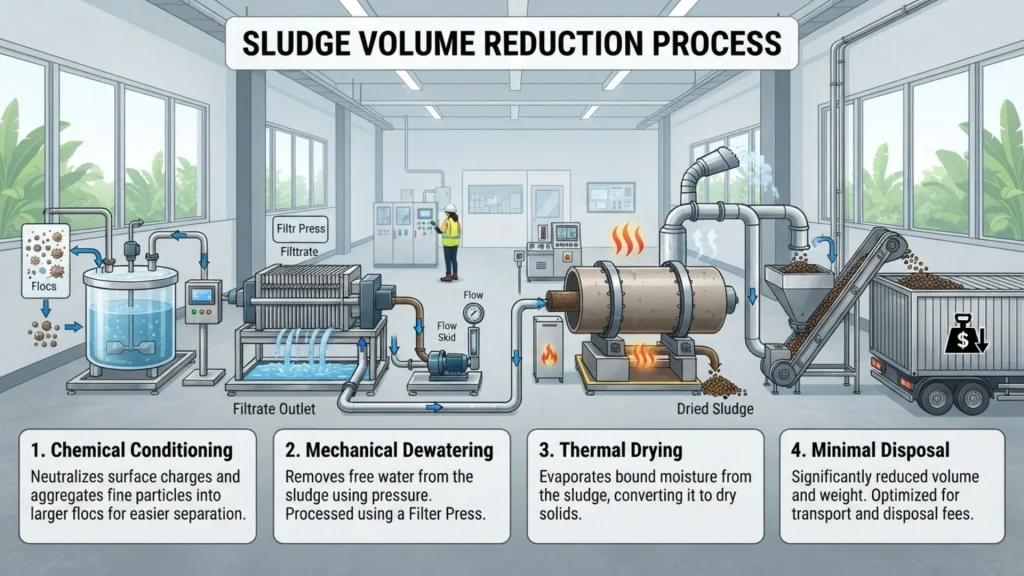
Before mechanical separation occurs, chemical conditioning neutralizes particle charges. Adding coagulants and polymers causes fine suspended solids to aggregate into larger flocs. As a result, free water releases much faster during subsequent mechanical dewatering stages.
Advanced Dewatering and Mechanical Drying
Mechanical dewatering remains the backbone of solid-liquid separation. Facilities utilize several high-efficiency technologies:
- Filter Presses: Recessed plate and membrane filter presses produce dense cake solids with low residual moisture.
- Centrifuges: High-speed decanter centrifuges continuously separate solids from liquid streams in compact footprints.
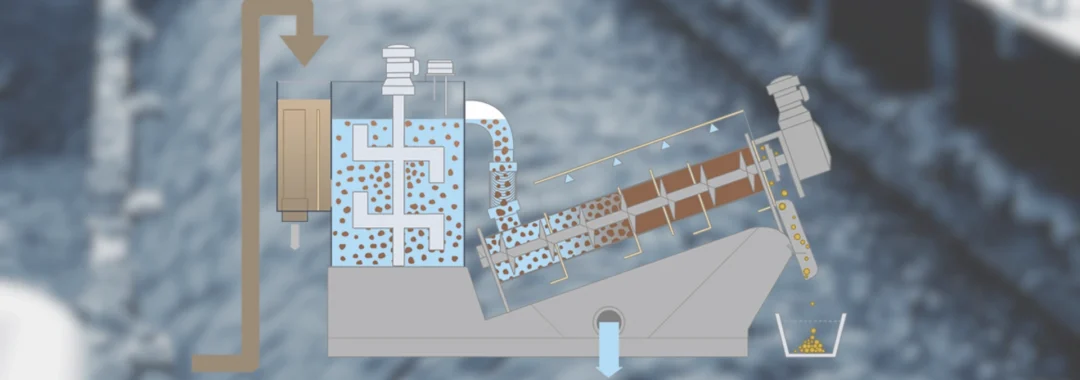
- Screw Presses: Low-speed screw presses provide energy-efficient dewatering for biological and fibrous sludges.
Following mechanical dewatering, thermal dryers remove bound water to further reduce total volume. According to technical resources from the Water Environment Federation (WEF), thermal drying significantly reduces final cake weight, drastically lowering downstream transport costs.
Biological Treatment and Resource Recovery
Biological sludge reduction techniques, such as aerobic digestion and extended aeration, digest organic solids before dewatering. In addition, advanced systems enable resource recovery, transforming dried sludge into usable byproducts like soil conditioners or secondary fuel sources.
Partnering with PT. Gapura Liqua Solutions as Your Water Treatment Consultant
Selecting the right technologies requires deep technical insight into fluid dynamics, water chemistry, and site-specific operational constraints.
End-to-End System Auditing and Engineering
PT. Gapura Liqua Solutions acts as a total water solutions partner for industrial clients across Indonesia. GLS provides end-to-end engineering, procurement, and consulting services tailored to complex industrial utility demands. By conducting detailed facility audits, GLS engineers identify process bottlenecks and design customized dewatering systems that deliver maximum volume reduction.
Sustainable Operational Excellence
Beyond initial system design, GLS delivers long-term Operation and Maintenance (O&M) services. Through continuous monitoring and technical support, clients maintain consistent operational efficiency without distracting from their core business production goals. Explore real-world project milestones and technical insights on the official PT. Gapura Liqua Solutions LinkedIn page.
Conclusion
Managing wastewater residuals effectively requires a strategic approach rather than reactive fixes. Developing a robust sludge volume reduction plan ensures long-term operational resilience, reduces logistics overhead, and keeps facilities compliant with evolving environmental regulations. Partnering with an experienced consultant like PT. Gapura Liqua Solutions empowers industrial plants to optimize utility operations, lower lifetime costs, and achieve sustainable water management.
FAQ Section
Q1: What is a sludge volume reduction plan? A sludge volume reduction plan is a structured strategy using chemical, mechanical, and thermal techniques to remove water content from wastewater residuals, minimizing physical volume and disposal weight.
Q2: Why is sludge volume reduction important for industrial facilities? Reducing sludge volume lowers waste handling and transportation fees, ensures compliance with environmental discharge regulations, and improves overall plant efficiency.
Q3: How does PT. Gapura Liqua Solutions assist in sludge reduction? PT. Gapura Liqua Solutions provides complete consulting, engineering design, technology procurement, and long-term O&M services to optimize wastewater treatment systems for industrial clients.
Follow us on Social Media