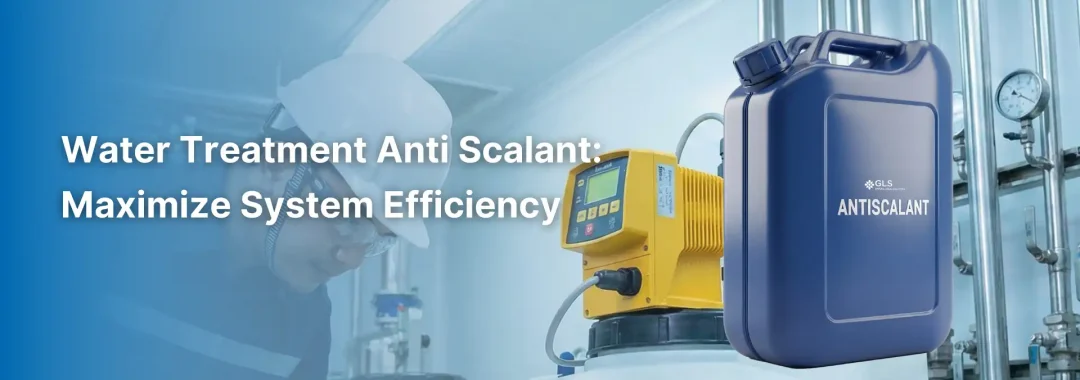
Industrial engineer inspecting a water treatment anti scalant dosing tank at a manufacturing plant.

Water Treatment Anti Scalant: Maximize System Efficiency

Water Treatment Anti Scalant: Maximizing Industrial Efficiency in Indonesia

For Facility Managers and Heads of Procurement across Indonesia, maintaining the longevity of industrial assets is a daily challenge. Whether operating cooling towers, boilers, or advanced desalination units, the threat of mineral deposition is constant. Implementing a robust water treatment anti scalant program is not merely a maintenance task; it is a strategic necessity to ensure operational continuity and cost control.

PT. Gapura Liqua Solutions (GLS) recognizes that in the competitive B2B landscape, unplanned downtime is unacceptable. This article explores how the correct chemical strategy protects your infrastructure and why choosing the right partner matters.

The Critical Role of Anti Scalant in Facility Management

Raw water sources in Indonesia often contain high levels of dissolved minerals, including calcium, magnesium, and silica. When water is heated in boilers or pressurized in Reverse Osmosis (RO) systems, these minerals precipitate out of the solution. Without a reliable water treatment anti scalant, these precipitates form hard scale deposits on heat transfer surfaces and membrane pores.

Understanding the Physics of Mineral Scaling

Scaling acts as an insulator. In boilers, even a thin layer of scale can drastically reduce heat transfer efficiency, forcing the system to burn more fuel to achieve the same output. In membrane systems, scale blocks the flow of water.

A high-performance water treatment anti scalant works by interfering with the crystal growth process. It utilizes mechanisms such as threshold inhibition to keep supersaturated salts dissolved in the water, allowing them to pass through the system without adhering to surfaces. This protection is vital for maintaining BWRO membrane performance over long operational periods.

The Financial Impact of Untreated Water

The cost of neglecting chemical treatment is two-fold:

  1. Energy Waste: Scaled systems require significantly more energy (electricity or fuel) to operate.
  2. Asset Depreciation: Heavy scaling can lead to overheating in boilers or irreversible fouling in membranes, necessitating expensive premature replacements.

By investing in a quality water treatment anti scalant, companies can convert unpredictable repair costs into manageable, planned operational expenses (OPEX).

Selecting the Right Water Treatment Anti Scalant

Not all chemicals are created equal. The effectiveness of a water treatment anti scalant depends heavily on the specific water chemistry of your site.

Tailoring Chemistry to Water Quality

A “one-size-fits-all” chemical often fails to address specific contaminants like silica or iron. For example, the Reverse Osmosis Membrane used in seawater desalination requires a different chemical profile than a low-pressure brackish water system.

GLS conducts thorough water analysis to recommend the precise formulation required. This ensures that the chemical acts effectively against the specific scaling potential of your feed water, aligning with the operational advantages of RO water systems designed by experts.

Dosing Precision and Monitoring

Applying the correct dosage is just as important as selecting the right chemical. Under-dosing leads to scaling, while over-dosing can be wasteful and cause bio-fouling issues. Modern dosing systems, supported by GLS technical teams, ensure that the water treatment anti scalant is injected at the optimal rate, maximizing protection while minimizing waste.

Why Procurement Leaders Partner with Gapura Liqua Solutions

In the industrial sector, supply chain reliability is paramount. PT. Gapura Liqua Solutions offers more than just products; we provide “Total Water Solutions.”

  • Technical Expertise: Our engineers understand the entire water cycle, from intake to discharge.
  • Availability: We ensure a steady supply of critical chemicals to prevent stock-outs. For quick procurement of standard components, you can also visit our Tokopedia store.
  • Trust: We are trusted by major industries to protect their critical utilities.

You can view our latest projects and technical updates on our LinkedIn Activity, demonstrating our commitment to excellence in the field.

Conclusion

The efficiency of your plant is directly tied to the quality of your water treatment program. A superior water treatment anti scalant is the guardian of your expensive machinery, preventing the silent accumulation of scale that drains profits and energy.

PT. Gapura Liqua Solutions is ready to audit your system and provide a tailored chemical strategy that guarantees results. Don’t wait for scale to stop your production.

Are you ready to secure your facility’s efficiency? Contact Us for a Consultation

FAQ Section

Q: Can water treatment anti scalant remove existing scale? A: Generally, anti scalants are designed to prevent new scale from forming. To remove existing hard scale, an acid cleaning or specialized descaling procedure (CIP) is usually required before restarting the preventative dosing program.

Q: Is water treatment anti scalant safe for all membrane types? A: Most modern formulations are compatible with standard composite membranes. However, it is crucial to verify compatibility with your specific membrane manufacturer (e.g., cellulose acetate vs. polyamide) to avoid damage. GLS experts can assist with this verification.

Q: How do I determine the correct dosage rate? A: Dosage is calculated based on water analysis (specifically hardness, alkalinity, and silica levels), pH, temperature, and system recovery rate. GLS uses specialized software to calculate the precise dosing required to prevent scaling without wastage.

Follow us on Social Media

Facebook Instagram LinkedIn
Industrial technician adjusting a chemical dosing pump to administer an effective anti scalant chemical into an RO system to prevent fouling.

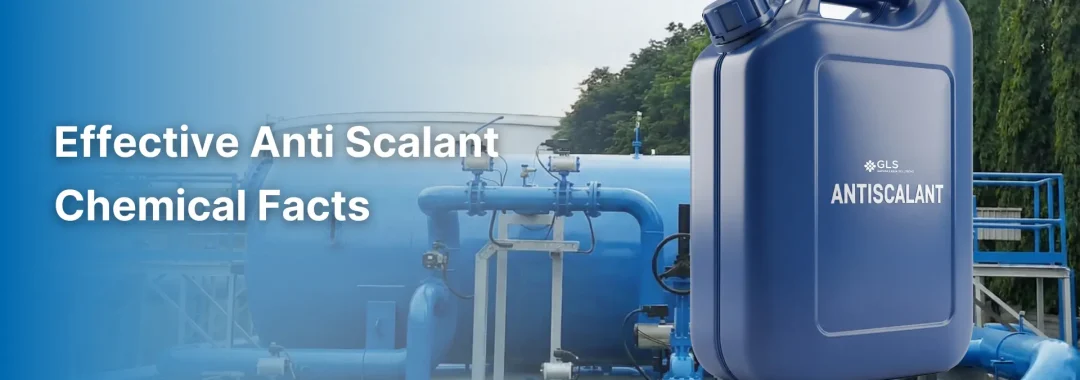
Effective Anti Scalant Chemical Facts

Effective Anti Scalant Chemical: Effective Anti Scalant Chemical: Protecting Your Industrial Assets

For industrial facility managers in Indonesia, maintaining the efficiency of a Seawater Reverse Osmosis (SWRO) or Brackish Water Reverse Osmosis (BWRO) plant is a constant battle against chemistry. However, as the system extracts pure water, the remaining salts concentrate rapidly. Consequently, this leads to a high risk of mineral precipitation. To combat this issue, deploying an effective anti scalant chemical is not just an option; it is a necessity for operational continuity.

Moreover, without the correct chemical intervention, scale formation can irreversibly damage expensive membrane elements. As a result, this leads to skyrocketing operational costs and critical production downtime.

Understanding the Threat of Membrane Scaling

Scaling occurs when dissolved minerals in the feed water exceed their solubility limits. In industrial settings, specific compounds like calcium carbonate, calcium sulfate, or reactive silica often drive this process.

How Mineral Precipitation Occurs

First, high-pressure pumps force water through the membrane. Then, the concentration of salts on the feed surface increases significantly. Unless you intervene with an effective anti scalant chemical, these salts crystallize. Subsequently, they form a hard, rock-like layer on the membrane surface. This layer blocks the flow of water. Therefore, the pumps must work harder and consume more energy to maintain production rates.

Why an Effective Anti Scalant Chemical is Critical

Implementing a robust dosing strategy is the first line of defense. Specifically, the primary function of an effective anti scalant chemical involves interfering with crystal growth. This action keeps minerals dissolved even when they are supersaturated.

Reducing Energy Consumption and Cleaning Frequency

When membranes are clean, they operate at optimal pressure. Conversely, scale buildup causes a spike in differential pressure, which leads to higher electricity bills. Furthermore, frequent scaling necessitates frequent Chemical Cleaning (CIP). CIP procedures require downtime and aggressive chemicals that can degrade membrane life over time. Thus, a proper antiscalant strategy minimizes these interruptions.

Extending Membrane Lifespan

Membranes are significant capital assets. In addition to saving energy, preventing physical damage from sharp crystals extends their service life. Simultaneously, reducing the frequency of harsh cleanings protects the membrane surface. For more details on maintaining optimal performance, you can review our guide on BWRO membrane performance.

Selecting the Right Formulation

Antiscalant formulations vary significantly. Therefore, the deployment of an effective anti scalant chemical depends entirely on the specific water chemistry of your site.

  • For instance, high silica water requires specific dispersants to prevent silica polymerization.
  • On the other hand, high hardness water requires strong threshold inhibitors for calcium salts.

Using the wrong generic chemical can be as damaging as using none at all. Consequently, proper selection requires a detailed water analysis and projection software simulation.

Comprehensive Support from Gapura Liqua Solutions

At PT. Gapura Liqua Solutions (GLS), we understand that chemical dosing is part of a larger ecosystem. Hence, we provide end-to-end support, from water analysis to the supply of premium chemicals and the maintenance of dosing equipment.

We ensure that your strategy utilizes an effective anti scalant chemical perfectly aligned with your system’s design limits. For example, procurement managers looking for reliable supplies can access critical components via our official Tokopedia store. Additionally, understanding the advantages of RO systems can help in justifying the investment in high-quality pre-treatment.

We have successfully implemented these strategies across various industries, ensuring long-term reliability. In fact, you can see examples of our operational success in our recent project updates on LinkedIn.

Conclusion

Ultimately, the integrity of your water treatment plant relies on proactive protection. Using an effective anti scalant chemical program is the most cost-effective insurance policy against fouling and failure.

Therefore, do not let mineral scaling compromise your production targets. Partner with experts who understand the science of water. Contact PT. Gapura Liqua Solutions today for a chemical audit and ensure your assets are protected for the long haul.

FAQ

Q: What makes a chemical an “effective anti scalant”?
A: An effective anti scalant chemical must have high threshold inhibition capabilities, meaning it can prevent precipitation even at low dosages. It should also be compatible with your specific membrane type (polyamide or cellulose acetate) and effective against the specific mix of ions in your feed water.

Q: How do I know if I am using the right dosage?
A: Dosage is calculated based on feed water analysis (TDS, pH, temperature, ion concentration) and recovery rate. Under-dosing leads to scaling; over-dosing can cause biofouling. GLS engineers can calculate the precise ppm required for your system.

Q: Can anti scalant remove existing scale?
A: No. Even an effective anti scalant chemical is strictly preventative. To remove existing scale, you must perform a Clean-in-Place (CIP) using low pH (acid) cleaners for minerals or high pH (alkaline) cleaners for organics.

Follow us on Social Media

Facebook Gapura Liqua - effective anti scalant chemical Instagram Gapura Liqua - effective anti scalant chemical LinkedIn Gapura Liqua - effective anti scalant chemical