As an archipelagic nation, the demand for high-performance Seawater intake pump Indonesia is skyrocketing. From coal-fired power plants (PLTU) along the coast of Java to oil refineries in Kalimantan and luxury resorts in Bali or Labuan Bajo, operations rely heavily on a consistent supply of seawater.
However, for a Head of Procurement or Facilities Manager, selecting the right seawater pump is not a simple transaction. A slight miscalculation in specification can lead to catastrophic operational failure due to rapid corrosion. This article provides a technical guide to selecting a Seawater intake pump Indonesia that is durable, efficient, and suited for our specific climate.
Unique Challenges of Operating Pumps in Indonesian Seas
Why can’t you simply buy a standard imported pump designed for Europe and install it in Indonesian waters? The answer lies in our unique geographical characteristics.
Indonesia has tropical waters with average temperatures of 28-30°C year-round. This warm environment is a perfect incubator for biofouling—the rapid growth of marine life like barnacles and mussels that can clog intakes. Furthermore, high salinity and temperature accelerate chemical reaction rates, causing metal corrosion to occur twice as fast compared to colder climates.
Therefore, the specifications for a Seawater intake pump Indonesia must be custom-engineered to withstand these extreme conditions, rather than relying on “off-the-shelf” solutions.
Most Effective Types of Seawater intake pump Indonesia
Selecting the right pump type depends heavily on your installation site and the tidal fluctuations in your area. Here are the two most recommended types for the Indonesian market:
Vertical Turbine Pumps for High Capacity
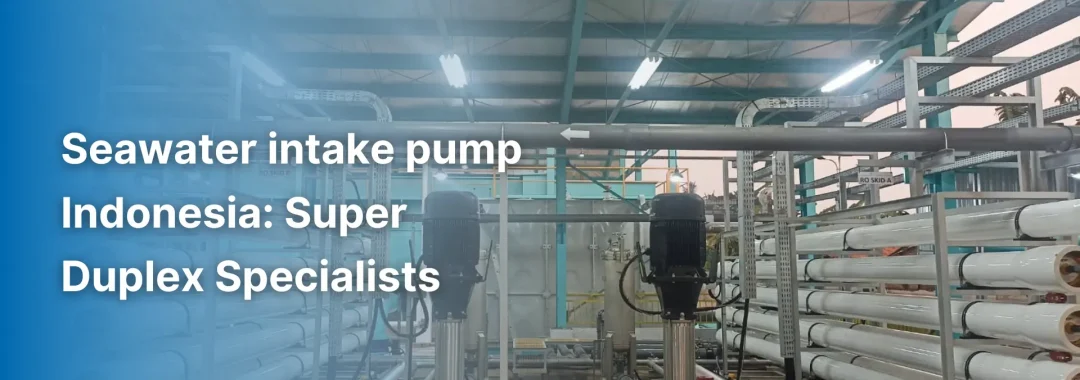
For large-scale industrial applications such as power plants or major Seawater Reverse Osmosis (SWRO) facilities, the Vertical Turbine Pump is the gold standard.
The motor is placed above ground (dry), while the impellers are submerged underwater. This design handles the significant tidal variations often found in Indonesian straits without losing prime, ensuring continuous flow.
Self-Priming Centrifugal Pumps for Ease of Maintenance
For resorts or smaller industrial units where maintenance teams are limited, self-priming centrifugal pumps are often preferred. They are located on land (suction lift), making them easier to access for repairs without needing divers or cranes. However, precise calculation of the Net Positive Suction Head (NPSH) is critical to prevent cavitation.
Material Metallurgy: The Key to Pump Longevity
The most common mistake when sourcing a Seawater intake pump Indonesia is compromising on materials to save on initial Capex. Standard Stainless Steel 316L is often insufficient for warm, stagnant tropical seawater.
To ensure longevity, PT. Gapura Liqua Solutions (GLS) recommends upgrading to Duplex or Super Duplex Stainless Steel (UNS S32750). These materials offer superior resistance to pitting and crevice corrosion. Additionally, understanding Galvanic Corrosion is vital; ensuring your pump materials are compatible with your piping system prevents the pump from becoming a “sacrificial anode.”
Logistics and Spare Parts in Remote Areas
Indonesia is a vast archipelago. A pump failure in a remote resort in Raja Ampat or a mining site in Halmahera can cause weeks of downtime if spare parts must be imported from abroad.
This is where sourcing a Seawater intake pump Indonesia from a local expert becomes a strategic advantage. PT. GLS understands the local logistics landscape. We prioritize brands and models with accessible spare parts networks within the country, ensuring that your core business—whether it’s hospitality or manufacturing—is never interrupted by a missing seal or impeller.
Frequently Asked Questions (FAQ)
To further assist your decision-making, here are answers to common technical questions we receive.
What is the best material for seawater pumps in Indonesia?
While SS316 is common, Super Duplex Stainless Steel or Nickel Aluminum Bronze is highly recommended for Indonesian waters to withstand high temperatures and chloride content.
How do we handle varying tide levels for the intake?
Using a Variable Frequency Drive (VFD) coupled with a level sensor allows the pump to adjust its speed based on the water level, maintaining constant pressure and protecting the pump from running dry.
Does GLS provide installation services?
Yes. PT. Gapura Liqua Solutions provides end-to-end services, from pump sizing calculation, supply, installation, to periodic maintenance contracts.
Conclusion: Partner with Local Experts for Reliability
Investing in the right Seawater intake pump Indonesia is an investment in operational security. By choosing the correct pump type and metallurgy, you avoid the nightmare of frequent replacements and high OpEx.
PT. Gapura Liqua Solutions (GLS) is ready to be your partner. We connect deep technical expertise in Seawater Desalination and Resource Recovery with local logistical capabilities. Let us handle your water needs so you can focus on your business growth.
Ready to upgrade your intake system? Hubungi tim ahli kami / Contact Us for a technical consultation and quote today.
Follow us on Social Media


