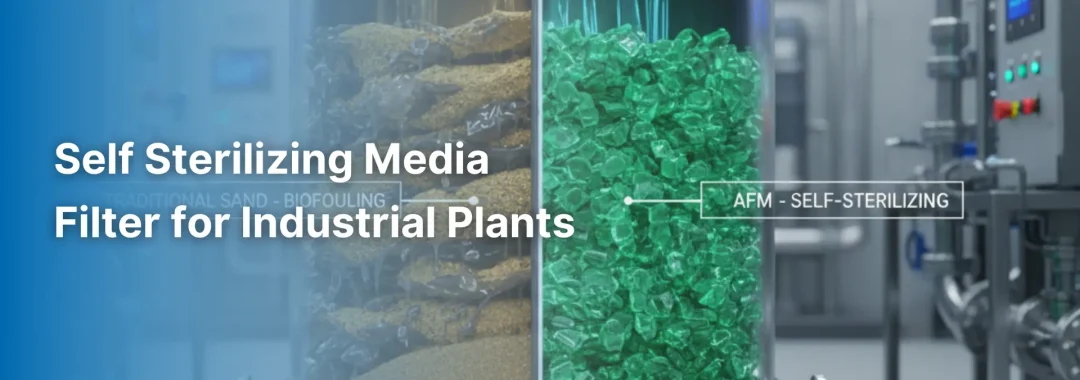
Industrial self sterilizing media filter installation

Self Sterilizing Media Filter for Industrial Water | GLS

Enhancing Industrial Water Pre-treatment with Self Sterilizing Media Filter Technology

In the demanding environment of Indonesian industrial utilities, the efficiency of pre-treatment systems dictates the lifespan of the entire water circuit. As facilities strive for higher operational uptime, many are pivoting toward the self sterilizing media filter, specifically utilizing Activated Filter Media (AFM). This shift is driven by the need to combat the persistent threat of biological growth within filtration beds, which often compromises downstream reverse osmosis membranes.

The Biofouling Challenge in Industrial Filtration

Traditional filtration methods often become breeding grounds for bacteria. When organic matter is trapped in standard media, it creates a biofilm that leads to “channeling.” This reduces the quality of the water and increases the frequency of backwashing.

Why Conventional Sand Filters Fail in Industrial Utilities

Sand is silica-based and chemically inert, allowing bacteria to colonize the surface of the grains. This biofilm acts as a “glue,” sticking grains together and increasing the pressure drop across the vessel. For a Facility Manager, this means higher energy costs and inconsistent water quality.

The AFM Advantage: A True Self Sterilizing Media Filter

Activated Filter Media (AFM) is a direct replacement for sand, manufactured from green glass and activated through a unique chemical and thermal process. This results in a self sterilizing media filter that prevents bacteria from ever attaching to the surface.

Performance MetricStandard Silica SandAFM (Self-Sterilizing)
Filtration Grade20 microns< 5 microns
Bio-ResistanceNone (Biofilm forms)High (Self-sterilizing)
Backwash WaterHigh volume required50% less water used
Lifespan2–3 yearsOver 15 years

Catalytic Oxidation and Bio-Resistance Explained

The surface of AFM has a high negative charge and catalytic properties. When water flows through, it creates small amounts of free radicals (OH) on the surface, which act as a disinfectant. This is what makes it a self sterilizing media filter. By removing the biological load at the pre-treatment stage, you significantly improve BWRO membrane performance and reduce the need for aggressive chemical cleaning.

Why PT. Gapura Liqua Solutions Integrates AFM in Systems

At PT. Gapura Liqua Solutions (GLS), we specialize in end-to-end engineering that prioritizes long-term reliability. We integrate self sterilizing media filter technology into our SWRO and BWRO systems because it allows our clients to focus on their core business without worrying about sudden utility failures.

By utilizing the keunggulan sistem air RO equipped with AFM, industrial plants in Indonesia can achieve lower TDS levels and superior permeate quality while reducing their environmental footprint.

Conclusion: Sustainable Water Reliability for Indonesian Industry

Investing in a self sterilizing media filter is a strategic decision for any technical director aiming for resource recovery and efficiency. AFM technology provides the stability required for modern industrial processes, ensuring that your water supply remains a silent partner in your success, not a constant maintenance headache.

To upgrade your current filtration system or design a new utility plant, Contact us at GLS.

FAQ Section

Q: How does a self sterilizing media filter reduce chemical costs?

A: Since the media prevents biofilm formation, there is less organic matter reaching the RO membranes. This reduces the frequency of CIP (Cleaning In Place) and the volume of biocides required.

Q: Can I replace my existing sand with AFM?

A: Yes, AFM is a 1:1 replacement for sand in existing pressure vessels, though we recommend a system audit to optimize backwash flow rates.

Q: Is this technology effective for seawater desalination?

A: Absolutely. In seawater applications, biofouling is the leading cause of membrane failure. AFM provides a critical protective barrier.

Follow us on Social Media

Facebook Instagram LinkedIn
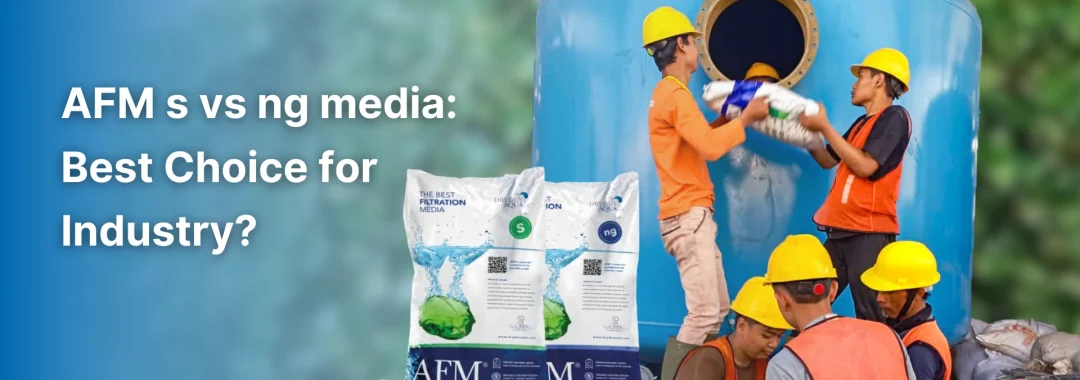
Gapura Liqua Solutions technicians loading AFM s vs ng media bags into an industrial filtration tank, showcasing the difference between standard and next-generation activated filter media.

AFM s vs ng media: Best Choice for Industry?

AFM s vs ng media: Selecting the Right Activated Filter Media for Industrial Use

For industrial facility managers in Indonesia, water treatment is not just about clarity; it is about operational continuity. The failure of a pre-treatment system often leads to rapid fouling of Reverse Osmosis (RO) membranes, resulting in unplanned downtime and skyrocketing operational costs. As the industry moves away from silica sand, the debate now centers on AFM s vs ng media.

Choosing the correct grade of Activated Filter Media (AFM) is critical for optimizing your Water Treatment Plant (WTP) or Desalination (SWRO) system. This article breaks down the technical differences to help you make an informed procurement decision.

Understanding the Core Technology: What is AFM?

Before diving into the AFM s vs ng media comparison, it is essential to understand why AFM outperforms traditional sand. Unlike crushed glass or silica sand, AFM is manufactured from processed green and brown glass that undergoes a specific chemical activation process.

This process increases the surface area up to 300 times compared to sand and creates a “self-sterilizing” surface. This feature prevents the growth of biofilm—the slimy bacterial layer that causes channeling and inconsistent filtration in standard sand filters.

Detailed Breakdown: AFM s vs ng media

The manufacturer, Dryden Aqua, produces two distinct types of activated media. While both offer superior filtration over sand, they serve different technical requirements.

AFM Grade s (Standard): The Negatively Charged Defender

AFM ‘s’ (Standard) is the established benchmark for high-performance filtration. During manufacturing, the glass surface acquires a strong negative zeta potential.

  • Mechanism: The negative charge repels bacteria, preventing them from adhering to the media. This prevents biofilm formation, ensuring that the filter bed remains clean and predictable.
  • Performance: It effectively removes heavy metals and reduces turbidity.
  • Best Use: Swimming pools, aquaculture, and standard pre-filtration where biofouling control is the primary concern.

AFM Grade ng (Next Generation): The Hydrophobic Specialist

The ‘ng’ stands for “Next Generation.” This media undergoes a different activation process to make the surface hydrophobic (water-repelling) while maintaining a neutral charge.

  • Mechanism: Because organic contaminants and microplastics are typically non-polar (hydrophobic), they are attracted to the hydrophobic surface of AFM ng like a magnet.
  • Performance: It offers a finer filtration rating. While AFM s filters down to 4 microns, AFM ng achieves a filtration rating of 1 micron.
  • Best Use: Industrial wastewater, tertiary treatment, and protection of high-value SWRO membranes where removing organics and microplastics is non-negotiable.

Comparative Performance: The Verdict

To visualize the AFM s vs ng media difference, consider this comparison of capabilities relevant to Indonesian industrial standards:

FeatureAFM s (Standard)AFM ng (Next Gen)
Surface ChemistryNegatively ChargedHydrophobic (Neutral)
Filtration Rating~4 Microns1 Micron
Organic RemovalGoodExcellent
Microplastic RemovalModerateSuperior
Bio-ResistanceHighHigh
ApplicationGeneral Water TreatmentCritical RO Pre-treatment

Why Your Choice Matters for RO Protection

For plants utilizing Seawater Reverse Osmosis (SWRO) or Brackish Water Reverse Osmosis (BWRO), the Silt Density Index (SDI) is a key performance indicator. High SDI values effectively kill RO membranes.

By utilizing AFM ng, you can significantly lower the SDI compared to sand or standard glass. The removal of sub-micron particles and organics means your RO membranes require less frequent Chemical Cleaning (CIP). This directly extends the lifespan of your membranes, which you can source directly through our Reverse Osmosis Membrane catalog.

Furthermore, reliable pre-treatment reduces the energy load on high-pressure pumps, contributing to lower operational expenses (OPEX).

Case Application: When to Upgrade to ng?

If your facility faces strict environmental regulations regarding microplastics or deals with high organic loads (TOC), the upgrade to AFM ng is justified. For example, textile or pharmaceutical plants in Java often struggle with complex wastewater streams. In these scenarios, the superior adsorption capacity of AFM ng provides the necessary buffer to ensure compliant effluent discharge.

However, procurement involves more than just buying media; it requires engineering the system for backwash efficiency and flow rates.

Sustainable Partnership with Gapura Liqua Solutions

At PT. Gapura Liqua Solutions, we do not just supply media; we engineer solutions. Whether you are retrofitting an existing sand filter or designing a new desalination plant, our team ensures that the AFM s vs ng media decision aligns with your long-term commercial goals.

We provide end-to-end support, from selecting the right media grade to full-scale engineering and maintenance. For urgent replacements or pilot tests, you can also view our ready stock components on Tokopedia.

Conclusion

The debate of AFM s vs ng media ultimately depends on your water quality targets. AFM s offers robust bio-resistance for general applications, while AFM ng delivers precision filtration for critical industrial processes and RO protection.

Do not gamble with water quality. Secure your operation’s reliability today. Contact PT. Gapura Liqua Solutions for a technical consultation and ensure your filtration system is built for the future.

Q: Can I mix AFM s and AFM ng in the same filter vessel?

A: Generally, it is recommended to use a single grade for consistent performance. However, layered configurations exist. Consult with GLS engineers to determine if a mixed bed is suitable for your specific vessel design.

Q: How often does AFM media need to be replaced?

A: Unlike silica sand, which requires replacement every 3–5 years, AFM can last over 10 years due to its resistance to biofouling and mechanical attrition, offering a better long-term ROI.

Q: Does AFM ng require special backwashing procedures?

A: AFM ng utilizes standard backwash protocols but is more efficient than sand. It requires significantly less water to clean—up to 50% less backwash water consumption is common, saving valuable process water.

Q: Is AFM suitable for seawater desalination pre-treatment?

A: Yes, it is ideal. AFM ng is specifically used in SWRO plants to lower SDI (Silt Density Index) below 3, which significantly protects sensitive RO membranes from particulate fouling.

Follow us on Social Media

Facebook Instagram LinkedIn