Optimizing Industrial Systems with Activated Glass Filter Media
In the demanding landscape of Indonesian industrial utilities, water quality is not just a regulatory requirement; it is a pillar of operational continuity. Facilities Managers often struggle with inconsistent filtration performance. Consequently, many are now turning to activated glass filter media as a high-performance alternative to traditional silica sand.
The Filtration Challenge in Indonesian Industry
Industrial sectors in Indonesia, ranging from power plants to food manufacturing, rely heavily on robust pretreatment. However, traditional sand filters frequently encounter issues such as “channeling” and biofouling. When bacteria colonize sand particles, they form a biofilm that traps organic matter, leading to increased pressure drops and frequent backwashing.
Why Conventional Sand Often Fails
Traditional media is prone to biological growth. Furthermore, because sand particles have irregular shapes and inconsistent surfaces, they often fail to capture fine particulates effectively. This inefficiency forces secondary systems, such as reverse osmosis membranes, to work harder, eventually leading to premature membrane fouling and higher replacement costs.
Benefits of Activated Glass Filter Media Over Traditional Media
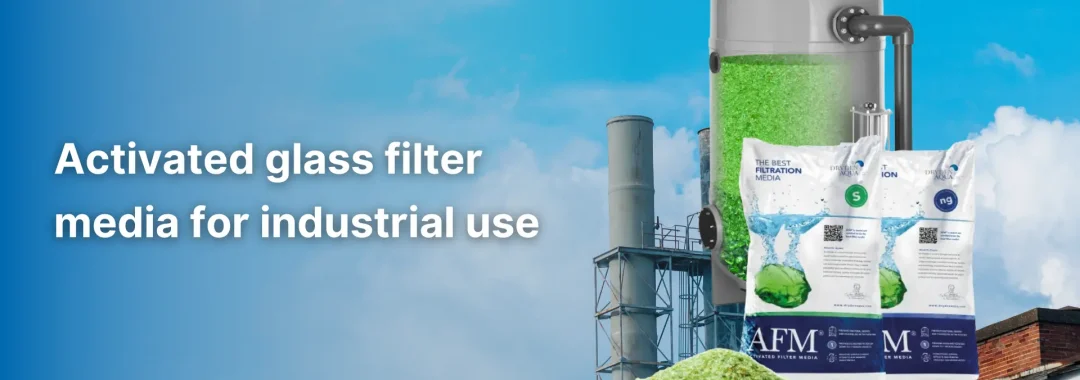
Activated glass filter media offers a bio-resistant and sustainable solution. Unlike sand, this media is manufactured from recycled green and brown glass, which undergoes a chemical and thermal activation process. This process gives the media a permanent negative surface charge, allowing it to attract and remove much smaller particles than standard sand.
Superior Bio-Resistance and Longevity
One of the most significant advantages is the prevention of biofilm. Because the surface of the glass is smooth and activated, bacteria cannot easily attach to it. Therefore, the filter remains clean for longer periods. Consequently, facilities see a reduction in chemical usage and backwash water consumption by up to 50%. For Indonesian companies looking to improve their BWRO membrane performance, starting with high-quality media is essential.
Role of Activated Glass Filter Media in Desalination
In seawater desalination (SWRO), the quality of pretreatment dictates the lifespan of the entire system. Using activated glass filter media ensures that the Silt Density Index (SDI) remains low. By removing more organic matter during the initial phase, you protect expensive downstream assets. This is particularly vital in Indonesia’s coastal industrial zones where seawater quality can fluctuate significantly.
Partnering with GLS for Total Water Solutions
Choosing the right media is only half the battle. To achieve true operational excellence, you need a partner who understands the integration of these technologies. PT. Gapura Liqua Solutions (GLS) provides end-to-end expertise in seawater desalination and resource recovery. We ensure that your activated glass filter media is perfectly calibrated within your specific system architecture.
By focusing on keunggulan sistem air RO, GLS helps procurement heads reduce Total Cost of Ownership (TCO). Whether you need to procure specialized media through Tokopedia or require a full-scale engineering overhaul, we offer the technical depth required for Indonesian industrial success.
Conclusion
Transitioning to activated glass filter media is a strategic move for any facility manager aiming for reliability and efficiency. This technology not only protects your equipment but also supports long-term sustainability goals. At PT. Gapura Liqua Solutions, we combine advanced filtration with decades of operational experience to ensure your business never stops due to water issues. For a customized evaluation of your filtration needs, please contact us today.
FAQ Section
- How long does activated glass filter media last? It typically lasts the lifetime of the filter vessel, unlike sand which requires replacement every 3–5 years.
- Can I swap sand for glass media in my existing tanks? Yes, it is a direct “drop-in” replacement that usually requires less volume than sand.
- Does it improve RO membrane lifespan? Yes, by significantly lowering the SDI and removing more particulates during pretreatment.
Follow us on Social Media


