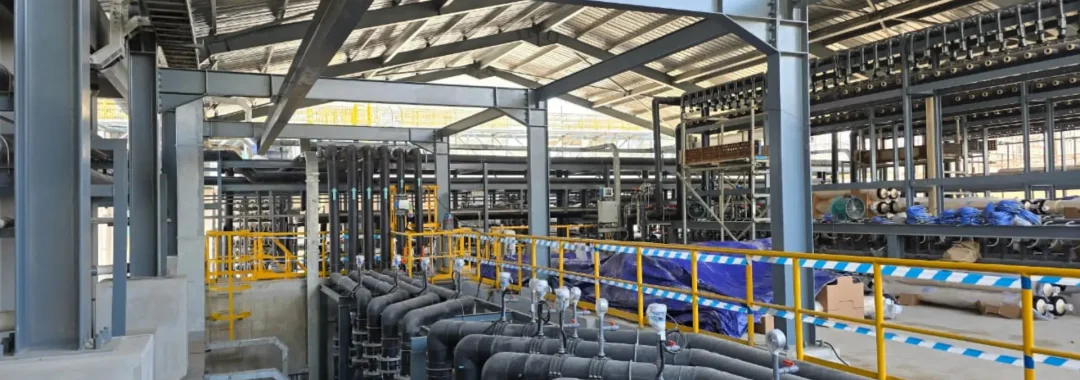
Why Choosing the Right Seawater Treatment Company Indonesia Drives OPEX
You review the monthly utility bill and notice a massive spike in power consumption. Simultaneously, operators report rising feed pressures on the SWRO skid. These issues stem directly from suboptimal desalination engineering. Therefore, hiring a competent seawater treatment company indonesia becomes a strict financial necessity. Tropical seawater contains aggressive organic loads and high salinity. Consequently, your membranes face relentless fouling pressure every single operating hour.
Facility managers often assume that standard reverse osmosis designs work anywhere. However, the reality in coastal environments proves completely different. Intake water parameters fluctuate wildly during tidal shifts. Thus, static filtration systems will inevitably trigger severe operational bottlenecks. Specifically, biological slime begins to suffocate the microscopic pores of the membranes. Ultimately, the plant must schedule emergency chemical cleanings that halt fresh water production entirely.
The Heavy Burden of SWRO Energy Consumption
Desalination requires pushing water against immense osmotic pressure. Generally, standard seawater reverse osmosis systems without energy recovery consume massive electricity. For instance, older plants often draw over 5 kWh per cubic meter of product water. Ultimately, this heavy energy penalty destroys your industrial profit margins. Therefore, competent process engineers always integrate advanced Energy Recovery Devices (ERD).
Specifically, isobaric pressure exchangers transfer reject brine pressure directly back to the feed stream. Consequently, specific energy consumption drops to a typical 2.5 to 3.0 kWh/m3. This massive reduction in power draw creates substantial financial savings annually. Therefore, correct commercial water treatment design prevents long-term budget overruns. In practice, seasoned utility managers always prioritize thermodynamic efficiency over cheap initial capital costs.
Tropical Seawater Biofouling Challenges
Indonesian coastal waters present unique biological and organic challenges. Algae blooms and high suspended solids frequently overwhelm basic sand filters. As a result, live organic matter bypasses the initial pretreatment phase. Then, bacteria rapidly colonize the expensive RO membrane surfaces. This biofilm layer drastically increases the required feed pressure.
Eventually, operators must push the pumps harder just to maintain baseline flow rates. Furthermore, tropical water temperatures accelerate this bacterial growth exponentially. Therefore, deploying robust pretreatment architecture is absolutely mandatory. Otherwise, you are simply sacrificing expensive membranes to aggressive marine biology. On the contrary, precise engineering protects your assets and extends their functional lifespan.
Core Engineering Architecture for Desalination
Building reliable seawater utilities requires strict data-driven hydraulic design. The process must handle fluctuating intake water quality smoothly and automatically. First, each filtration stage performs a highly specific protective function. Next, the system must balance flux rates to prevent localized membrane scaling. Consequently, equipment selection cannot rely on generic catalog specifications.
Flow capacities must accommodate peak industrial demands without stressing the high-pressure pumps. However, the plant must also operate efficiently during low-demand periods. As a result, deploying Variable Frequency Drives (VFD) on all major rotating equipment is highly recommended. Thus, power consumption scales proportionally with actual water production. Specifically, the following components define a resilient desalination plant.
Advanced Pretreatment and Dissolved Air Flotation
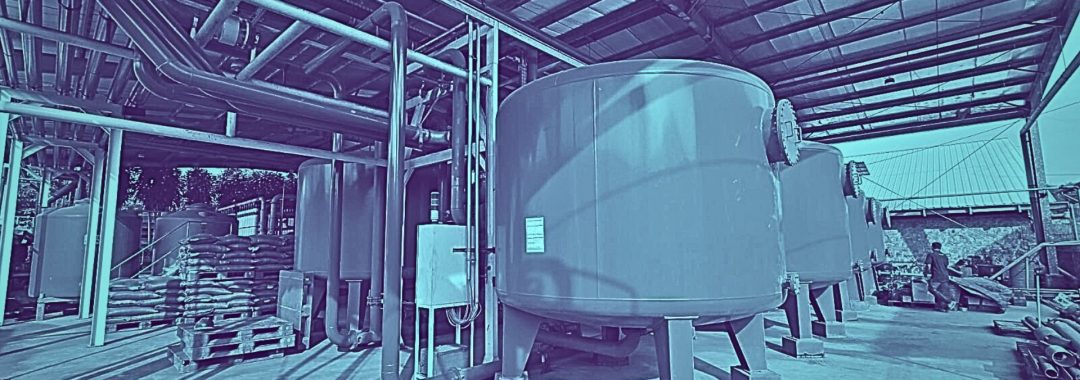
The first step focuses entirely on removing suspended solids and organic contaminants. Dissolved Air Flotation (DAF) removes algae, oils, and light organics highly effectively. Next, ultrafiltration (UF) acts as an absolute physical barrier against microscopic particulates. This precise pretreatment guarantees a consistently low Silt Density Index (SDI) for the feed water.
Consequently, the downstream RO membranes operate under ideal hydraulic conditions. Without UF or DAF, sudden changes in seawater turbidity will blind the system immediately. Therefore, automated backwash sequences are critical to maintain continuous filtration performance. For baseline potable water standards, engineers always refer strictly to the WHO Drinking Water Guidelines.
High-Pressure Pumps and Energy Recovery
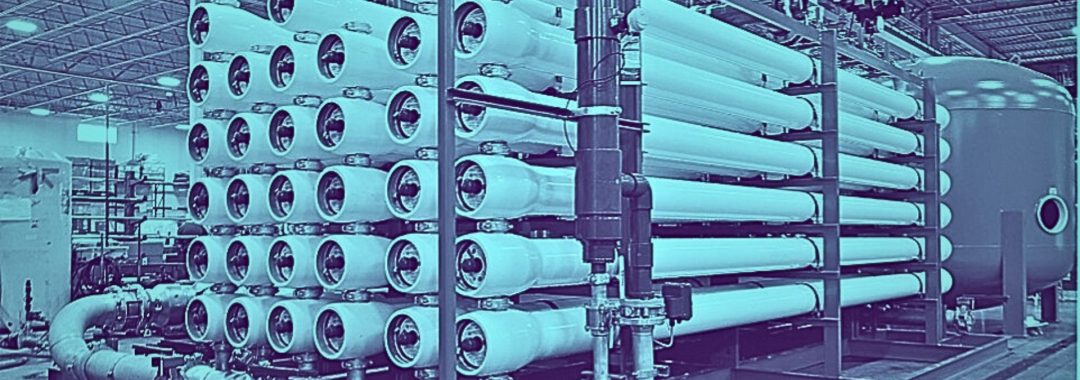
The high-pressure pump (HPP) serves as the mechanical heart of any SWRO plant. It must deliver continuous flow at intense pressures ranging from 60 to 80 bar. Unfortunately, improper metallurgy choices lead to rapid pitting corrosion. Seawater aggressively attacks standard commercial stainless steel grades. Therefore, utilizing Duplex or Super Duplex stainless steel is mandatory.
This strict material selection prevents sudden pipe ruptures and catastrophic plant downtime. Furthermore, combining these robust pumps with ERDs maximizes overall plant availability. Ultimately, disciplined engineering ensures that the mechanical components outlast the financial depreciation cycle. Moreover, safe brine discharge procedures are strictly monitored by authorities like the Ministry of Environment and Forestry (KLHK).
Simulating Your SWRO Investment ROI
Procurement managers often fixate entirely on initial CAPEX quotes. However, we must evaluate desalination through long-term operational savings. A premium seawater treatment company indonesia delivers highly measurable financial returns. In practice, operational margins improve dramatically as daily energy and chemical costs plummet.
Here are the direct business benefits of implementing precision SWRO architecture:
- Reduction in specific power consumption via high-efficiency ERD integration.
- Extension of RO membrane functional lifespan from 2 years to a typical 5 years.
- Minimization of unplanned downtime caused by severe biological fouling events.
- Lower chemical consumption for mandatory Cleaning in Place (CIP) procedures.
- Elimination of high-pressure pump corrosion failures through correct metallurgy.
Generally, investing in precision SWRO architecture targets a typical payback period of 18-24 months. Nevertheless, actual payback timelines depend heavily on local power tariffs and intake water stability. Therefore, conducting a comprehensive front-end engineering design (FEED) study is critical. This audit secures the accuracy of your financial projections.
24/7 Continuous Operation with Gapura Liqua Solutions
Keeping an industrial SWRO plant online demands deep technical expertise. You need an engineering partner who understands complex thermodynamics, membrane limits, and tropical hydrology. PT. Gapura Liqua Solutions (GLS) engineers heavy-duty desalination infrastructure to withstand severe operational shock loads. Consequently, you achieve the highest technical reliability in the market.
We prove that correct system architecture guarantees 24/7 continuous operation. Conversely, cheap components simply transfer your capital costs into staggering monthly maintenance bills. You can directly observe our field deployment standards through GLS project updates on LinkedIn. Furthermore, we consistently align our engineering practices with global frameworks like the US EPA guidelines.
Are your SWRO energy bills continuously draining your operational budget? Do not let hidden inefficiencies destroy your coastal facility’s profitability. Therefore, entrust your utility infrastructure to a proven seawater treatment company indonesia. Contact the PT. Gapura Liqua Solutions engineering team today to schedule an in-depth system audit.
FAQ Seawater Treatment
An ERD captures the hydraulic energy from the high-pressure reject brine. It transfers this pressure back to the incoming feed water. Consequently, this technology reduces the overall specific energy consumption of the plant significantly. Therefore, it is mandatory for OPEX reduction.
Tropical seawater contains massive amounts of organic matter and aggressive microorganisms. If pretreatment fails, these organisms form severe biofouling layers on the RO membranes. Consequently, feed pressure spikes and the membranes degrade rapidly. Therefore, advanced ultrafiltration is highly recommended.
Standard stainless steel corrodes rapidly under high-pressure seawater conditions. Therefore, engineers must utilize Duplex or Super Duplex stainless steel for the high-pressure side. This advanced metallurgy prevents dangerous pitting corrosion. Ultimately, it ensures safe and continuous plant operation.
With precision pretreatment and accurate chemical dosing, SWRO membranes typically last between 3 to 5 years. However, poor intake water management can destroy them within months. Therefore, maintaining strict operational logs and monitoring the Silt Density Index is critical.
Upgrading to high-efficiency pumps and advanced membranes targets a typical payback period of 18-24 months. This ROI stems primarily from massive electrical energy savings. Furthermore, reduced chemical usage and fewer membrane replacements accelerate the financial return significantly.
Follow us on Social Media