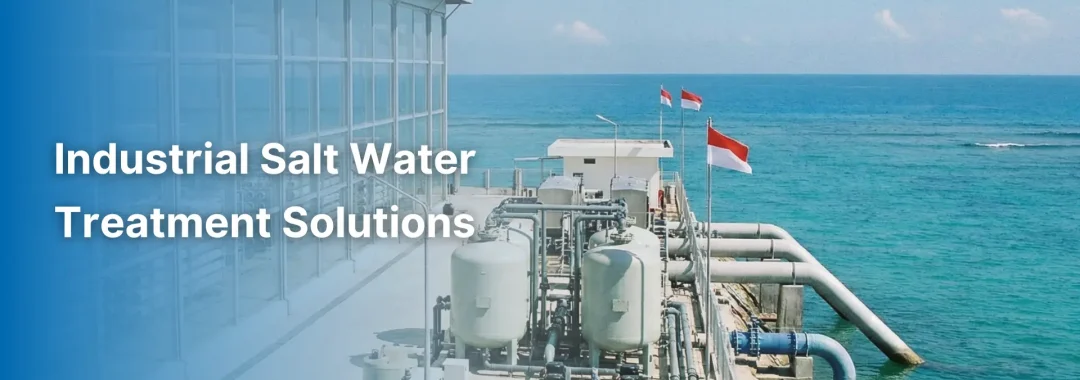
A large-scale industrial salt water treatment plant utilizing reverse osmosis pressure vessels under a clear sky in Indonesia

Industrial Salt Water Treatment Reliable Productions

Industrial Salt Water Treatment: Securing Operations Against Scarcity

For facility managers and procurement heads across Indonesia, securing a reliable, high-quality water supply is becoming increasingly complex. As freshwater sources become scarcer or contaminated due to seawater intrusion, industries are forced to look towards alternative sources: seawater and brackish groundwater. Consequently, implementing effective industrial salt water treatment is no longer an option; it is a strategic necessity for business continuity.

PT. Gapura Liqua Solutions (GLS) understands that your core business is not managing water treatment plants. However, without a reliable supply of process water, core operations grind to a halt. This article outlines the critical importance of professional desalination strategies.

The High Cost of Ignoring Salinity in Industrial Water

Utilizing water with high Total Dissolved Solids (TDS) without adequate treatment is a recipe for disaster. While the immediate availability of brackish or seawater might seem like a solution, the hidden costs are substantial.

Impact on Assets and Operational Continuity

Untreated saline water wreaks havoc on industrial infrastructure. Specifically, chlorides present in salt water are highly corrosive to metals, leading to rapid deterioration of piping, boilers, and cooling towers. Furthermore, high mineral content causes scaling, which reduces heat transfer efficiency and increases energy consumption.

Ultimately, these issues lead to unplanned downtime and expensive equipment replacement. Therefore, investing in a robust industrial salt water treatment system is essentially an insurance policy for your entire production facility.

Industrial Salt Water Treatment as a Strategic Solution

Modern desalination technology allows industries to convert virtually any saline source into high-purity process water. The most prevalent and energy-efficient method today is Reverse Osmosis (RO).

Depending on the source water salinity, systems are categorized as Seawater Reverse Osmosis (SWRO) or Brackish Water Reverse Osmosis (BWRO). To understand the benefits better, you can read about the general advantages of RO water systems.

The Role of Advanced Membrane Technology

At the heart of any RO system are the membranes. These semi-permeable barriers separate salts from water molecules under high pressure. The selection of the right Reverse Osmosis Membrane is critical and depends heavily on the specific feed water chemistry.

For facilities dealing with brackish groundwater, understanding factors affecting BWRO membrane performance is essential for optimizing lifespan and energy usage. Utilizing the correct technology turns a problematic water source into a secure, long-term asset.

Why Engineering Expertise Defines Long-Term Success

Buying equipment is easy; ensuring it runs efficiently for twenty years is difficult. Many industrial desalination projects fail not because of the technology, but due to poor system design or inadequate maintenance.

An effective industrial salt water treatment plant requires precise engineering, proper pre-treatment protocols, and energy recovery devices to keep operational expenditures (OPEX) manageable. According to the International Desalination Association, energy consumption remains a key factor in plant viability, emphasizing the need for efficient design.

Beyond Installation: The Importance of O&M

Successful water management requires a long-term view. GLS provides end-to-end systems, meaning we don’t just supply hardware; we ensure operational continuity. This includes long-term Operations & Maintenance (O&M) support, ensuring compliance with environmental regulations, and managing consumables.

Real-world application of this expertise is crucial. You can see examples of our ongoing commitment to operational excellence in our recent project updates on LinkedIn.

Conclusion

Facing water scarcity requires proactive measures. By adopting advanced industrial salt water treatment, Indonesian industries can secure their water future against operational risks. However, the technology is only as good as the partner behind it.

GLS offers the expertise to deliver reliable, end-to-end desalination solutions, allowing you to focus entirely on your core business. For convenience, you can even find essential components through our official Tokopedia store.

Do not compromise on water security. Contact PT. Gapura Liqua Solutions today to discuss your specific water challenges.

FAQ Section

Q: What is the difference between SWRO and BWRO in industrial treatment?

A: SWRO (Seawater Reverse Osmosis) treats water with very high salinity (typically >30,000 ppm TDS), requiring higher pressures and energy. BWRO (Brackish Water Reverse Osmosis) treats water that is saltier than fresh water but less salty than seawater (typically 1,000–10,000 ppm TDS), often found in coastal groundwater.

Q: How does GLS ensure the long-term reliability of a salt water treatment plant?

A: We go beyond just supplying equipment. We provide comprehensive engineering, proper pre-treatment design to protect membranes, and offer long-term Operations & Maintenance (O&M) contracts to ensure continuous, optimal performance.

Q: Is industrial salt water treatment cost-effective for my facility?

A: While the initial investment can be significant, the cost of not having reliable water—through downtime, corroded assets, or buying expensive trucked water—is often much higher. Modern energy recovery devices have also significantly reduced the OPEX of desalination.

Q: Can GLS handle high-volume water requirements for large industries?

A: Yes. GLS specializes in end-to-end industrial-scale solutions, designing systems tailored to the specific volume and quality requirements of large manufacturing and processing facilities.


    Follow us on Social Media  

                       
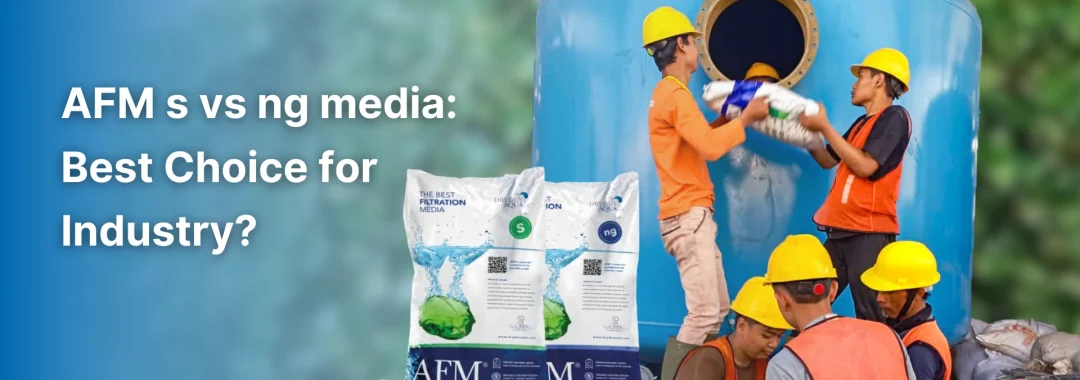
Gapura Liqua Solutions technicians loading AFM s vs ng media bags into an industrial filtration tank, showcasing the difference between standard and next-generation activated filter media.

AFM s vs ng media: Best Choice for Industry?

AFM s vs ng media: Selecting the Right Activated Filter Media for Industrial Use

For industrial facility managers in Indonesia, water treatment is not just about clarity; it is about operational continuity. The failure of a pre-treatment system often leads to rapid fouling of Reverse Osmosis (RO) membranes, resulting in unplanned downtime and skyrocketing operational costs. As the industry moves away from silica sand, the debate now centers on AFM s vs ng media.

Choosing the correct grade of Activated Filter Media (AFM) is critical for optimizing your Water Treatment Plant (WTP) or Desalination (SWRO) system. This article breaks down the technical differences to help you make an informed procurement decision.

Understanding the Core Technology: What is AFM?

Before diving into the AFM s vs ng media comparison, it is essential to understand why AFM outperforms traditional sand. Unlike crushed glass or silica sand, AFM is manufactured from processed green and brown glass that undergoes a specific chemical activation process.

This process increases the surface area up to 300 times compared to sand and creates a “self-sterilizing” surface. This feature prevents the growth of biofilm—the slimy bacterial layer that causes channeling and inconsistent filtration in standard sand filters.

Detailed Breakdown: AFM s vs ng media

The manufacturer, Dryden Aqua, produces two distinct types of activated media. While both offer superior filtration over sand, they serve different technical requirements.

AFM Grade s (Standard): The Negatively Charged Defender

AFM ‘s’ (Standard) is the established benchmark for high-performance filtration. During manufacturing, the glass surface acquires a strong negative zeta potential.

  • Mechanism: The negative charge repels bacteria, preventing them from adhering to the media. This prevents biofilm formation, ensuring that the filter bed remains clean and predictable.
  • Performance: It effectively removes heavy metals and reduces turbidity.
  • Best Use: Swimming pools, aquaculture, and standard pre-filtration where biofouling control is the primary concern.

AFM Grade ng (Next Generation): The Hydrophobic Specialist

The ‘ng’ stands for “Next Generation.” This media undergoes a different activation process to make the surface hydrophobic (water-repelling) while maintaining a neutral charge.

  • Mechanism: Because organic contaminants and microplastics are typically non-polar (hydrophobic), they are attracted to the hydrophobic surface of AFM ng like a magnet.
  • Performance: It offers a finer filtration rating. While AFM s filters down to 4 microns, AFM ng achieves a filtration rating of 1 micron.
  • Best Use: Industrial wastewater, tertiary treatment, and protection of high-value SWRO membranes where removing organics and microplastics is non-negotiable.

Comparative Performance: The Verdict

To visualize the AFM s vs ng media difference, consider this comparison of capabilities relevant to Indonesian industrial standards:

FeatureAFM s (Standard)AFM ng (Next Gen)
Surface ChemistryNegatively ChargedHydrophobic (Neutral)
Filtration Rating~4 Microns1 Micron
Organic RemovalGoodExcellent
Microplastic RemovalModerateSuperior
Bio-ResistanceHighHigh
ApplicationGeneral Water TreatmentCritical RO Pre-treatment

Why Your Choice Matters for RO Protection

For plants utilizing Seawater Reverse Osmosis (SWRO) or Brackish Water Reverse Osmosis (BWRO), the Silt Density Index (SDI) is a key performance indicator. High SDI values effectively kill RO membranes.

By utilizing AFM ng, you can significantly lower the SDI compared to sand or standard glass. The removal of sub-micron particles and organics means your RO membranes require less frequent Chemical Cleaning (CIP). This directly extends the lifespan of your membranes, which you can source directly through our Reverse Osmosis Membrane catalog.

Furthermore, reliable pre-treatment reduces the energy load on high-pressure pumps, contributing to lower operational expenses (OPEX).

Case Application: When to Upgrade to ng?

If your facility faces strict environmental regulations regarding microplastics or deals with high organic loads (TOC), the upgrade to AFM ng is justified. For example, textile or pharmaceutical plants in Java often struggle with complex wastewater streams. In these scenarios, the superior adsorption capacity of AFM ng provides the necessary buffer to ensure compliant effluent discharge.

However, procurement involves more than just buying media; it requires engineering the system for backwash efficiency and flow rates.

Sustainable Partnership with Gapura Liqua Solutions

At PT. Gapura Liqua Solutions, we do not just supply media; we engineer solutions. Whether you are retrofitting an existing sand filter or designing a new desalination plant, our team ensures that the AFM s vs ng media decision aligns with your long-term commercial goals.

We provide end-to-end support, from selecting the right media grade to full-scale engineering and maintenance. For urgent replacements or pilot tests, you can also view our ready stock components on Tokopedia.

Conclusion

The debate of AFM s vs ng media ultimately depends on your water quality targets. AFM s offers robust bio-resistance for general applications, while AFM ng delivers precision filtration for critical industrial processes and RO protection.

Do not gamble with water quality. Secure your operation’s reliability today. Contact PT. Gapura Liqua Solutions for a technical consultation and ensure your filtration system is built for the future.

Q: Can I mix AFM s and AFM ng in the same filter vessel?

A: Generally, it is recommended to use a single grade for consistent performance. However, layered configurations exist. Consult with GLS engineers to determine if a mixed bed is suitable for your specific vessel design.

Q: How often does AFM media need to be replaced?

A: Unlike silica sand, which requires replacement every 3–5 years, AFM can last over 10 years due to its resistance to biofouling and mechanical attrition, offering a better long-term ROI.

Q: Does AFM ng require special backwashing procedures?

A: AFM ng utilizes standard backwash protocols but is more efficient than sand. It requires significantly less water to clean—up to 50% less backwash water consumption is common, saving valuable process water.

Q: Is AFM suitable for seawater desalination pre-treatment?

A: Yes, it is ideal. AFM ng is specifically used in SWRO plants to lower SDI (Silt Density Index) below 3, which significantly protects sensitive RO membranes from particulate fouling.

Follow us on Social Media

Facebook Instagram LinkedIn
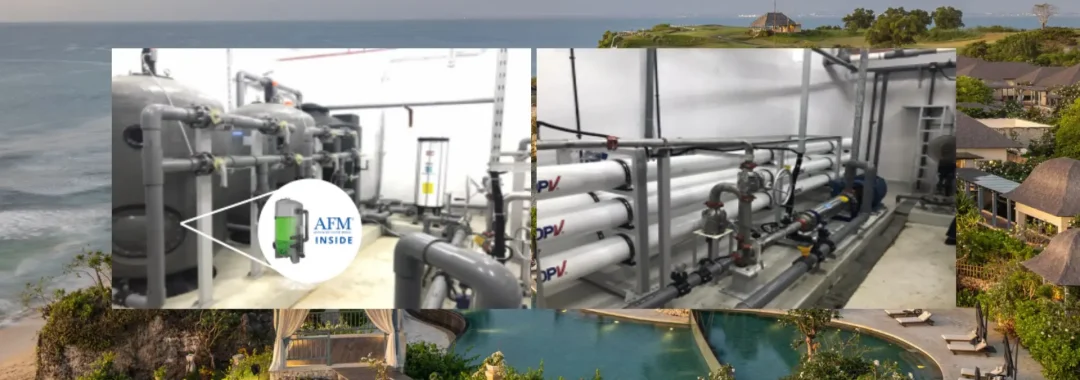
Desalination plant at Jumeirah Bali using Activated Filter Media (AFM) and Sea Water Reverse Osmosis (SWRO) for sustainable water treatment.

Jumeirah Bali Desalination Plant: AFM and SWRO

Introduction

Luxury coastal resorts must manage water supply carefully. At Jumeirah Bali, the resort installed a desalination plant combining Activated Filter Media (AFM) and Sea Water Reverse Osmosis (SWRO) to ensure sustainable, high-quality water for its operations. According to the group, it features one of the region’s most advanced desalination solutions to avoid stressing Bali’s fragile freshwater resources (Jumeirah).


Challenges Faced by Jumeirah Bali Desalination Plant

Resort-scale seawater desalination comes with several obstacles:

  • High turbidity and suspended solids in seawater intake
  • Need for robust pre-treatment to protect SWRO membranes
  • Maintaining cost efficiency (OPEX, CAPEX) for long-term operations
  • Environmental considerations like brine discharge and energy demand (ScienceDirect)

Technical Solution: AFM Filtration and SWRO in Industrial Desalination Systems

AFM Filtration in Jumeirah Bali Desalination Plant

  • Seawater intake filtered through AFM Grades 1–3.
  • AFM effectively reduced colloidal matter, suspended solids, and organic load.
  • Research shows AFM can outperform sand filters in reducing turbidity and SDI (ResearchGate).

👉 Learn more about our Water Treatment Supply solutions.

SWRO System for Seawater Desalination

  • Post AFM, seawater processed through SWRO membranes.
  • Reduced turbidity and lower SDI safeguarded RO performance.
  • External studies note that SWRO is effective but requires careful energy optimization and brine management (Frontiers in Water).

👉 See our Reverse Osmosis Membrane product page.


Performance Results of Jumeirah Bali Industrial Desalination System

The desalination plant achieved:

  • Turbidity: reduced from 3–4 NTU → 0.2 NTU
  • SDI: lowered from 5–6 → <3
  • Suspended solids: reduced from 10–12 mg/L → <2 mg/L
  • Capacity: 400 CMD (2021) and 300 CMD (2023)

These results highlight how AFM filtration + SWRO desalination produced stable, cost-efficient operations at Jumeirah Bali.


Sustainability and Benefits of Seawater Desalination at Jumeirah Bali

  • Long-term OPEX and CAPEX savings
  • Stable performance of industrial desalination systems
  • Reduction in freshwater dependency in Pecatu, Bali
  • Alignment with global resort sustainability standards (Destinasian)

👉 Explore our expertise in Seawater Treatment and Desalination Technologies.


Conclusion: Jumeirah Bali Desalination Plant as a Model for Resorts

The Jumeirah Bali Desalination Plant proves how industrial desalination systems combining AFM pre-filtration and SWRO technology can ensure clean, reliable, and sustainable water supply for luxury hospitality. By addressing turbidity, SDI, and suspended solids, this project demonstrates best practices for future resort-scale desalination projects in Southeast Asia.


❓ FAQ About Jumeirah Bali Desalination Plant

1. What is the Jumeirah Bali Desalination Plant?
It is a seawater treatment facility at Jumeirah Bali that uses Activated Filter Media (AFM) and Sea Water Reverse Osmosis (SWRO) to produce clean, sustainable water for resort operations.

2. Why does Jumeirah Bali need a desalination plant?
The resort is located in Pecatu, Bali, where freshwater resources are limited. Desalination reduces dependency on local water supplies and ensures sustainability.

3. How does AFM improve desalination at Jumeirah Bali?
AFM filtration removes turbidity, colloids, and suspended solids, lowering the SDI index. This extends the lifespan of SWRO membranes and reduces operational costs.

4. What are the results of the desalination system?
The system reduced turbidity from 3–4 NTU to 0.2 NTU, suspended solids from 10–12 mg/L to <2 mg/L, and stabilized SDI below 3.

5. Is seawater desalination sustainable for resorts?
Yes, when paired with technologies like AFM and energy-optimized SWRO, desalination provides resorts with reliable water while reducing environmental impact.

Follow us on Social Media

Facebook Instagram LinkedIn