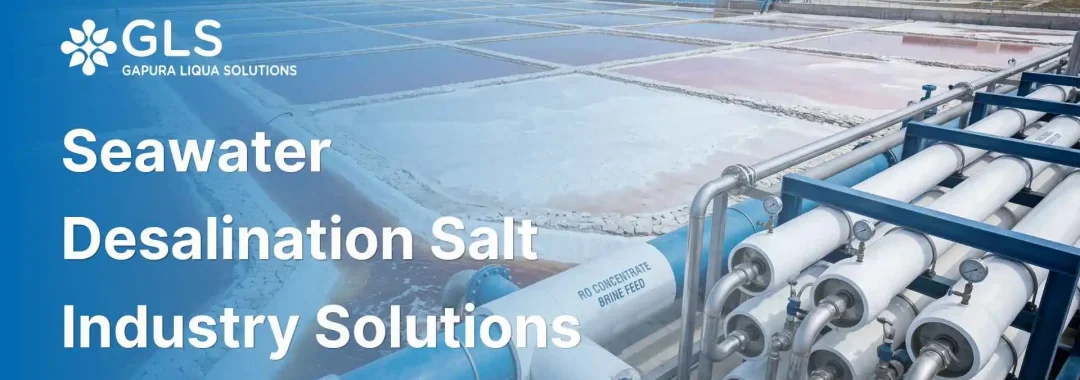
Reverse osmosis system pre-concentrating seawater brine for salt industry production

Seawater Desalination Salt Industry Solutions

Seawater Desalination Salt Industry Solutions: Turning Brine Into a Competitive Advantage

For most salt producers, profitability comes down to one factor: energy. Traditionally, salt makers relied almost entirely on the sun to convert seawater into crystallized salt. They used vast solar evaporation ponds that take months to concentrate brine to the point of crystallization. However, fuel and land costs keep climbing. As a result, more facilities now turn to seawater desalination salt industry solutions. Reverse osmosis (RO) is the leading choice. It mechanically pre-concentrates brine before the brine reaches the evaporation pans. Forward-looking plants no longer treat desalination and salt production as separate processes. Instead, they combine both into a single, energy-efficient system.

Why Salt Industries Are Turning to Seawater Desalination

The Traditional Solar Evaporation Bottleneck

Conventional salt production depends on gradually evaporating seawater across large open ponds. Salinity must rise high enough for sodium chloride to crystallize. This method is simple, yet it is also slow, land-intensive, and highly dependent on weather. Consequently, rainy seasons and periods of low solar irradiance cause production output to drop sharply. Facilities then struggle to meet delivery schedules.

Indonesia’s Push Toward Salt Self-Sufficiency

This challenge is especially pressing in Indonesia. The Ministry of Marine Affairs and Fisheries (KKP) confirms this gap. Indonesia still imports a significant share of its industrial-grade salt. National policy under Presidential Regulation No. 17/2025 now targets full salt self-sufficiency by 2027. This target includes supply for the pharmaceutical, chemical, and oil-drilling sectors. As a result, domestic producers face growing pressure to modernize their processes and increase yield. At the same time, they must do this without simply expanding pond area, since coastal land is often scarce.

How Reverse Osmosis Pre-Concentration Works

From Seawater to Brine — The RO Process

An RO-based seawater desalination salt industry system skips reliance on evaporation alone. High-pressure pumps push raw seawater against a semi-permeable membrane. This process mechanically separates roughly 40–50% of the water volume from the feed stream. The result is a significantly more concentrated brine before it ever reaches the ponds. Meanwhile, the facility can reuse the freshwater permeate produced during this stage elsewhere, which further improves overall water efficiency.

Energy Savings Compared to Thermal Evaporation

Thermal evaporation, by contrast, consumes substantial amounts of steam or fuel to boil off water. RO pre-concentration removes a large share of that water mechanically instead. This step dramatically reduces the thermal load on downstream crystallizers. Therefore, facilities that adopt this hybrid approach typically see meaningful reductions in fuel consumption per ton of salt produced.

Key Benefits for Salt Production Facilities

Faster Crystallization, Smaller Pond Footprint

RO-concentrated brine starts the evaporation stage at a much higher salinity. As a result, it reaches crystallization point far more quickly than raw seawater. Consequently, plants can shrink their pond footprint for the same output. Alternatively, they can scale up production without acquiring additional land — a critical advantage in space-constrained coastal areas.

Higher, More Consistent Salt Purity

Membrane filtration also removes suspended solids, organic matter, and certain trace contaminants before the brine reaches the ponds. This pre-treatment step creates a cleaner feed stream. A cleaner feed stream, in turn, supports more consistent crystal quality. That consistency matters most for industries such as pharmaceuticals and food processing, which demand high-purity salt.

Designing a Seawater Desalination System for Salt Industry Use

Pre-Treatment: Protecting the RO Membrane

Raw seawater intake often contains high turbidity, suspended solids, and organic load. For this reason, robust pre-treatment must happen before water reaches the RO membranes. Media filtration, such as Activated Filter Media (AFM), works alongside antiscalant dosing to prevent fouling and scaling. Without this step, membrane lifespan shortens and maintenance costs rise.

Membrane Selection for High-Salinity Feed

Salt industry feed water sits at or near full seawater salinity. Engineers must therefore design membrane selection and staging specifically for high-pressure, high-recovery operation. Choosing the wrong membrane configuration can trigger premature fouling or excessive energy consumption. Either outcome undermines the very savings the system should deliver.

Managing Reject Brine and Byproducts

The RO process naturally produces a concentrate stream. In a salt production context, this stream is not waste — it is the intended product. That said, facilities still need a clear plan for handling variable flow rates and monitoring salinity consistency. Engineers must also integrate the RO output smoothly into existing pond or crystallizer operations. Proper system design keeps this transition free of bottlenecks.

When Salt Producers Should Consult a Desalination Specialist

Does your facility struggle with inconsistent output during rainy seasons? Do land constraints limit your pond expansion? Are industrial buyers demanding stricter purity? If so, it pays to speak with a specialist early. This step lets engineers size and design the system correctly from the start. It also avoids costly retrofits after inefficiencies have already hurt production.

Conclusion — GLS as Your Salt Industry Desalination Partner

Ultimately, combining seawater desalination salt industry technology with traditional solar evaporation offers a practical path forward. It delivers higher yield, lower fuel costs, and more resilient production, regardless of season. PT. Gapura Liqua Solutions (GLS) brings hands-on experience in seawater reverse osmosis, brackish water treatment, and reverse osmosis-based salt production systems. This experience lets salt producers modernize their operations while staying focused on their core business. Want to explore how an RO pre-concentration system could fit your facility? Reach out to the GLS team through our contact page.

FAQ Section

1. What is seawater desalination for the salt industry? It refers to using reverse osmosis (RO) to mechanically pre-concentrate seawater into a stronger brine before it enters solar evaporation ponds, rather than relying on evaporation alone to reach crystallization salinity.

2. How much energy can RO pre-concentration save? Because RO removes a significant portion of water mechanically rather than through heat, facilities that adopt it typically see a meaningful drop in fuel or steam consumption per ton of salt produced compared to purely thermal methods.

3. Does RO pre-concentration replace evaporation ponds entirely? No. RO pre-concentration works alongside evaporation ponds, not instead of them. It reduces the volume of water the ponds must evaporate, which speeds up crystallization and reduces the required pond area.

4. What pre-treatment is needed before RO for salt production? Raw seawater intake typically requires filtration (such as Activated Filter Media) and antiscalant dosing to remove suspended solids and prevent scaling, protecting the RO membranes from premature fouling.

5. Is this technology relevant to Indonesia’s salt industry specifically? Yes. With national policy targeting salt self-sufficiency by 2027 and continued reliance on imported industrial-grade salt, Indonesian producers have strong incentive to adopt technologies that increase yield and purity without expanding land use.

Follow us on Social Media

Facebook Instagram LinkedIn
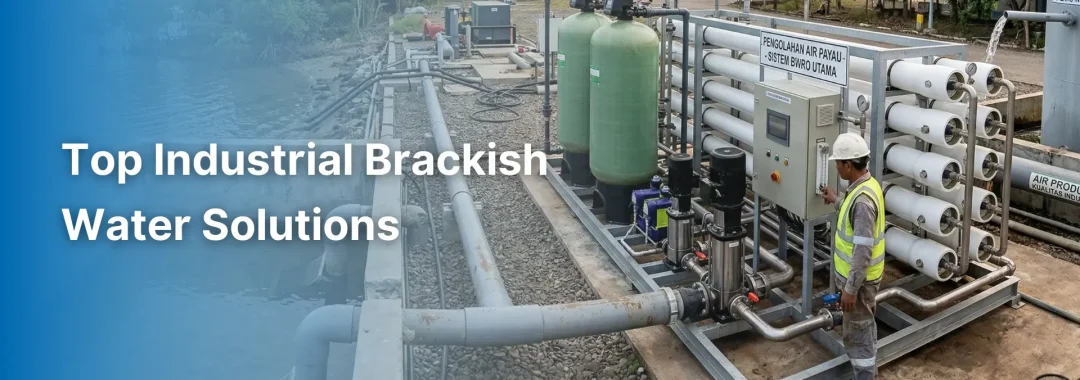
An industrial facility manager inspecting the pressure vessels of high-efficiency industrial brackish water solutions designed by Gapura Liqua Solutions.

Top Industrial Brackish Water Solutions

Securing Plant Utilities with Industrial Brackish Water Solutions

Industrial facility managers in Indonesia constantly battle the challenge of securing consistent, high-quality water supplies. Consequently, as coastal aquifers face seawater intrusion and inland groundwater sources degrade, raw water salinity is steadily increasing. Therefore, relying on standard filtration is no longer sufficient. Implementing advanced industrial brackish water solutions provides a decisive approach to overcoming these utility hurdles. Indeed, this technology separates dissolved salts efficiently, ensuring strict operational compliance while protecting vital plant infrastructure.

Furthermore, integrating advanced desalination is not merely a reactive measure. Instead, it serves as the foundational step toward sustainable resource recovery and long-term operational longevity.

The Problem with High Salinity Groundwater

Factories across the manufacturing, food, and petrochemical sectors require pristine water to operate properly. Therefore, managing brackish water streams effectively becomes a top priority for procurement and facility teams.

Scaling, Corrosion, and Equipment Failure

Brackish water contains moderate levels of dissolved salts, typically ranging between 1,000 and 10,000 parts per million (ppm) of Total Dissolved Solids (TDS). Because these minerals do not settle via gravity, they easily pass through conventional media filters. Subsequently, these hard minerals create severe scaling inside boilers, cooling towers, and heat exchangers.

Furthermore, high chloride concentrations accelerate pipeline corrosion. Thus, facilities face a high risk of catastrophic equipment failure and skyrocketing maintenance costs if these parameters remain unchecked.

How Industrial Brackish Water Solutions Provide the Answer

To resolve these contamination issues, engineers utilize membrane-based separation technologies. Specifically, highly engineered industrial brackish water solutions force pressurized water through microscopic barriers to remove dissolved impurities.

The Mechanics of Reverse Osmosis (RO)

The core technology driving these solutions is Reverse Osmosis (RO). First, high-pressure pumps push the saline feed water against a semi-permeable membrane. Next, the membrane allows pure water molecules to pass through while rejecting up to 99% of dissolved salts and organics.

Ultimately, this process produces a highly purified permeate stream ready for industrial use. To fully understand the operational benefits, you can explore the advantages of RO systems on our dedicated technical page.

Pre-Treatment and Membrane Protection

By removing heavy particulate loads early, comprehensive pre-treatment effectively protects downstream filtration assets. For instance, feeding correctly pre-treated water significantly enhances BWRO membrane performance. Additionally, utilizing properly specified Reverse Osmosis Membrane elements prevents premature fouling and ensures maximum lifecycle value. Should your facility require immediate consumable replacements, securing high-quality components is critical for maintaining flow rates.

Ensuring Long-Term Reliability and Efficiency

Environmental compliance and operational efficiency go hand in hand. Thus, utilizing robust industrial brackish water solutions helps facilities avoid sudden production halts. Moreover, integrating this separation technology promotes resource recovery. Facilities can safely recycle polished effluent or recover concentrated brines, drastically lowering daily water consumption and aligning with green industry standards.

Partnering with PT. Gapura Liqua Solutions

Sourcing reliable equipment and expert engineering remains a top priority for decision-makers. Therefore, PT. Gapura Liqua Solutions (GLS) offers comprehensive engineering, procurement, and construction (EPC) services. We tailor every installation to meet your specific water chemistry and production demands.

Additionally, we provide easy access to critical spare parts and consumables via our official Tokopedia store. Furthermore, you can view our successful, real-world implementations through our recent LinkedIn project updates, showcasing our deep commitment to engineering excellence.

Conclusion

Ultimately, establishing modern industrial brackish water solutions secures your facility’s operational future and process stability. PT. Gapura Liqua Solutions acts as your ideal expert partner in this critical journey. We explicitly link our expertise in seawater desalination (SWRO), advanced resource recovery, and long-term operations to guarantee your facility’s success. Therefore, do not leave your water supply to chance. Contact PT. Gapura Liqua Solutions today to discuss your next water treatment project and achieve total operational peace of mind.

FAQ

Q: What defines water as “brackish” in an industrial context? A: Brackish water possesses a salinity level between fresh water and seawater. Typically, it contains Total Dissolved Solids (TDS) ranging from 1,000 to 10,000 parts per million (ppm). Because it is highly corrosive and causes scaling, it requires specialized membrane treatment before industrial use.

Q: How do industrial brackish water solutions differ from seawater systems (SWRO)? A: While both utilize reverse osmosis, brackish water systems operate at significantly lower pressures because the incoming water has a lower osmotic pressure than seawater. Consequently, BWRO systems consume much less energy and utilize different membrane specifications compared to SWRO plants.

Q: Can a BWRO system help my facility achieve zero liquid discharge (ZLD)? A: Yes. Integrating a BWRO system is a highly effective step in resource recovery. By purifying and recycling wastewater or brackish sources, the system drastically reduces liquid waste volume, which represents a crucial phase in achieving full Zero Liquid Discharge (ZLD) objectives.

Q: Does GLS provide long-term maintenance for these treatment plants? A: Absolutely. PT. Gapura Liqua Solutions provides comprehensive Operations and Maintenance (O&M) contracts. Specifically, we handle everything from routine chemical dosing and membrane cleaning to full facility operation, ensuring your system runs optimally for decades.

Follow us on Social Media

Facebook Gapura Liqua - industrial brackish water solutions Instagram Gapura Liqua - industrial brackish water solutions LinkedIn Gapura Liqua - industrial brackish water solutions

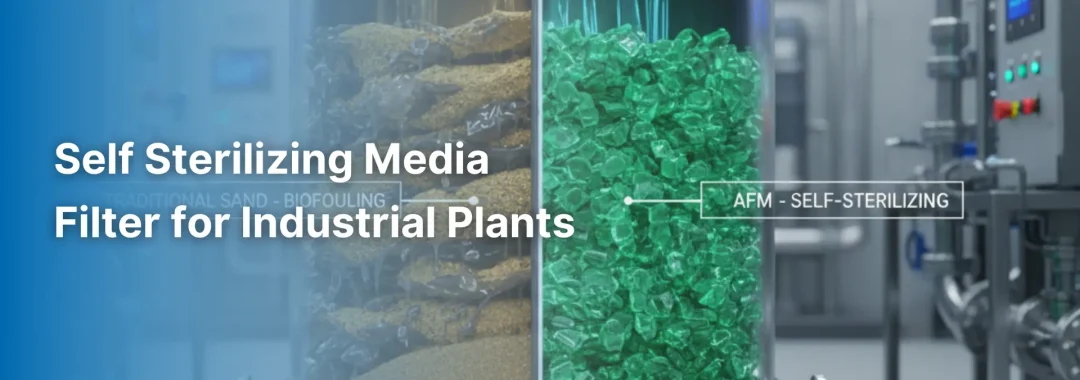
Industrial self sterilizing media filter installation

Self Sterilizing Media Filter for Industrial Water | GLS

Enhancing Industrial Water Pre-treatment with Self Sterilizing Media Filter Technology

In the demanding environment of Indonesian industrial utilities, the efficiency of pre-treatment systems dictates the lifespan of the entire water circuit. As facilities strive for higher operational uptime, many are pivoting toward the self sterilizing media filter, specifically utilizing Activated Filter Media (AFM). This shift is driven by the need to combat the persistent threat of biological growth within filtration beds, which often compromises downstream reverse osmosis membranes.

The Biofouling Challenge in Industrial Filtration

Traditional filtration methods often become breeding grounds for bacteria. When organic matter is trapped in standard media, it creates a biofilm that leads to “channeling.” This reduces the quality of the water and increases the frequency of backwashing.

Why Conventional Sand Filters Fail in Industrial Utilities

Sand is silica-based and chemically inert, allowing bacteria to colonize the surface of the grains. This biofilm acts as a “glue,” sticking grains together and increasing the pressure drop across the vessel. For a Facility Manager, this means higher energy costs and inconsistent water quality.

The AFM Advantage: A True Self Sterilizing Media Filter

Activated Filter Media (AFM) is a direct replacement for sand, manufactured from green glass and activated through a unique chemical and thermal process. This results in a self sterilizing media filter that prevents bacteria from ever attaching to the surface.

Performance MetricStandard Silica SandAFM (Self-Sterilizing)
Filtration Grade20 microns< 5 microns
Bio-ResistanceNone (Biofilm forms)High (Self-sterilizing)
Backwash WaterHigh volume required50% less water used
Lifespan2–3 yearsOver 15 years

Catalytic Oxidation and Bio-Resistance Explained

The surface of AFM has a high negative charge and catalytic properties. When water flows through, it creates small amounts of free radicals (OH) on the surface, which act as a disinfectant. This is what makes it a self sterilizing media filter. By removing the biological load at the pre-treatment stage, you significantly improve BWRO membrane performance and reduce the need for aggressive chemical cleaning.

Why PT. Gapura Liqua Solutions Integrates AFM in Systems

At PT. Gapura Liqua Solutions (GLS), we specialize in end-to-end engineering that prioritizes long-term reliability. We integrate self sterilizing media filter technology into our SWRO and BWRO systems because it allows our clients to focus on their core business without worrying about sudden utility failures.

By utilizing the keunggulan sistem air RO equipped with AFM, industrial plants in Indonesia can achieve lower TDS levels and superior permeate quality while reducing their environmental footprint.

Conclusion: Sustainable Water Reliability for Indonesian Industry

Investing in a self sterilizing media filter is a strategic decision for any technical director aiming for resource recovery and efficiency. AFM technology provides the stability required for modern industrial processes, ensuring that your water supply remains a silent partner in your success, not a constant maintenance headache.

To upgrade your current filtration system or design a new utility plant, Contact us at GLS.

FAQ Section

Q: How does a self sterilizing media filter reduce chemical costs?

A: Since the media prevents biofilm formation, there is less organic matter reaching the RO membranes. This reduces the frequency of CIP (Cleaning In Place) and the volume of biocides required.

Q: Can I replace my existing sand with AFM?

A: Yes, AFM is a 1:1 replacement for sand in existing pressure vessels, though we recommend a system audit to optimize backwash flow rates.

Q: Is this technology effective for seawater desalination?

A: Absolutely. In seawater applications, biofouling is the leading cause of membrane failure. AFM provides a critical protective barrier.

Follow us on Social Media

Facebook Instagram LinkedIn