Tips memilih RO industri untuk efisiensi sistem pengolahan air pabrik PT Gapura Liqua Solutions

Tips Memilih RO Industri Tepat

Tips Memilih RO Industri untuk Efisiensi OPEX Maksimal

Sistem pengolahan air adalah investasi krusial bagi pabrik. Oleh karena itu, kesalahan memilih spesifikasi akan memicu pemborosan anggaran. Penerapan Tips Memilih RO Industri secara tepat membantu Anda menghindari kerugian operasional. Selain itu, sistem yang efisien menjamin pasokan air bersih secara konsisten.

Mengapa Pemilihan Sistem RO Mempengaruhi Profitabilitas Pabrik?

Air utilitas bukanlah sekadar komponen pendukung operasi. Sebaliknya, air adalah aset penting dalam rantai produksi manufaktur.

Risiko Investasi pada Sistem RO yang Kurang Tepat

Sistem RO yang buruk bertindak seperti ember bocor. Akibatnya, biaya operasional (OPEX) pabrik akan membengkak drastis.

Berikut adalah kerugian akibat kesalahan pemilihan unit RO:

  • Konsumsi listrik tinggi: Pompa beroperasi melebihi kapasitas ideal.
  • Penggantian membran berulang: Pori-pori cepat rusak akibat Fouling Membran RO yang parah.
  • Downtime produksi tinggi: Pabrik sering terhenti karena perbaikan mendadak.
  • Pemborosan bahan kimia: Dosing antiscalant berlebihan tanpa hasil optimal.

Panduan Lengkap dan Tips Memilih RO Industri

Memilih unit RO butuh pertimbangan teknis secara mendalam. Oleh sebab itu, simak panduan utama berikut ini.

Analisis Karakteristik Air Baku dan Baku Mutu Target

Langkah awal adalah menguji parameter air baku secara rinci. Selanjutnya, tentukan baku mutu air permeat yang dibutuhkan.

Menurut standar mutu industri dari Kementerian Perindustrian, kualitas air mempengaruhi keawetan mesin utilitas. Selain itu, pedoman standar air bersih WHO menekankan pentingnya bebas dari kontaminan.

Evaluasi Teknologi Pretreatment dan Jenis Membran

Sistem penyaringan awal menentukan daya tahan unit utama. Oleh karena itu, integrasikan Pretreatment RO System yang tangguh sebelum unit RO.

Langkah ini mencegah timbulnya Scaling Membran RO yang kerap merusak elemen membran. Selanjutnya, pastikan pengaplikasian Dosis Antiscalant RO dilakukan secara akurat.

Kebutuhan Konsumsi Energi dan Efisiensi Pompa

Konsumsi energi adalah porsi biaya terbesar pada sistem RO. Namun, penggunaan teknologi Energy Recovery Device (ERD) mampu memangkas listrik.

Riset teknis pada jurnal ScienceDirect membuktikan bahwa ERD menekan biaya hingga 30%. Oleh karena itu, pilihlah vendor yang menawarkan rekayasa hemat energi.

💡 Checklist Utama Sebelum Membeli Sistem RO

  • Uji Air Baku: Analisis lengkap TDS, Silika, Hardness, dan SDI.
  • Pretreatment Lengkap: Filter media, multimedia, dan dosing kimia.
  • Spesifikasi Pompa: Gunakan High-Efficiency Pump dan ERD.
  • Kemudahan Pemeliharaan: Akses jalur Cleaning Membran RO yang terintegrasi.

Kalkulasi ROI dan Penghematan Biaya Operasional

Sistem RO berkualitas merupakan investasi jangka panjang. Oleh karena itu, jangan hanya tergiur harga murah di awal.

Dengan menerapkan Tips Memilih RO Industri yang benar, Anda memperoleh manfaat berikut:

  • Penurunan Biaya Listrik: Penghematan hingga 15–20% tiap bulan.
  • Panjang Usia Membran: Membran bertahan 3 hingga 5 tahun.
  • Penghematan Air Baku: Tingkat recovery air mencapai 75–85%.
  • Pengembalian Modal Cepat: Masa ROI tercapai dalam 18–24 bulan.

Oleh sebab itu, standar efisiensi ini sejalan dengan panduan pengolahan air dari US EPA.

Menjamin Operasi 24/7 Tanpa Henti Bersama PT. Gapura Liqua Solutions

Setiap industri membutuhkan kemitraan yang dapat diandalkan. Oleh karena itu, PT. Gapura Liqua Solutions (GLS) siap menjadi mitra strategis Anda.

GLS memiliki pengalaman luas dalam desain Design & Build (EPC) serta Operations & Maintenance (O&M). Selain itu, kami memberikan jaminan keandalan teknis untuk mendukung operasi 24/7 tanpa henti pabrik Anda.

Anda dapat melihat bukti keberhasilan rekayasa kami melalui GLS LinkedIn Project Update.

Kesimpulannya, penerapan Tips Memilih RO Industri memberikan dampak langsung pada profitabilitas perusahaan. Percayakan kebutuhan pengolahan air Anda kepada PT. Gapura Liqua Solutions. Hubungi tim ahli kami sekarang untuk berkonsultasi mengenai solusi air terintegrasi.

Q: Mengapa pengujian air baku sangat penting sebelum memilih sistem RO industri?

A: Pengujian air baku mengetahui kadar TDS, total hardness, dan silika secara detail. Informasi ini menentukan jenis pretreatment dan membran yang tepat agar sistem tidak cepat rusak.

Q: Apa akibatnya jika pabrik membeli unit RO tanpa sistem pretreatment yang memadai?

A: Tanpa pretreatment memadai, membran RO akan cepat mengalami scaling dan fouling. Akibatnya, biaya penggantian membran membengkak dan downtime produksi meningkat tajam.

Q: Berapa lama estimasi ROI saat berinvestasi pada sistem RO industri berkualitas?

A: Pengembalian investasi (ROI) biasanya tercapai dalam kurun waktu 18 hingga 24 bulan melalui penghematan energi listrik, penurunan pemakaian chemical, dan efisiensi biaya perawatan.

Q: Bagaimana PT. Gapura Liqua Solutions mendukung operasional pabrik tanpa gangguan?

A: PT. Gapura Liqua Solutions (GLS) merancang sistem EPC sesuai kebutuhan spesifik dan menyediakan kontrak O&M. Hal ini menjamin keandalan teknis tinggi serta mendukung operasi 24/7 tanpa henti.

Follow us on Social Media

Facebook Gapura Liqua Solutions Instagram Gapura Liqua Solutions LinkedIn Gapura Liqua Solutions
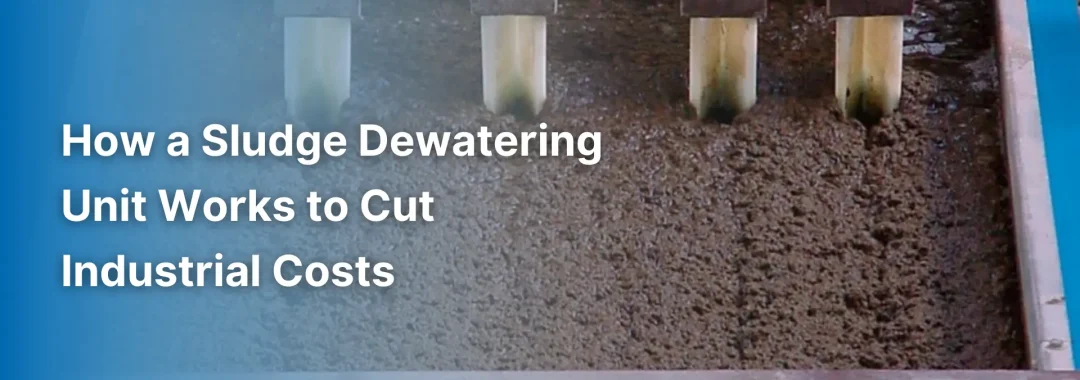
An industrial engineer inspecting a modern system to ensure the sludge dewatering unit works perfectly for volume reduction

Sludge Dewatering Unit Works Explained

How a Sludge Dewatering Unit Works to Cut Industrial Costs

For industrial facility managers in Indonesia, wastewater treatment generates a massive byproduct: liquid sludge. Consequently, handling, transporting, and disposing of this heavy, water-logged waste creates a severe financial burden. Therefore, implementing advanced mechanical separation is not just an option; it is a critical necessity. Understanding exactly how a sludge dewatering unit works provides the foundation for optimizing your plant’s efficiency and achieving strict environmental compliance.

Furthermore, integrating advanced solid-liquid separation serves as a foundational step toward sustainable manufacturing. By converting liquid liabilities into manageable solids, businesses can protect their bottom line.

The Problem with High-Volume Liquid Waste

Factories across the manufacturing, food, and petrochemical sectors continuously generate heavy effluent. Often, standard clarifiers produce a sludge that contains up to 98% water. Therefore, managing this waste stream effectively becomes a top priority for procurement teams.

Environmental and Financial Impacts

Transporting liquid waste is incredibly expensive because companies essentially pay to move water. Moreover, environmental regulations in Indonesia heavily penalize improper disposal of wet sludge. High moisture content increases the risk of toxic leaching and foul odors. Subsequently, facilities face a high risk of regulatory failure and environmental penalties if these parameters remain unchecked. Thus, a proactive approach to volume reduction is mandatory.

Understanding How a Sludge Dewatering Unit Works

To resolve these logistical nightmares, engineers utilize mechanical dewatering. Specifically, a sludge dewatering unit works by applying force to separate the water from the solid particles, creating a dry “cake.”

The Role of Chemical Conditioning

The mechanics behind this process begin with chemistry. First, the system injects specialized polymers into the liquid sludge. Next, these chemicals cause the microscopic solid particles to clump together in a process called flocculation. Because these larger flocs release trapped water more easily, chemical conditioning is absolutely vital. Ultimately, when a sludge dewatering unit works efficiently, it relies heavily on this precise chemical pre-treatment to maximize water extraction.

Mechanical Separation Technologies

Following chemical dosing, the thickened sludge enters the mechanical phase. Several technologies exist, including filter presses, decanter centrifuges, and multi-disc screw presses. For instance, a filter press uses high-pressure hydraulic plates to squeeze the water out through porous cloths. Alternatively, a centrifuge spins the waste at high speeds, using centrifugal force to push the heavier solids outward. Regardless of the specific machinery, the sludge dewatering unit works to transform a watery mess into a stackable, solid cake, thereby reducing total waste volume by up to 80%. You can explore more about this topic in our comprehensive guide on Sludge Dewatering Equipment.

Integrating Dewatering with Advanced Water Systems

By extracting the water from the sludge, facilities can route the recovered liquid back to the head of the wastewater treatment plant. Consequently, this recovered water can undergo further polishing. For example, feeding cleaner recovered water significantly enhances BWRO membrane performance. Additionally, understanding the advantages of RO systems highlights the necessity of excellent pre-treatment. Should your facility require maintenance for these polishing stages, securing high-quality Reverse Osmosis Membrane elements is critical for maintaining consistent flow rates.

Partnering with PT. Gapura Liqua Solutions

Sourcing reliable equipment and expert engineering remains a top priority for decision-makers. Therefore, PT. Gapura Liqua Solutions (GLS) offers comprehensive engineering, procurement, and construction (EPC) services. We tailor every installation to meet your specific effluent chemistry.

Additionally, we provide easy access to critical spare parts and consumables via our official Tokopedia store. Furthermore, you can view our successful, real-world implementations through our recent LinkedIn project updates, which thoroughly showcase our commitment to engineering excellence.

Conclusion

Ultimately, establishing a modern solid-liquid separation system secures your facility’s operational future and environmental standing. Because a sludge dewatering unit works to drastically cut disposal costs, it delivers an exceptional return on investment. PT. Gapura Liqua Solutions acts as your ideal expert partner in this critical journey. We explicitly link our expertise in seawater desalination, advanced resource recovery, and long-term operations to guarantee your facility’s success. Therefore, contact PT. Gapura Liqua Solutions today to discuss your next water treatment project and achieve total operational peace of mind.

FAQ

Q: How much can a sludge dewatering unit reduce my waste volume? A: By extracting water from the liquid sludge, a mechanical dewatering unit can reduce the total volume of your waste by 70% to 80%. Consequently, this drastically lowers transportation and tipping fees at disposal sites.

Q: Does the dewatering process require chemicals? A: Yes. Most systems require the addition of polymer flocculants. Specifically, these chemicals bind the small solid particles together, allowing the mechanical press or centrifuge to squeeze out the water much more effectively.

Q: What happens to the water that is squeezed out of the sludge? A: The extracted water, known as filtrate or centrate, is highly concentrated with dissolved organics. Therefore, it is typically routed back to the front of your wastewater treatment plant for proper biological treatment and polishing.

Q: Can GLS integrate a dewatering system into an existing wastewater plant? A: Absolutely. PT. Gapura Liqua Solutions specializes in retrofitting and upgrading existing infrastructure. We can seamlessly integrate a filter press or screw press into your current flow path to solve specific compliance issues and optimize resource recovery.