Seawater Desalination Salt Industry Solutions: Turning Brine Into a Competitive Advantage
For most salt producers, profitability comes down to one factor: energy. Traditionally, salt makers relied almost entirely on the sun to convert seawater into crystallized salt. They used vast solar evaporation ponds that take months to concentrate brine to the point of crystallization. However, fuel and land costs keep climbing. As a result, more facilities now turn to seawater desalination salt industry solutions. Reverse osmosis (RO) is the leading choice. It mechanically pre-concentrates brine before the brine reaches the evaporation pans. Forward-looking plants no longer treat desalination and salt production as separate processes. Instead, they combine both into a single, energy-efficient system.
Why Salt Industries Are Turning to Seawater Desalination
The Traditional Solar Evaporation Bottleneck
Conventional salt production depends on gradually evaporating seawater across large open ponds. Salinity must rise high enough for sodium chloride to crystallize. This method is simple, yet it is also slow, land-intensive, and highly dependent on weather. Consequently, rainy seasons and periods of low solar irradiance cause production output to drop sharply. Facilities then struggle to meet delivery schedules.
Indonesia’s Push Toward Salt Self-Sufficiency
This challenge is especially pressing in Indonesia. The Ministry of Marine Affairs and Fisheries (KKP) confirms this gap. Indonesia still imports a significant share of its industrial-grade salt. National policy under Presidential Regulation No. 17/2025 now targets full salt self-sufficiency by 2027. This target includes supply for the pharmaceutical, chemical, and oil-drilling sectors. As a result, domestic producers face growing pressure to modernize their processes and increase yield. At the same time, they must do this without simply expanding pond area, since coastal land is often scarce.
How Reverse Osmosis Pre-Concentration Works
From Seawater to Brine — The RO Process
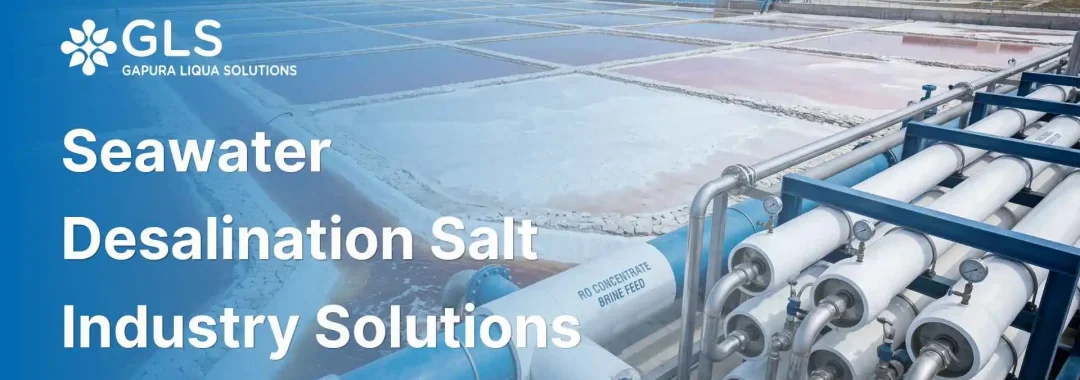
An RO-based seawater desalination salt industry system skips reliance on evaporation alone. High-pressure pumps push raw seawater against a semi-permeable membrane. This process mechanically separates roughly 40–50% of the water volume from the feed stream. The result is a significantly more concentrated brine before it ever reaches the ponds. Meanwhile, the facility can reuse the freshwater permeate produced during this stage elsewhere, which further improves overall water efficiency.
Energy Savings Compared to Thermal Evaporation
Thermal evaporation, by contrast, consumes substantial amounts of steam or fuel to boil off water. RO pre-concentration removes a large share of that water mechanically instead. This step dramatically reduces the thermal load on downstream crystallizers. Therefore, facilities that adopt this hybrid approach typically see meaningful reductions in fuel consumption per ton of salt produced.
Key Benefits for Salt Production Facilities
Faster Crystallization, Smaller Pond Footprint
RO-concentrated brine starts the evaporation stage at a much higher salinity. As a result, it reaches crystallization point far more quickly than raw seawater. Consequently, plants can shrink their pond footprint for the same output. Alternatively, they can scale up production without acquiring additional land — a critical advantage in space-constrained coastal areas.
Higher, More Consistent Salt Purity
Membrane filtration also removes suspended solids, organic matter, and certain trace contaminants before the brine reaches the ponds. This pre-treatment step creates a cleaner feed stream. A cleaner feed stream, in turn, supports more consistent crystal quality. That consistency matters most for industries such as pharmaceuticals and food processing, which demand high-purity salt.
Designing a Seawater Desalination System for Salt Industry Use
Pre-Treatment: Protecting the RO Membrane
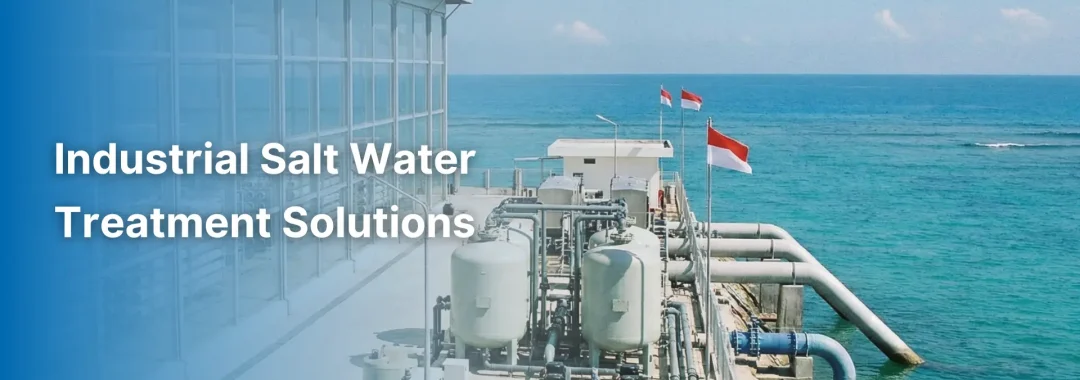
Raw seawater intake often contains high turbidity, suspended solids, and organic load. For this reason, robust pre-treatment must happen before water reaches the RO membranes. Media filtration, such as Activated Filter Media (AFM), works alongside antiscalant dosing to prevent fouling and scaling. Without this step, membrane lifespan shortens and maintenance costs rise.
Membrane Selection for High-Salinity Feed
Salt industry feed water sits at or near full seawater salinity. Engineers must therefore design membrane selection and staging specifically for high-pressure, high-recovery operation. Choosing the wrong membrane configuration can trigger premature fouling or excessive energy consumption. Either outcome undermines the very savings the system should deliver.
Managing Reject Brine and Byproducts
The RO process naturally produces a concentrate stream. In a salt production context, this stream is not waste — it is the intended product. That said, facilities still need a clear plan for handling variable flow rates and monitoring salinity consistency. Engineers must also integrate the RO output smoothly into existing pond or crystallizer operations. Proper system design keeps this transition free of bottlenecks.
When Salt Producers Should Consult a Desalination Specialist
Does your facility struggle with inconsistent output during rainy seasons? Do land constraints limit your pond expansion? Are industrial buyers demanding stricter purity? If so, it pays to speak with a specialist early. This step lets engineers size and design the system correctly from the start. It also avoids costly retrofits after inefficiencies have already hurt production.
Conclusion — GLS as Your Salt Industry Desalination Partner
Ultimately, combining seawater desalination salt industry technology with traditional solar evaporation offers a practical path forward. It delivers higher yield, lower fuel costs, and more resilient production, regardless of season. PT. Gapura Liqua Solutions (GLS) brings hands-on experience in seawater reverse osmosis, brackish water treatment, and reverse osmosis-based salt production systems. This experience lets salt producers modernize their operations while staying focused on their core business. Want to explore how an RO pre-concentration system could fit your facility? Reach out to the GLS team through our contact page.
FAQ Section
1. What is seawater desalination for the salt industry? It refers to using reverse osmosis (RO) to mechanically pre-concentrate seawater into a stronger brine before it enters solar evaporation ponds, rather than relying on evaporation alone to reach crystallization salinity.
2. How much energy can RO pre-concentration save? Because RO removes a significant portion of water mechanically rather than through heat, facilities that adopt it typically see a meaningful drop in fuel or steam consumption per ton of salt produced compared to purely thermal methods.
3. Does RO pre-concentration replace evaporation ponds entirely? No. RO pre-concentration works alongside evaporation ponds, not instead of them. It reduces the volume of water the ponds must evaporate, which speeds up crystallization and reduces the required pond area.
4. What pre-treatment is needed before RO for salt production? Raw seawater intake typically requires filtration (such as Activated Filter Media) and antiscalant dosing to remove suspended solids and prevent scaling, protecting the RO membranes from premature fouling.
5. Is this technology relevant to Indonesia’s salt industry specifically? Yes. With national policy targeting salt self-sufficiency by 2027 and continued reliance on imported industrial-grade salt, Indonesian producers have strong incentive to adopt technologies that increase yield and purity without expanding land use.
Follow us on Social Media