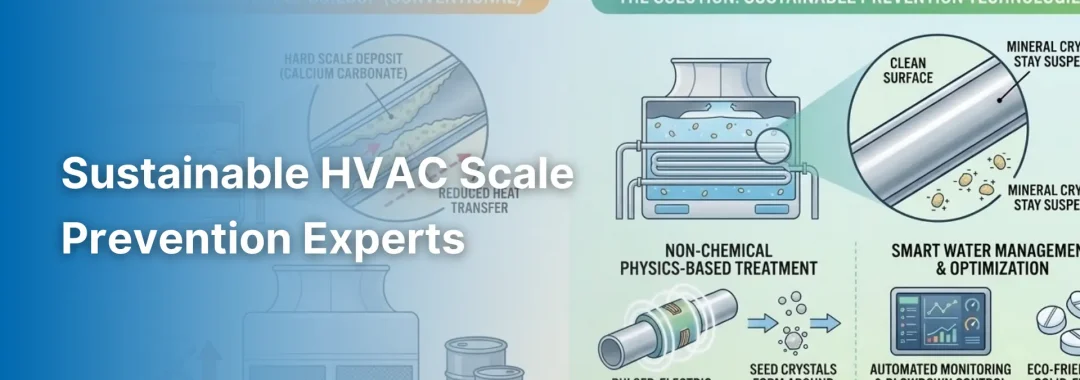
An industrial technician inspecting a high-efficiency chiller unit protected by sustainable HVAC scale prevention water treatment.

Sustainable HVAC Scale Prevention Experts

Sustainable HVAC Scale Prevention: The Key to Cooling Efficiency and Asset ROI

In the intensive cooling environments of Indonesia’s luxury hospitality and industrial sectors, facility managers often view water as an unavoidable utility bill. However, treating water as a passive expense is a strategic mistake. Water quality dictates the performance of your entire air conditioning network, acting either as a seamless heat-exchange medium or as a destructive force. Implementing sustainable HVAC scale prevention is the most effective way to transform this “hidden cost” into a controllable operational expense (OPEX). By addressing water purity at the source, facilities can protect their most expensive assets while achieving significant energy savings.

Traditional water management is often a “leaking bucket” for profits. Specifically, inefficient filtration and untreated mineral loads waste water, consume excessive chemicals, and slowly destroy downstream equipment such as chillers and cooling towers.

The Hidden Cost of Water: Why Poor Quality Destroys HVAC Performance

Scale is an invisible thief of energy. In cooling towers and chillers, minerals such as calcium carbonate and silica precipitate out of the water, forming a rock-hard layer on heat-exchange surfaces. Consequently, this layer acts as a thermal insulator, forcing the HVAC system to consume significantly more electricity to achieve the same cooling effect.

Scaling as an Insulator: The “Leaking Bucket” of Energy Waste

Even a thin layer of scale can reduce heat transfer efficiency by over 10%. For a large-scale resort or manufacturing plant, this inefficiency results in thousands of dollars of wasted energy every month. Furthermore, mineral deposits harbor bacteria and accelerate localized corrosion, leading to premature equipment failure. Therefore, relying on standard treatment methods often proves insufficient for modern luxury hospitality standards, where 100% uptime is expected.

Implementing Sustainable HVAC Scale Prevention Strategies

To stop “washing money away,” facilities must transition toward an advanced sustainability architecture. This involves moving beyond basic sand filtration toward high-performance, bioactive systems.

Transitioning from Traditional Sand to Activated Filter Media (AFM)

Most facilities rely on mined silica sand, which is prone to bio-fouling and “channeling.” In contrast, a modern approach involves using AFM S vs NG Media. This upcycled glass media is bio-resistant, preventing the bacterial growth that leads to uneven water flow and scale precursors bypassing the filter. By using AFM, hotels can cut backwash water waste by 50% while providing the ultra-clean water necessary for sustainable HVAC scale prevention.

High-Recovery RO for Superior Heat Exchange Protection

Following primary filtration, high-purity Reverse Osmosis (RO) water provides the ultimate defense against scale. By removing up to 99% of dissolved solids, RO water ensures that heat-exchange surfaces remain pristine. To achieve this, selecting a high-quality Reverse Osmosis Membrane is essential. Moreover, maintaining optimal BWRO membrane performance ensures that the system provides high-quality permeate with minimal energy consumption. Understanding the keunggulan sistem air RO is the first step for any facility manager looking to eliminate scaling emergency calls.

The Economic Logic: Calculating ROI and Facility OPEX Reduction

Transitioning to advanced water systems is not just an environmental choice; it is a high-yield investment. A well-engineered water loop typically delivers a clear ROI within 18 to 24 months. These savings are realized through reduced electricity bills, lower chemical consumption, and the extended lifespan of chillers and boilers. By focusing on sustainable HVAC scale prevention, procurement heads can shift budgets from “emergency repairs” to “preventative optimization,” significantly strengthening the company’s bottom line.

Partnering with PT. Gapura Liqua Solutions for Operational Continuity

Managing complex utility networks requires a partner who understands the total water cycle. PT. Gapura Liqua Solutions (GLS) provides end-to-end engineering, procurement, and long-term operations. We integrate seawater desalination and resource recovery into a seamless loop, ensuring your facility remains compliant and efficient. Our commitment to excellence is showcased in our latest project updates on LinkedIn, where we demonstrate utility savings for Indonesia’s premier properties.

For immediate maintenance needs, we provide professional-grade components through our official Tokopedia store. Additionally, we offer a Management Service Agreement to ensure your systems are maintained by experts, guaranteeing operational continuity.

Conclusion: Securing Long-Term Reliability and Resource Recovery

Ultimately, the performance of your cooling network is only as good as the water within it. By adopting sustainable HVAC scale prevention, you protect your physical assets, reduce utility waste, and ensure the long-term reliability of your facility. PT. Gapura Liqua Solutions remains the ideal partner for the Indonesian industrial and hospitality sectors, explicitly linking seawater desalination, resource recovery, and expert operations to your business success.

Stop letting scale drain your profits. Contact PT. Gapura Liqua Solutions today to audit your cooling network and implement a high-efficiency water strategy.

FAQ

Q: Can sustainable HVAC scale prevention really lower my electricity bill? A: Absolutely. By preventing scale buildup on heat-exchange surfaces, the chillers can operate at peak efficiency. Even a 1mm layer of scale can increase energy consumption by 10% or more.

Q: Why is AFM better than sand for HVAC pre-filtration? A: Specifically, Activated Filter Media (AFM) is bio-resistant and prevents the formation of biofilm. This eliminates “channeling” and ensures that minerals and organics are captured before they enter the cooling loop, providing superior sustainable HVAC scale prevention.

Q: How often should we audit our cooling tower water quality? A: For optimal performance, water quality should be monitored continuously with automated sensors. However, a comprehensive laboratory audit should be performed at least quarterly to adjust chemical dosing and filtration settings.

Q: Does GLS provide operational support for existing HVAC systems? A: Yes. PT. Gapura Liqua Solutions offers Management Service Agreements to optimize both new and existing water treatment infrastructure, ensuring long-term reliability.

Follow us on Social Media

Facebook Instagram LinkedIn
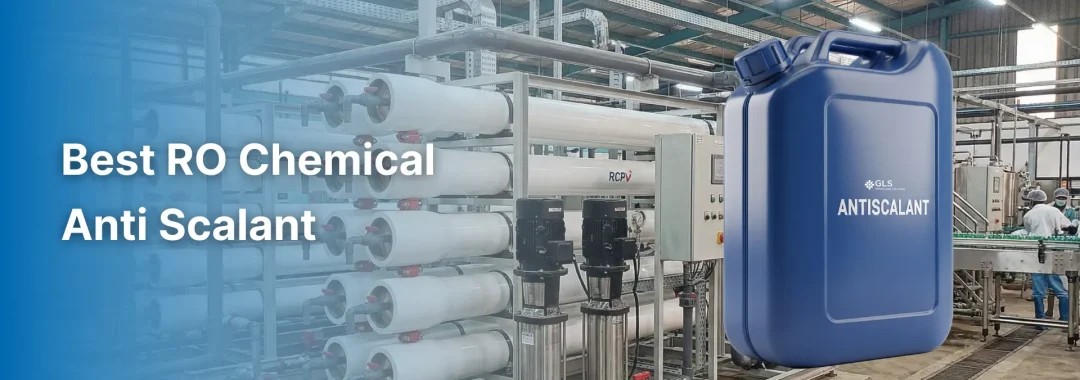
An industrial facility technician calibrating an injection pump for an RO chemical anti scalant system to prevent membrane scaling.

Best RO Chemical Anti Scalant

Securing Your Plant with an RO Chemical Anti Scalant

For industrial facility managers in Indonesia, maintaining a reliable and continuous water supply presents a constant challenge. Consequently, as advanced systems extract pure water from saline sources, the remaining dissolved minerals concentrate rapidly. Therefore, utilizing a high-quality RO chemical anti scalant becomes a non-negotiable requirement for operational success. Indeed, this specific chemical intervention actively prevents hard minerals from crystallizing, ensuring continuous production and protecting your most expensive equipment.

Furthermore, integrating a precise chemical dosing strategy is not merely a maintenance task. Instead, it serves as the foundational step toward sustainable resource recovery and long-term facility longevity.

The Threat of Mineral Scaling in Desalination

Industrial feed water—whether from deep wells or the ocean—often contains high levels of calcium, magnesium, barium, and reactive silica. Specifically, when these minerals exceed their natural solubility limits inside a pressure vessel, they form a hard, destructive scale directly on the membrane surface.

Operational Disruptions and Rising OPEX

This mineral scaling creates a severe physical barrier. Consequently, high-pressure feed pumps must work significantly harder to push water through the clogged microscopic pores. As a result, electrical energy consumption spikes immediately. Furthermore, frequent scaling forces technicians to perform harsh, acidic cleanings (CIP). Ultimately, these aggressive cleaning cycles chemically degrade the membrane material, leading to premature asset failure and skyrocketing operational expenditure (OPEX).

How an RO Chemical Anti Scalant Solves the Problem

To combat this expensive issue, utility engineers deploy precision chemical dosing. Specifically, a well-formulated RO chemical anti scalant interferes with the crystal growth process long before solid scale can form.

The Science of Threshold Inhibition

These advanced chemicals primarily utilize a mechanism called threshold inhibition. Basically, the active polymer molecules attach themselves to the newly forming mineral crystals. By doing so, they completely halt further crystalline growth. Therefore, the minerals remain safely suspended in the water phase and exit the system harmlessly through the brine reject stream.

Selecting the Right Dosing Strategy

However, choosing the correct formulation requires deep technical knowledge and precision. Facilities must base their chemical selection on a comprehensive laboratory water analysis. For instance, high-silica feed water demands a completely different polymer blend than high-calcium water. Understanding the distinct advantages of RO systems helps operators appreciate the absolute necessity of this precise pre-treatment stage.

Advanced Membrane Protection for Indonesian Industries

Incorporating the correct dosing strategy extends asset life dramatically. For example, maintaining optimal BWRO membrane performance relies entirely on preventing mineral buildup from day one. Moreover, you must pair your chemical strategy with a robust, industrial-grade Reverse Osmosis Membrane to achieve maximum separation efficiency.

Additionally, facilities experiencing uniquely high production demands can explore specific engineering strategies to handle high RO flow and membrane scaling safely.

Partnering with Gapura Liqua Solutions

Managing complex water chemistry demands expert, hands-on support. Therefore, PT. Gapura Liqua Solutions (GLS) provides comprehensive Engineering, Procurement, and Construction (EPC) services tailored exactly to your facility’s needs. We guarantee that your RO chemical anti scalant program perfectly matches your unique feed water profile.

Additionally, we ensure quick, reliable access to essential dosing consumables via our official Tokopedia store. Furthermore, you can review our proven track record of industrial excellence through our recent LinkedIn project updates.

Conclusion

Ultimately, proactive maintenance represents the key to sustainable, profitable manufacturing operations. Integrating a highly effective RO chemical anti scalant strategy protects your vital water infrastructure and drastically lowers your total cost of ownership.

Therefore, do not let unseen mineral scaling disrupt your critical business processes. Contact PT. Gapura Liqua Solutions today to secure expert chemical management and ensure total operational peace of mind for your facility.

FAQ

Q: What is the main difference between an RO chemical anti scalant and a water softener? A: A water softener physically removes hardness minerals (calcium and magnesium) by exchanging them with sodium ions, which requires massive amounts of regeneration salt and space. Conversely, an RO chemical anti scalant is simply injected in tiny doses (ppm) to prevent those minerals from crystallizing, making it far more cost-effective and space-efficient for large industrial plants.

Q: How do I know the correct dosage for my system? A: You calculate the exact dosage using specialized projection software provided by the chemical manufacturer. Specifically, this software analyzes your raw water laboratory results (pH, temperature, TDS, specific ions) alongside your system’s design recovery rate to determine the precise parts per million (ppm) required.

Q: Can injecting too much anti scalant harm my RO system? A: Yes. While under-dosing leads to hard mineral scaling, over-dosing can cause the chemical polymers themselves to foul the membrane. Furthermore, excessive organic-based antiscalants can act as food for bacteria, leading to severe biofouling. Therefore, precise calibration of the dosing pump is mandatory.

Q: Will an anti scalant remove existing scale from my membranes? A: No. These chemicals are strictly preventive. If your membranes are already severely scaled, you must perform a Clean-in-Place (CIP) procedure using low-pH acidic cleaners to dissolve the existing minerals before resuming normal anti scalant dosing.

Follow us on Social Media

Facebook Gapura Liqua - RO chemical anti scalant Instagram Gapura Liqua - RO chemical anti scalant LinkedIn Gapura Liqua - RO chemical anti scalant