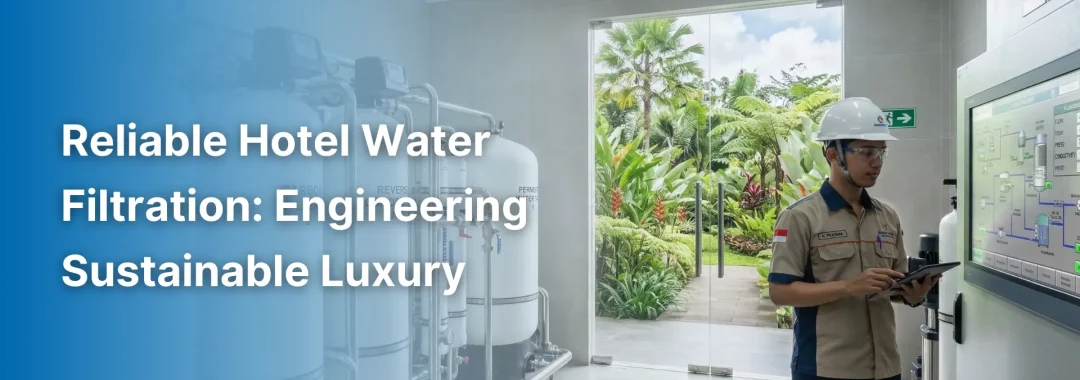
A technical installation of a reliable hotel water filtration system using AFM media and RO technology in a clean resort utility room.

Reliable Hotel Water Filtration for Resorts

Reliable Hotel Water Filtration: Engineering Sustainable Luxury

In the luxury hospitality sector of Indonesia, sustainability has transitioned from a marketing buzzword to a critical operational standard. Resorts in Bali and Jakarta are now evaluated by their “water intensity,” making reliable hotel water filtration a top priority for facility managers. Traditional systems often waste thousands of liters of treated water during cleaning cycles. Consequently, implementing a robust, circular water loop is the most effective way to meet zero-waste goals while maintaining the crystal-clear water quality that elite guests expect.

Furthermore, a professional water strategy acts as a high-yield investment. By treating water as a recoverable resource rather than a disposable utility, hotels can significantly reduce their monthly operational expenditure (OPEX).

The Hidden Risks of Traditional Sand Filtration

Many 5-star properties still rely on decades-old silica sand technology for their primary filtration. While functional, these systems are fundamentally incompatible with modern efficiency standards and often pose a risk to operational continuity.

Why Silica Sand Is a “Leaking Bucket” for Profits

Silica sand filters suffer from a major biological flaw: they allow bacteria to grow and form a biofilm. This biofilm glues the sand together, leading to “channeling,” where water bypasses the media entirely. As a result, the system must backwash more frequently to maintain clarity, wasting up to 50% more water than necessary. Specifically, this “leaking bucket” approach drains hotel profits through wasted water, excessive electricity, and high chemical consumption. Transitioning to reliable hotel water filtration solves this biological instability at the source.

Transitioning to Reliable Hotel Water Filtration

To achieve true reliability, engineers must focus on advanced sustainability architecture. Integrating bioactive media with high-recovery membranes creates a system that produces superior water with minimal waste.

Activated Filter Media (AFM) and Backwash Reduction

The cornerstone of reliable hotel water filtration is Activated Filter Media (AFM). Unlike mined sand, AFM is an upcycled glass media that is 100% bio-resistant. Because bacteria cannot grow on the AFM surface, it prevents channeling and the formation of “mud balls.” Moreover, AFM requires significantly less water for backwashing. For a detailed technical look at why this media is the superior choice, you can read our AFM S vs NG Media comparison.

Protecting Chillers, Boilers, and RO Membranes

Precision filtration does more than save water; it acts as a shield for your most expensive mechanical assets. By removing fine particulates as small as 1 micron, AFM prevents the scale buildup and organic fouling that destroy chillers and boilers. Furthermore, it safeguards your Reverse Osmosis Membrane, ensuring consistent BWRO membrane performance. Understanding the keunggulan sistem air RO is key to justifying the ROI of these advanced setups.

Achieving Zero-Waste Goals and Green Certifications

For modern hotel owners, ROI is not just about bills; it is about brand positioning. Implementing reliable hotel water filtration contributes directly to points for EarthCheck or Green Globe certifications. By reducing water intensity and chemical usage by up to 30%, your facility secures a competitive edge. This level of precision is especially vital for specialized needs, such as a sistem filtrasi air hotel in areas with high water hardness.

Partnering with Gapura Liqua Solutions for Operational Continuity

Successful utility management requires a partner who understands engineering, procurement, and long-term operations. PT. Gapura Liqua Solutions (GLS) provides end-to-end systems that allow our clients to focus on their core hospitality business. We integrate seawater desalination and resource recovery into a seamless, high-reliability loop. Our track record is visible in our latest project updates on LinkedIn, showcasing utility savings for iconic resorts like The Jewel of Seminyak – W Hotel.

For hotels needing immediate support, we provide premium components through our official Tokopedia store. This ensures your team has access to professional-grade tools for maintaining reliable hotel water filtration standards.

Conclusion: Securing ROI and Brand Reputation

Ultimately, a sustainable water strategy is the most robust insurance policy for your hotel’s operational future. By adopting reliable hotel water filtration, you reduce OPEX, earn prestigious certifications, and deliver an unparalleled guest experience. PT. Gapura Liqua Solutions remains the ideal partner for the Indonesian hospitality sector, explicitly linking resource recovery with long-term reliability.

Ensure your resort is a leader in sustainable luxury. Contact PT. Gapura Liqua Solutions today to audit your utility room and implement a bioactive, circular water strategy.

FAQ

Q: Can reliable hotel water filtration save money on electricity? A: Yes. By preventing scale buildup in heat exchangers, chillers, and boilers, the equipment operates at peak efficiency. This can reduce facility-wide energy consumption by up to 10–15%.

Q: How long does Activated Filter Media (AFM) last compared to sand? A: Silica sand typically requires replacement every 2-3 years due to bio-fouling and attrition. However, AFM is bio-resistant and extremely durable, meaning it often lasts for the entire lifespan of the filtration system.

Q: Is it possible to retrofit AFM into my existing sand filter tanks? A: Absolutely. Reliable hotel water filtration using AFM acts as a “drop-in” replacement. You simply remove the old sand and replace it with AFM without needing to modify your existing tanks or pumps.

Q: Does GLS provide operational support for remote resort locations? A: Yes. PT. Gapura Liqua Solutions offers Management Service Agreements and long-term O&M support for resorts across the entire Indonesian archipelago.

Follow us on Social Media

Facebook Instagram LinkedIn
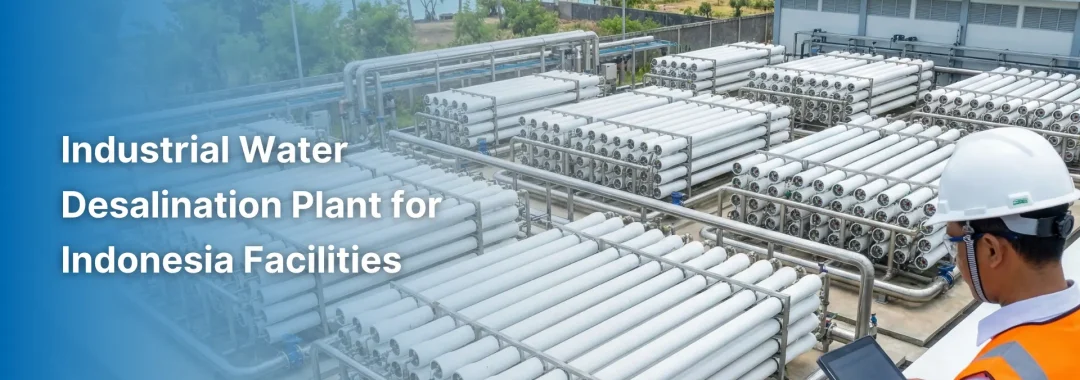
Engineer monitoring an industrial water desalination plant system at a coastal facility in Indonesia.

Industrial Water Desalination Plant for Indonesia Facilities

Industrial Water Desalination Plant: Securing Business Continuity in Indonesia

For Facilities Managers and Heads of Procurement in Indonesia, water is not merely a utility; it is the lifeblood of production. As industrial zones expand and climate patterns shift, relying solely on groundwater or municipal supplies is increasingly risky. Implementing a robust industrial water desalination plant is no longer just an option—it is a strategic necessity for safeguarding operational continuity.

This article examines how modern desalination systems solve critical supply issues and why selecting the right engineering partner is paramount for long-term success.

The Strategic Necessity of Desalination for Facilities

Indonesia’s vast coastline offers abundant seawater resources, yet many industries still struggle with clean water availability. An industrial water desalination plant converts this inexhaustible resource into high-purity process water, insulating your business from drought, regulatory restrictions on groundwater extraction, and municipal supply interruptions.

Mitigating Risks of Unreliable Water Supply

Inconsistent water quality can wreak havoc on expensive machinery. High salinity and contaminants lead to rapid corrosion, scaling, and frequent downtime. By deploying a dedicated industrial water desalination plant, facilities gain control over their water quality parameters. This autonomy prevents unexpected production halts and protects capital assets from premature degradation, directly impacting the bottom line.

Technical Components of an Efficient Industrial Water Desalination Plant

Modern desalination is far more than just filtration; it is a sophisticated integration of hydraulics and chemistry. To ensure commercial viability, the system must balance output quality with energy efficiency.

Advanced Membrane Technology and Pre-treatment

The heart of any Seawater Reverse Osmosis (SWRO) system is the membrane. However, the lifespan of these membranes depends heavily on pre-treatment. Effective removal of suspended solids prevents fouling, which is a common cause of efficiency loss.

At PT. Gapura Liqua Solutions (GLS), we utilize high-performance Reverse Osmosis Membrane technology designed to withstand high pressure and challenging feed water conditions. Understanding BWRO membrane performance is also critical for facilities dealing with brackish sources, ensuring that the specific rejection rates meet industrial standards.

Energy Efficiency and Resource Recovery

Historically, desalination was viewed as energy-intensive. Today, technologies such as Energy Recovery Devices (ERDs) have revolutionized the economics of the industrial water desalination plant. Furthermore, forward-thinking companies are now looking beyond water. Through resource recovery, brine (waste stream) can be processed to extract valuable minerals, turning waste into value.

You can learn more about the specific advantages of RO water systems and how they contribute to a circular economy in our technical insights.

Why Procurement Leaders Partner with Gapura Liqua Solutions

Selecting a vendor for an industrial water desalination plant involves evaluating technical capability, local support, and long-term reliability. PT. Gapura Liqua Solutions stands out as a premier partner for Indonesian industries.

We provide end-to-end solutions, from Engineering and Procurement to Construction and long-term Operations (EPC + O&M). Our “Total Water Solutions” approach means you can focus on your core business while we manage water availability and compliance.

  • Local Expertise: We understand the unique water chemistry of the Indonesian archipelago.
  • Supply Chain Security: We ensure the availability of critical consumables and spare parts, also accessible via our Tokopedia official store for ease of procurement.
  • Proven Track Record: Our projects demonstrate high reliability in challenging environments.

For a glimpse into our recent project activities and industry updates, you can view our latest LinkedIn Activity.

Conclusion

Investing in an industrial water desalination plant is a decisive move toward operational resilience. It mitigates the risks of water scarcity and ensures that your facility meets global standards for sustainability and efficiency. However, the technology is only as good as the partner who installs and maintains it.

PT. Gapura Liqua Solutions combines technical excellence with local understanding to deliver systems that last. We invite you to discuss your specific water requirements with our engineering team.

Are you ready to secure your facility’s water future? Contact Us for a Consultation

FAQ Section

Q: What is the typical lifespan of an industrial water desalination plant? A: With proper maintenance and high-quality components, a plant can operate efficiently for over 20 years. The membranes typically require replacement every 3 to 5 years depending on the feed water quality and pre-treatment efficacy.

Q: How does GLS handle the high energy consumption associated with desalination? A: We design our systems using advanced Energy Recovery Devices (ERDs) and high-efficiency pumps. This significantly reduces the energy footprint, making the operational costs competitive with traditional water sourcing methods.

Q: Can the plant handle variable feed water quality, such as seasonal changes in seawater? A: Yes. Our engineering team designs the pre-treatment and SWRO systems with flexibility in mind. We analyze seasonal data to ensure the system remains stable regardless of fluctuations in turbidity or salinity.

Q: Does GLS provide support after the installation is complete? A: Absolutely. We offer comprehensive Operation & Maintenance (O&M) contracts. Our team manages routine monitoring, chemical cleaning (CIP), and spare parts supply to ensure zero unplanned downtime.

Follow us on Social Media

Facebook Instagram LinkedIn