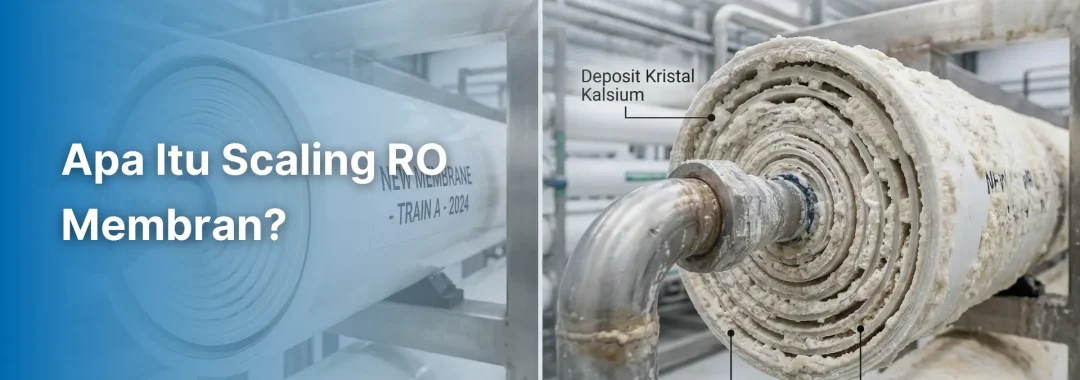
Seorang insinyur pabrik memeriksa panel tekanan air, mengidentifikasi gejala untuk menjelaskan apa itu scaling RO pada sistem membran industri berteknologi tinggi

Apa Itu Scaling RO Membran

Panduan Teknis: Memahami Secara Mendalam Apa Itu Scaling RO

Bagi para manajer fasilitas di kawasan industri, menjaga keandalan sistem pengolahan air adalah tugas yang sangat krusial. Sering kali, operator lapangan dihadapkan pada masalah penurunan kapasitas produksi air bersih secara tiba-tiba. Oleh karena itu, memahami apa itu scaling RO menjadi langkah awal yang wajib dikuasai untuk melindungi aset perusahaan. Selanjutnya, kerak mineral ini bukan sekadar masalah teknis kecil, melainkan ancaman serius yang dapat melumpuhkan operasional manufaktur secara total. Dengan demikian, artikel ini akan membahas tuntas mekanisme terjadinya kerak dan memberikan solusi pencegahan yang komprehensif.

Sebagai fasilitas vital, sistem air industri harus beroperasi tanpa hambatan. Namun, fluktuasi kualitas air baku sering memicu masalah pada elemen penyaringan bertekanan tinggi.

Mengenal Secara Teknis Apa Itu Scaling RO

Banyak pengambil keputusan di sektor industri mencari tahu detail mengenai gangguan teknis ini. Secara teknis, apa itu scaling RO merujuk pada fenomena pengendapan mineral terlarut yang melampaui batas kelarutannya tepat di atas permukaan membran. Akibatnya, kristal keras mulai terbentuk dan menyumbat pori-pori mikroskopis pada elemen filtrasi tersebut.

Proses Pembentukan Kerak Mineral pada Sistem

Pada awalnya, air tanah atau air permukaan selalu mengandung berbagai mineral keras seperti kalsium, magnesium, dan silika. Ketika pompa bertekanan tinggi mendorong air melewati membran, mineral-mineral tersebut akan terkonsentrasi di sisi buangan (reject). Kemudian, apabila konsentrasinya terlalu tinggi, zat-zat ini akan memadat dan mengendap. Oleh sebab itu, kondisi ini sangat rentan terjadi pada pengolahan air bersalinitas menengah. Anda dapat mempelajari lebih jauh tentang performa filtrasi pada kondisi air payau melalui halaman BWRO membrane performance kami.

Dampak Buruk terhadap Kinerja Peralatan

Selanjutnya, penumpukan kerak ini secara langsung akan menghambat aliran air murni. Sebagai respons mekanis, sistem otomatis akan menaikkan tekanan (pressure drop) untuk mencoba mempertahankan target debit air. Tentu saja, lonjakan tekanan kerja ini akan menyebabkan konsumsi energi listrik pabrik membengkak secara drastis. Lebih buruk lagi, kerak keras yang tidak langsung ditangani oleh teknisi dapat merusak struktur fisik elemen penyaring secara permanen.

Solusi Pencegahan Kerak untuk Keandalan Operasional

Setelah menyadari ancamannya, manajemen utilitas harus segera menerapkan strategi mitigasi yang efektif. Sebaliknya dari sekadar memperbaiki alat yang rusak, mencegah terbentuknya kerak jauh lebih menghemat biaya dan mengamankan produksi.

Optimalisasi Sistem Pre-Treatment Pabrik

Pertama-tama, setiap fasilitas harus memastikan bahwa tahap pre-treatment beroperasi secara maksimal. Sistem penyaringan awal ini bertugas menghilangkan partikel tersuspensi dan menurunkan beban mineral sebelum air mencapai ruang reverse osmosis. Melalui penyaringan awal yang optimal, umur pakai komponen hilir akan jauh lebih panjang. Untuk memahami teknologi modern di balik efisiensi ini, silakan baca panduan teknis kami mengenai keunggulan sistem air RO.

Penggunaan Elemen Membran Berkualitas

Selain memaksimalkan penyaringan awal, pemilihan elemen filtrasi yang tangguh sangat menentukan ketahanan sistem pabrik Anda. Industri berat sangat disarankan untuk selalu menggunakan Reverse Osmosis Membrane yang dirancang khusus untuk memiliki resistensi tinggi terhadap penumpukan mineral. Selain itu, teknisi wajib melakukan injeksi bahan kimia antiscalant dengan takaran presisi agar mineral keras tetap berada dalam wujud terlarut.

Keunggulan Bermitra dengan Gapura Liqua Solutions

Mengelola infrastruktur air membutuhkan penguasaan teknis tingkat tinggi serta jam terbang lapangan yang teruji. Oleh karena itu, PT. Gapura Liqua Solutions (GLS) menawarkan layanan Engineering, Procurement, and Construction (EPC) yang dirancang khusus untuk menunjang industri di Indonesia. Kami telah membuktikan kualitas sistem kami melalui berbagai portofolio berskala masif, yang dapat Anda saksikan pada pembaruan proyek kami di LinkedIn.

Lebih lanjut, kami juga siap menjamin kelancaran aktivitas harian fasilitas Anda. Untuk memfasilitasi tim purchasing dalam pengadaan suku cadang pemeliharaan yang cepat, divisi Anda dapat berbelanja secara aman di toko resmi Tokopedia kami. Melalui jalur ini, proses pengadaan barang industri menjadi sangat transparan dan efisien.

Kesimpulan

Kesimpulannya, setiap manajer fasilitas manufaktur dituntut untuk menyadari bahaya kerak mineral terhadap keberlangsungan pabrik. Dengan mengetahui secara pasti apa itu scaling RO, Anda dapat segera mengambil langkah preventif yang terukur untuk menghindari kerusakan sistem filtrasi yang amat mahal harganya.

Pada akhirnya, PT. Gapura Liqua Solutions hadir sebagai mitra rekayasa ideal yang secara ahli mengintegrasikan teknologi desalinasi air laut (SWRO), pemulihan sumber daya (resource recovery), serta manajemen operasional jangka panjang. Kami berdedikasi tinggi untuk menjaga keandalan pasokan utilitas Anda secara konsisten. Oleh sebab itu, jangan tunda lagi proses pengamanan aset pabrik Anda. Silakan hubungi PT. Gapura Liqua Solutions sekarang juga untuk merancang instalasi pengolahan air paling tangguh di industri Anda.

FAQ

Q: Apa perbedaan antara scaling dan fouling pada sistem RO? A: Meskipun sering dianggap sama, keduanya berbeda. Scaling terjadi ketika mineral anorganik terlarut (seperti kalsium dan silika) mengkristal dan mengeras di permukaan membran. Sementara itu, fouling merujuk pada penyumbatan yang disebabkan oleh partikel padat tersuspensi, zat organik, maupun koloni bakteri (biofouling).

Q: Bagaimana cara teknisi mengetahui jika sistem mulai mengalami scaling? A: Indikator utama yang paling mudah diamati adalah penurunan debit air produksi (permeate) sebesar 10-15% dari standar desain pabrik, diiringi dengan kenaikan tekanan operasional (pressure drop) pada tabung membran. Operator harus mencatat log ini setiap hari untuk tindakan preventif.

Q: Apakah injeksi bahan kimia antiscalant bisa membersihkan kerak yang sudah mengeras? A: Tidak bisa. Fungsi utama antiscalant adalah mencegah pembentukan kristal mineral. Jika membran sudah terlanjur dipenuhi kerak keras, teknisi harus melakukan prosedur Clean in Place (CIP) menggunakan formula pembersih berbasis asam ber-pH rendah, atau mengganti membran jika kerusakan fisiknya sudah sangat parah.

Q: Berapa nilai Recovery Rate aman agar membran terhindar dari scaling berlebih? A: Nilai recovery rate (rasio air bersih yang dihasilkan terhadap air baku) sangat bergantung pada hasil analisis laboratorium air umpan. Untuk air payau bersalinitas menengah, sistem biasanya diatur antara 50% hingga 75%. Memaksakan nilai recovery terlalu tinggi tanpa injeksi kimia yang tepat akan memicu kerak secara masif.

Follow us on Social Media

Facebook Gapura Liqua - apa itu scaling RO Instagram Gapura Liqua - apa itu scaling RO LinkedIn Gapura Liqua - apa itu scaling RO
An industrial facility manager inspecting the pressure vessels of high-efficiency industrial brackish water solutions designed by Gapura Liqua Solutions.

Top Industrial Brackish Water Solutions

Securing Plant Utilities with Industrial Brackish Water Solutions

Industrial facility managers in Indonesia constantly battle the challenge of securing consistent, high-quality water supplies. Consequently, as coastal aquifers face seawater intrusion and inland groundwater sources degrade, raw water salinity is steadily increasing. Therefore, relying on standard filtration is no longer sufficient. Implementing advanced industrial brackish water solutions provides a decisive approach to overcoming these utility hurdles. Indeed, this technology separates dissolved salts efficiently, ensuring strict operational compliance while protecting vital plant infrastructure.

Furthermore, integrating advanced desalination is not merely a reactive measure. Instead, it serves as the foundational step toward sustainable resource recovery and long-term operational longevity.

The Problem with High Salinity Groundwater

Factories across the manufacturing, food, and petrochemical sectors require pristine water to operate properly. Therefore, managing brackish water streams effectively becomes a top priority for procurement and facility teams.

Scaling, Corrosion, and Equipment Failure

Brackish water contains moderate levels of dissolved salts, typically ranging between 1,000 and 10,000 parts per million (ppm) of Total Dissolved Solids (TDS). Because these minerals do not settle via gravity, they easily pass through conventional media filters. Subsequently, these hard minerals create severe scaling inside boilers, cooling towers, and heat exchangers.

Furthermore, high chloride concentrations accelerate pipeline corrosion. Thus, facilities face a high risk of catastrophic equipment failure and skyrocketing maintenance costs if these parameters remain unchecked.

How Industrial Brackish Water Solutions Provide the Answer

To resolve these contamination issues, engineers utilize membrane-based separation technologies. Specifically, highly engineered industrial brackish water solutions force pressurized water through microscopic barriers to remove dissolved impurities.

The Mechanics of Reverse Osmosis (RO)

The core technology driving these solutions is Reverse Osmosis (RO). First, high-pressure pumps push the saline feed water against a semi-permeable membrane. Next, the membrane allows pure water molecules to pass through while rejecting up to 99% of dissolved salts and organics.

Ultimately, this process produces a highly purified permeate stream ready for industrial use. To fully understand the operational benefits, you can explore the advantages of RO systems on our dedicated technical page.

Pre-Treatment and Membrane Protection

By removing heavy particulate loads early, comprehensive pre-treatment effectively protects downstream filtration assets. For instance, feeding correctly pre-treated water significantly enhances BWRO membrane performance. Additionally, utilizing properly specified Reverse Osmosis Membrane elements prevents premature fouling and ensures maximum lifecycle value. Should your facility require immediate consumable replacements, securing high-quality components is critical for maintaining flow rates.

Ensuring Long-Term Reliability and Efficiency

Environmental compliance and operational efficiency go hand in hand. Thus, utilizing robust industrial brackish water solutions helps facilities avoid sudden production halts. Moreover, integrating this separation technology promotes resource recovery. Facilities can safely recycle polished effluent or recover concentrated brines, drastically lowering daily water consumption and aligning with green industry standards.

Partnering with PT. Gapura Liqua Solutions

Sourcing reliable equipment and expert engineering remains a top priority for decision-makers. Therefore, PT. Gapura Liqua Solutions (GLS) offers comprehensive engineering, procurement, and construction (EPC) services. We tailor every installation to meet your specific water chemistry and production demands.

Additionally, we provide easy access to critical spare parts and consumables via our official Tokopedia store. Furthermore, you can view our successful, real-world implementations through our recent LinkedIn project updates, showcasing our deep commitment to engineering excellence.

Conclusion

Ultimately, establishing modern industrial brackish water solutions secures your facility’s operational future and process stability. PT. Gapura Liqua Solutions acts as your ideal expert partner in this critical journey. We explicitly link our expertise in seawater desalination (SWRO), advanced resource recovery, and long-term operations to guarantee your facility’s success. Therefore, do not leave your water supply to chance. Contact PT. Gapura Liqua Solutions today to discuss your next water treatment project and achieve total operational peace of mind.

FAQ

Q: What defines water as “brackish” in an industrial context? A: Brackish water possesses a salinity level between fresh water and seawater. Typically, it contains Total Dissolved Solids (TDS) ranging from 1,000 to 10,000 parts per million (ppm). Because it is highly corrosive and causes scaling, it requires specialized membrane treatment before industrial use.

Q: How do industrial brackish water solutions differ from seawater systems (SWRO)? A: While both utilize reverse osmosis, brackish water systems operate at significantly lower pressures because the incoming water has a lower osmotic pressure than seawater. Consequently, BWRO systems consume much less energy and utilize different membrane specifications compared to SWRO plants.

Q: Can a BWRO system help my facility achieve zero liquid discharge (ZLD)? A: Yes. Integrating a BWRO system is a highly effective step in resource recovery. By purifying and recycling wastewater or brackish sources, the system drastically reduces liquid waste volume, which represents a crucial phase in achieving full Zero Liquid Discharge (ZLD) objectives.

Q: Does GLS provide long-term maintenance for these treatment plants? A: Absolutely. PT. Gapura Liqua Solutions provides comprehensive Operations and Maintenance (O&M) contracts. Specifically, we handle everything from routine chemical dosing and membrane cleaning to full facility operation, ensuring your system runs optimally for decades.

Follow us on Social Media

Facebook Gapura Liqua - industrial brackish water solutions Instagram Gapura Liqua - industrial brackish water solutions LinkedIn Gapura Liqua - industrial brackish water solutions

An industrial engineer inspecting a modern system to ensure the sludge dewatering unit works perfectly for volume reduction

Sludge Dewatering Unit Works Explained

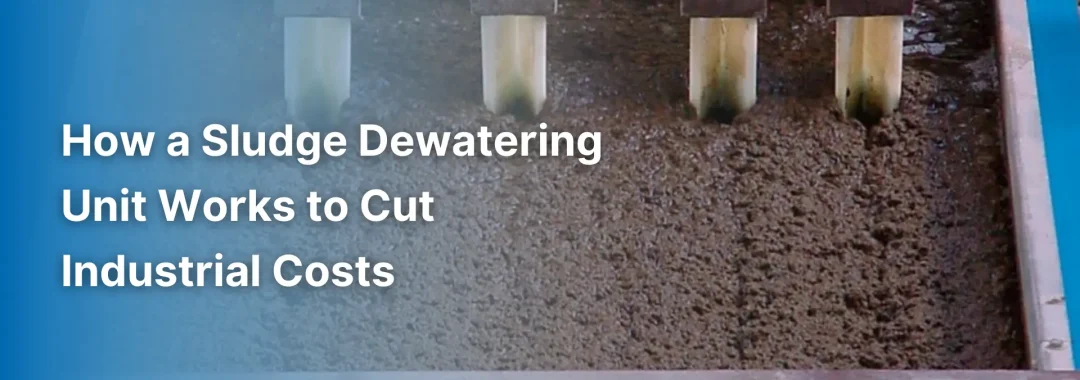
How a Sludge Dewatering Unit Works to Cut Industrial Costs

For industrial facility managers in Indonesia, wastewater treatment generates a massive byproduct: liquid sludge. Consequently, handling, transporting, and disposing of this heavy, water-logged waste creates a severe financial burden. Therefore, implementing advanced mechanical separation is not just an option; it is a critical necessity. Understanding exactly how a sludge dewatering unit works provides the foundation for optimizing your plant’s efficiency and achieving strict environmental compliance.

Furthermore, integrating advanced solid-liquid separation serves as a foundational step toward sustainable manufacturing. By converting liquid liabilities into manageable solids, businesses can protect their bottom line.

The Problem with High-Volume Liquid Waste

Factories across the manufacturing, food, and petrochemical sectors continuously generate heavy effluent. Often, standard clarifiers produce a sludge that contains up to 98% water. Therefore, managing this waste stream effectively becomes a top priority for procurement teams.

Environmental and Financial Impacts

Transporting liquid waste is incredibly expensive because companies essentially pay to move water. Moreover, environmental regulations in Indonesia heavily penalize improper disposal of wet sludge. High moisture content increases the risk of toxic leaching and foul odors. Subsequently, facilities face a high risk of regulatory failure and environmental penalties if these parameters remain unchecked. Thus, a proactive approach to volume reduction is mandatory.

Understanding How a Sludge Dewatering Unit Works

To resolve these logistical nightmares, engineers utilize mechanical dewatering. Specifically, a sludge dewatering unit works by applying force to separate the water from the solid particles, creating a dry “cake.”

The Role of Chemical Conditioning

The mechanics behind this process begin with chemistry. First, the system injects specialized polymers into the liquid sludge. Next, these chemicals cause the microscopic solid particles to clump together in a process called flocculation. Because these larger flocs release trapped water more easily, chemical conditioning is absolutely vital. Ultimately, when a sludge dewatering unit works efficiently, it relies heavily on this precise chemical pre-treatment to maximize water extraction.

Mechanical Separation Technologies

Following chemical dosing, the thickened sludge enters the mechanical phase. Several technologies exist, including filter presses, decanter centrifuges, and multi-disc screw presses. For instance, a filter press uses high-pressure hydraulic plates to squeeze the water out through porous cloths. Alternatively, a centrifuge spins the waste at high speeds, using centrifugal force to push the heavier solids outward. Regardless of the specific machinery, the sludge dewatering unit works to transform a watery mess into a stackable, solid cake, thereby reducing total waste volume by up to 80%. You can explore more about this topic in our comprehensive guide on Sludge Dewatering Equipment.

Integrating Dewatering with Advanced Water Systems

By extracting the water from the sludge, facilities can route the recovered liquid back to the head of the wastewater treatment plant. Consequently, this recovered water can undergo further polishing. For example, feeding cleaner recovered water significantly enhances BWRO membrane performance. Additionally, understanding the advantages of RO systems highlights the necessity of excellent pre-treatment. Should your facility require maintenance for these polishing stages, securing high-quality Reverse Osmosis Membrane elements is critical for maintaining consistent flow rates.

Partnering with PT. Gapura Liqua Solutions

Sourcing reliable equipment and expert engineering remains a top priority for decision-makers. Therefore, PT. Gapura Liqua Solutions (GLS) offers comprehensive engineering, procurement, and construction (EPC) services. We tailor every installation to meet your specific effluent chemistry.

Additionally, we provide easy access to critical spare parts and consumables via our official Tokopedia store. Furthermore, you can view our successful, real-world implementations through our recent LinkedIn project updates, which thoroughly showcase our commitment to engineering excellence.

Conclusion

Ultimately, establishing a modern solid-liquid separation system secures your facility’s operational future and environmental standing. Because a sludge dewatering unit works to drastically cut disposal costs, it delivers an exceptional return on investment. PT. Gapura Liqua Solutions acts as your ideal expert partner in this critical journey. We explicitly link our expertise in seawater desalination, advanced resource recovery, and long-term operations to guarantee your facility’s success. Therefore, contact PT. Gapura Liqua Solutions today to discuss your next water treatment project and achieve total operational peace of mind.

FAQ

Q: How much can a sludge dewatering unit reduce my waste volume? A: By extracting water from the liquid sludge, a mechanical dewatering unit can reduce the total volume of your waste by 70% to 80%. Consequently, this drastically lowers transportation and tipping fees at disposal sites.

Q: Does the dewatering process require chemicals? A: Yes. Most systems require the addition of polymer flocculants. Specifically, these chemicals bind the small solid particles together, allowing the mechanical press or centrifuge to squeeze out the water much more effectively.

Q: What happens to the water that is squeezed out of the sludge? A: The extracted water, known as filtrate or centrate, is highly concentrated with dissolved organics. Therefore, it is typically routed back to the front of your wastewater treatment plant for proper biological treatment and polishing.

Q: Can GLS integrate a dewatering system into an existing wastewater plant? A: Absolutely. PT. Gapura Liqua Solutions specializes in retrofitting and upgrading existing infrastructure. We can seamlessly integrate a filter press or screw press into your current flow path to solve specific compliance issues and optimize resource recovery.

Insinyur industri sedang menginspeksi sistem pre-treatment dan tabung membran bertekanan tinggi sebagai bagian dari penerapan solusi cegah fouling RO.

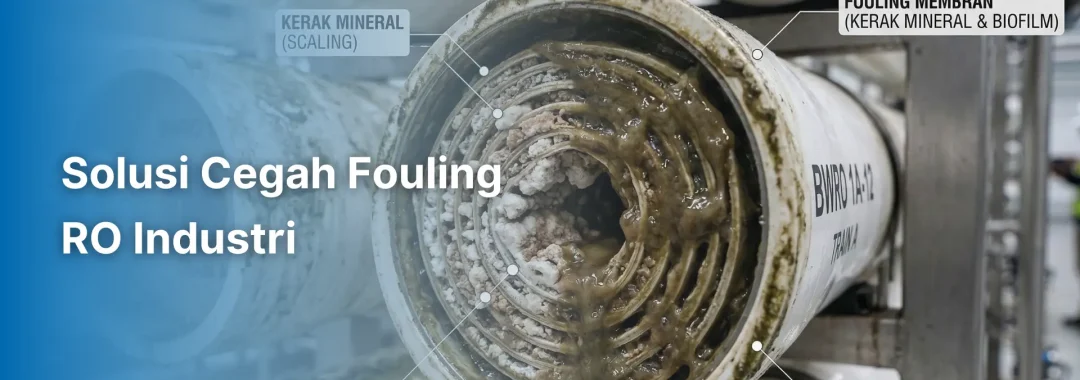
Solusi Cegah Fouling RO Industri

Melindungi Aset Pabrik Melalui Manajemen Kualitas Air yang Andal

Setiap fasilitas industri di Indonesia sangat bergantung pada pasokan air yang konsisten untuk menjaga kelancaran produksi harian. Sayangnya, banyak manajer fasilitas menghadapi masalah serius ketika elemen filtrasi mereka mengalami penyumbatan mendadak. Oleh karena itu, menerapkan solusi cegah fouling RO merupakan langkah esensial, bukan sekadar pelengkap operasional. Selanjutnya, pendekatan yang berorientasi pada pencegahan ini memastikan bahwa mesin-mesin kritis dapat beroperasi tanpa hambatan yang merugikan.

Akibat fluktuasi kualitas air baku, elemen membran sangat rentan terhadap penumpukan partikel. Dengan demikian, para profesional utilitas wajib memahami akar permasalahan tersebut agar dapat mengelola fasilitas dengan lebih efisien.

Mengidentifikasi Ancaman Utama pada Fasilitas Filtrasi

Pada dasarnya, air tanah maupun air laut selalu membawa berbagai kontaminan yang berpotensi merusak mesin. Ketika sistem memompa air melewati membran, polutan ini akan terkonsentrasi di satu sisi.

Bagaimana Proses Penyumbatan Terjadi?

Pertama, partikulat halus yang lolos dari saringan awal akan langsung menutupi pori-pori mikroskopis pada membran. Kedua, mikroorganisme dalam air sering kali membentuk lapisan lendir biologis (biofouling) yang sangat sulit dibersihkan. Selain itu, mineral terlarut yang melewati batas kelarutannya akan mengkristal dan menyebabkan kerak keras (scaling). Sebagai akibatnya, sistem harus bekerja ekstra keras dengan menaikkan tekanan (pressure drop) untuk mempertahankan target produksi air bersih.

Dampak Finansial dari Kegagalan Sistem

Selanjutnya, lonjakan tekanan kerja ini berdampak langsung pada peningkatan konsumsi energi listrik pabrik. Terlebih lagi, teknisi terpaksa melakukan proses pencucian bahan kimia (Clean in Place) terlalu sering. Padahal, paparan bahan kimia pembersih yang agresif justru akan mempercepat kerusakan fisik membran. Tentu saja, siklus penggantian elemen yang terlalu cepat akan menguras anggaran pengadaan secara signifikan.

Menerapkan Solusi Cegah Fouling RO secara Efektif

Untuk mengatasi berbagai masalah di atas, insinyur utilitas harus menerapkan strategi yang komprehensif. Khususnya, sebuah solusi cegah fouling RO yang baik selalu mengedepankan tindakan pencegahan sebelum air menyentuh membran utama.

Pentingnya Optimalisasi Tahap Pre-treatment

Sebagai langkah awal, fasilitas harus memiliki sistem pre-treatment yang mumpuni. Sistem ini secara aktif menyaring partikel tersuspensi, zat organik, dan klorin bebas. Dengan cara ini, beban kerja membran utama menjadi jauh lebih ringan. Untuk memahami secara menyeluruh tentang bagaimana desain sistem yang tepat membawa manfaat ekonomi, Anda dapat mempelajari keunggulan sistem air RO modern.

Pengendalian Melalui Injeksi Kimia Presisi

Di samping penyaringan fisik, teknisi juga menggunakan injeksi kimia untuk mengendalikan kerak mineral. Pompa dosis akan menyuntikkan antiscalant secara presisi untuk menahan pertumbuhan kristal mineral. Hasilnya, mineral-mineral perusak tersebut tetap larut dan terbuang aman bersama aliran reject.

Membangun Ketahanan Operasional Jangka Panjang

Meskipun sistem pencegahan sudah terpasang, kualitas elemen filtrasi itu sendiri memegang peranan vital. Oleh sebab itu, kami sangat merekomendasikan penggunaan Reverse Osmosis Membrane spesifikasi industri tinggi. Selanjutnya, para operator harus mencatat data operasional secara disiplin setiap hari.

Melalui pemantauan ketat ini, fasilitas dapat mengevaluasi BWRO membrane performance dengan sangat akurat. Dengan demikian, tim dapat mendeteksi gejala awal penurunan performa dan mengambil tindakan sebelum kerusakan menjadi tidak dapat diperbaiki.

Bermitra dengan Ahli Pengolahan Air Terpercaya

Mengelola infrastruktur air menuntut gabungan antara rekayasa teknis tingkat tinggi dan pengalaman lapangan yang luas. Oleh karena itu, PT. Gapura Liqua Solutions (GLS) menyediakan layanan Engineering, Procurement, and Construction (EPC) yang teruji mutunya. Anda dapat menyaksikan bukti komitmen kami dalam mengelola proyek berskala masif melalui pembaruan proyek kami di LinkedIn.

Lebih lanjut, kami juga memfasilitasi kebutuhan pemeliharaan harian pabrik Anda. Untuk mempercepat proses pembelian komponen esensial, tim purchasing Anda dapat langsung mengunjungi toko resmi Tokopedia kami. Melalui dukungan ini, kami memastikan rantai pasok Anda tidak pernah terputus.

Kesimpulan

Singkatnya, menjaga integritas fasilitas filtrasi adalah strategi perlindungan investasi yang sangat berharga. Menerapkan solusi cegah fouling RO secara konsisten akan menghindarkan pabrik Anda dari risiko downtime yang sangat merugikan.

Pada akhirnya, PT. Gapura Liqua Solutions menempatkan diri sebagai mitra ahli Anda yang ideal. Kami secara eksplisit memadukan keunggulan desalinasi air laut (SWRO), pemulihan sumber daya limbah (resource recovery), serta layanan operasional jangka panjang yang menjamin keandalan produksi Anda. Oleh karena itu, pastikan masa depan utilitas air Anda berada di tangan yang tepat. Silakan hubungi PT. Gapura Liqua Solutions hari ini untuk merancang sistem air yang tangguh bagi fasilitas Anda.

FAQ

Q: Apa tanda-tanda awal bahwa membran RO mulai mengalami fouling? A: Gejala pertama biasanya berupa penurunan debit air produksi (permeate flow) secara perlahan meski tekanan pompa tidak diturunkan. Selain itu, Anda akan melihat kenaikan tekanan operasional (pressure drop) yang cukup signifikan di antara titik masuk air baku dan titik keluar air buangan.

Q: Bisakah fouling pada membran dibersihkan sepenuhnya? A: Hal ini sangat bergantung pada jenis keraknya. Kotoran organik dan partikel ringan umumnya bisa dibersihkan melalui proses Clean in Place (CIP) menggunakan bahan kimia khusus. Namun, jika kerak mineral (seperti silika) sudah mengeras secara ekstrem, membran sering kali mengalami kerusakan ireversibel dan harus diganti.

Q: Apakah sistem pre-treatment yang baik bisa menjamin membran tidak akan pernah mampet? A: Sistem pre-treatment yang optimal akan memperlambat proses penyumbatan secara drastis, tetapi tidak bisa menghentikannya 100%. Semua membran secara alami akan mengalami penurunan performa seiring berjalannya waktu operasional, sehingga pemeliharaan preventif dan cleaning berkala tetap diwajibkan.

Q: Berapa lama usia pakai membran RO standar industri jika dirawat dengan benar? A: Jika air baku diolah dengan pre-treatment yang tepat dan dosis antiscalant yang akurat, membran RO tingkat industri dari Gapura Liqua Solutions dapat bertahan dengan baik antara 3 hingga 5 tahun sebelum perlu dilakukan penggantian massal.

An industrial engineer inspecting a highly efficient DAF wastewater treatment system to ensure proper removal of suspended solids and fats.

DAF Wastewater Treatment System Experts

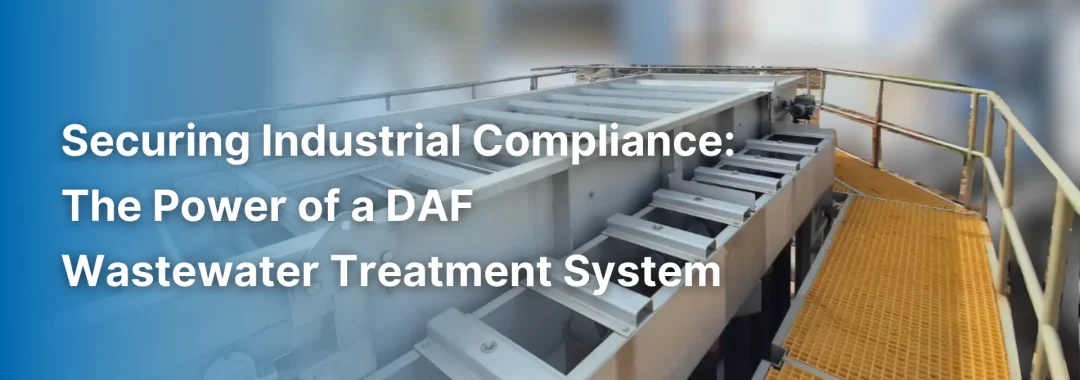
Securing Industrial Compliance: The Power of a DAF Wastewater Treatment System

Industrial facility managers constantly face the challenge of meeting stringent effluent discharge limits. Consequently, managing fats, oils, and grease (FOG) alongside heavy total suspended solids (TSS) requires robust technology. Implementing a reliable DAF wastewater treatment system provides an effective, solution-driven answer to these operational hurdles. Indeed, this specialized technology separates contaminants efficiently, ensuring strict environmental compliance while optimizing overall plant performance.

Furthermore, integrating advanced primary treatment is no longer a luxury for modern factories. Instead, it serves as the foundational step toward sustainable resource recovery and operational longevity.

Overcoming Industrial Effluent Challenges

Factories across the food, beverage, and petrochemical sectors generate heavily polluted water. Therefore, managing this waste stream effectively becomes a top priority for procurement and facility teams.

The Burden of High TSS and FOG

Conventional settling clarifiers often fail to remove lighter particles and emulsified oils. Because these contaminants do not settle via gravity, they easily pass through standard settling tanks. Subsequently, heavy organic loads disrupt downstream biological processes. High concentrations of FOG can coat biological flocs, essentially starving the beneficial bacteria of oxygen. Thus, facilities face a high risk of regulatory failure and environmental penalties if these parameters remain unchecked.

How a DAF Wastewater Treatment System Drives Efficiency

To resolve these settling issues, engineers utilize Dissolved Air Flotation (DAF). Specifically, a DAF wastewater treatment system floats contaminants to the surface rather than waiting for them to sink.

The Science of Microbubble Flotation

The mechanics behind this process are highly efficient. First, the system dissolves air into a recycled stream of water under high pressure. Next, releasing this pressurized water into the main flotation tank creates millions of microscopic bubbles. These tiny bubbles attach directly to the chemically dosed suspended particles. Ultimately, the buoyancy of the bubbles floats the flocculated sludge to the surface, where mechanical skimmers easily remove it. For further technical reading, we detail exactly how DAF system works for wastewater on our dedicated resources page.

Protecting Downstream Membrane Assets

By removing heavy particulate loads early, the DAF unit effectively protects downstream filtration assets. For instance, feeding cleaner water significantly enhances BWRO membrane performance. Additionally, understanding the advantages of RO systems highlights the absolute necessity of excellent pre-treatment to prevent premature fouling. Should your facility require maintenance, securing high-quality Reverse Osmosis Membrane elements is critical for maintaining flow rates.

Guaranteeing Regulatory Compliance and Operational Continuity

Environmental agencies in Indonesia strictly monitor industrial discharge. Thus, utilizing a proper DAF unit wastewater treatment for compliance helps facilities avoid heavy fines and operational shutdowns. Moreover, integrating this robust separation technology promotes resource recovery. Facilities can safely recycle polished effluent back into cooling towers or washing stations, drastically lowering daily water consumption.

Partnering with Gapura Liqua Solutions

Sourcing reliable equipment and expert engineering remains a top priority for decision-makers. Therefore, PT. Gapura Liqua Solutions (GLS) offers comprehensive engineering, procurement, and construction (EPC) services. We tailor every installation to meet your specific effluent chemistry.

Additionally, we provide easy access to critical spare parts and consumables via our official Tokopedia store. Furthermore, you can view our successful, real-world implementations through our recent LinkedIn project updates, showcasing our commitment to engineering excellence.

Conclusion

Ultimately, establishing a modern DAF wastewater treatment system secures your facility’s operational future and environmental standing. PT. Gapura Liqua Solutions acts as your ideal expert partner in this critical journey. We explicitly link our expertise in seawater desalination, advanced resource recovery, and long-term operations to guarantee your facility’s success. Therefore, contact PT. Gapura Liqua Solutions today to discuss your next water treatment project and achieve total operational peace of mind.

FAQ

Q: What types of contaminants does a DAF system remove most effectively? A: A DAF system excels at removing low-density particulates that do not settle easily via gravity. Specifically, it highly effectively removes Fats, Oils, and Grease (FOG), total suspended solids (TSS), and light biological sludges from industrial effluent.

Q: How does a DAF system protect my Reverse Osmosis (RO) membranes? A: By acting as a robust primary pre-treatment step, the DAF unit drastically reduces the particulate and organic load in the water. Consequently, this prevents premature clogging and organic fouling of downstream ultrafiltration and RO membranes, saving significant maintenance costs.

Q: Do I need chemical dosing for a DAF system to work? A: Yes, in most industrial applications. Adding coagulants and flocculants binds smaller particles together into larger flocs. Subsequently, the microbubbles can easily attach to these larger flocs, significantly increasing the overall removal efficiency of the system.

Q: Can GLS integrate a DAF unit into my existing wastewater treatment plant? A: Absolutely. PT. Gapura Liqua Solutions specializes in upgrading existing infrastructure. We can seamlessly integrate a DAF unit into your current flow path to solve specific compliance issues or increase your overall treatment capacity.

Follow us on Social Media

Facebook Gapura Liqua - DAF wastewater treatment system Instagram Gapura Liqua - DAF wastewater treatment system LinkedIn Gapura Liqua - DAF wastewater treatment system
Teknisi memeriksa unit sistem daf wastewater treatment di fasilitas industri.

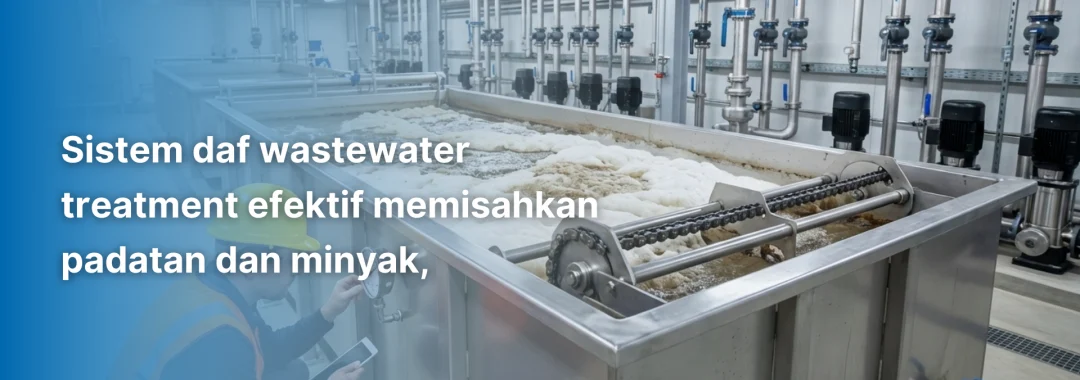
Sistem DAF Wastewater Treatment untuk Industri Indonesia

Sistem DAF Wastewater Treatment: Kunci Efisiensi Pengolahan Limbah Industri

Bagi para Head of Procurement dan Manajer Fasilitas di sektor industri, efisiensi Instalasi Pengolahan Air Limbah (IPAL) adalah prioritas non-negosiabel. Di tengah ketatnya regulasi lingkungan dan kebutuhan untuk menekan biaya operasional, penerapan sistem daf wastewater treatment (Dissolved Air Flotation) menjadi solusi strategis yang kian relevan, terutama bagi industri dengan beban pencemar organik dan padatan tinggi.

Artikel ini akan membahas secara mendalam urgensi teknologi DAF dalam rantai pengolahan air dan bagaimana PT. Gapura Liqua Solutions (GLS) mengintegrasikannya untuk menjamin keberlanjutan operasional Anda.

Tantangan Padatan Tersuspensi dan Minyak dalam Air Limbah

Limbah cair industri, khususnya dari sektor makanan-minuman, tekstil, dan minyak kelapa sawit, sering kali mengandung kadar Total Suspended Solids (TSS) serta lemak dan minyak (Fats, Oils, Grease – FOG) yang sangat tinggi. Tanpa penanganan awal yang tepat menggunakan sistem daf wastewater treatment, polutan ini menjadi ancaman serius bagi keseluruhan sistem utilitas pabrik.

Risiko Kerusakan pada Sistem Filtrasi Lanjut

Banyak industri kini beralih ke teknologi penggunaan kembali air (water reuse) menggunakan membran. Namun, membran Reverse Osmosis (RO) sangat sensitif terhadap fouling atau penyumbatan. TSS dan minyak yang lolos dari tahap awal akan menutupi pori-pori membran dengan cepat.

Hal ini menyebabkan penurunan kinerja yang drastis, seperti yang sering dibahas dalam analisis BWRO membrane performance. Tanpa perlindungan dari unit DAF yang andal, biaya penggantian membran akan melonjak dan frekuensi downtime untuk pencucian kimia (chemical cleaning) akan meningkat, mengganggu jadwal produksi.

Kepatuhan Regulasi Lingkungan di Indonesia

Pemerintah Indonesia, melalui Kementerian Lingkungan Hidup dan Kehutanan (KLHK), menerapkan standar baku mutu air limbah yang ketat. Kegagalan dalam memisahkan kontaminan fisik seperti TSS dan FOG tidak hanya berisiko merusak peralatan, tetapi juga membawa risiko hukum dan sanksi administratif. Implementasi sistem daf wastewater treatment yang terkalibrasi memastikan effluent pabrik Anda selalu berada dalam ambang batas aman sebelum dibuang atau diolah lebih lanjut.

Cara Kerja dan Keunggulan Teknologi DAF

Berbeda dengan sedimentasi konvensional yang mengandalkan gaya gravitasi untuk mengendapkan partikel berat, Dissolved Air Flotation (DAF) menggunakan prinsip pengapungan.

Mekanisme Pengapungan dengan Gelembung Mikro

Dalam proses ini, air yang telah dijenuhkan dengan udara bertekanan dilepaskan ke dalam tangki flotasi. Pelepasan tekanan ini menghasilkan jutaan gelembung mikro (microbubbles) yang menempel pada partikel padatan tersuspensi dan flok minyak. Gabungan gelembung-partikel ini memiliki densitas lebih ringan dari air, sehingga mengapung ke permukaan membentuk lapisan lumpur (sludge blanket) yang kemudian disapu bersih oleh mekanisme skimmer.

Teknologi ini sangat efektif untuk memisahkan partikel ringan yang sulit mengendap, menjadikan proses klarifikasi jauh lebih cepat dibandingkan clarifier konvensional.

Peran DAF sebagai Pre-Treatment Vital untuk RO

Dalam konteks desalinasi air laut (SWRO) atau daur ulang air limbah, DAF berfungsi sebagai benteng pertahanan pertama. Dengan mereduksi beban TSS dan organik secara signifikan, DAF melindungi unit Reverse Osmosis Membrane di hilir.

Integrasi ini adalah contoh nyata dari keunggulan sistem air RO yang didesain dengan benar: umur membran lebih panjang, konsumsi energi lebih rendah, dan kualitas air produk yang konsisten.

Mengapa Memilih PT. Gapura Liqua Solutions?

Memilih vendor untuk instalasi pengolahan air bukan sekadar membeli tangki besi; ini adalah kemitraan jangka panjang untuk keamanan utilitas. PT. Gapura Liqua Solutions (GLS) menawarkan keahlian end-to-end yang membedakan kami di pasar.

Kami tidak hanya menyediakan sistem daf wastewater treatment, tetapi mengintegrasikannya ke dalam solusi Total Water Management.

  • Rekayasa Presisi: Tim engineering kami mendesain sistem DAF yang disesuaikan dengan karakteristik spesifik limbah cair pabrik Anda (custom-engineered).
  • Dukungan Operasional: Kami menawarkan layanan Engineering, Procurement, and Construction (EPC) serta kontrak operasional jangka panjang, memastikan sistem berjalan optimal 24/7.
  • Ketersediaan Suku Cadang: Akses mudah ke komponen dan bahan kimia pengolahan air melalui toko resmi kami di Tokopedia.

Komitmen kami terhadap inovasi dan transparansi proyek dapat Anda pantau melalui pembaruan rutin di LinkedIn Gapura Liqua Solutions.

Kesimpulan

Investasi pada sistem daf wastewater treatment yang berkualitas adalah langkah proaktif untuk melindungi aset produksi dan mematuhi regulasi lingkungan. Dengan kemampuan memisahkan kontaminan membandel secara efisien, teknologi ini menjadi pondasi bagi sistem pengelolaan air industri yang berkelanjutan.

PT. Gapura Liqua Solutions siap menjadi mitra strategis Anda, mengubah tantangan limbah menjadi keunggulan operasional melalui solusi teknis yang teruji dan terpercaya.

Jangan biarkan masalah limbah menghambat pertumbuhan bisnis Anda. Hubungi Kami untuk Konsultasi Gratis

FAQ Section

Q: Apakah sistem DAF cocok untuk semua jenis air limbah industri? A: Sistem DAF sangat efektif untuk limbah yang mengandung padatan ringan, minyak, dan lemak (FOG) seperti pada industri makanan, sawit, dan tekstil. Untuk limbah dengan padatan berat yang mudah mengendap, sedimentasi konvensional mungkin lebih cocok. GLS dapat melakukan audit untuk menentukan solusi terbaik bagi Anda.

Q: Seberapa besar penghematan lahan jika menggunakan DAF dibandingkan clarifier biasa? A: DAF memiliki loading rate yang jauh lebih tinggi, sehingga footprint (kebutuhan lahan) instalasinya bisa lebih kecil dan kompak dibandingkan kolam sedimentasi gravitasi, sangat cocok untuk pabrik dengan lahan terbatas.

Q: Apakah GLS menyediakan bahan kimia koagulan dan flokulan untuk proses DAF? A: Ya, kami menyediakan paket lengkap termasuk pemilihan bahan kimia (chemical treatment) yang tepat untuk memaksimalkan pembentukan flok dan efisiensi pemisahan dalam unit DAF.

Q: Bagaimana sistem DAF membantu proses desalinasi air laut (SWRO)? A: Pada desalinasi, air laut sering mengandung alga dan residu organik yang bersifat ringan. DAF efektif mengangkat kontaminan ini sebelum air masuk ke sistem ultrafiltrasi atau RO, mencegah biofouling yang parah pada membran.

Follow us on Social Media

Facebook Instagram LinkedIn

Engineer monitoring an industrial water desalination plant system at a coastal facility in Indonesia.

Industrial Water Desalination Plant for Indonesia Facilities

Industrial Water Desalination Plant: Securing Business Continuity in Indonesia

For Facilities Managers and Heads of Procurement in Indonesia, water is not merely a utility; it is the lifeblood of production. As industrial zones expand and climate patterns shift, relying solely on groundwater or municipal supplies is increasingly risky. Implementing a robust industrial water desalination plant is no longer just an option—it is a strategic necessity for safeguarding operational continuity.

This article examines how modern desalination systems solve critical supply issues and why selecting the right engineering partner is paramount for long-term success.

The Strategic Necessity of Desalination for Facilities

Indonesia’s vast coastline offers abundant seawater resources, yet many industries still struggle with clean water availability. An industrial water desalination plant converts this inexhaustible resource into high-purity process water, insulating your business from drought, regulatory restrictions on groundwater extraction, and municipal supply interruptions.

Mitigating Risks of Unreliable Water Supply

Inconsistent water quality can wreak havoc on expensive machinery. High salinity and contaminants lead to rapid corrosion, scaling, and frequent downtime. By deploying a dedicated industrial water desalination plant, facilities gain control over their water quality parameters. This autonomy prevents unexpected production halts and protects capital assets from premature degradation, directly impacting the bottom line.

Technical Components of an Efficient Industrial Water Desalination Plant

Modern desalination is far more than just filtration; it is a sophisticated integration of hydraulics and chemistry. To ensure commercial viability, the system must balance output quality with energy efficiency.

Advanced Membrane Technology and Pre-treatment

The heart of any Seawater Reverse Osmosis (SWRO) system is the membrane. However, the lifespan of these membranes depends heavily on pre-treatment. Effective removal of suspended solids prevents fouling, which is a common cause of efficiency loss.

At PT. Gapura Liqua Solutions (GLS), we utilize high-performance Reverse Osmosis Membrane technology designed to withstand high pressure and challenging feed water conditions. Understanding BWRO membrane performance is also critical for facilities dealing with brackish sources, ensuring that the specific rejection rates meet industrial standards.

Energy Efficiency and Resource Recovery

Historically, desalination was viewed as energy-intensive. Today, technologies such as Energy Recovery Devices (ERDs) have revolutionized the economics of the industrial water desalination plant. Furthermore, forward-thinking companies are now looking beyond water. Through resource recovery, brine (waste stream) can be processed to extract valuable minerals, turning waste into value.

You can learn more about the specific advantages of RO water systems and how they contribute to a circular economy in our technical insights.

Why Procurement Leaders Partner with Gapura Liqua Solutions

Selecting a vendor for an industrial water desalination plant involves evaluating technical capability, local support, and long-term reliability. PT. Gapura Liqua Solutions stands out as a premier partner for Indonesian industries.

We provide end-to-end solutions, from Engineering and Procurement to Construction and long-term Operations (EPC + O&M). Our “Total Water Solutions” approach means you can focus on your core business while we manage water availability and compliance.

  • Local Expertise: We understand the unique water chemistry of the Indonesian archipelago.
  • Supply Chain Security: We ensure the availability of critical consumables and spare parts, also accessible via our Tokopedia official store for ease of procurement.
  • Proven Track Record: Our projects demonstrate high reliability in challenging environments.

For a glimpse into our recent project activities and industry updates, you can view our latest LinkedIn Activity.

Conclusion

Investing in an industrial water desalination plant is a decisive move toward operational resilience. It mitigates the risks of water scarcity and ensures that your facility meets global standards for sustainability and efficiency. However, the technology is only as good as the partner who installs and maintains it.

PT. Gapura Liqua Solutions combines technical excellence with local understanding to deliver systems that last. We invite you to discuss your specific water requirements with our engineering team.

Are you ready to secure your facility’s water future? Contact Us for a Consultation

FAQ Section

Q: What is the typical lifespan of an industrial water desalination plant? A: With proper maintenance and high-quality components, a plant can operate efficiently for over 20 years. The membranes typically require replacement every 3 to 5 years depending on the feed water quality and pre-treatment efficacy.

Q: How does GLS handle the high energy consumption associated with desalination? A: We design our systems using advanced Energy Recovery Devices (ERDs) and high-efficiency pumps. This significantly reduces the energy footprint, making the operational costs competitive with traditional water sourcing methods.

Q: Can the plant handle variable feed water quality, such as seasonal changes in seawater? A: Yes. Our engineering team designs the pre-treatment and SWRO systems with flexibility in mind. We analyze seasonal data to ensure the system remains stable regardless of fluctuations in turbidity or salinity.

Q: Does GLS provide support after the installation is complete? A: Absolutely. We offer comprehensive Operation & Maintenance (O&M) contracts. Our team manages routine monitoring, chemical cleaning (CIP), and spare parts supply to ensure zero unplanned downtime.

Follow us on Social Media

Facebook Instagram LinkedIn
Teknisi industri melakukan maintenance membran RO dan pengecekan sistem desalinasi.

Pentingnya Maintenance Membran RO untuk Efisiensi Industri

Pentingnya Maintenance Membran RO untuk Keandalan Operasional Industri

Dalam ekosistem industri modern, air bukan sekadar utilitas pendukung, melainkan komponen kritis yang menentukan kelancaran produksi. Bagi perusahaan yang mengandalkan teknologi desalinasi atau pengolahan air payau, memahami pentingnya maintenance membran RO (Reverse Osmosis) adalah langkah strategis untuk mengamankan aset dan efisiensi biaya.

PT. Gapura Liqua Solutions (GLS) memahami bahwa tantangan utama bagi manajer fasilitas dan kepala pengadaan saat ini bukan hanya tentang membeli peralatan, tetapi memastikan peralatan tersebut beroperasi secara kontinyu tanpa gangguan. Artikel ini akan membahas secara mendalam risiko pengabaian perawatan dan solusi teknis untuk menjaga performa sistem air Anda.

Risiko Fatal Akibat Mengabaikan Perawatan Membran

Sistem RO bekerja dengan prinsip filtrasi tingkat tinggi yang sangat sensitif terhadap kotoran. Tanpa jadwal perawatan yang ketat, kinerja sistem akan menurun drastis dalam waktu singkat. Oleh karena itu, kesadaran akan pentingnya maintenance membran RO harus dimiliki oleh setiap tim operasional.

Ancaman Fouling dan Scaling pada Kualitas Air

Musuh utama dari membran RO adalah fouling (penumpukan materi organik/biologis) dan scaling (kerak mineral). Ketika kontaminan ini menutupi permukaan membran, pori-pori mikroskopis akan tersumbat. Akibatnya, kualitas air hasil olahan (permeate) akan menurun dan tidak memenuhi standar industri yang ketat.

Kondisi ini sering kali diperparah oleh fluktuasi kualitas air baku. Pemahaman mendalam mengenai BWRO membrane performance sangat diperlukan untuk mengidentifikasi gejala awal penurunan kinerja sebelum terjadi kerusakan permanen pada elemen membran.

Dampak Finansial: Lonjakan Energi dan Umur Aset Pendek

Mengabaikan perawatan tidak hanya berdampak pada kualitas air, tetapi juga pada neraca keuangan perusahaan. Membran yang kotor membutuhkan tekanan pompa yang jauh lebih tinggi untuk mendorong air melewatinya. Hal ini secara langsung menyebabkan lonjakan konsumsi listrik yang signifikan.

Selain itu, penggantian membran secara dini akibat kerusakan permanen memakan biaya investasi (CAPEX) yang besar. Padahal, dengan memahami pentingnya maintenance membran RO, umur pakai membran dapat diperpanjang hingga bertahun-tahun, mengubah biaya tak terduga menjadi pengeluaran operasional (OPEX) yang terencana dan efisien.

Strategi Pemeliharaan untuk Memaksimalkan Kinerja BWRO dan SWRO

Untuk menjaga keandalan sistem, pendekatan reaktif (memperbaiki saat rusak) harus ditinggalkan. Industri harus beralih ke pendekatan preventif dan prediktif.

Implementasi Cleaning-in-Place (CIP) yang Efektif

Salah satu metode perawatan utama adalah Cleaning-in-Place (CIP). Proses ini melibatkan sirkulasi bahan kimia pembersih khusus ke dalam sistem membran untuk melarutkan kerak dan kotoran tanpa perlu membongkar unit.

Keberhasilan CIP sangat bergantung pada ketepatan pemilihan bahan kimia, suhu, dan pH. Prosedur ini krusial untuk mengembalikan flux (laju alir) ke titik optimal. Anda dapat mempelajari lebih lanjut mengenai spesifikasi teknis komponen ini di halaman produk Reverse Osmosis Membrane kami.

Monitoring Rutin sebagai Langkah Preventif

Selain pembersihan fisik, pemantauan data operasional harian seperti tekanan, konduktivitas, dan laju alir adalah wajib. Data ini berfungsi sebagai indikator kesehatan sistem. Deteksi dini terhadap anomali tekanan (differential pressure) memungkinkan teknisi untuk mengambil tindakan korektif sebelum terjadi telescoping atau kerusakan fisik pada membran.

Pendekatan sistematis ini merupakan salah satu keunggulan sistem air RO yang dikelola dengan standar profesional, menjamin pasokan air yang stabil untuk kebutuhan pabrik.

Mengapa Memilih PT. Gapura Liqua Solutions sebagai Mitra Anda?

Memilih mitra untuk perawatan sistem air industri adalah keputusan jangka panjang. PT. Gapura Liqua Solutions (GLS) hadir bukan sekadar sebagai vendor, tetapi sebagai mitra ahli yang memberikan solusi end-to-end.

Kami mengintegrasikan teknologi desalinasi air laut (SWRO) dan pengolahan air payau dengan fokus pada keandalan jangka panjang. Berikut adalah alasan mengapa profesional industri mempercayakan sistem mereka kepada kami:

  1. Keahlian Teknis Mendalam: Tim kami terdiri dari insinyur berpengalaman yang memahami karakteristik air di Indonesia.
  2. Solusi Resource Recovery: Kami tidak hanya memurnikan air, tetapi juga membantu klien mengeksplorasi potensi pemulihan sumber daya dari limbah cair.
  3. Ketersediaan Suku Cadang: Kami menjamin ketersediaan komponen vital untuk meminimalkan downtime. Anda bahkan dapat mengecek ketersediaan komponen pendukung melalui kanal resmi kami di Tokopedia.

Komitmen kami terhadap inovasi dan layanan pelanggan juga tercermin dalam aktivitas proyek terbaru kami, yang dapat Anda lihat melalui pembaruan di LinkedIn Gapura Liqua Solutions. Kepercayaan klien adalah bukti nyata dedikasi kami.

Kesimpulan

Pada akhirnya, keberlanjutan operasional industri sangat bergantung pada keandalan utilitas pendukungnya. Menyadari pentingnya maintenance membran RO adalah langkah awal untuk mencegah kerugian besar di masa depan. Dengan perawatan yang tepat, Anda tidak hanya menghemat biaya energi dan penggantian suku cadang, tetapi juga memastikan lini produksi berjalan tanpa henti.

PT. Gapura Liqua Solutions siap membantu Anda merancang strategi perawatan yang komprehensif, mulai dari audit sistem, penyediaan bahan kimia, hingga kontrak servis berkala. Jangan biarkan masalah air menghambat target produksi Anda.

Apakah Anda siap meningkatkan efisiensi sistem water treatment Anda? Hubungi Kami untuk Konsultasi Gratis

FAQ Section

Q: Seberapa sering maintenance membran RO harus dilakukan? A: Frekuensi perawatan bergantung pada kualitas air baku. Namun, Cleaning-in-Place (CIP) umumnya disarankan ketika terjadi penurunan aliran (flux) sebesar 10-15% atau kenaikan tekanan operasional sebesar 10-15% dari kondisi awal.

Q: Apa tanda-tanda membran RO perlu segera diganti? A: Tanda utamanya adalah ketika proses pembersihan (CIP) tidak lagi mampu mengembalikan performa aliran atau kualitas air (rejection rate) ke standar yang diinginkan, atau terjadi kerusakan fisik pada membran.

Q: Apakah GLS menyediakan layanan kontrak servis untuk perawatan membran? A: Ya, PT. Gapura Liqua Solutions menyediakan layanan Operation & Maintenance (O&M) jangka panjang untuk memastikan sistem Anda dikelola oleh tenaga ahli, sehingga Anda bisa fokus pada bisnis inti.

Q: Mengapa biaya energi sistem RO saya meningkat tajam? A: Peningkatan biaya energi biasanya disebabkan oleh fouling atau scaling pada membran. Pompa harus bekerja lebih keras (tekanan lebih tinggi) untuk menembus membran yang tersumbat, sehingga konsumsi listrik meningkat.

Follow us on Social Media

Facebook Instagram LinkedIn
Teknisi memeriksa sistem pemrosesan garam industri dan membran RO di fasilitas water treatment modern.

Sistem Pemrosesan Garam Industri: Efisiensi & Pemurnian Tinggi

Sistem Pemrosesan Garam Industri: Kunci Efisiensi dan Resource Recovery

Bagi para pemangku kepentingan di sektor manufaktur dan fasilitas industri, sistem pemrosesan garam industri bukan sekadar pelengkap utilitas, melainkan aset strategis. Di tengah ketatnya regulasi lingkungan dan kebutuhan efisiensi biaya, kemampuan untuk mengelola air asin (brine) dan memurnikan garam industri menjadi penentu keberlanjutan operasional.

Artikel ini akan mengupas tuntas bagaimana teknologi pemrosesan yang tepat dapat meningkatkan profitabilitas Anda dan mengapa bermitra dengan ahli yang tepat adalah keputusan investasi terbaik.

Tantangan Utama dalam Pengelolaan Garam dan Brine Industri

Industri kimia, tekstil, hingga makanan dan minuman sering kali menghadapi tantangan ganda: kebutuhan akan pasokan garam industri berkualitas tinggi dan kewajiban mengelola limbah brine hasil sampingan dari proses desalinasi atau manufaktur.

Tanpa sistem pemrosesan garam industri yang andal, perusahaan menghadapi risiko operasional yang signifikan. Fluktuasi kualitas air baku dapat mengganggu proses produksi, sementara pembuangan limbah air asin yang tidak sesuai standar dapat berujung pada sanksi lingkungan yang berat.

Risiko Inefisiensi pada Metode Konvensional

Metode penguapan kolam terbuka atau sistem termal konvensional sering kali memakan lahan luas dan energi yang sangat besar. Selain itu, metode ini sulit mencapai konsistensi kemurnian yang dibutuhkan oleh standar industri modern. Inefisiensi ini secara langsung menggerus margin keuntungan perusahaan akibat biaya energi yang membengkak dan downtime akibat perawatan peralatan yang terkorosi.

Komponen Vital dalam Sistem Pemrosesan Garam Industri Modern

Untuk menjawab tantangan tersebut, diperlukan pendekatan terintegrasi yang menggabungkan teknologi membran dan termal. Sistem pemrosesan garam industri modern dirancang untuk bekerja secara kontinyu dengan efisiensi energi yang optimal.

Peran Membran Reverse Osmosis dalam Prakonsentrasi

Langkah awal yang krusial dalam sistem ini adalah pemekatan larutan garam. Di sinilah peran teknologi membran menjadi sangat vital. Penggunaan teknologi Reverse Osmosis Membrane memungkinkan pemisahan air murni dari larutan garam secara efisien sebelum masuk ke tahap kristalisasi.

Dengan menggunakan membran berkualitas tinggi, volume air yang harus diuapkan dapat dikurangi secara drastis. Hal ini tidak hanya menghemat energi termal, tetapi juga mempercepat siklus produksi. Untuk aplikasi dengan salinitas air payau, pemahaman mengenai BWRO Membrane Performance sangat penting untuk memastikan sistem pra-perawatan berjalan optimal dan mencegah fouling dini pada sistem utama.

Teknologi Kristalisasi untuk Kemurnian Maksimal

Setelah melalui tahap prakonsentrasi, larutan garam jenuh (brine) akan masuk ke unit kristalisasi. Teknologi ini memisahkan kristal garam dari cairan induknya dengan presisi tinggi. Hasilnya adalah garam industri dengan tingkat kemurnian yang konsisten, siap digunakan kembali dalam proses produksi (seperti pada industri Klor-Alkali) atau dikemas sebagai produk bernilai jual.

Keunggulan sistem yang terintegrasi ini sejalan dengan keunggulan sistem air RO pada umumnya, yaitu modularitas, efisiensi ruang, dan kontrol kualitas yang ketat.

Mengubah Limbah Menjadi Nilai dengan Resource Recovery

Konsep ekonomi sirkular kini menjadi standar baru dalam manajemen fasilitas. Sistem pemrosesan garam industri yang canggih memungkinkan implementasi Zero Liquid Discharge (ZLD). Dalam skema ini, limbah cair brine dari instalasi Desalinasi Air Laut (SWRO) tidak dibuang kembali ke laut yang berpotensi merusak ekosistem, melainkan diolah lebih lanjut.

Melalui proses resource recovery, mineral berharga seperti natrium klorida, magnesium, atau litium dapat diekstraksi kembali. Ini mengubah pusat biaya (pengolahan limbah) menjadi pusat keuntungan (pemulihan bahan baku).

Catatan Penting: Implementasi teknologi ini memerlukan keahlian teknis mendalam, mulai dari desain proses hingga pemilihan material yang tahan korosi ekstrem.

Mengapa Memilih PT. Gapura Liqua Solutions sebagai Mitra Anda?

Memilih vendor untuk sistem pemrosesan garam industri adalah keputusan jangka panjang. Anda memerlukan mitra yang tidak hanya menjual alat, tetapi memberikan solusi end-to-end.

PT. Gapura Liqua Solutions (GLS) hadir sebagai mitra strategis bagi industri di Indonesia. Dengan keahlian inti dalam Seawater Reverse Osmosis (SWRO) dan pengolahan air payau, GLS menawarkan layanan lengkap mulai dari rekayasa (engineering), pengadaan (procurement), hingga operasional jangka panjang.

Mengapa GLS?

  • Fokus pada Bisnis Inti: Kami menangani utilitas air dan garam Anda, sehingga Anda bisa fokus sepenuhnya pada produksi utama tanpa pusing memikirkan ketersediaan air atau kepatuhan limbah.
  • Ketersediaan Suku Cadang: Dukungan purna jual yang kuat dengan ketersediaan komponen yang mudah diakses, termasuk melalui kanal digital resmi kami di Tokopedia.
  • Rekam Jejak Terbukti: GLS aktif terlibat dalam proyek-proyek strategis nasional dan industri swasta, memberikan solusi yang disesuaikan dengan kondisi air lokal di Indonesia.

Anda dapat melihat salah satu update terbaru mengenai aktivitas proyek dan wawasan industri kami melalui tautan berikut: LinkedIn Update GLS.

Kesimpulan

Investasi pada sistem pemrosesan garam industri yang andal adalah langkah krusial untuk mengamankan masa depan operasional pabrik Anda. Dari penghematan energi melalui membran RO hingga penciptaan nilai tambah melalui resource recovery, manfaatnya sangat nyata bagi bottom line perusahaan.

PT. Gapura Liqua Solutions siap menjadi mitra terpercaya Anda dalam mewujudkan sistem utilitas air dan pemrosesan garam yang efisien, patuh regulasi, dan menguntungkan. Jangan biarkan masalah kualitas air menghambat pertumbuhan bisnis Anda.

Apakah Anda siap meningkatkan efisiensi fasilitas Anda? Hubungi Kami untuk Konsultasi Gratis

FAQ Section

Q: Apa keuntungan utama menggunakan sistem pemrosesan garam industri modern dibandingkan metode tradisional? A: Sistem modern menawarkan efisiensi energi yang jauh lebih tinggi, jejak lahan (footprint) yang lebih kecil, kualitas produk garam yang konsisten dan kemurnian tinggi, serta kemampuan untuk mematuhi regulasi lingkungan yang ketat melalui Zero Liquid Discharge.

Q: Apakah sistem ini bisa diterapkan untuk mengolah air laut menjadi garam industri? A: Ya, sistem ini sangat ideal untuk diintegrasikan dengan Seawater Reverse Osmosis (SWRO). Brine (air buangan) dari SWRO yang biasanya dibuang dapat diproses lebih lanjut untuk menghasilkan garam industri, memaksimalkan pemanfaatan sumber daya.

Q: Bagaimana GLS menjamin keberlanjutan operasional sistem ini? A: GLS tidak hanya membangun sistem, tetapi menawarkan layanan operasional dan pemeliharaan jangka panjang. Kami memastikan pasokan suku cadang, monitoring kinerja membran, dan optimalisasi proses secara berkala agar klien dapat fokus pada bisnis inti mereka.

Q: Apakah GLS menyediakan suku cadang untuk sistem membran? A: Tentu. Kami menyediakan berbagai komponen vital seperti membran RO, pressure vessel, dan bahan kimia pendukung yang orisinal dan berkualitas tinggi.

Follow us on Social Media

Facebook Instagram LinkedIn
An industrial-scale demineralized water system for a power plant, featuring a row of large blue carbon filter tanks, a central control panel, and stainless steel polishing vessels, with the Gapura Liqua Solutions logo.

Demineralized Water Power Plants: Optimizing Assets & OPEX

Demineralized Water Systems Power Plants: A Technical Guide to Asset Reliability and Operational Efficiency

The Critical Role of Demineralized Water (Demin Water) in Modern Power Plant Operations

In the high-stakes environment of power generation, water is not merely a utility. Instead, it is an engineered fluid. It is a critical component that directly impacts plant performance, asset longevity, and financial returns. The purity of this water, specifically demineralized water, is therefore paramount. A modern demineralized water system for a power plant is not a peripheral unit. In fact, it is a core component of operational integrity. Its applications are fundamental to the power generation cycle.

  • Boiler Feedwater for Heat Recovery Steam Generators (HRSG): In a combined-cycle power plant, the HRSG is the heart of efficiency. Ultra-pure demin water is essential to produce high-pressure steam that drives the steam turbine. Any impurity can lead to catastrophic failures.
  • NOx Emission Control in Gas Turbine Generators (GTG): Demin water is injected into gas turbine combustors to lower temperatures and control the formation of nitrogen oxides (NOx), ensuring compliance with stringent environmental regulations.
  • Cooling Systems & Other Applications: High-purity water is also used in closed-loop cooling systems, hydrogen generation, and solar panel cleaning on solar energy farms to prevent spotting and efficiency loss.

Ultimately, water purity is directly and inextricably linked to plant efficiency (MW output), operational reliability (uptime), and the lifespan of multi-million dollar assets.

Risks and Inefficiencies: The Hidden Costs of Sub-Optimal Water Quality

Failing to maintain the specified water purity introduces immense technical and financial risks. These are not minor operational hurdles. On the contrary, they are significant threats to the plant’s core function and profitability.

Corrosion and Silica Scale: The Primary Threats to Turbines and HRSG

Silica is particularly insidious. Under high pressure, it can volatilize and carry over with the steam. As the steam expands and cools in the turbine, the silica deposits onto the turbine blades. This scaling disrupts the blade’s precise aerodynamics, which consequently causes imbalance and reduces efficiency. Ultimately, this can lead to catastrophic blade failure and unscheduled shutdowns that cost millions in lost revenue and repairs. Similarly, silica scale in boiler tubes acts as an insulator. This drastically reduces heat transfer efficiency and forces the system to consume more fuel for the same steam output.

  • Dissolved Minerals (Salts): Ions like chloride and sulfate are highly corrosive to metal surfaces at high temperatures and pressures, leading to premature failure of boiler tubes and other critical components.
  • Silica (SiOâ‚‚): Silica is particularly insidious. Under high pressure, it can volatilize and carry over with the steam. As the steam expands and cools in the turbine, the silica deposits onto the turbine blades. This scaling disrupts the precise aerodynamics of the blades, causing imbalance, reducing efficiency, and potentially leading to catastrophic blade failure and unscheduled shutdowns costing millions in lost revenue and repairs. In boiler tubes, silica scale acts as an insulator, drastically reducing heat transfer efficiency and forcing the system to consume more fuel for the same steam output.

Balancing the Financial Equation: How to “Optimize CAPEX and OPEX”

Decision-makers often face the challenge of capital expenditure (CAPEX) versus operational expenditure (OPEX). A water treatment system with a low initial purchase price (low CAPEX) can appear attractive. However, this is often a financial trap. Such systems typically lead to exorbitant long-term costs (high OPEX) through:

  • High consumption of chemicals for regeneration and cleaning.
  • Frequent replacement of consumables like membranes and resins.
  • Increased labor for monitoring and maintenance.
  • The highest cost of all: unplanned downtime of the entire power plant.

The true goal is to achieve the lowest Total Cost of Ownership (TCO). This requires a strategic investment in a well-engineered system that balances CAPEX with reliability and minimal OPEX.

Designing Robust Demineralized Water Systems for Power Plants: Key Technologies

A reliable demineralization plant is not a single piece of equipment. Rather, it is a multi-stage, integrated process. Each stage is engineered to remove specific contaminants and protect the subsequent, more sensitive stages. A complete demineralized water system for a power plant depends on every stage functioning perfectly.

Pre-Treatment: The Foundation for Long-Term Performance

The longevity and performance of the entire demin system depend on the robustness of its pre-treatment stage. This initial phase is designed to remove suspended solids, colloids, and organic matter from the raw water source. Key technologies include:

  • Multimedia Filtration (MMF): Removes larger suspended particles, silt, and sediment.
  • Ultrafiltration (UF): Utilizes a membrane barrier to remove much finer particles, bacteria, viruses, and colloids. A well-designed UF system is the best defense for protecting the downstream Reverse Osmosis membranes from fouling, ensuring their long-term performance. The principles of applying these effective pre-treatment strategies are crucial across all industries requiring high-purity water.

Two-Pass Reverse Osmosis (RO): The Workhorse of Demineralization

Following pre-treatment, the water enters the core demineralization process. A Two-Pass RO system is the industry standard for power plant applications.

  • First Pass: Removes the bulk (typically >99.5%) of Total Dissolved Solids (TDS) from the water.
  • Second Pass: Takes the permeate (product water) from the first pass and processes it again, achieving an even higher level of purity and significantly reducing the ionic load on the final polishing stage. This design provides redundancy and ensures consistently high-quality water.

Polishing: Electrodeionization (EDI) vs. Mixed Bed for Ultimate Purity

The final “polishing” step removes the last traces of dissolved ions. This is done to achieve the ultra-pure specifications required, which is often <0.1 µS/cm conductivity.

  • Traditional Mixed Bed Ion Exchange: This method uses cation and anion resins in a single vessel. While effective, it is a batch process. As a result, it requires periodic shutdown for chemical regeneration using strong acids and alkalis. This creates hazardous waste streams and requires significant operator intervention.
  • Electrodeionization (EDI): This is the modern, superior alternative. EDI uses electricity, ion exchange membranes, and resin to continuously remove ions. Crucially, it does this without the need for chemical regeneration. The benefits are substantial. They include continuous operation, no hazardous chemical handling, and minimal waste. Furthermore, it provides a highly stable and predictable water quality. For new power plants, EDI is the preferred technology due to its safety, reliability, and lower OPEX.

The Financial Benefits of a Well-Engineered System

Investing in a properly designed demineralized water system for a power plant, particularly one incorporating modern technologies like UF and EDI, provides direct and measurable financial returns.

“Reduce Annual Operational Cost” Through Automation and Efficiency

A modern demin plant is designed for efficiency. For example, the adoption of EDI eliminates the significant recurring cost of regeneration chemicals. Advanced automation and PLC controls also minimize the need for operator oversight, reducing labor costs. In addition, efficient system design can include a resource recovery application service to treat and reuse certain waste streams. This minimizes water loss and disposal costs, directly contributing to a healthier bottom line.

Protecting Multi-Million Dollar Assets and Ensuring Maximum Uptime

The capital investment in a demin water system is a fraction of the cost of the assets it protects. It should be viewed as an essential insurance policy for the plant’s core revenue-generating equipment—the gas turbines, steam turbines, and HRSG. By preventing corrosion and scaling, the system ensures these assets operate at peak efficiency for their entire designed lifespan and, most critically, prevents unplanned shutdowns that result in massive revenue loss.

Gapura Liqua Solutions: Your EPC Partner for Energy Industry Water Solutions

Choosing the right partner to design and build your demineralization plant is as critical as the technology itself. Gapura Liqua Solutions operates as a full-service EPC partner, providing a single point of responsibility for your critical water infrastructure. As specialists in demineralized water systems for power plants, we understand the demands of your industry. Our focus is on delivering automated, reliable systems optimized for the lowest total cost of ownership. Ultimately, this ensures your plant operates safely, efficiently, and profitably.

Our end-to-end capabilities cover everything from initial raw water analysis, detailed process engineering and design, procurement of world-class components, to professional construction, commissioning, and long-term service. We have a proven track record in industrial applications and possess a deep understanding of the stringent water quality specifications and reliability demands of Indonesia’s power generation industry. Our focus is on delivering automated, reliable systems that are optimized for the lowest total cost of ownership, ensuring your plant operates safely, efficiently, and profitably.


Discuss your demin water requirements for your power generation facility. Contact our engineering team at Gapura Liqua Solutions to schedule a technical audit and initial system design consultation.