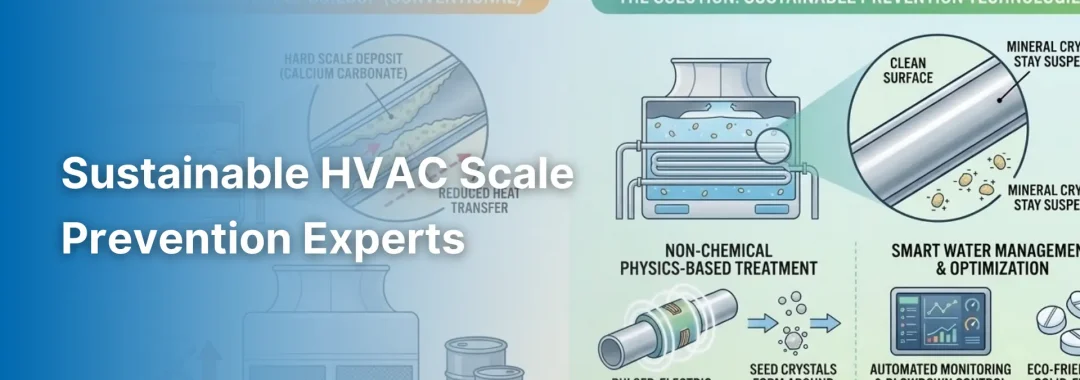
An industrial technician inspecting a high-efficiency chiller unit protected by sustainable HVAC scale prevention water treatment.

Sustainable HVAC Scale Prevention Experts

Sustainable HVAC Scale Prevention: The Key to Cooling Efficiency and Asset ROI

In the intensive cooling environments of Indonesia’s luxury hospitality and industrial sectors, facility managers often view water as an unavoidable utility bill. However, treating water as a passive expense is a strategic mistake. Water quality dictates the performance of your entire air conditioning network, acting either as a seamless heat-exchange medium or as a destructive force. Implementing sustainable HVAC scale prevention is the most effective way to transform this “hidden cost” into a controllable operational expense (OPEX). By addressing water purity at the source, facilities can protect their most expensive assets while achieving significant energy savings.

Traditional water management is often a “leaking bucket” for profits. Specifically, inefficient filtration and untreated mineral loads waste water, consume excessive chemicals, and slowly destroy downstream equipment such as chillers and cooling towers.

The Hidden Cost of Water: Why Poor Quality Destroys HVAC Performance

Scale is an invisible thief of energy. In cooling towers and chillers, minerals such as calcium carbonate and silica precipitate out of the water, forming a rock-hard layer on heat-exchange surfaces. Consequently, this layer acts as a thermal insulator, forcing the HVAC system to consume significantly more electricity to achieve the same cooling effect.

Scaling as an Insulator: The “Leaking Bucket” of Energy Waste

Even a thin layer of scale can reduce heat transfer efficiency by over 10%. For a large-scale resort or manufacturing plant, this inefficiency results in thousands of dollars of wasted energy every month. Furthermore, mineral deposits harbor bacteria and accelerate localized corrosion, leading to premature equipment failure. Therefore, relying on standard treatment methods often proves insufficient for modern luxury hospitality standards, where 100% uptime is expected.

Implementing Sustainable HVAC Scale Prevention Strategies

To stop “washing money away,” facilities must transition toward an advanced sustainability architecture. This involves moving beyond basic sand filtration toward high-performance, bioactive systems.

Transitioning from Traditional Sand to Activated Filter Media (AFM)

Most facilities rely on mined silica sand, which is prone to bio-fouling and “channeling.” In contrast, a modern approach involves using AFM S vs NG Media. This upcycled glass media is bio-resistant, preventing the bacterial growth that leads to uneven water flow and scale precursors bypassing the filter. By using AFM, hotels can cut backwash water waste by 50% while providing the ultra-clean water necessary for sustainable HVAC scale prevention.

High-Recovery RO for Superior Heat Exchange Protection

Following primary filtration, high-purity Reverse Osmosis (RO) water provides the ultimate defense against scale. By removing up to 99% of dissolved solids, RO water ensures that heat-exchange surfaces remain pristine. To achieve this, selecting a high-quality Reverse Osmosis Membrane is essential. Moreover, maintaining optimal BWRO membrane performance ensures that the system provides high-quality permeate with minimal energy consumption. Understanding the keunggulan sistem air RO is the first step for any facility manager looking to eliminate scaling emergency calls.

The Economic Logic: Calculating ROI and Facility OPEX Reduction

Transitioning to advanced water systems is not just an environmental choice; it is a high-yield investment. A well-engineered water loop typically delivers a clear ROI within 18 to 24 months. These savings are realized through reduced electricity bills, lower chemical consumption, and the extended lifespan of chillers and boilers. By focusing on sustainable HVAC scale prevention, procurement heads can shift budgets from “emergency repairs” to “preventative optimization,” significantly strengthening the company’s bottom line.

Partnering with PT. Gapura Liqua Solutions for Operational Continuity

Managing complex utility networks requires a partner who understands the total water cycle. PT. Gapura Liqua Solutions (GLS) provides end-to-end engineering, procurement, and long-term operations. We integrate seawater desalination and resource recovery into a seamless loop, ensuring your facility remains compliant and efficient. Our commitment to excellence is showcased in our latest project updates on LinkedIn, where we demonstrate utility savings for Indonesia’s premier properties.

For immediate maintenance needs, we provide professional-grade components through our official Tokopedia store. Additionally, we offer a Management Service Agreement to ensure your systems are maintained by experts, guaranteeing operational continuity.

Conclusion: Securing Long-Term Reliability and Resource Recovery

Ultimately, the performance of your cooling network is only as good as the water within it. By adopting sustainable HVAC scale prevention, you protect your physical assets, reduce utility waste, and ensure the long-term reliability of your facility. PT. Gapura Liqua Solutions remains the ideal partner for the Indonesian industrial and hospitality sectors, explicitly linking seawater desalination, resource recovery, and expert operations to your business success.

Stop letting scale drain your profits. Contact PT. Gapura Liqua Solutions today to audit your cooling network and implement a high-efficiency water strategy.

FAQ

Q: Can sustainable HVAC scale prevention really lower my electricity bill? A: Absolutely. By preventing scale buildup on heat-exchange surfaces, the chillers can operate at peak efficiency. Even a 1mm layer of scale can increase energy consumption by 10% or more.

Q: Why is AFM better than sand for HVAC pre-filtration? A: Specifically, Activated Filter Media (AFM) is bio-resistant and prevents the formation of biofilm. This eliminates “channeling” and ensures that minerals and organics are captured before they enter the cooling loop, providing superior sustainable HVAC scale prevention.

Q: How often should we audit our cooling tower water quality? A: For optimal performance, water quality should be monitored continuously with automated sensors. However, a comprehensive laboratory audit should be performed at least quarterly to adjust chemical dosing and filtration settings.

Q: Does GLS provide operational support for existing HVAC systems? A: Yes. PT. Gapura Liqua Solutions offers Management Service Agreements to optimize both new and existing water treatment infrastructure, ensuring long-term reliability.

Follow us on Social Media

Facebook Instagram LinkedIn
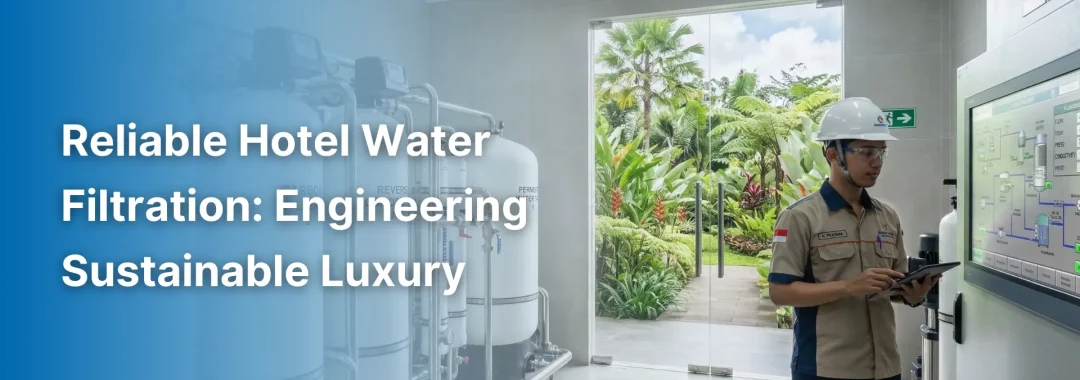
A technical installation of a reliable hotel water filtration system using AFM media and RO technology in a clean resort utility room.

Reliable Hotel Water Filtration for Resorts

Reliable Hotel Water Filtration: Engineering Sustainable Luxury

In the luxury hospitality sector of Indonesia, sustainability has transitioned from a marketing buzzword to a critical operational standard. Resorts in Bali and Jakarta are now evaluated by their “water intensity,” making reliable hotel water filtration a top priority for facility managers. Traditional systems often waste thousands of liters of treated water during cleaning cycles. Consequently, implementing a robust, circular water loop is the most effective way to meet zero-waste goals while maintaining the crystal-clear water quality that elite guests expect.

Furthermore, a professional water strategy acts as a high-yield investment. By treating water as a recoverable resource rather than a disposable utility, hotels can significantly reduce their monthly operational expenditure (OPEX).

The Hidden Risks of Traditional Sand Filtration

Many 5-star properties still rely on decades-old silica sand technology for their primary filtration. While functional, these systems are fundamentally incompatible with modern efficiency standards and often pose a risk to operational continuity.

Why Silica Sand Is a “Leaking Bucket” for Profits

Silica sand filters suffer from a major biological flaw: they allow bacteria to grow and form a biofilm. This biofilm glues the sand together, leading to “channeling,” where water bypasses the media entirely. As a result, the system must backwash more frequently to maintain clarity, wasting up to 50% more water than necessary. Specifically, this “leaking bucket” approach drains hotel profits through wasted water, excessive electricity, and high chemical consumption. Transitioning to reliable hotel water filtration solves this biological instability at the source.

Transitioning to Reliable Hotel Water Filtration

To achieve true reliability, engineers must focus on advanced sustainability architecture. Integrating bioactive media with high-recovery membranes creates a system that produces superior water with minimal waste.

Activated Filter Media (AFM) and Backwash Reduction

The cornerstone of reliable hotel water filtration is Activated Filter Media (AFM). Unlike mined sand, AFM is an upcycled glass media that is 100% bio-resistant. Because bacteria cannot grow on the AFM surface, it prevents channeling and the formation of “mud balls.” Moreover, AFM requires significantly less water for backwashing. For a detailed technical look at why this media is the superior choice, you can read our AFM S vs NG Media comparison.

Protecting Chillers, Boilers, and RO Membranes

Precision filtration does more than save water; it acts as a shield for your most expensive mechanical assets. By removing fine particulates as small as 1 micron, AFM prevents the scale buildup and organic fouling that destroy chillers and boilers. Furthermore, it safeguards your Reverse Osmosis Membrane, ensuring consistent BWRO membrane performance. Understanding the keunggulan sistem air RO is key to justifying the ROI of these advanced setups.

Achieving Zero-Waste Goals and Green Certifications

For modern hotel owners, ROI is not just about bills; it is about brand positioning. Implementing reliable hotel water filtration contributes directly to points for EarthCheck or Green Globe certifications. By reducing water intensity and chemical usage by up to 30%, your facility secures a competitive edge. This level of precision is especially vital for specialized needs, such as a sistem filtrasi air hotel in areas with high water hardness.

Partnering with Gapura Liqua Solutions for Operational Continuity

Successful utility management requires a partner who understands engineering, procurement, and long-term operations. PT. Gapura Liqua Solutions (GLS) provides end-to-end systems that allow our clients to focus on their core hospitality business. We integrate seawater desalination and resource recovery into a seamless, high-reliability loop. Our track record is visible in our latest project updates on LinkedIn, showcasing utility savings for iconic resorts like The Jewel of Seminyak – W Hotel.

For hotels needing immediate support, we provide premium components through our official Tokopedia store. This ensures your team has access to professional-grade tools for maintaining reliable hotel water filtration standards.

Conclusion: Securing ROI and Brand Reputation

Ultimately, a sustainable water strategy is the most robust insurance policy for your hotel’s operational future. By adopting reliable hotel water filtration, you reduce OPEX, earn prestigious certifications, and deliver an unparalleled guest experience. PT. Gapura Liqua Solutions remains the ideal partner for the Indonesian hospitality sector, explicitly linking resource recovery with long-term reliability.

Ensure your resort is a leader in sustainable luxury. Contact PT. Gapura Liqua Solutions today to audit your utility room and implement a bioactive, circular water strategy.

FAQ

Q: Can reliable hotel water filtration save money on electricity? A: Yes. By preventing scale buildup in heat exchangers, chillers, and boilers, the equipment operates at peak efficiency. This can reduce facility-wide energy consumption by up to 10–15%.

Q: How long does Activated Filter Media (AFM) last compared to sand? A: Silica sand typically requires replacement every 2-3 years due to bio-fouling and attrition. However, AFM is bio-resistant and extremely durable, meaning it often lasts for the entire lifespan of the filtration system.

Q: Is it possible to retrofit AFM into my existing sand filter tanks? A: Absolutely. Reliable hotel water filtration using AFM acts as a “drop-in” replacement. You simply remove the old sand and replace it with AFM without needing to modify your existing tanks or pumps.

Q: Does GLS provide operational support for remote resort locations? A: Yes. PT. Gapura Liqua Solutions offers Management Service Agreements and long-term O&M support for resorts across the entire Indonesian archipelago.

Follow us on Social Media

Facebook Instagram LinkedIn
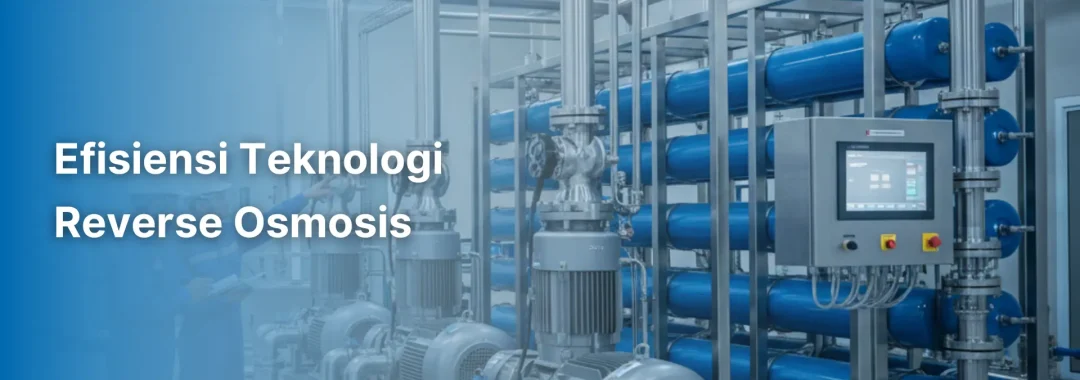
Implementasi sistem untuk meningkatkan efisiensi teknologi reverse osmosis pada fasilitas pengolahan air industri skala besar oleh PT. Gapura Liqua Solutions.

Efisiensi Teknologi Reverse Osmosis untuk Industri Indonesia

Optimasi Efisiensi Teknologi Reverse Osmosis untuk Keberlanjutan Industri

Dalam lanskap industri Indonesia yang kompetitif, gangguan pada utilitas air berarti kerugian finansial. Kegagalan sistem pengolahan sering kali berujung pada penghentian produksi secara mendadak. Memahami efisiensi teknologi reverse osmosis bukan sekadar pilihan teknis. Ini adalah strategi manajemen risiko bagi para direktur teknis dan manajer fasilitas.

Tantangan Operasional: Mengapa Sistem RO Standar Sering Gagal?

Banyak perusahaan manufaktur menghadapi masalah kronis pada sistem pemurnian air mereka. Masalah utama biasanya berkisar pada tingginya biaya operasional (OPEX) dan rendahnya masa pakai komponen.

Beberapa faktor kegagalan meliputi:

  • Biofouling: Akumulasi mikroorganisme yang menyumbat pori membran secara prematur.
  • High Pressure Drop: Penurunan tekanan yang drastis akibat desain sistem yang tidak presisi.
  • Permeate Quality: Fluktuasi kualitas air hasil yang tidak memenuhi standar proses industri.

Tanpa penanganan tepat, beban biaya penggantian reverse osmosis membrane akan membengkak secara signifikan.

Solusi Teknis: Integrasi Engineering dan Presisi Material

Mencapai efisiensi teknologi reverse osmosis memerlukan pendekatan holistik. PT. Gapura Liqua Solutions (GLS) menerapkan standar engineering yang melampaui sekadar perakitan komponen.

1. Pre-treatment Tingkat Lanjut

Kami menggunakan media filtrasi aktif seperti Activated Filter Media (AFM). Teknologi ini memiliki sifat katalitik yang mencegah penggumpalan bakteri. Hal ini secara langsung menurunkan risiko membrane fouling.

2. Monitoring TDS dan Laju Aliran

Sistem kami dirancang untuk menangani variasi TDS levels yang ekstrem, baik untuk aplikasi Sea Water (SWRO) maupun Brackish Water (BWRO). Dengan pemantauan real-time, risiko kerusakan mekanis akibat kerak dapat dimitigasi sejak dini. Anda dapat mempelajari lebih lanjut mengenai BWRO membrane performance untuk data teknis lebih dalam.


Perbandingan: Standar Industri vs. Solusi GLS

Fitur TeknisPraktek Industri StandarGLS Engineered Solutions
Desain SistemRakitan komponen generikCustom-engineered sesuai feed water
Manajemen MembranPenggantian reaktifPrediktif berbasis data performa
Konsumsi EnergiTinggi (tanpa optimasi tekanan)Rendah (dengan Energy Recovery Devices)
Dukungan TeknisTerbatas pada penjualanKontrak O&M menyeluruh

Memilih Mitra Strategis: Keunggulan GLS

PT. Gapura Liqua Solutions memahami bahwa air adalah nadi industri Anda. Kami menawarkan keunggulan sistem air RO yang terintegrasi dengan layanan EPC (Engineering, Procurement, and Construction).

Fokus kami adalah Resource Recovery. Kami membantu industri tidak hanya memurnikan air, tetapi juga mengoptimalkan setiap tetes yang digunakan melalui sistem yang andal dan efisien. Fokuslah pada bisnis inti Anda, sementara kami menangani kompleksitas pengolahan air.

Untuk pengadaan komponen cepat, Anda juga dapat mengunjungi Official Store kami di Tokopedia.

Kesimpulan: Investasi untuk Masa Depan

Meningkatkan efisiensi teknologi reverse osmosis adalah investasi jangka panjang. Dengan sistem yang tepat, perusahaan Anda dapat menekan biaya maintenance dan meningkatkan keberlanjutan operasional. Pastikan sistem Anda didukung oleh keahlian teknis kelas dunia untuk hasil yang konsisten.

Konsultasikan kebutuhan sistem air industri Anda dengan tim ahli kami melalui halaman Contact Us.

FAQ: Pertanyaan Teknis Pengambil Keputusan

1. Bagaimana cara menghitung ROI dari upgrade sistem RO? ROI dihitung berdasarkan penurunan frekuensi pembersihan membran (CIP), penghematan energi melalui variable speed drives, dan pengurangan biaya penggantian membran tahunan.

2. Apakah GLS dapat melakukan audit pada sistem RO yang sudah ada? Ya, kami menyediakan layanan audit teknis untuk mengidentifikasi bottleneck operasional dan memberikan rekomendasi peningkatan efisiensi secara spesifik.

3. Apa standar kualitas permeate yang dijamin oleh teknologi GLS? Sistem kami dirancang untuk memenuhi standar ketat sesuai kebutuhan spesifik industri, mulai dari standar air umpan boiler hingga proses farmasi yang mengacu pada regulasi internasional seperti World Health Organization (WHO) atau standar lokal Kementerian Perindustrian.

Follow us on Social Media

Facebook Instagram LinkedIn
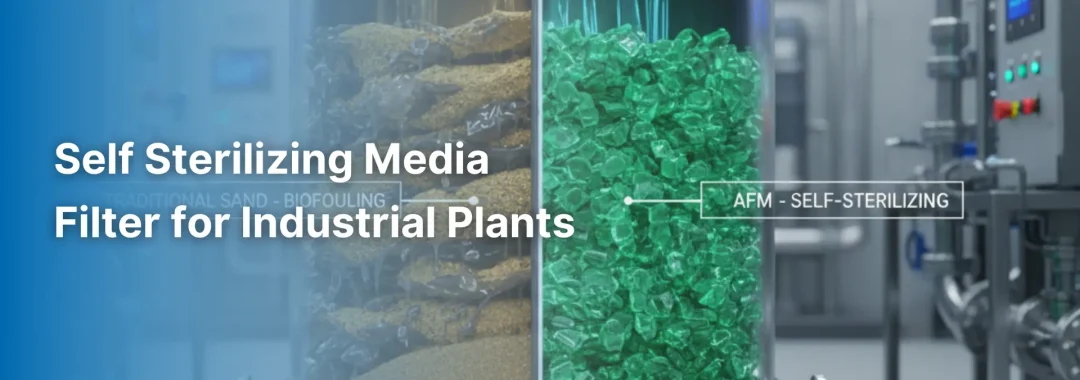
Industrial self sterilizing media filter installation

Self Sterilizing Media Filter for Industrial Water | GLS

Enhancing Industrial Water Pre-treatment with Self Sterilizing Media Filter Technology

In the demanding environment of Indonesian industrial utilities, the efficiency of pre-treatment systems dictates the lifespan of the entire water circuit. As facilities strive for higher operational uptime, many are pivoting toward the self sterilizing media filter, specifically utilizing Activated Filter Media (AFM). This shift is driven by the need to combat the persistent threat of biological growth within filtration beds, which often compromises downstream reverse osmosis membranes.

The Biofouling Challenge in Industrial Filtration

Traditional filtration methods often become breeding grounds for bacteria. When organic matter is trapped in standard media, it creates a biofilm that leads to “channeling.” This reduces the quality of the water and increases the frequency of backwashing.

Why Conventional Sand Filters Fail in Industrial Utilities

Sand is silica-based and chemically inert, allowing bacteria to colonize the surface of the grains. This biofilm acts as a “glue,” sticking grains together and increasing the pressure drop across the vessel. For a Facility Manager, this means higher energy costs and inconsistent water quality.

The AFM Advantage: A True Self Sterilizing Media Filter

Activated Filter Media (AFM) is a direct replacement for sand, manufactured from green glass and activated through a unique chemical and thermal process. This results in a self sterilizing media filter that prevents bacteria from ever attaching to the surface.

Performance MetricStandard Silica SandAFM (Self-Sterilizing)
Filtration Grade20 microns< 5 microns
Bio-ResistanceNone (Biofilm forms)High (Self-sterilizing)
Backwash WaterHigh volume required50% less water used
Lifespan2–3 yearsOver 15 years

Catalytic Oxidation and Bio-Resistance Explained

The surface of AFM has a high negative charge and catalytic properties. When water flows through, it creates small amounts of free radicals (OH) on the surface, which act as a disinfectant. This is what makes it a self sterilizing media filter. By removing the biological load at the pre-treatment stage, you significantly improve BWRO membrane performance and reduce the need for aggressive chemical cleaning.

Why PT. Gapura Liqua Solutions Integrates AFM in Systems

At PT. Gapura Liqua Solutions (GLS), we specialize in end-to-end engineering that prioritizes long-term reliability. We integrate self sterilizing media filter technology into our SWRO and BWRO systems because it allows our clients to focus on their core business without worrying about sudden utility failures.

By utilizing the keunggulan sistem air RO equipped with AFM, industrial plants in Indonesia can achieve lower TDS levels and superior permeate quality while reducing their environmental footprint.

Conclusion: Sustainable Water Reliability for Indonesian Industry

Investing in a self sterilizing media filter is a strategic decision for any technical director aiming for resource recovery and efficiency. AFM technology provides the stability required for modern industrial processes, ensuring that your water supply remains a silent partner in your success, not a constant maintenance headache.

To upgrade your current filtration system or design a new utility plant, Contact us at GLS.

FAQ Section

Q: How does a self sterilizing media filter reduce chemical costs?

A: Since the media prevents biofilm formation, there is less organic matter reaching the RO membranes. This reduces the frequency of CIP (Cleaning In Place) and the volume of biocides required.

Q: Can I replace my existing sand with AFM?

A: Yes, AFM is a 1:1 replacement for sand in existing pressure vessels, though we recommend a system audit to optimize backwash flow rates.

Q: Is this technology effective for seawater desalination?

A: Absolutely. In seawater applications, biofouling is the leading cause of membrane failure. AFM provides a critical protective barrier.

Follow us on Social Media

Facebook Instagram LinkedIn