Securing Industrial Compliance: The Power of a DAF Wastewater Treatment System
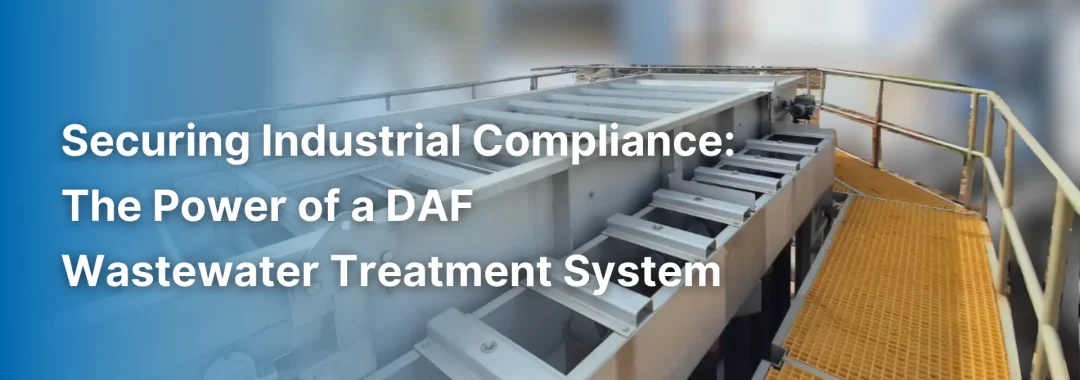
Industrial facility managers constantly face the challenge of meeting stringent effluent discharge limits. Consequently, managing fats, oils, and grease (FOG) alongside heavy total suspended solids (TSS) requires robust technology. Implementing a reliable DAF wastewater treatment system provides an effective, solution-driven answer to these operational hurdles. Indeed, this specialized technology separates contaminants efficiently, ensuring strict environmental compliance while optimizing overall plant performance.
Furthermore, integrating advanced primary treatment is no longer a luxury for modern factories. Instead, it serves as the foundational step toward sustainable resource recovery and operational longevity.
Overcoming Industrial Effluent Challenges
Factories across the food, beverage, and petrochemical sectors generate heavily polluted water. Therefore, managing this waste stream effectively becomes a top priority for procurement and facility teams.
The Burden of High TSS and FOG
Conventional settling clarifiers often fail to remove lighter particles and emulsified oils. Because these contaminants do not settle via gravity, they easily pass through standard settling tanks. Subsequently, heavy organic loads disrupt downstream biological processes. High concentrations of FOG can coat biological flocs, essentially starving the beneficial bacteria of oxygen. Thus, facilities face a high risk of regulatory failure and environmental penalties if these parameters remain unchecked.
How a DAF Wastewater Treatment System Drives Efficiency
To resolve these settling issues, engineers utilize Dissolved Air Flotation (DAF). Specifically, a DAF wastewater treatment system floats contaminants to the surface rather than waiting for them to sink.
The Science of Microbubble Flotation
The mechanics behind this process are highly efficient. First, the system dissolves air into a recycled stream of water under high pressure. Next, releasing this pressurized water into the main flotation tank creates millions of microscopic bubbles. These tiny bubbles attach directly to the chemically dosed suspended particles. Ultimately, the buoyancy of the bubbles floats the flocculated sludge to the surface, where mechanical skimmers easily remove it. For further technical reading, we detail exactly how DAF system works for wastewater on our dedicated resources page.
Protecting Downstream Membrane Assets
By removing heavy particulate loads early, the DAF unit effectively protects downstream filtration assets. For instance, feeding cleaner water significantly enhances BWRO membrane performance. Additionally, understanding the advantages of RO systems highlights the absolute necessity of excellent pre-treatment to prevent premature fouling. Should your facility require maintenance, securing high-quality Reverse Osmosis Membrane elements is critical for maintaining flow rates.
Guaranteeing Regulatory Compliance and Operational Continuity
Environmental agencies in Indonesia strictly monitor industrial discharge. Thus, utilizing a proper DAF unit wastewater treatment for compliance helps facilities avoid heavy fines and operational shutdowns. Moreover, integrating this robust separation technology promotes resource recovery. Facilities can safely recycle polished effluent back into cooling towers or washing stations, drastically lowering daily water consumption.
Partnering with Gapura Liqua Solutions
Sourcing reliable equipment and expert engineering remains a top priority for decision-makers. Therefore, PT. Gapura Liqua Solutions (GLS) offers comprehensive engineering, procurement, and construction (EPC) services. We tailor every installation to meet your specific effluent chemistry.
Additionally, we provide easy access to critical spare parts and consumables via our official Tokopedia store. Furthermore, you can view our successful, real-world implementations through our recent LinkedIn project updates, showcasing our commitment to engineering excellence.
Conclusion
Ultimately, establishing a modern DAF wastewater treatment system secures your facility’s operational future and environmental standing. PT. Gapura Liqua Solutions acts as your ideal expert partner in this critical journey. We explicitly link our expertise in seawater desalination, advanced resource recovery, and long-term operations to guarantee your facility’s success. Therefore, contact PT. Gapura Liqua Solutions today to discuss your next water treatment project and achieve total operational peace of mind.
FAQ
Q: What types of contaminants does a DAF system remove most effectively? A: A DAF system excels at removing low-density particulates that do not settle easily via gravity. Specifically, it highly effectively removes Fats, Oils, and Grease (FOG), total suspended solids (TSS), and light biological sludges from industrial effluent.
Q: How does a DAF system protect my Reverse Osmosis (RO) membranes? A: By acting as a robust primary pre-treatment step, the DAF unit drastically reduces the particulate and organic load in the water. Consequently, this prevents premature clogging and organic fouling of downstream ultrafiltration and RO membranes, saving significant maintenance costs.
Q: Do I need chemical dosing for a DAF system to work? A: Yes, in most industrial applications. Adding coagulants and flocculants binds smaller particles together into larger flocs. Subsequently, the microbubbles can easily attach to these larger flocs, significantly increasing the overall removal efficiency of the system.
Q: Can GLS integrate a DAF unit into my existing wastewater treatment plant? A: Absolutely. PT. Gapura Liqua Solutions specializes in upgrading existing infrastructure. We can seamlessly integrate a DAF unit into your current flow path to solve specific compliance issues or increase your overall treatment capacity.
Follow us on Social Media