This image is a visual for a blog that explained about sea water treatment process and benefit.

Seawater Reverse Osmosis System: Slash Your Plant OPEX

Why a Seawater Reverse Osmosis System Dictates Your Profit Margin

Many coastal plant managers treat their monthly water utility bill as a fixed operational penalty. However, accepting aggressively high energy costs is a massive management mistake. Therefore, understanding the core mechanics of a seawater reverse osmosis system is mandatory for protecting your profit margins. Without a highly optimized desalination skid, your high-pressure pumps will quietly consume massive amounts of electrical power. Consequently, your cost per cubic meter of fresh water will skyrocket before you even realize a problem exists.

On the factory floor, operators monitor the differential pressure across the membrane array daily. Every single particle of marine biofouling that slips past the pretreatment stage forces the main pump to work harder. As a result, the system demands significantly more kilowatt-hours just to push raw seawater through the fouled polyamide layers. Thus, an outdated or poorly maintained setup quickly transforms your water supply into a severe financial liability.

Energy Recovery Devices: The Heart of SWRO Efficiency

A modern seawater reverse osmosis system relies entirely on advanced pressure management to maintain financial viability. For example, processing raw seawater requires immense hydraulic force to overcome natural osmotic pressure. Specifically, feed pumps often operate at sixty to eighty bar of pressure continuously. Without specialized mechanical intervention, dumping the concentrated brine reject means losing all that expensive kinetic energy.

Smart facility managers never waste this stored hydraulic energy. Instead, they install advanced Energy Recovery Devices (ERD) on the reject line. Consequently, an isobaric ERD captures the extreme pressure from the brine and transfers it directly to the incoming feed water. Because of this physical transfer, the main high-pressure pump requires drastically less electricity to reach its target setpoint. Ultimately, this single engineering upgrade can slash your specific energy consumption by up to fifty percent. For deeper context on isobaric thermodynamics, operators frequently review the ScienceDirect research on seawater desalination to validate mechanical efficiency claims.

Evaluating Thermal vs. Membrane Desalination Technologies

Historically, heavy industries relied exclusively on thermal desalination methods like Multi-Stage Flash (MSF) distillation. However, boiling millions of liters of seawater demands an enormous, constant supply of cheap thermal energy. Therefore, MSF is only economically viable if your facility sits directly next to a massive power plant with excess waste heat. Today, advanced membrane technology has completely disrupted this old, inefficient industrial paradigm.

Membrane-based separation simply outmaneuvers thermal evaporation in almost every commercial metric available. First, a skid-mounted RO setup requires a fraction of the physical footprint of an MSF evaporator building. Second, routine maintenance involves swapping out modular membrane elements rather than repairing massive, corroded heat exchangers. Furthermore, you can instantly track performance degradation through digital flow and conductivity sensors. To optimize this monitoring process, you should study our guide on understanding TDS parameters as a key metric for daily operations.

Feed Water Pretreatment: Defending Your RO Membranes

Coastal feed water is notoriously volatile and heavily loaded with aggressive marine organisms. When organic matter strikes the main separation elements, biological fouling happens almost instantly. As a result, a thick, sticky biofilm suffocates the lead membrane surface and completely blocks the feed channels. Therefore, a robust pretreatment strategy forms the absolute foundation of your entire desalination project.

Industrial operators must deploy precise chemical dosing and precision ultrafiltration before the high-pressure stage. For instance, hollow-fiber ultrafiltration modules physically block suspended solids and microorganisms from reaching the delicate polyamide layers. Additionally, technicians must calibrate antiscalant injection rates accurately to prevent hard sulfate scaling. Otherwise, catastrophic membrane failure will quickly force an expensive emergency plant shutdown. You can read our proven tactics for overcoming scaling and fouling to secure your pretreatment line.

Achieving 24/7 Technical Reliability in Coastal Plants

Facility directors demand absolute certainty that their industrial water supply will never fail during peak production hours. Indeed, achieving 24/7 technical reliability requires disciplined engineering and relentless, uncompromising maintenance routines. Therefore, running a highly efficient seawater desalination plant delivers concrete financial and operational advantages to your bottom line. Here is a breakdown of the exact business benefits you gain from a meticulously engineered facility:

  • Continuous OPEX Reduction: Slashing daily high-pressure electrical loads by integrating advanced isobaric energy recovery technology.
  • Absolute Asset Protection: Extending the functional lifespan of imported membrane elements to a full five-year cycle through optimal pretreatment.
  • Strict Environmental Compliance: Managing brine discharge accurately to avoid massive ecological penalties from local marine authorities.
  • Targeted ROI Windows: Upgrading to modern SWRO architecture generally delivers a full capital investment breakeven within eighteen to twenty-four months.

Please note that actual financial payback speed always depends on your local electricity tariffs and seasonal feed water quality fluctuations. To establish baseline quality targets, engineers often align their product water metrics with the WHO global drinking water quality guidelines. Furthermore, consulting the U.S. EPA commercial water management framework helps standardize these utility efficiency protocols.

Long-Term Strategic Partnership with PT. Gapura Liqua Solutions

Designing a heavy-duty desalination facility requires decades of practical, hands-on mechanical engineering experience. Therefore, PT. Gapura Liqua Solutions (GLS) provides the technical authority to build, optimize, and maintain your industrial water infrastructure. We know exactly how a minor instrument calibration error can quietly ruin your quarterly operational budget. Consequently, our field engineers conduct rigorous system audits to identify and eliminate hidden electrical inefficiencies immediately.

Our dedicated internal teams manage everything from initial skid fabrication to long-term operational maintenance contracts. As proof of our heavy-duty execution capability, please review the latest GLS industrial SWRO project update on LinkedIn. Do not let an outdated water treatment setup drain your facility’s profitability any longer. Contact our expert process engineers today to schedule a comprehensive technical evaluation of your current utility system. A properly calibrated seawater reverse osmosis system guarantees absolute uptime for your heavy industrial operations.

FAQ Seawater Reverse Osmosis System

What is the standard operating pressure for a seawater reverse osmosis system?

Engineers typically operate SWRO high-pressure pumps between sixty and eighty bar. This massive hydraulic force is strictly necessary to overcome the natural osmotic pressure of highly concentrated marine feed water and force fresh water through the membrane pores.

How does an energy recovery device reduce desalination utility costs?

An energy recovery device captures the extreme kinetic pressure from the outgoing reject brine stream. It directly transfers this mechanical force to the incoming raw seawater, which significantly reduces the electrical load demanded by the primary high-pressure pump.

Why is biofouling a critical threat to coastal desalination plants?

Marine feed water contains aggressive organic matter that rapidly multiplies on the polyamide membrane surface. This thick biological slime blocks hydraulic flow channels completely, causing severe pressure drops and forcing emergency chemical circulation cleaning procedures.

What is the typical capital payback period for an SWRO efficiency upgrade?

Plant managers usually achieve a full return on their capital expenditure within an eighteen to twenty-four month operational window. However, this financial recovery speed relies heavily on stable regional electricity tariffs and proper daily maintenance discipline.

Why is membrane technology replacing older thermal distillation methods?

Membrane separation consumes significantly less energy than boiling millions of liters of seawater. Furthermore, modular RO skids require vastly smaller physical footprints and provide superior operational flexibility compared to massive, heavily corroded thermal evaporation heat exchangers.

Follow us on Social Media

Facebook Gapura Liqua Solutions Instagram Gapura Liqua Solutions LinkedIn Gapura Liqua Solutions
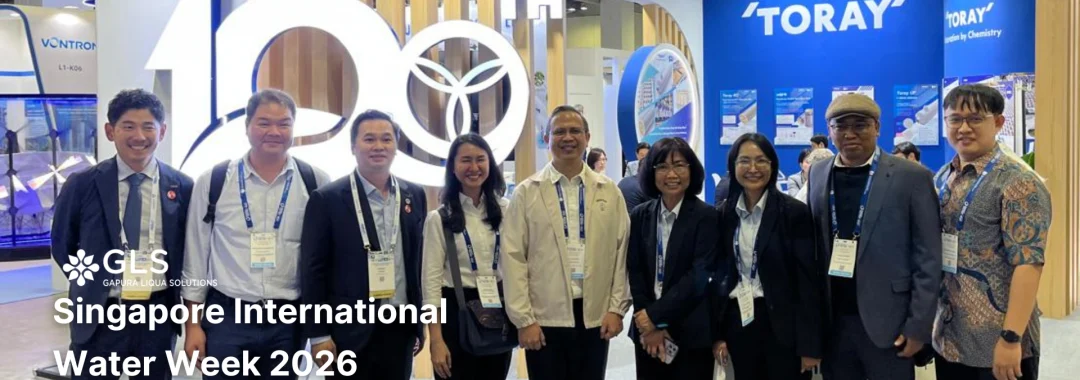
The PT. Gapura Liqua Solutions team attending Singapore International Water Week 2026, posing with global partners at the Toray exhibition booth to explore advanced reverse osmosis membrane technologies.

Singapore International Water Week 2026

Elevating Industrial Utilities with Singapore International Water Week 2026

As industrial facilities face unprecedented environmental and economic pressures, relying on outdated water management strategies is simply no longer viable. To bring world-class innovations directly to Indonesia, the PT. Gapura Liqua Solutions (GLS) engineering team actively participated in Singapore International Water Week 2026. Because this premier global event convenes thousands of water leaders, experts, and practitioners, it provided critical insights into solving the most pressing urban and industrial water challenges. Consequently, we discovered actionable strategies to mitigate higher energy costs, manage increasing water demand, and overcome the severe limitations of ageing urban water systems.

Furthermore, the exhibition served as a vital platform for deep knowledge sharing. Therefore, instead of merely observing, our engineers actively evaluated breakthrough technologies to enhance our local Engineering, procurement, and long-term operations.

Global Challenges Addressed at Singapore International Water Week

The recent exhibition and convention, held at the Sands Expo and Convention Centre, highlighted the severe realities of modern water management. For Indonesian B2B stakeholders, these global themes perfectly mirror our local operational bottlenecks.

Tackling Higher Energy Costs and Ageing Water Systems

Across Southeast Asia, utilities and factories struggle immensely with ageing urban water systems and unsustainable water extraction practices. Consequently, these systemic inefficiencies lead to severe non-revenue water (NRW) losses and significantly higher energy costs. During Singapore International Water Week, global experts emphasized that overcoming these carbon-heavy operations requires immediate digitalization and robust pre-treatment upgrades. Indeed, facilities must move away from reactive fixes and embrace continuous operational control to remain competitive.

Managing Water-Intensive Industries and Extreme Weather Patterns

Moreover, the rapid growth of water-intensive industries, such as data centres and advanced manufacturing, strongly exacerbates local water scarcity. When this rising demand is paired with climate impacts originating from extreme weather patterns and rising sea levels, traditional water supplies become highly unreliable. Therefore, adopting a holistic, integrated approach to industrial water solutions is now absolutely mandatory to secure long-term operational continuity.

Innovations Discovered at Singapore International Water Week

To effectively address these complex challenges, Singapore International Water Week showcased breakthrough technologies focusing specifically on municipal water solutions, coastal resilience, and industrial efficiency. PT. Gapura Liqua Solutions thoroughly evaluated these advancements to seamlessly integrate them into our service portfolio.

Singapore International Water Week Insights on Resource Recovery

Currently, throwing away complex industrial wastewater is increasingly viewed as a massive financial and environmental loss. At the Water Convention, numerous technical sessions heavily focused on used water management, reuse, and resource circularity. Specifically, by implementing advanced waste water treatment and resource recovery systems, facilities can reclaim valuable byproducts and safely recycle the majority of their effluent. Ultimately, this circular approach drastically reduces a facility’s reliance on vulnerable raw water sources while ensuring strict regulatory compliance.

High-Recovery SWRO and Decarbonization

Another major focal point of the event was optimizing energy consumption in desalination networks. Because seawater desalination capacity continues to expand globally, the energy efficiency of Reverse Osmosis (RO) systems relies heavily on effective upstream pretreatment. By deploying high-recovery SWRO and BWRO systems equipped with premium Reverse Osmosis Membranes, industries can simultaneously achieve essential decarbonization and total water security. Moreover, optimizing BWRO membrane performance ensures that Indonesian facilities maintain high permeate yields without incurring unexpectedly higher energy costs.

Applying Singapore International Water Week Solutions to Indonesian Industries

By explicitly bridging the gap between global innovations and local necessities, PT. Gapura Liqua Solutions empowers Indonesian industries to overcome their most daunting water challenges. The keunggulan sistem air RO modern designs we deploy directly combat the unsustainable water extraction practices highlighted extensively at the convention. Because we handle the complex engineering, procurement, and long-term operations, you can focus entirely on your core business. You can follow our ongoing journey of technology implementation through our latest industrial project updates on LinkedIn.

Conclusion: Bringing Global Reliability to Your Facility

In summary, the critical insights gained from Singapore International Water Week 2026 proved invaluable for advancing industrial water resilience. By actively engaging with global experts on pressing issues like rising sea levels, higher energy costs, and complex industrial wastewater, PT. Gapura Liqua Solutions ensures that Indonesian industries do not get left behind. We explicitly link these global discoveries in seawater desalination, resource recovery, and high-efficiency treatment to your long-term operational reliability.

Do not let ageing infrastructure compromise your operations. Contact PT. Gapura Liqua Solutions today to discuss how these proven global innovations can securely transform your facility.

FAQ Section

Q: What were the main themes at Singapore International Water Week 2026? A: The 2026 event focused heavily on Municipal Water Solutions, Coastal and Flood Resilience, and Industrial Water Solutions. Key technical discussions revolved around decarbonization, resource circularity, managing water-intensive industries, and mitigating higher energy costs.

Q: Why did PT. Gapura Liqua Solutions participate in this event? A: GLS participated to perform deep knowledge-sharing and to investigate the newest global breakthroughs in desalination, advanced pretreatment, and wastewater recovery. This ensures we bring the most advanced, climate-resilient technologies directly back to our clients in Indonesia.

Q: What is the most pressing problem facing industrial water users today? A: According to global experts at the convention, industries are heavily burdened by ageing water infrastructure, unsustainable extraction practices, and significantly higher energy costs, all exacerbated by extreme weather patterns.

Q: How can Indonesian factories benefit from these global innovations? A: By partnering with GLS, facilities can replace wasteful, ageing systems with modern High-Recovery RO and advanced Resource Recovery architectures. This immediately protects expensive equipment, cuts electrical and chemical usage, and builds critical climate resilience.

Follow us on Social Media

Facebook Instagram LinkedIn
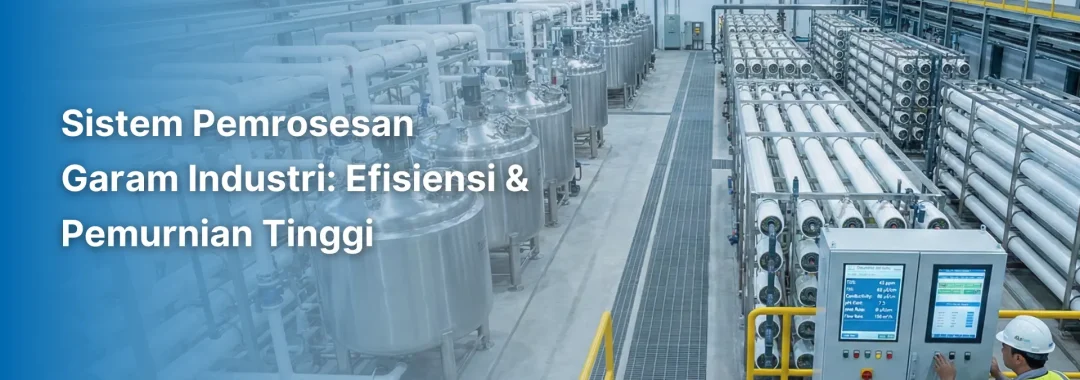
Teknisi memeriksa sistem pemrosesan garam industri dan membran RO di fasilitas water treatment modern.

Sistem Pemrosesan Garam Industri: Efisiensi & Pemurnian Tinggi

Sistem Pemrosesan Garam Industri: Kunci Efisiensi dan Resource Recovery

Bagi para pemangku kepentingan di sektor manufaktur dan fasilitas industri, sistem pemrosesan garam industri bukan sekadar pelengkap utilitas, melainkan aset strategis. Di tengah ketatnya regulasi lingkungan dan kebutuhan efisiensi biaya, kemampuan untuk mengelola air asin (brine) dan memurnikan garam industri menjadi penentu keberlanjutan operasional.

Artikel ini akan mengupas tuntas bagaimana teknologi pemrosesan yang tepat dapat meningkatkan profitabilitas Anda dan mengapa bermitra dengan ahli yang tepat adalah keputusan investasi terbaik.

Tantangan Utama dalam Pengelolaan Garam dan Brine Industri

Industri kimia, tekstil, hingga makanan dan minuman sering kali menghadapi tantangan ganda: kebutuhan akan pasokan garam industri berkualitas tinggi dan kewajiban mengelola limbah brine hasil sampingan dari proses desalinasi atau manufaktur.

Tanpa sistem pemrosesan garam industri yang andal, perusahaan menghadapi risiko operasional yang signifikan. Fluktuasi kualitas air baku dapat mengganggu proses produksi, sementara pembuangan limbah air asin yang tidak sesuai standar dapat berujung pada sanksi lingkungan yang berat.

Risiko Inefisiensi pada Metode Konvensional

Metode penguapan kolam terbuka atau sistem termal konvensional sering kali memakan lahan luas dan energi yang sangat besar. Selain itu, metode ini sulit mencapai konsistensi kemurnian yang dibutuhkan oleh standar industri modern. Inefisiensi ini secara langsung menggerus margin keuntungan perusahaan akibat biaya energi yang membengkak dan downtime akibat perawatan peralatan yang terkorosi.

Komponen Vital dalam Sistem Pemrosesan Garam Industri Modern

Untuk menjawab tantangan tersebut, diperlukan pendekatan terintegrasi yang menggabungkan teknologi membran dan termal. Sistem pemrosesan garam industri modern dirancang untuk bekerja secara kontinyu dengan efisiensi energi yang optimal.

Peran Membran Reverse Osmosis dalam Prakonsentrasi

Langkah awal yang krusial dalam sistem ini adalah pemekatan larutan garam. Di sinilah peran teknologi membran menjadi sangat vital. Penggunaan teknologi Reverse Osmosis Membrane memungkinkan pemisahan air murni dari larutan garam secara efisien sebelum masuk ke tahap kristalisasi.

Dengan menggunakan membran berkualitas tinggi, volume air yang harus diuapkan dapat dikurangi secara drastis. Hal ini tidak hanya menghemat energi termal, tetapi juga mempercepat siklus produksi. Untuk aplikasi dengan salinitas air payau, pemahaman mengenai BWRO Membrane Performance sangat penting untuk memastikan sistem pra-perawatan berjalan optimal dan mencegah fouling dini pada sistem utama.

Teknologi Kristalisasi untuk Kemurnian Maksimal

Setelah melalui tahap prakonsentrasi, larutan garam jenuh (brine) akan masuk ke unit kristalisasi. Teknologi ini memisahkan kristal garam dari cairan induknya dengan presisi tinggi. Hasilnya adalah garam industri dengan tingkat kemurnian yang konsisten, siap digunakan kembali dalam proses produksi (seperti pada industri Klor-Alkali) atau dikemas sebagai produk bernilai jual.

Keunggulan sistem yang terintegrasi ini sejalan dengan keunggulan sistem air RO pada umumnya, yaitu modularitas, efisiensi ruang, dan kontrol kualitas yang ketat.

Mengubah Limbah Menjadi Nilai dengan Resource Recovery

Konsep ekonomi sirkular kini menjadi standar baru dalam manajemen fasilitas. Sistem pemrosesan garam industri yang canggih memungkinkan implementasi Zero Liquid Discharge (ZLD). Dalam skema ini, limbah cair brine dari instalasi Desalinasi Air Laut (SWRO) tidak dibuang kembali ke laut yang berpotensi merusak ekosistem, melainkan diolah lebih lanjut.

Melalui proses resource recovery, mineral berharga seperti natrium klorida, magnesium, atau litium dapat diekstraksi kembali. Ini mengubah pusat biaya (pengolahan limbah) menjadi pusat keuntungan (pemulihan bahan baku).

Catatan Penting: Implementasi teknologi ini memerlukan keahlian teknis mendalam, mulai dari desain proses hingga pemilihan material yang tahan korosi ekstrem.

Mengapa Memilih PT. Gapura Liqua Solutions sebagai Mitra Anda?

Memilih vendor untuk sistem pemrosesan garam industri adalah keputusan jangka panjang. Anda memerlukan mitra yang tidak hanya menjual alat, tetapi memberikan solusi end-to-end.

PT. Gapura Liqua Solutions (GLS) hadir sebagai mitra strategis bagi industri di Indonesia. Dengan keahlian inti dalam Seawater Reverse Osmosis (SWRO) dan pengolahan air payau, GLS menawarkan layanan lengkap mulai dari rekayasa (engineering), pengadaan (procurement), hingga operasional jangka panjang.

Mengapa GLS?

  • Fokus pada Bisnis Inti: Kami menangani utilitas air dan garam Anda, sehingga Anda bisa fokus sepenuhnya pada produksi utama tanpa pusing memikirkan ketersediaan air atau kepatuhan limbah.
  • Ketersediaan Suku Cadang: Dukungan purna jual yang kuat dengan ketersediaan komponen yang mudah diakses, termasuk melalui kanal digital resmi kami di Tokopedia.
  • Rekam Jejak Terbukti: GLS aktif terlibat dalam proyek-proyek strategis nasional dan industri swasta, memberikan solusi yang disesuaikan dengan kondisi air lokal di Indonesia.

Anda dapat melihat salah satu update terbaru mengenai aktivitas proyek dan wawasan industri kami melalui tautan berikut: LinkedIn Update GLS.

Kesimpulan

Investasi pada sistem pemrosesan garam industri yang andal adalah langkah krusial untuk mengamankan masa depan operasional pabrik Anda. Dari penghematan energi melalui membran RO hingga penciptaan nilai tambah melalui resource recovery, manfaatnya sangat nyata bagi bottom line perusahaan.

PT. Gapura Liqua Solutions siap menjadi mitra terpercaya Anda dalam mewujudkan sistem utilitas air dan pemrosesan garam yang efisien, patuh regulasi, dan menguntungkan. Jangan biarkan masalah kualitas air menghambat pertumbuhan bisnis Anda.

Apakah Anda siap meningkatkan efisiensi fasilitas Anda? Hubungi Kami untuk Konsultasi Gratis

FAQ Section

Q: Apa keuntungan utama menggunakan sistem pemrosesan garam industri modern dibandingkan metode tradisional? A: Sistem modern menawarkan efisiensi energi yang jauh lebih tinggi, jejak lahan (footprint) yang lebih kecil, kualitas produk garam yang konsisten dan kemurnian tinggi, serta kemampuan untuk mematuhi regulasi lingkungan yang ketat melalui Zero Liquid Discharge.

Q: Apakah sistem ini bisa diterapkan untuk mengolah air laut menjadi garam industri? A: Ya, sistem ini sangat ideal untuk diintegrasikan dengan Seawater Reverse Osmosis (SWRO). Brine (air buangan) dari SWRO yang biasanya dibuang dapat diproses lebih lanjut untuk menghasilkan garam industri, memaksimalkan pemanfaatan sumber daya.

Q: Bagaimana GLS menjamin keberlanjutan operasional sistem ini? A: GLS tidak hanya membangun sistem, tetapi menawarkan layanan operasional dan pemeliharaan jangka panjang. Kami memastikan pasokan suku cadang, monitoring kinerja membran, dan optimalisasi proses secara berkala agar klien dapat fokus pada bisnis inti mereka.

Q: Apakah GLS menyediakan suku cadang untuk sistem membran? A: Tentu. Kami menyediakan berbagai komponen vital seperti membran RO, pressure vessel, dan bahan kimia pendukung yang orisinal dan berkualitas tinggi.

Follow us on Social Media

Facebook Instagram LinkedIn