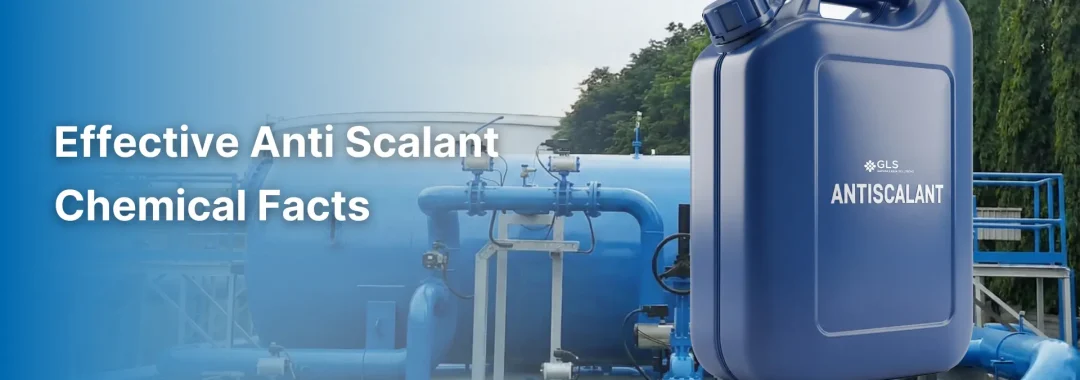
Industrial technician adjusting a chemical dosing pump to administer an effective anti scalant chemical into an RO system to prevent fouling.

Effective Anti Scalant Chemical Facts

Effective Anti Scalant Chemical: Effective Anti Scalant Chemical: Protecting Your Industrial Assets

For industrial facility managers in Indonesia, maintaining the efficiency of a Seawater Reverse Osmosis (SWRO) or Brackish Water Reverse Osmosis (BWRO) plant is a constant battle against chemistry. However, as the system extracts pure water, the remaining salts concentrate rapidly. Consequently, this leads to a high risk of mineral precipitation. To combat this issue, deploying an effective anti scalant chemical is not just an option; it is a necessity for operational continuity.

Moreover, without the correct chemical intervention, scale formation can irreversibly damage expensive membrane elements. As a result, this leads to skyrocketing operational costs and critical production downtime.

Understanding the Threat of Membrane Scaling

Scaling occurs when dissolved minerals in the feed water exceed their solubility limits. In industrial settings, specific compounds like calcium carbonate, calcium sulfate, or reactive silica often drive this process.

How Mineral Precipitation Occurs

First, high-pressure pumps force water through the membrane. Then, the concentration of salts on the feed surface increases significantly. Unless you intervene with an effective anti scalant chemical, these salts crystallize. Subsequently, they form a hard, rock-like layer on the membrane surface. This layer blocks the flow of water. Therefore, the pumps must work harder and consume more energy to maintain production rates.

Why an Effective Anti Scalant Chemical is Critical

Implementing a robust dosing strategy is the first line of defense. Specifically, the primary function of an effective anti scalant chemical involves interfering with crystal growth. This action keeps minerals dissolved even when they are supersaturated.

Reducing Energy Consumption and Cleaning Frequency

When membranes are clean, they operate at optimal pressure. Conversely, scale buildup causes a spike in differential pressure, which leads to higher electricity bills. Furthermore, frequent scaling necessitates frequent Chemical Cleaning (CIP). CIP procedures require downtime and aggressive chemicals that can degrade membrane life over time. Thus, a proper antiscalant strategy minimizes these interruptions.

Extending Membrane Lifespan

Membranes are significant capital assets. In addition to saving energy, preventing physical damage from sharp crystals extends their service life. Simultaneously, reducing the frequency of harsh cleanings protects the membrane surface. For more details on maintaining optimal performance, you can review our guide on BWRO membrane performance.

Selecting the Right Formulation

Antiscalant formulations vary significantly. Therefore, the deployment of an effective anti scalant chemical depends entirely on the specific water chemistry of your site.

  • For instance, high silica water requires specific dispersants to prevent silica polymerization.
  • On the other hand, high hardness water requires strong threshold inhibitors for calcium salts.

Using the wrong generic chemical can be as damaging as using none at all. Consequently, proper selection requires a detailed water analysis and projection software simulation.

Comprehensive Support from Gapura Liqua Solutions

At PT. Gapura Liqua Solutions (GLS), we understand that chemical dosing is part of a larger ecosystem. Hence, we provide end-to-end support, from water analysis to the supply of premium chemicals and the maintenance of dosing equipment.

We ensure that your strategy utilizes an effective anti scalant chemical perfectly aligned with your system’s design limits. For example, procurement managers looking for reliable supplies can access critical components via our official Tokopedia store. Additionally, understanding the advantages of RO systems can help in justifying the investment in high-quality pre-treatment.

We have successfully implemented these strategies across various industries, ensuring long-term reliability. In fact, you can see examples of our operational success in our recent project updates on LinkedIn.

Conclusion

Ultimately, the integrity of your water treatment plant relies on proactive protection. Using an effective anti scalant chemical program is the most cost-effective insurance policy against fouling and failure.

Therefore, do not let mineral scaling compromise your production targets. Partner with experts who understand the science of water. Contact PT. Gapura Liqua Solutions today for a chemical audit and ensure your assets are protected for the long haul.

FAQ

Q: What makes a chemical an “effective anti scalant”?
A: An effective anti scalant chemical must have high threshold inhibition capabilities, meaning it can prevent precipitation even at low dosages. It should also be compatible with your specific membrane type (polyamide or cellulose acetate) and effective against the specific mix of ions in your feed water.

Q: How do I know if I am using the right dosage?
A: Dosage is calculated based on feed water analysis (TDS, pH, temperature, ion concentration) and recovery rate. Under-dosing leads to scaling; over-dosing can cause biofouling. GLS engineers can calculate the precise ppm required for your system.

Q: Can anti scalant remove existing scale?
A: No. Even an effective anti scalant chemical is strictly preventative. To remove existing scale, you must perform a Clean-in-Place (CIP) using low pH (acid) cleaners for minerals or high pH (alkaline) cleaners for organics.

Follow us on Social Media

Facebook Gapura Liqua - effective anti scalant chemical Instagram Gapura Liqua - effective anti scalant chemical LinkedIn Gapura Liqua - effective anti scalant chemical
Large industrial manufacturing plant with smoke stacks, illustrating the operational scale that benefits from an Industrial Management Service Agreement by Gapura Liqua Solutions.

Industrial Management Service Agreement Value

Industrial Management Service Agreement: Securing Your Water Operations

For facility managers and procurement heads in Indonesia, the stability of utilities is non-negotiable. However, managing a complex Seawater Reverse Osmosis (SWRO) plant or a wastewater treatment facility in-house often becomes a distraction from core business activities. This is where an Industrial Management Service Agreement becomes a critical strategic asset.

Rather than struggling with fluctuating maintenance costs and technical staffing issues, forward-thinking companies are leveraging MSAs to ensure reliability. An Industrial Management Service Agreement is not just a contract; it is a partnership that guarantees water availability while optimizing operational expenses.

Understanding the Industrial Management Service Agreement

An Industrial Management Service Agreement (MSA) defines a long-term relationship between a facility owner and a specialized service provider. In the context of water treatment, this agreement transfers the responsibility for day-to-day operations, maintenance, and performance monitoring to experts.

Unlike simple ad-hoc repair services, an MSA focuses on comprehensive asset management. It encompasses everything from routine monitoring to complex troubleshooting, ensuring that the water treatment plant operates at peak efficiency. By adopting an Industrial Management Service Agreement, companies effectively shift the burden of operational risk to a partner equipped to handle it.

Why Implement an Industrial Management Service Agreement?

The decision to outsource operations through an MSA is often driven by the need for financial stability and risk mitigation.

Transforming Variable Costs into Fixed Costs

One of the most significant advantages of an Industrial Management Service Agreement is financial predictability. In-house management often faces unexpected spikes in costs due to emergency repairs, sudden spare part requirements, or inefficient chemical usage.

An MSA typically structures these costs into a fixed monthly fee. This allows procurement departments to forecast budgets accurately, eliminating unpleasant surprises at the end of the fiscal year. Furthermore, professional management often reduces energy and chemical consumption, lowering the overall Total Cost of Ownership (TCO).

Mitigating Technical and Compliance Risks

Water treatment standards in Indonesia are becoming increasingly stringent. Failure to meet effluent standards can result in severe penalties, including a downgrade in PROPER ratings. An Industrial Management Service Agreement includes strict Service Level Agreements (SLAs) regarding water quality.

This means the service provider is contractually obligated to deliver water that meets specific parameters. Consequently, the risk of non-compliance is shifted from the facility owner to the specialist partner, ensuring peace of mind regarding environmental regulations.

The Value of Specialized Expertise

Modern water treatment technologies, such as high-pressure SWRO and Ultrafiltration, require specialized knowledge. Maintaining a team of certified engineers in-house is both difficult and expensive.

Through an Industrial Management Service Agreement, your facility gains immediate access to a pool of experts. These professionals stay updated with the latest technologies, such as advanced Reverse Osmosis Membrane cleaning techniques and energy recovery optimization. This expertise ensures that your assets are not just running, but are being optimized to extend their lifespan.

Partnering with Gapura Liqua Solutions

PT. Gapura Liqua Solutions (GLS) understands that every facility has unique needs. We do not offer a one-size-fits-all solution. Instead, we tailor every Industrial Management Service Agreement to align with your specific operational goals and risk appetite.

From full comprehensive operations to supervision-only contracts, GLS provides the technical backbone your business needs. We manage the supply chain for critical consumables and spare parts, many of which are readily available through our official store on Tokopedia, ensuring minimal downtime.

Conclusion

In a competitive industrial landscape, operational reliability is the foundation of success. An Industrial Management Service Agreement offers the most effective path to securing your water supply, controlling costs, and managing risks.

Do not let water utility challenges hinder your production targets. Partner with a trusted expert who prioritizes your operational continuity. Contact PT. Gapura Liqua Solutions today to discuss how we can structure an MSA that drives value for your business.

FAQ

Q: What is the primary difference between a warranty and an MSA?

A: A warranty covers equipment defects for a limited time. In contrast, an Industrial Management Service Agreement covers the ongoing performance, labor, and maintenance of the entire system, ensuring it operates correctly throughout the contract duration.

Q: Can an MSA help with environmental compliance in Indonesia?

A: Yes. A robust MSA includes performance guarantees that align with Indonesian environmental regulations (such as PROPER). The service provider assumes the responsibility for maintaining effluent quality within legal limits.

Q: Does GLS provide spare parts under the MSA?

A: This depends on the specific contract structure. We offer comprehensive MSAs that include all spare parts and chemicals, as well as “labor-plus-supervision” models where parts are billed separately.

Q: Is an MSA suitable for older water treatment plants?

A: Absolutely. In fact, older plants often benefit most from an Industrial Management Service Agreement. Our experts can optimize aging assets, perform necessary retrofits, and extend the remaining useful life of the equipment.

Two engineers in safety gear reviewing a clipboard in front of a water treatment plant, symbolizing the reliability of an Industrial Management Service Agreement.

Secure your operations and transfer risk. An Industrial Management Service Agreement ensures your water systems are managed by experts, allowing you to focus on production.

Follow us on Social Media

Facebook Instagram LinkedIn