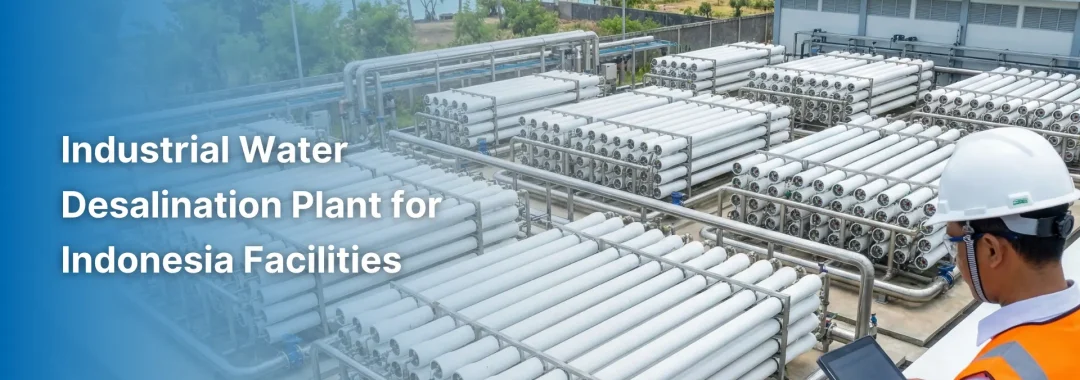
Engineer monitoring an industrial water desalination plant system at a coastal facility in Indonesia.

Industrial Water Desalination Plant for Indonesia Facilities

Industrial Water Desalination Plant: Securing Business Continuity in Indonesia

For Facilities Managers and Heads of Procurement in Indonesia, water is not merely a utility; it is the lifeblood of production. As industrial zones expand and climate patterns shift, relying solely on groundwater or municipal supplies is increasingly risky. Implementing a robust industrial water desalination plant is no longer just an option—it is a strategic necessity for safeguarding operational continuity.

This article examines how modern desalination systems solve critical supply issues and why selecting the right engineering partner is paramount for long-term success.

The Strategic Necessity of Desalination for Facilities

Indonesia’s vast coastline offers abundant seawater resources, yet many industries still struggle with clean water availability. An industrial water desalination plant converts this inexhaustible resource into high-purity process water, insulating your business from drought, regulatory restrictions on groundwater extraction, and municipal supply interruptions.

Mitigating Risks of Unreliable Water Supply

Inconsistent water quality can wreak havoc on expensive machinery. High salinity and contaminants lead to rapid corrosion, scaling, and frequent downtime. By deploying a dedicated industrial water desalination plant, facilities gain control over their water quality parameters. This autonomy prevents unexpected production halts and protects capital assets from premature degradation, directly impacting the bottom line.

Technical Components of an Efficient Industrial Water Desalination Plant

Modern desalination is far more than just filtration; it is a sophisticated integration of hydraulics and chemistry. To ensure commercial viability, the system must balance output quality with energy efficiency.

Advanced Membrane Technology and Pre-treatment

The heart of any Seawater Reverse Osmosis (SWRO) system is the membrane. However, the lifespan of these membranes depends heavily on pre-treatment. Effective removal of suspended solids prevents fouling, which is a common cause of efficiency loss.

At PT. Gapura Liqua Solutions (GLS), we utilize high-performance Reverse Osmosis Membrane technology designed to withstand high pressure and challenging feed water conditions. Understanding BWRO membrane performance is also critical for facilities dealing with brackish sources, ensuring that the specific rejection rates meet industrial standards.

Energy Efficiency and Resource Recovery

Historically, desalination was viewed as energy-intensive. Today, technologies such as Energy Recovery Devices (ERDs) have revolutionized the economics of the industrial water desalination plant. Furthermore, forward-thinking companies are now looking beyond water. Through resource recovery, brine (waste stream) can be processed to extract valuable minerals, turning waste into value.

You can learn more about the specific advantages of RO water systems and how they contribute to a circular economy in our technical insights.

Why Procurement Leaders Partner with Gapura Liqua Solutions

Selecting a vendor for an industrial water desalination plant involves evaluating technical capability, local support, and long-term reliability. PT. Gapura Liqua Solutions stands out as a premier partner for Indonesian industries.

We provide end-to-end solutions, from Engineering and Procurement to Construction and long-term Operations (EPC + O&M). Our “Total Water Solutions” approach means you can focus on your core business while we manage water availability and compliance.

  • Local Expertise: We understand the unique water chemistry of the Indonesian archipelago.
  • Supply Chain Security: We ensure the availability of critical consumables and spare parts, also accessible via our Tokopedia official store for ease of procurement.
  • Proven Track Record: Our projects demonstrate high reliability in challenging environments.

For a glimpse into our recent project activities and industry updates, you can view our latest LinkedIn Activity.

Conclusion

Investing in an industrial water desalination plant is a decisive move toward operational resilience. It mitigates the risks of water scarcity and ensures that your facility meets global standards for sustainability and efficiency. However, the technology is only as good as the partner who installs and maintains it.

PT. Gapura Liqua Solutions combines technical excellence with local understanding to deliver systems that last. We invite you to discuss your specific water requirements with our engineering team.

Are you ready to secure your facility’s water future? Contact Us for a Consultation

FAQ Section

Q: What is the typical lifespan of an industrial water desalination plant? A: With proper maintenance and high-quality components, a plant can operate efficiently for over 20 years. The membranes typically require replacement every 3 to 5 years depending on the feed water quality and pre-treatment efficacy.

Q: How does GLS handle the high energy consumption associated with desalination? A: We design our systems using advanced Energy Recovery Devices (ERDs) and high-efficiency pumps. This significantly reduces the energy footprint, making the operational costs competitive with traditional water sourcing methods.

Q: Can the plant handle variable feed water quality, such as seasonal changes in seawater? A: Yes. Our engineering team designs the pre-treatment and SWRO systems with flexibility in mind. We analyze seasonal data to ensure the system remains stable regardless of fluctuations in turbidity or salinity.

Q: Does GLS provide support after the installation is complete? A: Absolutely. We offer comprehensive Operation & Maintenance (O&M) contracts. Our team manages routine monitoring, chemical cleaning (CIP), and spare parts supply to ensure zero unplanned downtime.

Follow us on Social Media

Facebook Instagram LinkedIn
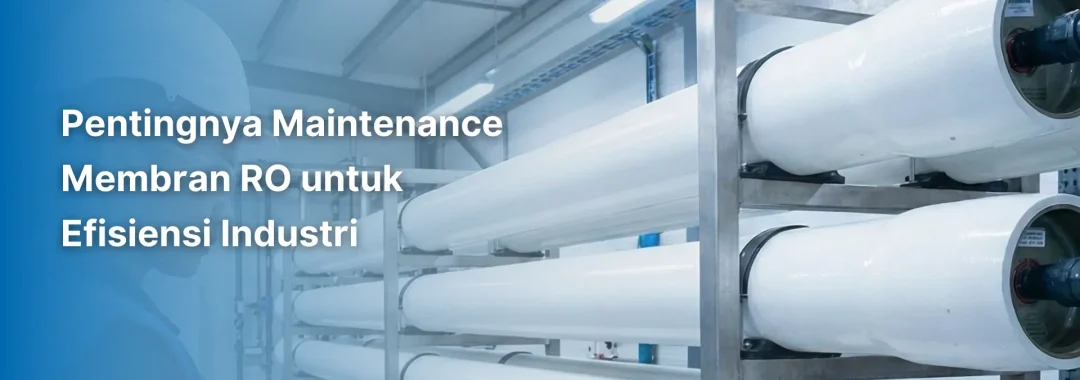
Teknisi industri melakukan maintenance membran RO dan pengecekan sistem desalinasi.

Pentingnya Maintenance Membran RO untuk Efisiensi Industri

Pentingnya Maintenance Membran RO untuk Keandalan Operasional Industri

Dalam ekosistem industri modern, air bukan sekadar utilitas pendukung, melainkan komponen kritis yang menentukan kelancaran produksi. Bagi perusahaan yang mengandalkan teknologi desalinasi atau pengolahan air payau, memahami pentingnya maintenance membran RO (Reverse Osmosis) adalah langkah strategis untuk mengamankan aset dan efisiensi biaya.

PT. Gapura Liqua Solutions (GLS) memahami bahwa tantangan utama bagi manajer fasilitas dan kepala pengadaan saat ini bukan hanya tentang membeli peralatan, tetapi memastikan peralatan tersebut beroperasi secara kontinyu tanpa gangguan. Artikel ini akan membahas secara mendalam risiko pengabaian perawatan dan solusi teknis untuk menjaga performa sistem air Anda.

Risiko Fatal Akibat Mengabaikan Perawatan Membran

Sistem RO bekerja dengan prinsip filtrasi tingkat tinggi yang sangat sensitif terhadap kotoran. Tanpa jadwal perawatan yang ketat, kinerja sistem akan menurun drastis dalam waktu singkat. Oleh karena itu, kesadaran akan pentingnya maintenance membran RO harus dimiliki oleh setiap tim operasional.

Ancaman Fouling dan Scaling pada Kualitas Air

Musuh utama dari membran RO adalah fouling (penumpukan materi organik/biologis) dan scaling (kerak mineral). Ketika kontaminan ini menutupi permukaan membran, pori-pori mikroskopis akan tersumbat. Akibatnya, kualitas air hasil olahan (permeate) akan menurun dan tidak memenuhi standar industri yang ketat.

Kondisi ini sering kali diperparah oleh fluktuasi kualitas air baku. Pemahaman mendalam mengenai BWRO membrane performance sangat diperlukan untuk mengidentifikasi gejala awal penurunan kinerja sebelum terjadi kerusakan permanen pada elemen membran.

Dampak Finansial: Lonjakan Energi dan Umur Aset Pendek

Mengabaikan perawatan tidak hanya berdampak pada kualitas air, tetapi juga pada neraca keuangan perusahaan. Membran yang kotor membutuhkan tekanan pompa yang jauh lebih tinggi untuk mendorong air melewatinya. Hal ini secara langsung menyebabkan lonjakan konsumsi listrik yang signifikan.

Selain itu, penggantian membran secara dini akibat kerusakan permanen memakan biaya investasi (CAPEX) yang besar. Padahal, dengan memahami pentingnya maintenance membran RO, umur pakai membran dapat diperpanjang hingga bertahun-tahun, mengubah biaya tak terduga menjadi pengeluaran operasional (OPEX) yang terencana dan efisien.

Strategi Pemeliharaan untuk Memaksimalkan Kinerja BWRO dan SWRO

Untuk menjaga keandalan sistem, pendekatan reaktif (memperbaiki saat rusak) harus ditinggalkan. Industri harus beralih ke pendekatan preventif dan prediktif.

Implementasi Cleaning-in-Place (CIP) yang Efektif

Salah satu metode perawatan utama adalah Cleaning-in-Place (CIP). Proses ini melibatkan sirkulasi bahan kimia pembersih khusus ke dalam sistem membran untuk melarutkan kerak dan kotoran tanpa perlu membongkar unit.

Keberhasilan CIP sangat bergantung pada ketepatan pemilihan bahan kimia, suhu, dan pH. Prosedur ini krusial untuk mengembalikan flux (laju alir) ke titik optimal. Anda dapat mempelajari lebih lanjut mengenai spesifikasi teknis komponen ini di halaman produk Reverse Osmosis Membrane kami.

Monitoring Rutin sebagai Langkah Preventif

Selain pembersihan fisik, pemantauan data operasional harian seperti tekanan, konduktivitas, dan laju alir adalah wajib. Data ini berfungsi sebagai indikator kesehatan sistem. Deteksi dini terhadap anomali tekanan (differential pressure) memungkinkan teknisi untuk mengambil tindakan korektif sebelum terjadi telescoping atau kerusakan fisik pada membran.

Pendekatan sistematis ini merupakan salah satu keunggulan sistem air RO yang dikelola dengan standar profesional, menjamin pasokan air yang stabil untuk kebutuhan pabrik.

Mengapa Memilih PT. Gapura Liqua Solutions sebagai Mitra Anda?

Memilih mitra untuk perawatan sistem air industri adalah keputusan jangka panjang. PT. Gapura Liqua Solutions (GLS) hadir bukan sekadar sebagai vendor, tetapi sebagai mitra ahli yang memberikan solusi end-to-end.

Kami mengintegrasikan teknologi desalinasi air laut (SWRO) dan pengolahan air payau dengan fokus pada keandalan jangka panjang. Berikut adalah alasan mengapa profesional industri mempercayakan sistem mereka kepada kami:

  1. Keahlian Teknis Mendalam: Tim kami terdiri dari insinyur berpengalaman yang memahami karakteristik air di Indonesia.
  2. Solusi Resource Recovery: Kami tidak hanya memurnikan air, tetapi juga membantu klien mengeksplorasi potensi pemulihan sumber daya dari limbah cair.
  3. Ketersediaan Suku Cadang: Kami menjamin ketersediaan komponen vital untuk meminimalkan downtime. Anda bahkan dapat mengecek ketersediaan komponen pendukung melalui kanal resmi kami di Tokopedia.

Komitmen kami terhadap inovasi dan layanan pelanggan juga tercermin dalam aktivitas proyek terbaru kami, yang dapat Anda lihat melalui pembaruan di LinkedIn Gapura Liqua Solutions. Kepercayaan klien adalah bukti nyata dedikasi kami.

Kesimpulan

Pada akhirnya, keberlanjutan operasional industri sangat bergantung pada keandalan utilitas pendukungnya. Menyadari pentingnya maintenance membran RO adalah langkah awal untuk mencegah kerugian besar di masa depan. Dengan perawatan yang tepat, Anda tidak hanya menghemat biaya energi dan penggantian suku cadang, tetapi juga memastikan lini produksi berjalan tanpa henti.

PT. Gapura Liqua Solutions siap membantu Anda merancang strategi perawatan yang komprehensif, mulai dari audit sistem, penyediaan bahan kimia, hingga kontrak servis berkala. Jangan biarkan masalah air menghambat target produksi Anda.

Apakah Anda siap meningkatkan efisiensi sistem water treatment Anda? Hubungi Kami untuk Konsultasi Gratis

FAQ Section

Q: Seberapa sering maintenance membran RO harus dilakukan? A: Frekuensi perawatan bergantung pada kualitas air baku. Namun, Cleaning-in-Place (CIP) umumnya disarankan ketika terjadi penurunan aliran (flux) sebesar 10-15% atau kenaikan tekanan operasional sebesar 10-15% dari kondisi awal.

Q: Apa tanda-tanda membran RO perlu segera diganti? A: Tanda utamanya adalah ketika proses pembersihan (CIP) tidak lagi mampu mengembalikan performa aliran atau kualitas air (rejection rate) ke standar yang diinginkan, atau terjadi kerusakan fisik pada membran.

Q: Apakah GLS menyediakan layanan kontrak servis untuk perawatan membran? A: Ya, PT. Gapura Liqua Solutions menyediakan layanan Operation & Maintenance (O&M) jangka panjang untuk memastikan sistem Anda dikelola oleh tenaga ahli, sehingga Anda bisa fokus pada bisnis inti.

Q: Mengapa biaya energi sistem RO saya meningkat tajam? A: Peningkatan biaya energi biasanya disebabkan oleh fouling atau scaling pada membran. Pompa harus bekerja lebih keras (tekanan lebih tinggi) untuk menembus membran yang tersumbat, sehingga konsumsi listrik meningkat.

Follow us on Social Media

Facebook Instagram LinkedIn
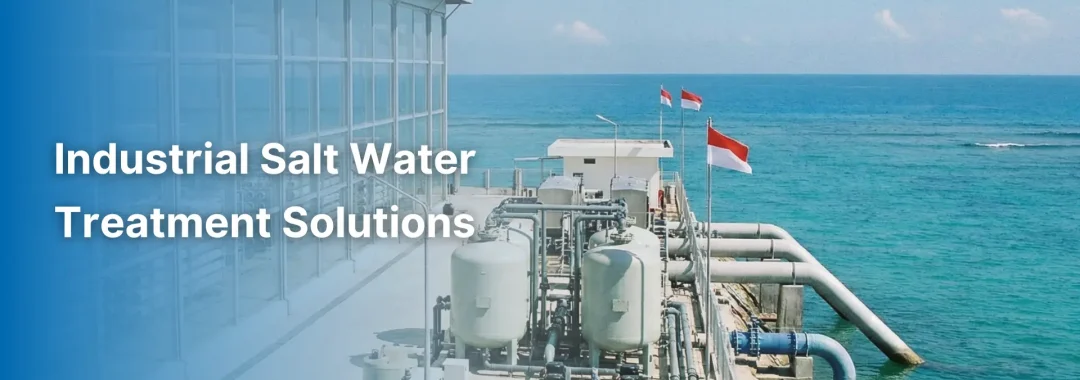
A large-scale industrial salt water treatment plant utilizing reverse osmosis pressure vessels under a clear sky in Indonesia

Industrial Salt Water Treatment Reliable Productions

Industrial Salt Water Treatment: Securing Operations Against Scarcity

For facility managers and procurement heads across Indonesia, securing a reliable, high-quality water supply is becoming increasingly complex. As freshwater sources become scarcer or contaminated due to seawater intrusion, industries are forced to look towards alternative sources: seawater and brackish groundwater. Consequently, implementing effective industrial salt water treatment is no longer an option; it is a strategic necessity for business continuity.

PT. Gapura Liqua Solutions (GLS) understands that your core business is not managing water treatment plants. However, without a reliable supply of process water, core operations grind to a halt. This article outlines the critical importance of professional desalination strategies.

The High Cost of Ignoring Salinity in Industrial Water

Utilizing water with high Total Dissolved Solids (TDS) without adequate treatment is a recipe for disaster. While the immediate availability of brackish or seawater might seem like a solution, the hidden costs are substantial.

Impact on Assets and Operational Continuity

Untreated saline water wreaks havoc on industrial infrastructure. Specifically, chlorides present in salt water are highly corrosive to metals, leading to rapid deterioration of piping, boilers, and cooling towers. Furthermore, high mineral content causes scaling, which reduces heat transfer efficiency and increases energy consumption.

Ultimately, these issues lead to unplanned downtime and expensive equipment replacement. Therefore, investing in a robust industrial salt water treatment system is essentially an insurance policy for your entire production facility.

Industrial Salt Water Treatment as a Strategic Solution

Modern desalination technology allows industries to convert virtually any saline source into high-purity process water. The most prevalent and energy-efficient method today is Reverse Osmosis (RO).

Depending on the source water salinity, systems are categorized as Seawater Reverse Osmosis (SWRO) or Brackish Water Reverse Osmosis (BWRO). To understand the benefits better, you can read about the general advantages of RO water systems.

The Role of Advanced Membrane Technology

At the heart of any RO system are the membranes. These semi-permeable barriers separate salts from water molecules under high pressure. The selection of the right Reverse Osmosis Membrane is critical and depends heavily on the specific feed water chemistry.

For facilities dealing with brackish groundwater, understanding factors affecting BWRO membrane performance is essential for optimizing lifespan and energy usage. Utilizing the correct technology turns a problematic water source into a secure, long-term asset.

Why Engineering Expertise Defines Long-Term Success

Buying equipment is easy; ensuring it runs efficiently for twenty years is difficult. Many industrial desalination projects fail not because of the technology, but due to poor system design or inadequate maintenance.

An effective industrial salt water treatment plant requires precise engineering, proper pre-treatment protocols, and energy recovery devices to keep operational expenditures (OPEX) manageable. According to the International Desalination Association, energy consumption remains a key factor in plant viability, emphasizing the need for efficient design.

Beyond Installation: The Importance of O&M

Successful water management requires a long-term view. GLS provides end-to-end systems, meaning we don’t just supply hardware; we ensure operational continuity. This includes long-term Operations & Maintenance (O&M) support, ensuring compliance with environmental regulations, and managing consumables.

Real-world application of this expertise is crucial. You can see examples of our ongoing commitment to operational excellence in our recent project updates on LinkedIn.

Conclusion

Facing water scarcity requires proactive measures. By adopting advanced industrial salt water treatment, Indonesian industries can secure their water future against operational risks. However, the technology is only as good as the partner behind it.

GLS offers the expertise to deliver reliable, end-to-end desalination solutions, allowing you to focus entirely on your core business. For convenience, you can even find essential components through our official Tokopedia store.

Do not compromise on water security. Contact PT. Gapura Liqua Solutions today to discuss your specific water challenges.

FAQ Section

Q: What is the difference between SWRO and BWRO in industrial treatment?

A: SWRO (Seawater Reverse Osmosis) treats water with very high salinity (typically >30,000 ppm TDS), requiring higher pressures and energy. BWRO (Brackish Water Reverse Osmosis) treats water that is saltier than fresh water but less salty than seawater (typically 1,000–10,000 ppm TDS), often found in coastal groundwater.

Q: How does GLS ensure the long-term reliability of a salt water treatment plant?

A: We go beyond just supplying equipment. We provide comprehensive engineering, proper pre-treatment design to protect membranes, and offer long-term Operations & Maintenance (O&M) contracts to ensure continuous, optimal performance.

Q: Is industrial salt water treatment cost-effective for my facility?

A: While the initial investment can be significant, the cost of not having reliable water—through downtime, corroded assets, or buying expensive trucked water—is often much higher. Modern energy recovery devices have also significantly reduced the OPEX of desalination.

Q: Can GLS handle high-volume water requirements for large industries?

A: Yes. GLS specializes in end-to-end industrial-scale solutions, designing systems tailored to the specific volume and quality requirements of large manufacturing and processing facilities.


    Follow us on Social Media