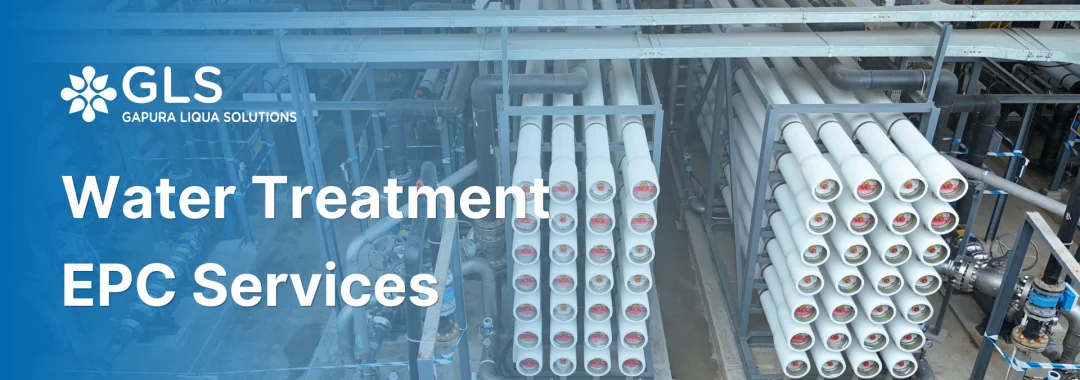
A high-angle view of a large-scale industrial Reverse Osmosis plant with extensive piping and pressure vessel arrays, showcasing water treatment EPC contractor services by PT. Gapura Liqua Solutions.

Water Treatment EPC Contractor Services

Transforming Utilities: Partnering with a Water Treatment EPC Contractor

For many procurement executives and facility managers in Indonesia, water management is mistakenly viewed as a passive, unchangeable monthly utility bill. However, this outdated paradigm actively conceals massive, highly controllable operational expenses (OPEX). Instead of patching up failing systems piecemeal, forward-thinking industries must treat their water infrastructure as a strategic, high-yield investment. Consequently, navigating this complex transformation requires specialized expertise. Specifically, partnering with an experienced water treatment EPC contractor ensures that your facility transitions seamlessly from wasteful legacy systems to highly efficient, modern operations.

If your factory continuously battles skyrocketing OPEX and unplanned downtime, the root cause likely stems from poor system integration. Let us explore why a comprehensive Design & Build approach is the ultimate solution for securing your industrial utility network.

Why Ignoring a Water Treatment EPC Contractor Leads to Fragmented Upgrades

In the industrial water sector, attempting to upgrade facilities through fragmented, multi-vendor approaches frequently creates disastrous operational bottlenecks. Unfortunately, many factories still rely on severely outdated system designs that quietly drain corporate profitability.

How an EPC Contractor Fixes the “Leaking Bucket” of Filtration

Traditionally, hospitality resorts and manufacturing plants utilize silica sand filters as their primary barrier. Nevertheless, relying solely on conventional sand filters is like ignoring a “leaking bucket” in your profitability. Sand filters frequently suffer from channeling and bacterial slime accumulation. As a result, massive amounts of clean water are wasted during mandatory backwash cycles. An expert water treatment EPC contractor immediately identifies these inefficiencies and replaces them with bio-resistant media, preventing fine micro-particles from carrying heavy organic loads directly into your core facility infrastructure.

Protecting Downstream Assets with an Expert Water Treatment Contractor

What happens when this poorly filtered water travels further into your facility? Those fine particles will immediately trigger severe boiler feed water problems. Consequently, escaped mineral particles cause boiler scaling and chiller clogging, drastically reducing thermal efficiency. Additionally, if the water feeds into a purification system, it will rapidly cause RO membrane failure through irreversible fouling. Repairing these heavy machines requires incredibly expensive downtime that could have been completely avoided by utilizing a professional water treatment EPC contractor for proper front-end engineering.

The Strategic Value of a Dedicated Water Treatment EPC Contractor

To definitively halt this massive waste, facilities must abandon piecemeal upgrades and embrace a unified strategy. Engaging a professional water treatment EPC contractor ensures that every component of your water infrastructure is designed to work in perfect harmony.

End-to-End Design & Build Integration by a Trusted EPC Partner

The core advantage of this partnership is the Design & Build (EPC) methodology. EPC stands for Engineering, Procurement, and Construction. By consolidating these three critical phases under one expert water treatment EPC contractor, facilities eliminate the communication gaps and technical mismatches that plague multi-vendor projects. From the initial 3D CAD design and rigorous raw water analysis to the final commissioning of the plant, the contractor takes absolute accountability. Therefore, your internal team can focus entirely on your core manufacturing or hospitality business without worrying about project delays.

Implementing Advanced Sustainability Architecture via EPC Services

Furthermore, a top-tier EPC partner does not just install equipment; they implement Advanced Sustainability Architecture. By combining bio-resistant Activated Filter Media (AFM) pre-treatment with premium Reverse Osmosis Membranes, the water treatment EPC contractor builds a system customized for extreme efficiency. Whether your facility requires complex seawater desalination or advanced industrial wastewater recycling—similar to processes explained in our guide on how a DAF system works for wastewater—the EPC approach guarantees that precision filtration is embedded perfectly into the architectural design.

Achieving an 18–24 Month ROI with Your Water Treatment EPC Contractor

Many decision-makers initially assume that hiring an end-to-end contractor is overly expensive. However, this perspective is entirely incorrect. Executing a turnkey Design & Build project with a reliable water treatment EPC contractor is an incredibly high-yield investment.

Because the EPC approach flawlessly integrates Advanced Sustainability Architecture, the operational savings are immediate. The system drastically reduces clean water waste, eliminates the need for excessive chemical dosing, and prevents heat-insulating scale from forming inside your chillers. Ultimately, the cumulative reduction in energy consumption and emergency maintenance consistently generates a clear Return on Investment (ROI) within just 18 to 24 months.

PT. Gapura Liqua Solutions: Your Premier Water Treatment EPC Contractor

Transitioning your utility network toward zero-waste, highly profitable operations requires an elite engineering partner. PT. Gapura Liqua Solutions (GLS) is Indonesia’s premier water treatment EPC contractor, delivering flawless end-to-end systems. We manage the entire lifecycle of your water infrastructure—from precision engineering and global procurement to construction and long-term operational maintenance. You can witness our uncompromising dedication to engineering excellence directly through our latest national industrial project updates on LinkedIn.

For facilities looking to immediately upgrade specific components while planning a larger overhaul, our premium parts are always accessible through our official Tokopedia store.

Conclusion: Securing Your Future with the Right Water Treatment EPC Contractor

In summary, treating utility infrastructure as an afterthought brings devastating financial impacts to your facility. By comprehensively understanding the value of a dedicated water treatment EPC , you not only prevent heavy machinery damage but also actively transform uncontrollable cost burdens into measurable OPEX efficiency. Ultimately, PT. Gapura Liqua Solutions stands as your trusted expert partner, explicitly integrating seawater desalination, dynamic resource recovery systems, and long-term operational reliability. Do not let a “leaking bucket” destroy your factory’s profits; contact PT. Gapura Liqua Solutions today to initiate your Design & Build transformation.

FAQ Section

Q: What exactly does a water treatment EPC contractor do? A: An EPC (Engineering, Procurement, and Construction) contractor handles the entire lifecycle of a water treatment project from start to finish. They design the technical architecture, source all necessary materials and membranes globally, and construct the physical plant, ensuring a seamless, turnkey handover to the client.

Q: Why is the Design & Build approach better than hiring separate designers and installers? A: Hiring separate vendors often leads to miscommunication, technical mismatches, and delayed timelines. A Design & Build approach consolidates all accountability under one expert company. This ensures the system is built exactly as engineered, reducing OPEX leaks and preventing catastrophic equipment failure.

Q: Can upgrading through an EPC contract actually provide an ROI? A: Yes. By implementing Advanced Sustainability Architecture, an expert EPC contractor eliminates the “leaking bucket” effect. The new system will slash backwash water waste, lower the electrical load on high-pressure pumps, and prevent scaling in boilers—typically delivering an ROI within 18 to 24 months.

Q: Does PT. Gapura Liqua Solutions offer services beyond the construction phase? A: Absolutely. Alongside our core Design & Build (EPC) services, PT. GLS provides comprehensive, long-term Operations & Maintenance (O&M) contracts. We ensure that your facility continuously meets required water quality and environmental compliance standards for years to come.

Follow us on Social Media

Facebook Gapura Liqua Solutions Instagram Gapura Liqua Solutions LinkedIn Gapura Liqua Solutions
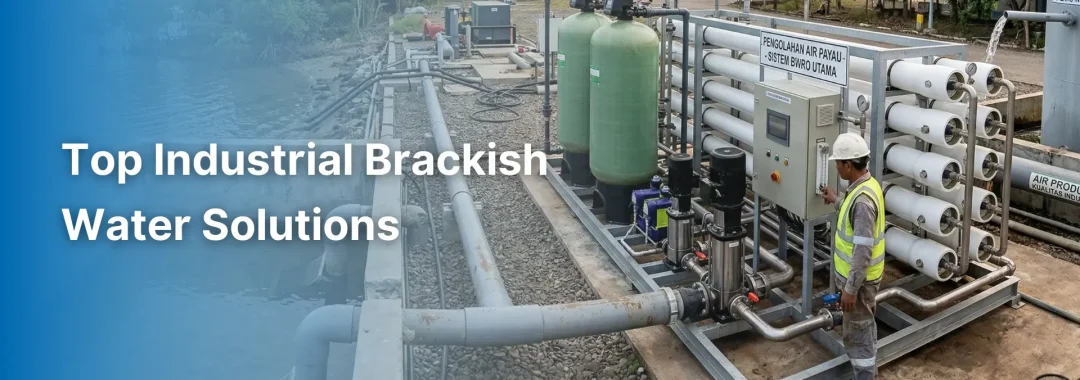
An industrial facility manager inspecting the pressure vessels of high-efficiency industrial brackish water solutions designed by Gapura Liqua Solutions.

Top Industrial Brackish Water Solutions

Securing Plant Utilities with Industrial Brackish Water Solutions

Industrial facility managers in Indonesia constantly battle the challenge of securing consistent, high-quality water supplies. Consequently, as coastal aquifers face seawater intrusion and inland groundwater sources degrade, raw water salinity is steadily increasing. Therefore, relying on standard filtration is no longer sufficient. Implementing advanced industrial brackish water solutions provides a decisive approach to overcoming these utility hurdles. Indeed, this technology separates dissolved salts efficiently, ensuring strict operational compliance while protecting vital plant infrastructure.

Furthermore, integrating advanced desalination is not merely a reactive measure. Instead, it serves as the foundational step toward sustainable resource recovery and long-term operational longevity.

The Problem with High Salinity Groundwater

Factories across the manufacturing, food, and petrochemical sectors require pristine water to operate properly. Therefore, managing brackish water streams effectively becomes a top priority for procurement and facility teams.

Scaling, Corrosion, and Equipment Failure

Brackish water contains moderate levels of dissolved salts, typically ranging between 1,000 and 10,000 parts per million (ppm) of Total Dissolved Solids (TDS). Because these minerals do not settle via gravity, they easily pass through conventional media filters. Subsequently, these hard minerals create severe scaling inside boilers, cooling towers, and heat exchangers.

Furthermore, high chloride concentrations accelerate pipeline corrosion. Thus, facilities face a high risk of catastrophic equipment failure and skyrocketing maintenance costs if these parameters remain unchecked.

How Industrial Brackish Water Solutions Provide the Answer

To resolve these contamination issues, engineers utilize membrane-based separation technologies. Specifically, highly engineered industrial brackish water solutions force pressurized water through microscopic barriers to remove dissolved impurities.

The Mechanics of Reverse Osmosis (RO)

The core technology driving these solutions is Reverse Osmosis (RO). First, high-pressure pumps push the saline feed water against a semi-permeable membrane. Next, the membrane allows pure water molecules to pass through while rejecting up to 99% of dissolved salts and organics.

Ultimately, this process produces a highly purified permeate stream ready for industrial use. To fully understand the operational benefits, you can explore the advantages of RO systems on our dedicated technical page.

Pre-Treatment and Membrane Protection

By removing heavy particulate loads early, comprehensive pre-treatment effectively protects downstream filtration assets. For instance, feeding correctly pre-treated water significantly enhances BWRO membrane performance. Additionally, utilizing properly specified Reverse Osmosis Membrane elements prevents premature fouling and ensures maximum lifecycle value. Should your facility require immediate consumable replacements, securing high-quality components is critical for maintaining flow rates.

Ensuring Long-Term Reliability and Efficiency

Environmental compliance and operational efficiency go hand in hand. Thus, utilizing robust industrial brackish water solutions helps facilities avoid sudden production halts. Moreover, integrating this separation technology promotes resource recovery. Facilities can safely recycle polished effluent or recover concentrated brines, drastically lowering daily water consumption and aligning with green industry standards.

Partnering with PT. Gapura Liqua Solutions

Sourcing reliable equipment and expert engineering remains a top priority for decision-makers. Therefore, PT. Gapura Liqua Solutions (GLS) offers comprehensive engineering, procurement, and construction (EPC) services. We tailor every installation to meet your specific water chemistry and production demands.

Additionally, we provide easy access to critical spare parts and consumables via our official Tokopedia store. Furthermore, you can view our successful, real-world implementations through our recent LinkedIn project updates, showcasing our deep commitment to engineering excellence.

Conclusion

Ultimately, establishing modern industrial brackish water solutions secures your facility’s operational future and process stability. PT. Gapura Liqua Solutions acts as your ideal expert partner in this critical journey. We explicitly link our expertise in seawater desalination (SWRO), advanced resource recovery, and long-term operations to guarantee your facility’s success. Therefore, do not leave your water supply to chance. Contact PT. Gapura Liqua Solutions today to discuss your next water treatment project and achieve total operational peace of mind.

FAQ

Q: What defines water as “brackish” in an industrial context? A: Brackish water possesses a salinity level between fresh water and seawater. Typically, it contains Total Dissolved Solids (TDS) ranging from 1,000 to 10,000 parts per million (ppm). Because it is highly corrosive and causes scaling, it requires specialized membrane treatment before industrial use.

Q: How do industrial brackish water solutions differ from seawater systems (SWRO)? A: While both utilize reverse osmosis, brackish water systems operate at significantly lower pressures because the incoming water has a lower osmotic pressure than seawater. Consequently, BWRO systems consume much less energy and utilize different membrane specifications compared to SWRO plants.

Q: Can a BWRO system help my facility achieve zero liquid discharge (ZLD)? A: Yes. Integrating a BWRO system is a highly effective step in resource recovery. By purifying and recycling wastewater or brackish sources, the system drastically reduces liquid waste volume, which represents a crucial phase in achieving full Zero Liquid Discharge (ZLD) objectives.

Q: Does GLS provide long-term maintenance for these treatment plants? A: Absolutely. PT. Gapura Liqua Solutions provides comprehensive Operations and Maintenance (O&M) contracts. Specifically, we handle everything from routine chemical dosing and membrane cleaning to full facility operation, ensuring your system runs optimally for decades.

Follow us on Social Media

Facebook Gapura Liqua - industrial brackish water solutions Instagram Gapura Liqua - industrial brackish water solutions LinkedIn Gapura Liqua - industrial brackish water solutions

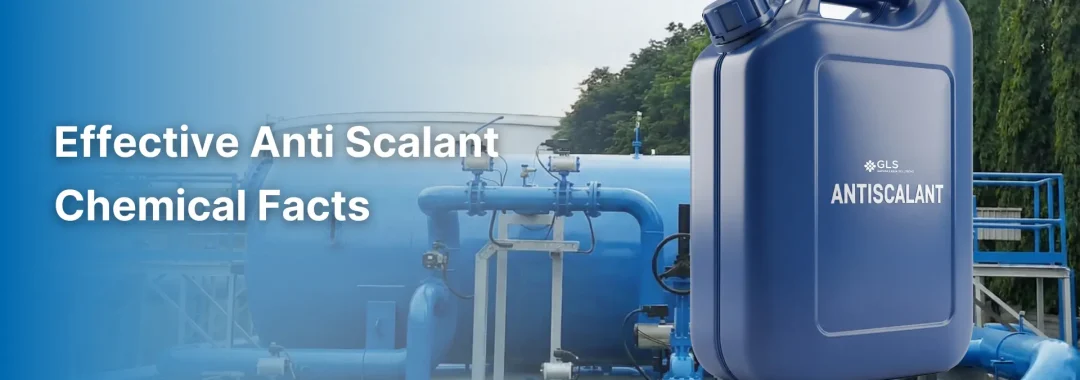
Industrial technician adjusting a chemical dosing pump to administer an effective anti scalant chemical into an RO system to prevent fouling.

Effective Anti Scalant Chemical Facts

Effective Anti Scalant Chemical: Effective Anti Scalant Chemical: Protecting Your Industrial Assets

For industrial facility managers in Indonesia, maintaining the efficiency of a Seawater Reverse Osmosis (SWRO) or Brackish Water Reverse Osmosis (BWRO) plant is a constant battle against chemistry. However, as the system extracts pure water, the remaining salts concentrate rapidly. Consequently, this leads to a high risk of mineral precipitation. To combat this issue, deploying an effective anti scalant chemical is not just an option; it is a necessity for operational continuity.

Moreover, without the correct chemical intervention, scale formation can irreversibly damage expensive membrane elements. As a result, this leads to skyrocketing operational costs and critical production downtime.

Understanding the Threat of Membrane Scaling

Scaling occurs when dissolved minerals in the feed water exceed their solubility limits. In industrial settings, specific compounds like calcium carbonate, calcium sulfate, or reactive silica often drive this process.

How Mineral Precipitation Occurs

First, high-pressure pumps force water through the membrane. Then, the concentration of salts on the feed surface increases significantly. Unless you intervene with an effective anti scalant chemical, these salts crystallize. Subsequently, they form a hard, rock-like layer on the membrane surface. This layer blocks the flow of water. Therefore, the pumps must work harder and consume more energy to maintain production rates.

Why an Effective Anti Scalant Chemical is Critical

Implementing a robust dosing strategy is the first line of defense. Specifically, the primary function of an effective anti scalant chemical involves interfering with crystal growth. This action keeps minerals dissolved even when they are supersaturated.

Reducing Energy Consumption and Cleaning Frequency

When membranes are clean, they operate at optimal pressure. Conversely, scale buildup causes a spike in differential pressure, which leads to higher electricity bills. Furthermore, frequent scaling necessitates frequent Chemical Cleaning (CIP). CIP procedures require downtime and aggressive chemicals that can degrade membrane life over time. Thus, a proper antiscalant strategy minimizes these interruptions.

Extending Membrane Lifespan

Membranes are significant capital assets. In addition to saving energy, preventing physical damage from sharp crystals extends their service life. Simultaneously, reducing the frequency of harsh cleanings protects the membrane surface. For more details on maintaining optimal performance, you can review our guide on BWRO membrane performance.

Selecting the Right Formulation

Antiscalant formulations vary significantly. Therefore, the deployment of an effective anti scalant chemical depends entirely on the specific water chemistry of your site.

  • For instance, high silica water requires specific dispersants to prevent silica polymerization.
  • On the other hand, high hardness water requires strong threshold inhibitors for calcium salts.

Using the wrong generic chemical can be as damaging as using none at all. Consequently, proper selection requires a detailed water analysis and projection software simulation.

Comprehensive Support from Gapura Liqua Solutions

At PT. Gapura Liqua Solutions (GLS), we understand that chemical dosing is part of a larger ecosystem. Hence, we provide end-to-end support, from water analysis to the supply of premium chemicals and the maintenance of dosing equipment.

We ensure that your strategy utilizes an effective anti scalant chemical perfectly aligned with your system’s design limits. For example, procurement managers looking for reliable supplies can access critical components via our official Tokopedia store. Additionally, understanding the advantages of RO systems can help in justifying the investment in high-quality pre-treatment.

We have successfully implemented these strategies across various industries, ensuring long-term reliability. In fact, you can see examples of our operational success in our recent project updates on LinkedIn.

Conclusion

Ultimately, the integrity of your water treatment plant relies on proactive protection. Using an effective anti scalant chemical program is the most cost-effective insurance policy against fouling and failure.

Therefore, do not let mineral scaling compromise your production targets. Partner with experts who understand the science of water. Contact PT. Gapura Liqua Solutions today for a chemical audit and ensure your assets are protected for the long haul.

FAQ

Q: What makes a chemical an “effective anti scalant”?
A: An effective anti scalant chemical must have high threshold inhibition capabilities, meaning it can prevent precipitation even at low dosages. It should also be compatible with your specific membrane type (polyamide or cellulose acetate) and effective against the specific mix of ions in your feed water.

Q: How do I know if I am using the right dosage?
A: Dosage is calculated based on feed water analysis (TDS, pH, temperature, ion concentration) and recovery rate. Under-dosing leads to scaling; over-dosing can cause biofouling. GLS engineers can calculate the precise ppm required for your system.

Q: Can anti scalant remove existing scale?
A: No. Even an effective anti scalant chemical is strictly preventative. To remove existing scale, you must perform a Clean-in-Place (CIP) using low pH (acid) cleaners for minerals or high pH (alkaline) cleaners for organics.

Follow us on Social Media

Facebook Gapura Liqua - effective anti scalant chemical Instagram Gapura Liqua - effective anti scalant chemical LinkedIn Gapura Liqua - effective anti scalant chemical
Large industrial manufacturing plant with smoke stacks, illustrating the operational scale that benefits from an Industrial Management Service Agreement by Gapura Liqua Solutions.

Industrial Management Service Agreement Value

Industrial Management Service Agreement: Securing Your Water Operations

For facility managers and procurement heads in Indonesia, the stability of utilities is non-negotiable. However, managing a complex Seawater Reverse Osmosis (SWRO) plant or a wastewater treatment facility in-house often becomes a distraction from core business activities. This is where an Industrial Management Service Agreement becomes a critical strategic asset.

Rather than struggling with fluctuating maintenance costs and technical staffing issues, forward-thinking companies are leveraging MSAs to ensure reliability. An Industrial Management Service Agreement is not just a contract; it is a partnership that guarantees water availability while optimizing operational expenses.

Understanding the Industrial Management Service Agreement

An Industrial Management Service Agreement (MSA) defines a long-term relationship between a facility owner and a specialized service provider. In the context of water treatment, this agreement transfers the responsibility for day-to-day operations, maintenance, and performance monitoring to experts.

Unlike simple ad-hoc repair services, an MSA focuses on comprehensive asset management. It encompasses everything from routine monitoring to complex troubleshooting, ensuring that the water treatment plant operates at peak efficiency. By adopting an Industrial Management Service Agreement, companies effectively shift the burden of operational risk to a partner equipped to handle it.

Why Implement an Industrial Management Service Agreement?

The decision to outsource operations through an MSA is often driven by the need for financial stability and risk mitigation.

Transforming Variable Costs into Fixed Costs

One of the most significant advantages of an Industrial Management Service Agreement is financial predictability. In-house management often faces unexpected spikes in costs due to emergency repairs, sudden spare part requirements, or inefficient chemical usage.

An MSA typically structures these costs into a fixed monthly fee. This allows procurement departments to forecast budgets accurately, eliminating unpleasant surprises at the end of the fiscal year. Furthermore, professional management often reduces energy and chemical consumption, lowering the overall Total Cost of Ownership (TCO).

Mitigating Technical and Compliance Risks

Water treatment standards in Indonesia are becoming increasingly stringent. Failure to meet effluent standards can result in severe penalties, including a downgrade in PROPER ratings. An Industrial Management Service Agreement includes strict Service Level Agreements (SLAs) regarding water quality.

This means the service provider is contractually obligated to deliver water that meets specific parameters. Consequently, the risk of non-compliance is shifted from the facility owner to the specialist partner, ensuring peace of mind regarding environmental regulations.

The Value of Specialized Expertise

Modern water treatment technologies, such as high-pressure SWRO and Ultrafiltration, require specialized knowledge. Maintaining a team of certified engineers in-house is both difficult and expensive.

Through an Industrial Management Service Agreement, your facility gains immediate access to a pool of experts. These professionals stay updated with the latest technologies, such as advanced Reverse Osmosis Membrane cleaning techniques and energy recovery optimization. This expertise ensures that your assets are not just running, but are being optimized to extend their lifespan.

Partnering with Gapura Liqua Solutions

PT. Gapura Liqua Solutions (GLS) understands that every facility has unique needs. We do not offer a one-size-fits-all solution. Instead, we tailor every Industrial Management Service Agreement to align with your specific operational goals and risk appetite.

From full comprehensive operations to supervision-only contracts, GLS provides the technical backbone your business needs. We manage the supply chain for critical consumables and spare parts, many of which are readily available through our official store on Tokopedia, ensuring minimal downtime.

Conclusion

In a competitive industrial landscape, operational reliability is the foundation of success. An Industrial Management Service Agreement offers the most effective path to securing your water supply, controlling costs, and managing risks.

Do not let water utility challenges hinder your production targets. Partner with a trusted expert who prioritizes your operational continuity. Contact PT. Gapura Liqua Solutions today to discuss how we can structure an MSA that drives value for your business.

FAQ

Q: What is the primary difference between a warranty and an MSA?

A: A warranty covers equipment defects for a limited time. In contrast, an Industrial Management Service Agreement covers the ongoing performance, labor, and maintenance of the entire system, ensuring it operates correctly throughout the contract duration.

Q: Can an MSA help with environmental compliance in Indonesia?

A: Yes. A robust MSA includes performance guarantees that align with Indonesian environmental regulations (such as PROPER). The service provider assumes the responsibility for maintaining effluent quality within legal limits.

Q: Does GLS provide spare parts under the MSA?

A: This depends on the specific contract structure. We offer comprehensive MSAs that include all spare parts and chemicals, as well as “labor-plus-supervision” models where parts are billed separately.

Q: Is an MSA suitable for older water treatment plants?

A: Absolutely. In fact, older plants often benefit most from an Industrial Management Service Agreement. Our experts can optimize aging assets, perform necessary retrofits, and extend the remaining useful life of the equipment.

Two engineers in safety gear reviewing a clipboard in front of a water treatment plant, symbolizing the reliability of an Industrial Management Service Agreement.

Secure your operations and transfer risk. An Industrial Management Service Agreement ensures your water systems are managed by experts, allowing you to focus on production.

Follow us on Social Media

Facebook Instagram LinkedIn