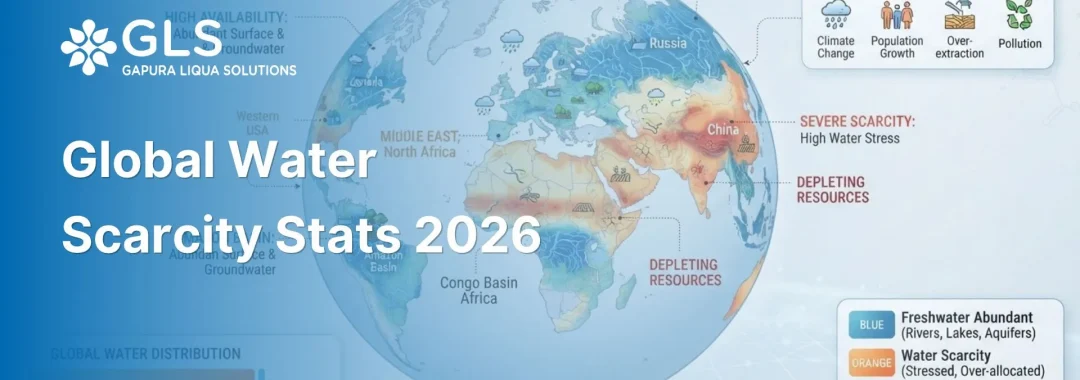
Global map illustration showing regions affected by freshwater stress and water scarcity statistics.

Global Water Scarcity Stats 2026

Understanding the Crisis: global water scarcity stats 2026

Water is essential for all human life, agriculture, and ecosystem health. However, access to clean freshwater is shrinking rapidly across the globe. Examining global water scarcity stats 2026 reveals a growing environmental challenge. Billions of people now experience severe water stress during the year. Understanding these key figures helps communities and policymakers build sustainable solutions.

The Extent of Global Water Shortages

Freshwater accounts for less than three percent of all water on Earth. Furthermore, most freshwater remains trapped in glaciers or deep underground aquifers.

Regional Stress and Population Impact

Over two billion people currently live in countries experiencing high water stress. Furthermore, nearly four billion people face severe water scarcity for at least one month annually. Rapid urbanization and climate change continue to accelerate freshwater depletion worldwide. Regions like North Africa and Central Asia face the most acute supply deficits.

Sectoral Usage and Resource Demand

Agriculture accounts for approximately seventy percent of global freshwater withdrawals. Industrial processes consume another twenty percent of available supply for power and manufacturing. Meanwhile, domestic municipal consumption uses the remaining ten percent of freshwater resources. As global food demand grows, agricultural water stress continues to intensify.

Causes Driving Water Scarcity in 2026

Several interconnected factors contribute to the accelerating global water crisis. Addressing these causes requires international cooperation and modern resource management.

Climate Change and Shifting Weather Patterns

Rising global temperatures disrupt traditional precipitation cycles and glacier melting rates. Prolonged droughts dry up essential rivers, lakes, and surface reservoirs. Consequently, groundwater reserves are being depleted faster than natural recharge rates allow. International bodies like the United Nations stress the urgency of sustainable water governance.

Population Growth and Pollution Risks

The global population demands more freshwater for drinking and sanitation every year. At the same time, untreated municipal and industrial wastewater pollutes local rivers. Restoring polluted waterways is critical to securing safe drinking water supplies. Organizations like the World Health Organization highlight the vital link between clean water and health.

Solutions for a Sustainable Water Future

Overcoming water scarcity requires adopting modern conservation and technology solutions. Every sector must play an active role in protecting vital freshwater ecosystems.

Innovation in Treatment and Reuse

Advanced filtration systems allow communities to recycle wastewater for non-potable uses. Seawater desalination provides a reliable freshwater alternative for coastal populations. Furthermore, efficient drip irrigation reduces agricultural water waste dramatically. Implementing these technologies strengthens long-term water resilience across vulnerable communities.

Global Cooperation and Local Action

Governments must enforce strict regulations to protect vulnerable aquifers and rivers. Communities can practice daily conservation by repairing leaks and harvesting rainwater. Public education campaigns raise essential awareness about smart water usage habits. Protecting freshwater resources ensures a secure future for generations to come.

Conclusion

Analyzing global water scarcity stats 2026 highlights an urgent environmental challenge. Millions of families and ecosystems face growing freshwater risks each year. However, combining modern water treatment with active conservation offers a clear path forward. Protecting global freshwater is essential for building a healthy, sustainable world.

FAQ

Q1: How many people are affected by global water scarcity?

A: Over two billion people live in countries facing high water stress, and nearly four billion experience severe water scarcity for at least one month each year.

Q2: Which sector consumes the most freshwater globally?

A: Agriculture is the largest consumer, accounting for roughly seventy percent of global freshwater withdrawals, followed by industry at twenty percent and domestic usage at ten percent.

Q3: What are the primary solutions to mitigate global water scarcity?

A: Primary solutions include adopting advanced water recycling, seawater desalination, efficient drip irrigation in agriculture, strict pollution controls, and daily water conservation habits.

Follow us on Social Media

Facebook Gapura Liqua Solutions Instagram Gapura Liqua Solutions LinkedIn Gapura Liqua Solutions
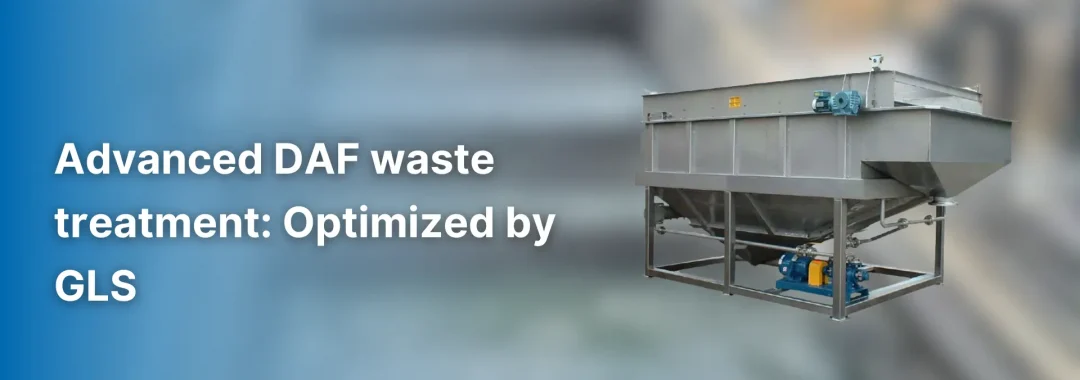
Advanced DAF waste treatment unit showing high-efficiency flotation for Indonesian industrial wastewater.

Advanced DAF waste treatment: Optimized by GLS

Enhancing Industrial Efficiency with Advanced DAF Waste Treatment

In the rapidly evolving industrial landscape of Indonesia, “business as usual” no longer applies to wastewater management. As environmental regulations tighten and water scarcity increases, procurement heads are prioritizing advanced DAF waste treatment to safeguard their operations. Dissolved Air Flotation (DAF) has evolved from a simple separation tool into a high-tech solution capable of handling the most challenging industrial effluents.

Navigating the Complexities of Wastewater Compliance

Facilities Managers in sectors such as petrochemicals and food production face a significant hurdle: removing non-settleable solids and emulsified oils. These contaminants often bypass traditional treatment stages, leading to non-compliance with Indonesian environmental standards. Therefore, relying on outdated infrastructure can result in both ecological damage and severe financial penalties.

Why Conventional Settling Often Falls Short

Traditional sedimentation relies on gravity. However, many industrial pollutants are buoyant or have a density similar to water, making gravity settling painstakingly slow and often ineffective. In contrast, advanced DAF waste treatment uses a pressurized air system to force these particles to the surface. Consequently, this method is significantly faster and requires a much smaller physical footprint than massive clarifiers.

Technical Superiority of Advanced DAF Waste Treatment

The “advanced” nature of modern DAF systems lies in the precision of micro-bubble generation and chemical dosing. By optimizing the coagulation and flocculation process before the water enters the flotation tank, the system ensures that even the smallest colloidal particles are captured. This results in water that is not just “treated” but is often suitable for internal recycling processes.

Synergizing Micro-bubble Technology with Resource Recovery

Beyond mere waste removal, advanced DAF waste treatment acts as a gateway to resource recovery. For many Indonesian industries, the sludge harvested from the DAF process can be repurposed or processed for energy. This shift from “waste disposal” to “resource management” is a hallmark of the total water solutions provided by PT. Gapura Liqua Solutions.

Protecting Your Assets: From DAF to Membrane Systems

A critical role of the DAF system is the protection of downstream technology. If your plant utilizes an industrial reverse osmosis membrane, the DAF unit serves as the primary shield against fouling. By ensuring a low Silt Density Index (SDI), the DAF process maintains optimal bwro membrane performance and extends the interval between expensive maintenance cycles.

Why PT. Gapura Liqua Solutions is Your Expert Partner

PT. Gapura Liqua Solutions (GLS) stands at the forefront of the water treatment industry in Indonesia. We provide end-to-end expertise, ensuring that your advanced DAF waste treatment system is not a standalone box, but a fully integrated component of your utility infrastructure. Our focus on keunggulan sistem air RO and long-term operational continuity makes us the partner of choice for procurement heads who value reliability over the lowest initial bid.

From specialized components available on Tokopedia to large-scale engineering, procurement, and operations (EPO), GLS delivers the technical depth required for modern industry.

Conclusion

Investing in advanced DAF waste treatment is more than a compliance move; it is a commitment to operational excellence and resource recovery. By choosing a system designed for high performance and low maintenance, you ensure the longevity of your facility and the quality of your output. PT. Gapura Liqua Solutions is ready to help you navigate these technical challenges with a partnership built on transparency and expertise. To secure your facility’s water future, contact us today for a technical consultation.

FAQ Section

  • What makes DAF “advanced”? It involves automated chemical dosing, precise micro-bubble control, and integrated monitoring systems that adapt to changing wastewater quality in real-time.
  • Does DAF reduce COD and BOD? Yes, by effectively removing organic solids and fats, it significantly reduces Chemical Oxygen Demand and Biological Oxygen Demand levels.
  • Can GLS retrofit an old settling tank with DAF? Absolutely. We specialize in upgrading existing infrastructure to modern advanced DAF waste treatment standards.

Follow us on Social Media

Facebook Instagram LinkedIn