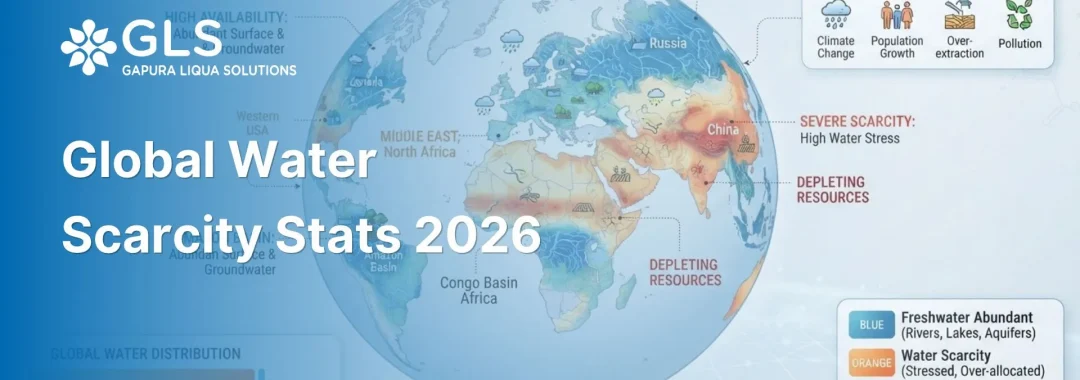
Global map illustration showing regions affected by freshwater stress and water scarcity statistics.

Global Water Scarcity Stats 2026

Understanding the Crisis: global water scarcity stats 2026

Water is essential for all human life, agriculture, and ecosystem health. However, access to clean freshwater is shrinking rapidly across the globe. Examining global water scarcity stats 2026 reveals a growing environmental challenge. Billions of people now experience severe water stress during the year. Understanding these key figures helps communities and policymakers build sustainable solutions.

The Extent of Global Water Shortages

Freshwater accounts for less than three percent of all water on Earth. Furthermore, most freshwater remains trapped in glaciers or deep underground aquifers.

Regional Stress and Population Impact

Over two billion people currently live in countries experiencing high water stress. Furthermore, nearly four billion people face severe water scarcity for at least one month annually. Rapid urbanization and climate change continue to accelerate freshwater depletion worldwide. Regions like North Africa and Central Asia face the most acute supply deficits.

Sectoral Usage and Resource Demand

Agriculture accounts for approximately seventy percent of global freshwater withdrawals. Industrial processes consume another twenty percent of available supply for power and manufacturing. Meanwhile, domestic municipal consumption uses the remaining ten percent of freshwater resources. As global food demand grows, agricultural water stress continues to intensify.

Causes Driving Water Scarcity in 2026

Several interconnected factors contribute to the accelerating global water crisis. Addressing these causes requires international cooperation and modern resource management.

Climate Change and Shifting Weather Patterns

Rising global temperatures disrupt traditional precipitation cycles and glacier melting rates. Prolonged droughts dry up essential rivers, lakes, and surface reservoirs. Consequently, groundwater reserves are being depleted faster than natural recharge rates allow. International bodies like the United Nations stress the urgency of sustainable water governance.

Population Growth and Pollution Risks

The global population demands more freshwater for drinking and sanitation every year. At the same time, untreated municipal and industrial wastewater pollutes local rivers. Restoring polluted waterways is critical to securing safe drinking water supplies. Organizations like the World Health Organization highlight the vital link between clean water and health.

Solutions for a Sustainable Water Future

Overcoming water scarcity requires adopting modern conservation and technology solutions. Every sector must play an active role in protecting vital freshwater ecosystems.

Innovation in Treatment and Reuse

Advanced filtration systems allow communities to recycle wastewater for non-potable uses. Seawater desalination provides a reliable freshwater alternative for coastal populations. Furthermore, efficient drip irrigation reduces agricultural water waste dramatically. Implementing these technologies strengthens long-term water resilience across vulnerable communities.

Global Cooperation and Local Action

Governments must enforce strict regulations to protect vulnerable aquifers and rivers. Communities can practice daily conservation by repairing leaks and harvesting rainwater. Public education campaigns raise essential awareness about smart water usage habits. Protecting freshwater resources ensures a secure future for generations to come.

Conclusion

Analyzing global water scarcity stats 2026 highlights an urgent environmental challenge. Millions of families and ecosystems face growing freshwater risks each year. However, combining modern water treatment with active conservation offers a clear path forward. Protecting global freshwater is essential for building a healthy, sustainable world.

FAQ

Q1: How many people are affected by global water scarcity?

A: Over two billion people live in countries facing high water stress, and nearly four billion experience severe water scarcity for at least one month each year.

Q2: Which sector consumes the most freshwater globally?

A: Agriculture is the largest consumer, accounting for roughly seventy percent of global freshwater withdrawals, followed by industry at twenty percent and domestic usage at ten percent.

Q3: What are the primary solutions to mitigate global water scarcity?

A: Primary solutions include adopting advanced water recycling, seawater desalination, efficient drip irrigation in agriculture, strict pollution controls, and daily water conservation habits.

Follow us on Social Media

Facebook Gapura Liqua Solutions Instagram Gapura Liqua Solutions LinkedIn Gapura Liqua Solutions
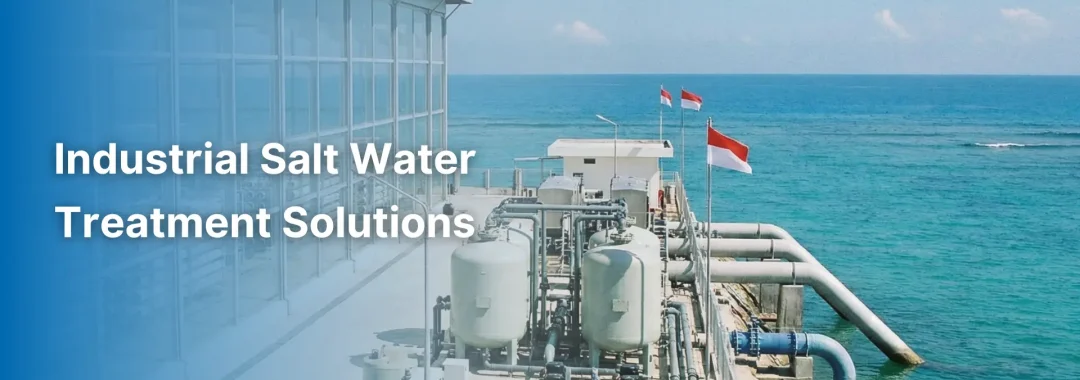
A large-scale industrial salt water treatment plant utilizing reverse osmosis pressure vessels under a clear sky in Indonesia

Industrial Salt Water Treatment Reliable Productions

Industrial Salt Water Treatment: Securing Operations Against Scarcity

For facility managers and procurement heads across Indonesia, securing a reliable, high-quality water supply is becoming increasingly complex. As freshwater sources become scarcer or contaminated due to seawater intrusion, industries are forced to look towards alternative sources: seawater and brackish groundwater. Consequently, implementing effective industrial salt water treatment is no longer an option; it is a strategic necessity for business continuity.

PT. Gapura Liqua Solutions (GLS) understands that your core business is not managing water treatment plants. However, without a reliable supply of process water, core operations grind to a halt. This article outlines the critical importance of professional desalination strategies.

The High Cost of Ignoring Salinity in Industrial Water

Utilizing water with high Total Dissolved Solids (TDS) without adequate treatment is a recipe for disaster. While the immediate availability of brackish or seawater might seem like a solution, the hidden costs are substantial.

Impact on Assets and Operational Continuity

Untreated saline water wreaks havoc on industrial infrastructure. Specifically, chlorides present in salt water are highly corrosive to metals, leading to rapid deterioration of piping, boilers, and cooling towers. Furthermore, high mineral content causes scaling, which reduces heat transfer efficiency and increases energy consumption.

Ultimately, these issues lead to unplanned downtime and expensive equipment replacement. Therefore, investing in a robust industrial salt water treatment system is essentially an insurance policy for your entire production facility.

Industrial Salt Water Treatment as a Strategic Solution

Modern desalination technology allows industries to convert virtually any saline source into high-purity process water. The most prevalent and energy-efficient method today is Reverse Osmosis (RO).

Depending on the source water salinity, systems are categorized as Seawater Reverse Osmosis (SWRO) or Brackish Water Reverse Osmosis (BWRO). To understand the benefits better, you can read about the general advantages of RO water systems.

The Role of Advanced Membrane Technology

At the heart of any RO system are the membranes. These semi-permeable barriers separate salts from water molecules under high pressure. The selection of the right Reverse Osmosis Membrane is critical and depends heavily on the specific feed water chemistry.

For facilities dealing with brackish groundwater, understanding factors affecting BWRO membrane performance is essential for optimizing lifespan and energy usage. Utilizing the correct technology turns a problematic water source into a secure, long-term asset.

Why Engineering Expertise Defines Long-Term Success

Buying equipment is easy; ensuring it runs efficiently for twenty years is difficult. Many industrial desalination projects fail not because of the technology, but due to poor system design or inadequate maintenance.

An effective industrial salt water treatment plant requires precise engineering, proper pre-treatment protocols, and energy recovery devices to keep operational expenditures (OPEX) manageable. According to the International Desalination Association, energy consumption remains a key factor in plant viability, emphasizing the need for efficient design.

Beyond Installation: The Importance of O&M

Successful water management requires a long-term view. GLS provides end-to-end systems, meaning we don’t just supply hardware; we ensure operational continuity. This includes long-term Operations & Maintenance (O&M) support, ensuring compliance with environmental regulations, and managing consumables.

Real-world application of this expertise is crucial. You can see examples of our ongoing commitment to operational excellence in our recent project updates on LinkedIn.

Conclusion

Facing water scarcity requires proactive measures. By adopting advanced industrial salt water treatment, Indonesian industries can secure their water future against operational risks. However, the technology is only as good as the partner behind it.

GLS offers the expertise to deliver reliable, end-to-end desalination solutions, allowing you to focus entirely on your core business. For convenience, you can even find essential components through our official Tokopedia store.

Do not compromise on water security. Contact PT. Gapura Liqua Solutions today to discuss your specific water challenges.

FAQ Section

Q: What is the difference between SWRO and BWRO in industrial treatment?

A: SWRO (Seawater Reverse Osmosis) treats water with very high salinity (typically >30,000 ppm TDS), requiring higher pressures and energy. BWRO (Brackish Water Reverse Osmosis) treats water that is saltier than fresh water but less salty than seawater (typically 1,000–10,000 ppm TDS), often found in coastal groundwater.

Q: How does GLS ensure the long-term reliability of a salt water treatment plant?

A: We go beyond just supplying equipment. We provide comprehensive engineering, proper pre-treatment design to protect membranes, and offer long-term Operations & Maintenance (O&M) contracts to ensure continuous, optimal performance.

Q: Is industrial salt water treatment cost-effective for my facility?

A: While the initial investment can be significant, the cost of not having reliable water—through downtime, corroded assets, or buying expensive trucked water—is often much higher. Modern energy recovery devices have also significantly reduced the OPEX of desalination.

Q: Can GLS handle high-volume water requirements for large industries?

A: Yes. GLS specializes in end-to-end industrial-scale solutions, designing systems tailored to the specific volume and quality requirements of large manufacturing and processing facilities.


    Follow us on Social Media  

                      Â