An industrial technician inspecting a high-efficiency AFM filtration tank designed for reducing backwash water volume in a luxury resort

Reducing Backwash Water Volume Guide

Reducing Backwash Water Volume: Cutting Utility Waste in Luxury Hospitality

For many luxury resorts and industrial facilities in Indonesia, water is often viewed as an unavoidable operational expense. However, facility managers frequently overlook the massive inefficiencies hidden within their filtration rooms. Traditional silica sand filters are essentially “leaking buckets” for hotel profits. Specifically, every time a technician initiates a cleaning cycle, the facility loses thousands of liters of treated, heated, and chemically dosed water. Therefore, focusing on reducing backwash water volume has become the single most effective strategy for optimizing utility expenditure (OPEX) and improving the facility’s bottom line.

By moving away from traditional mined sand and embracing advanced “Precision Water” technology, hotels can stop washing money away. Indeed, transitioning to a circular hospitality water loop is no longer just an environmental goal; it is a financial necessity.

The Hidden Cost of Sand: Why You are Washing Money Away

Standard silica sand filtration has a fundamental biological flaw. Within days of installation, bacteria colonize the sand grains and create a protective layer known as biofilm. This biofilm essentially glues the sand together, leading to a phenomenon called “channeling.”

The Biofilm and Channeling Dilemma

When channeling occurs, water finds the path of least resistance, bypassing the filter media entirely. Consequently, the filter loses its efficiency, and the system must backwash more frequently to compensate. This cycle results in excessive water waste. Furthermore, these bacteria react with chlorine to create trichloramines, which cause the unpleasant “pool smell” and skin irritation that lead to guest complaints. Achieving high standards in luxury hospitality requires a bioactive solution that addresses the root of this biological problem.

Reducing Backwash Water Volume with Activated Filter Media (AFM)

The most effective solution for modern facility managers is the implementation of Activated Filter Media (AFM). Unlike sand, AFM is an upcycled, activated glass media that is 100% bio-resistant. Because bacteria cannot grow on the surface of AFM, the media remains clean and free-flowing for years.

50% Less Water, 30% Fewer Chemicals

By preventing biofilm and channeling, AFM makes the filtration process significantly more efficient. Specifically, reducing backwash water volume by up to 50% is a standard outcome when switching from sand to AFM. Since the media does not stick to itself, the backwash process is shorter and requires a lower flow rate to be effective. Additionally, because the filter removes more organic precursors, facilities typically see a 30% reduction in chlorine and other chemical consumption. This dramatic reduction helps hotels secure prestigious certifications such as EarthCheck or Green Globe.

Beyond Savings: Protecting Your Downstream RO Assets

A filter is more than just a cleaning tool; it is a shield for your facility’s most expensive machinery. When primary filtration allows fine particles or biological matter to pass through, your downstream assets suffer. For instance, poor filtration is a leading cause of premature fouling in a Reverse Osmosis Membrane.

Maintaining superior BWRO membrane performance requires consistent, ultra-clean feed water. By successfully reducing backwash water volume and increasing filtration precision, you protect your chillers, boilers, and RO units from the scaling and organic load that cause emergency downtime. Understanding the keunggulan sistem air RO alongside precision media filtration ensures a high-yield investment for your property.

Partnering with Gapura Liqua Solutions for Long-Term Reliability

Successful utility management requires an expert partner who understands the total water cycle. PT. Gapura Liqua Solutions (GLS) provides end-to-end engineering, procurement, and long-term operations. We integrate seawater desalination and resource recovery into a seamless loop, ensuring your facility remains compliant and efficient. Our commitment to operational continuity is visible in our latest project updates on LinkedIn, where we demonstrate real-world utility savings for major Indonesian resorts.

For facilities looking for immediate maintenance support, we offer professional-grade filtration components through our official Tokopedia store. This ensures your technical team has the reliable parts needed to prevent utility loss.

Conclusion: Securing ROI and Operational Continuity

Ultimately, the goal of any facility manager is to achieve maximum reliability at the lowest possible cost. Reducing backwash water volume is the cornerstone of this objective. By adopting Activated Filter Media, you protect your physical assets, earn green certifications, and achieve a clear ROI within 18 to 24 months. PT. Gapura Liqua Solutions remains the ideal partner for the Indonesian hospitality and industrial sectors, explicitly linking resource recovery with long-term reliability.

Stop washing your facility’s profits away with outdated sand technology. Contact PT. Gapura Liqua Solutions today to audit your utility room and implement a bioactive, circular water strategy.

FAQ

Q: How does reducing backwash water volume improve my chiller’s efficiency? A: Precision filtration with AFM removes the fine particles that cause scale buildup in chillers and boilers. By keeping these heat-exchange surfaces clean, the equipment operates at peak efficiency, lowering your overall energy bill.

Q: Is Activated Filter Media (AFM) more expensive than sand? A: While the initial cost of AFM is higher than mined sand, the ROI is achieved rapidly. Specifically, the savings in water, electricity, and chemicals, along with the extended life of your RO membranes, typically cover the investment within 24 months.

Q: Can AFM be used in seawater desalination systems (SWRO)? A: Absolutely. Reducing backwash water volume in SWRO systems is critical because the intake water has already been treated and pressurized. AFM provides superior pre-filtration that protects expensive high-pressure pumps and membranes.

Q: Does GLS provide maintenance services for these systems? A: Yes. PT. Gapura Liqua Solutions offers Management Service Agreements to ensure that your filtration and desalination systems remain optimized for decades.

Follow us on Social Media

Facebook Instagram LinkedIn
A technical cross-section of sub-5 micron filtration units utilizing AFM to provide crystal-clear water for a luxury resort.

Sub-5 Micron Filtration Units for Hotels

Sub-5 Micron Filtration Units: Why Modern Luxury Hospitality Demands Precision

In the competitive landscape of luxury hospitality, “perfection” is a standard, not a goal. While high-end resorts focus heavily on interior aesthetics and service, the silent engine of the guest experience—the water utility—is often overlooked. Unfortunately, many 5-star properties still rely on 50-year-old sand filtration technology. This reliance creates a significant vulnerability. Transitioning to professional sub-5 micron filtration units is no longer a luxury; it is a critical necessity to protect assets and maintain brand prestige.

Standard silica sand filters generally capture particles down to 20 or 40 microns. Consequently, millions of microscopic particles and biological precursors pass through the system, eventually damaging expensive downstream infrastructure.

The Failure of Standard Sand Filtration in Luxury Standards

The hospitality sector in Indonesia, particularly in high-demand areas like Bali and Jakarta, faces unique raw water challenges. Traditional sand filters create a “leaking bucket” for hotel profits.

The 20-Micron Barrier and Bio-fouling Risks

Sand is not just physically limited; it is biologically unstable. Within weeks, bacteria colonize the sand grains, creating a biofilm that leads to “channeling.” This allows unfiltered water to bypass the media entirely. Specifically, sand cannot capture the fine particles that cause cloudy water or the organic precursors that react with chlorine to create trichloramines. Therefore, hotels using sand often suffer from that unpleasant “pool smell” and skin irritation among guests. By contrast, implementing sub-5 micron filtration units provides a bioactive, precise barrier that standard sand simply cannot match.

Precision Water: The Power of Sub-5 Micron Filtration Units

To achieve truly “Precision Water,” facility managers must utilize media that is physically and chemically superior. The shift toward Activated Filter Media (AFM) represents the current gold standard in the industry.

Activated Filter Media (AFM) vs. Traditional Mined Sand

AFM is an upcycled, activated glass media that possesses a permanent negative surface charge. While sand traps dirt mechanically, AFM attracts it electrostatically. Consequently, sub-5 micron filtration units utilizing AFM can remove up to 95% of all particles down to 1 micron. This level of purity is virtually impossible for silica sand. For a deeper technical analysis of these differences, you can review our AFM S vs NG Media comparison.

Protecting High-Value Assets: Chillers, Boilers, and RO Membranes

Effective filtration is the most robust insurance policy for your hotel’s mechanical room. When fine particulates bypass primary filtration, they cause scale buildup in chillers and boilers, leading to massive energy inefficiency. Moreover, they cause rapid fouling of your Reverse Osmosis Membrane. Ensuring consistent BWRO membrane performance requires the ultra-clean feed water that only sub-5 micron filtration units can provide. By removing the load before it hits the RO, you drastically extend the life of your membranes and reduce the frequency of expensive chemical cleanings.

Enhancing the Guest Experience: Beyond Aesthetics

In a luxury setting, water must be more than “safe”—it must be “superior.” Sub-5 micron filtration results in water with significantly lower turbidity, creating a crystal-clear appearance in pools and spas. Furthermore, because these units remove more organic matter, the demand for chlorine drops by up to 30%. This reduces the chemical smell and provides a gentler experience for guests. Understanding the keunggulan sistem air RO alongside precision filtration ensures that every touchpoint, from the shower to the swimming pool, reflects 5-star quality.

Partnering with Gapura Liqua Solutions for Operational Continuity

Managing a modern resort requires a partner who understands the total water loop. PT. Gapura Liqua Solutions (GLS) provides end-to-end engineering and long-term operations to ensure your facility remains compliant and efficient. We specialize in high selective filter media that protects your ROI and enhances guest satisfaction.

Our proven expertise is visible in our latest project updates on LinkedIn, where we showcase the transformation of hospitality utilities across Indonesia. Additionally, for immediate maintenance needs, we offer premium filtration components through our official Tokopedia store.

Conclusion: The Future of Hospitality Water Management

Ultimately, the choice of filtration technology determines the lifespan of your facility’s most expensive assets. By adopting sub-5 micron filtration units, you protect your physical infrastructure, reduce water and chemical waste, and deliver a guest experience that meets modern luxury standards. PT. Gapura Liqua Solutions remains the ideal partner for the Indonesian hospitality sector, explicitly linking advanced resource recovery with long-term reliability.

Stop washing your hotel’s profits away with outdated sand technology. Contact PT. Gapura Liqua Solutions today to audit your utility room and implement a precision water solution.

FAQ

Q: Can sub-5 micron filtration units save money on electricity? A: Yes. By preventing fine particulates and scale from reaching your chillers and boilers, the equipment operates at peak heat-exchange efficiency, reducing energy consumption by up to 10–15%.

Q: Is it difficult to switch from sand to AFM in our hotel? A: Not at all. Sub-5 micron filtration units using AFM act as a “drop-in” replacement. You simply remove the old sand and replace it with the activated glass media without needing to change your existing filter tanks or pumps.

Q: How does this technology help with “Green Hotel” certifications? A: Advanced media reduces backwash water waste by up to 50% and chemical usage by 30%. These metrics contribute directly to EarthCheck or Green Globe certification requirements.

Q: Does GLS provide maintenance for these filtration systems? A: Absolutely. PT. Gapura Liqua Solutions offers Management Service Agreements to ensure your systems perform optimally year-round.

Teknisi sedang melakukan audit sistem pengolahan air sebagai bagian dari strategi optimasi utility cost untuk efisiensi operasional pabrik

Strategi Optimasi Utility Cost Industri & Hotel

Strategi Optimasi Utility Cost: Mengubah Biaya Air Menjadi Profit

Dalam manajemen fasilitas industri dan perhotelan di Indonesia, biaya utilitas sering kali dipandang sebagai angka mati di dalam neraca keuangan. Namun, bagi pengambil keputusan yang visioner, air seharusnya tidak lagi diperlakukan sebagai tagihan bulanan yang pasif. Sebaliknya, air adalah pengeluaran operasional (OPEX) yang sangat bisa dikendalikan. Melalui strategi optimasi utility cost yang tepat, perusahaan dapat mengidentifikasi inefisiensi tersembunyi yang selama ini menggerus profitabilitas.

Banyak fasilitas masih mengandalkan sistem filtrasi pasir tradisional yang sebenarnya merupakan “ember bocor” bagi keuangan perusahaan. Sistem lama ini tidak hanya memboroskan air melalui siklus backwash yang sering, tetapi juga merusak peralatan hilir yang mahal.

Biaya Air: Pengeluaran Tetap atau OPEX yang Bisa Dikendalikan?

Langkah awal dalam strategi optimasi utility cost adalah menyadari bahwa kualitas air yang buruk meningkatkan beban kerja mesin lain. Ketika sistem filtrasi utama gagal menyaring kontaminan secara optimal, peralatan seperti boiler, chiller, dan unit desalinasi harus bekerja lebih keras.

Masalah Tersembunyi pada Filtrasi Pasir Tradisional

Pasir silika murni memiliki kelemahan biologis yang serius. Bakteri dapat tumbuh di permukaan pasir dan membentuk biofilm yang menyebabkan channeling. Fenomena ini memaksa sistem untuk melakukan backwash lebih sering, yang berarti membuang air bersih dan energi secara percuma. Selain itu, partikel halus yang lolos dari filter pasir akan mempercepat pembentukan kerak pada Reverse Osmosis Membrane, yang berujung pada biaya penggantian aset yang sangat tinggi.

Implementasi Strategi Optimasi Utility Cost Melalui Teknologi Modern

Solusi nyata untuk menekan biaya utilitas terletak pada transisi ke Arsitektur Keberlanjutan Tingkat Lanjut. Teknologi ini menggabungkan media filtrasi berkinerja tinggi dengan sistem pemurnian air yang cerdas.

Mengganti Pasir Silika dengan AFM untuk Efisiensi Maksimal

Salah satu strategi optimasi utility cost yang paling efektif adalah mengganti pasir silika dengan Activated Filter Media (AFM). AFM terbuat dari kaca daur ulang yang telah diaktivasi secara kimia untuk mencegah pertumbuhan bakteri. Hasilnya, kebutuhan air untuk backwash dapat berkurang hingga 50%, dan konsumsi bahan kimia pembersih turun sekitar 30%. Penghematan ini secara langsung akan memperbaiki struktur biaya operasional fasilitas Anda.

Peran Membran RO dalam Menekan Biaya Jangka Panjang

Setelah tahap filtrasi awal yang bersih, penggunaan sistem Reverse Osmosis (RO) menjadi jauh lebih efisien. Dengan air umpan yang berkualitas, keunggulan sistem air RO akan terlihat pada rendahnya biaya energi dan jarangnya frekuensi pembersihan membran. Oleh karena itu, memastikan BWRO membrane performance tetap stabil adalah kunci untuk menjaga ketersediaan air tanpa gangguan operasional.

Menghitung ROI dari Investasi Arsitektur Air Berkelanjutan

Banyak manajer fasilitas khawatir mengenai biaya awal pembaruan sistem. Namun, investasi pada teknologi filtrasi canggih bukanlah sekadar biaya, melainkan aset yang menghasilkan yield tinggi. Secara rata-rata, transisi ke sistem filtrasi AFM dan RO yang dioptimalkan memberikan Return on Investment (ROI) dalam waktu 18 hingga 24 bulan. Penghematan dari pengurangan limbah air, efisiensi energi, dan perlindungan aset mesin (Boiler dan Chiller) jauh melampaui biaya modal awal.

Kemitraan Strategis dengan PT. Gapura Liqua Solutions

Menangani kompleksitas air industri membutuhkan mitra yang memiliki keahlian teknis mendalam. PT. Gapura Liqua Solutions (GLS) hadir sebagai penyedia solusi end-to-end yang memungkinkan klien berfokus pada bisnis inti mereka. Kami tidak hanya menyediakan alat, tetapi juga membantu merancang strategi optimasi utility cost yang disesuaikan dengan kebutuhan spesifik fasilitas Anda di Indonesia.

Dedikasi kami dalam mengelola utilitas air telah terbukti melalui berbagai proyek skala besar, mulai dari sektor perhotelan hingga industri berat. Anda dapat melihat rekam jejak keberhasilan kami melalui update proyek di LinkedIn. Untuk kebutuhan suku cadang dan media filtrasi cepat, kami juga menyediakan layanan melalui toko resmi Tokopedia.

Kesimpulan: Memastikan Keandalan Operasional dan Efisiensi Finansial

Sebagai penutup, efisiensi utilitas adalah fondasi dari daya saing bisnis di era modern. Dengan menerapkan strategi optimasi utility cost yang berfokus pada teknologi berkelanjutan seperti desalinasi air laut dan pemulihan sumber daya, perusahaan Anda tidak hanya berkontribusi pada lingkungan, tetapi juga memperkuat fundamental keuangan. PT. Gapura Liqua Solutions siap menjadi mitra ahli Anda dalam mewujudkan keandalan operasional jangka panjang. Hubungi PT. Gapura Liqua Solutions hari ini untuk konsultasi dan audit sistem utilitas air Anda.

FAQ

Q: Apakah mengganti pasir silika dengan AFM memerlukan perubahan desain tangki? A: Tidak perlu. AFM didesain untuk menggantikan pasir silika secara langsung (drop-in replacement) pada tangki filtrasi yang sudah ada tanpa perlu modifikasi besar pada infrastruktur perpipaan.

Q: Bagaimana strategi optimasi utility cost berdampak pada umur mesin chiller? A: Dengan filtrasi yang lebih baik, air yang masuk ke sistem pendingin memiliki beban organik dan mineral yang jauh lebih rendah. Hal ini mencegah korosi dan penumpukan kerak pada kondensor, sehingga mesin beroperasi lebih efisien dan awet.

Q: Apa bedanya AFM dibandingkan dengan media filter kaca biasa? A: AFM adalah media teraktivasi yang memiliki muatan negatif untuk menarik partikel halus dan bersifat bio-resisten. Kaca daur ulang biasa tanpa aktivasi tidak memiliki kemampuan untuk mencegah biofilm, sehingga kinerjanya mirip dengan pasir silika biasa.


    Follow us on Social Media  

                       
An industrial filter cross-section showcasing sustainable media filter solutions like AFM glass media used in luxury hotel water treatment.

Sustainable Media Filter Solutions Water Savings

Sustainable Media Filter Solutions: The Circular Water Loop for Luxury Hospitality

Most hotels are literally washing money down the drain during every backwash cycle. While silica sand has served as the industry standard for decades, it poses significant operational risks and hidden costs. For procurement heads and facility managers in Indonesia, the shift toward sustainable media filter solutions is no longer just an environmental preference; it is a financial necessity. Specifically, Activated Filter Media (AFM) technology allows resorts to transition toward a circular hospitality water loop. This transition simultaneously protects expensive utility assets and reduces the hotel’s environmental footprint.

Why Silica Sand Is Draining Your Resort’s Profits

Traditionally, hotels rely on mined silica sand for their filtration needs. However, sand filtration has a critical flaw: bio-fouling. Consequently, bacteria colonize the sand grains, secreting an alginate “glue” that binds particles together. This process leads to channeling, where water finds the path of least resistance without being filtered. Therefore, your system must backwash more frequently to maintain water quality. This frequency wastes thousands of liters of treated water and increases the chemical load required to keep pools and utilities sanitary.

The Hidden Operational Risks of Bio-Fouling and Channeling

Furthermore, bio-fouling in sand filters creates trichloramines—the chemical responsible for the unpleasant “pool smell” and skin irritation. In contrast, implementing sustainable media filter solutions prevents the initial colonization of bacteria. By using upcycled, activated glass media, hotels eliminate the biological breeding ground found in sand. Specifically, this prevents the formation of “mud balls” in the filter bed, ensuring that every drop of water passes through a bioactive, efficient barrier.

High-Performance Protection: How Sustainable Media Filter Solutions Guard Your Assets

A filter should do more than just clean water; it must act as a high-performance shield for your most expensive equipment. In a luxury hotel, the chillers, boilers, and reverse osmosis units represent massive capital investments. When filtration fails, these assets suffer.

Optimizing RO Membrane Lifespan and Chiller Efficiency

If your primary filtration allows fine particles or biological matter through, your Reverse Osmosis Membrane will foul prematurely. Consequently, you will face higher pressures and energy consumption. Moreover, ensuring optimal BWRO membrane performance requires consistent, high-purity feed water. By switching to sustainable media filter solutions, you provide a superior level of pre-filtration. This effectively prevents the scaling and organic fouling that lead to emergency repairs in boilers and chillers. Furthermore, understanding the keunggulan sistem air RO highlights how high-quality filtration acts as the foundation for energy-efficient utility management.

The Circular Hospitality Advantage: Saving Water and Chemicals

The financial impact of advanced filtration is immediate. Specifically, Activated Filter Media (AFM) requires up to 50% less water for backwashing compared to sand. Because the media is bio-resistant, it does not “stick” to contaminants as aggressively as sand does. Therefore, the backwash cycle is shorter and more effective. Additionally, hotels typically see a 30% reduction in chemical consumption. This is because the filter removes more organic precursors before they react with chlorine.

Achieving EarthCheck and Green Globe Certifications

For the modern hotel owner, ROI is not just about bills; it is about brand positioning. Many luxury travelers now prioritize properties with verified environmental credentials. Implementing sustainable media filter solutions contributes directly to points for EarthCheck or Green Globe certifications. By proving a reduction in water intensity and chemical usage, your facility secures a competitive edge in the global hospitality market.

Why Engineering Expertise Matters for Long-Term Reliability

Successful water management requires more than just high-quality media. It requires a partner who understands engineering, procurement, and long-term operations. PT. Gapura Liqua Solutions (GLS) provides end-to-end systems that allow clients to focus on their core business. We integrate seawater desalination and resource recovery into a seamless loop, ensuring that your facility never faces a water shortage or a compliance crisis. Our commitment to excellence is visible in our latest project updates on LinkedIn, where we showcase real-world water savings across Indonesia.

For hotels looking for immediate maintenance support, we offer high-performance filtration components through our official Tokopedia store. This ensures your facility manager has access to professional-grade tools for operational continuity.

Conclusion: Partnering for Operational Continuity with GLS

Ultimately, the choice of filter media determines the health of your entire water system. By adopting sustainable media filter solutions, you protect your physical assets, earn prestigious green certifications, and significantly reduce operational expenditure. PT. Gapura Liqua Solutions remains the ideal partner for the Indonesian hospitality sector, explicitly linking resource recovery with long-term reliability.

Ensure your hotel is not “washing money away” with outdated sand technology. Contact PT. Gapura Liqua Solutions today to audit your filtration system and implement a bioactive, circular water loop.

FAQ Section

Q: Can I replace my existing sand with a sustainable media filter without changing my tanks? A: Yes, in most cases. Sustainable media filter solutions like AFM are designed to fit into standard pressure vessels. You simply remove the sand and replace it with the upgraded media.

Q: How long does Activated Filter Media (AFM) last compared to sand? A: While sand usually needs replacing every 2-3 years due to bio-fouling and attrition, AFM is bio-resistant and much harder. Therefore, it can last for the entire lifespan of the filtration system without losing its efficiency.

Q: Does switching to AFM help with legionella prevention? A: Specifically, yes. Because sustainable media filters do not allow the formation of a biofilm, they significantly reduce the breeding ground for pathogens like Legionella in the filter bed.

Q: Is there an ROI for switching if our water costs are low? A: Absolutely. The ROI comes not just from water savings, but from reduced chemical costs and the extended lifespan of your RO membranes, boilers, and chillers.

Follow us on Social Media

Facebook Gapura Liqua - sustainable media filter solutions Instagram Gapura Liqua - sustainable media filter solutions LinkedIn Gapura Liqua - sustainable media filter solutions
A close-up of crystal clear ice cubes produced by a machine utilizing high-efficiency ice production methods with RO water filtration.

High-Efficiency Ice Production Utility Savings

High-Efficiency Ice Production: Maximizing ROI Through Water Purity

In the luxury hospitality and commercial kitchen sectors, ice is more than just a frozen utility; it is a critical component of the guest experience. However, many facilities overlook the quality of the water entering their ice machines. Achieving high-efficiency ice production requires more than just a high-end machine. Specifically, it requires high-purity feed water that protects your equipment while optimizing physical freezing processes. Consequently, using untreated water leads to cloudy ice and skyrocketing maintenance costs. Therefore, savvy owners are turning to Reverse Osmosis (RO) to secure their bottom line.

Why Traditional Water Sources Kill Your Ice Machine

Tap water in many parts of Indonesia contains high concentrations of dissolved minerals like calcium and magnesium. These minerals do not simply disappear when water freezes. Instead, they remain in the machine, causing catastrophic mechanical issues.

The Hidden Cost of Scale and Mineral Deposits

When water turns into ice, minerals drop out of the solution and attach to the evaporator plates. This creates a rock-hard layer of scale. Consequently, this layer acts as an insulator, which forces the ice machine to work harder to reach freezing temperatures. Moreover, scale buildup is the primary cause of evaporator failure. Notably, replacing an evaporator can cost thousands of dollars, often representing a significant portion of the machine’s initial value. In contrast, preventative filtration stops these minerals before they enter the system.

Achieving High-Efficiency Ice Production with Reverse Osmosis

Integrating a Reverse Osmosis system is the most effective way to guarantee high-efficiency ice production. By removing up to 99% of dissolved solids, RO technology ensures that the freezing cycle is as pure and efficient as possible.

Shorter Freezing Cycles and Reduced Electricity Bills

Pure water behaves differently than mineral-heavy water. Specifically, impurities lower the freezing point of water, a phenomenon known as freezing-point depression. Because RO water is nearly free of solutes, it reaches a solid state more quickly. As a result, the ice machine completes its cycles faster. Shorter cycles directly translate to lower electricity bills, which significantly improves your long-term ROI. Furthermore, understanding the keunggulan sistem air RO is essential for any manager looking to optimize utility costs.

Crystal Clear Ice: Elevating the Premium Guest Experience

Cloudy ice is the result of trapped air and minerals. While it may seem like a minor aesthetic issue, it negatively impacts the guest experience. In contrast, RO water produces crystal-clear ice that melts slowly and does not alter the flavor of premium beverages. This clarity signals high standards of hygiene and luxury to your customers. Moreover, ensuring high BWRO membrane performance allows your facility to maintain this quality even when using brackish groundwater sources.

The Engineer’s Perspective: Zero Scale and Fewer Emergency Calls

From a maintenance standpoint, untreated water is a nightmare. Chief Engineers frequently deal with “ice machine down” emergency calls caused by clogged water lines or scale-jammed harvest cycles. Implementing an RO system serves as a robust preventative maintenance strategy. By eliminating the source of scale, you reduce the frequency of descaling procedures and emergency repairs. Consequently, your technical team can focus on other critical tasks rather than reactive maintenance. Using a high-quality Reverse Osmosis Membrane ensures that your machine receives the most consistent water quality possible.

Implementing a Total Water Solution for Hospitality Operations

PT. Gapura Liqua Solutions (GLS) provides end-to-end systems that allow your facility to operate without worrying about water availability or quality. We understand that your ice machine is a $10,000+ asset that needs protection. Therefore, we design systems that integrate seamlessly with your existing plumbing. Whether you are dealing with high-salinity seawater or local tap water, our EPC services provide a customized path to high-efficiency ice production. For those looking for immediate components, our official Tokopedia store offers the necessary parts to keep your systems running.

Conclusion: Protecting Your $10,000 Asset with GLS Expertise

Ultimately, the ROI of a water treatment system is found in what you save. By achieving high-efficiency ice production, you reduce electricity consumption, extend the life of your ice machine, and elevate your brand image. PT. Gapura Liqua Solutions remains the ideal partner for Indonesian hospitality, explicitly linking seawater desalination, resource recovery, and long-term reliability to your business success. You can see our commitment to engineering excellence through our latest project updates on LinkedIn.

Protect your utilities and your profits today. Contact PT. Gapura Liqua Solutions to audit your water quality and implement a solution that secures your facility’s operational continuity.

FAQ

Q: Does RO water really freeze faster than tap water? A: Yes. Because RO water is free from dissolved minerals, it has a higher freezing point than contaminated water. Consequently, the machine reaches the solid state more quickly, resulting in high-efficiency ice production.

Q: Will an RO system eliminate the need for descaling my ice machine? A: While it cannot remove 100% of minerals in all conditions, it removes up to 99%. This drastically reduces scale buildup, often extending the time between required descaling from months to years.

Q: Is the investment in an RO system worth it for a small ice machine? A: If the machine is critical to your guest experience and electricity costs are a concern, the ROI is usually achieved within 12–18 months through energy savings and avoided repair costs.

Q: Can GLS handle the installation in a remote resort location? A: Absolutely. PT. Gapura Liqua Solutions has a proven track record of implementing water solutions across the Indonesian archipelago, from North Jakarta to remote coastal resorts.

Follow us on Social Media

Facebook Gapura Liqua - high-efficiency ice production Instagram Gapura Liqua - high-efficiency ice production LinkedIn Gapura Liqua - high-efficiency ice production

A professional-grade hotel water treatment system featuring multiple reverse osmosis vessels and high-pressure pumps.

Hotel Water Treatment System Facts

Hotel Water Treatment System: Protecting Guest Experience and Assets

In the luxury hospitality sector, excellence is measured by the smallest details. While room aesthetics and dining are front-facing, the quality of the water running through the facility is the silent foundation of a premium stay. Consequently, a failure in water quality can result in immediate guest complaints regarding skin irritation or, worse, the catastrophic failure of centralized utility systems. Therefore, implementing a robust hotel water treatment system is not merely a technical requirement; it is a strategic investment in brand reputation and asset protection.

For facility managers and procurement heads in Indonesia, sourcing reliable water is a complex challenge. Whether your property faces coastal salinity or inland hard water, a specialized solution is necessary to maintain standards.

The Financial Impact of Poor Water Quality

Operating a large-scale resort or hotel requires massive amounts of water for laundry, boilers, and pools. When the water quality is poor, the financial consequences are significant and often hidden.

Scaling and Energy Inefficiency in Utility Rooms

Hard water is the primary culprit behind rising energy bills in the hospitality industry. When minerals like calcium and magnesium are heated, they form a rock-hard scale inside boilers and heat exchangers. Consequently, this layer acts as an insulator, forcing the equipment to consume significantly more energy to achieve the same temperature. Furthermore, scale leads to frequent equipment breakdowns. By integrating a professional hotel water treatment system, you eliminate these minerals before they can damage your high-value assets.

Guest Dissatisfaction and Brand Reputation

Guest expectations have never been higher. Mineral-heavy water can leave hair feeling brittle and skin irritated, which leads to negative reviews. Additionally, the smell of excessive chlorine or the presence of visible turbidity in tap water can quickly damage a brand’s prestige. Achieving consistent, crystal-clear water quality requires advanced filtration protocols that go beyond basic carbon filters.

How a Modern Hotel Water Treatment System Solves These Issues

Modern hospitality leaders are moving toward integrated, membrane-based solutions to guarantee consistency regardless of the raw water source.

Leveraging Reverse Osmosis for Superior Purity

Reverse Osmosis (RO) is currently the gold standard for high-end hospitality utilities. This process removes 99% of dissolved solids, ensuring that the water is soft and free from heavy metals. To achieve this, selecting a high-performance Reverse Osmosis Membrane is vital for maintaining system pressure and water flow. Furthermore, understanding the keunggulan sistem air RO allows managers to see the long-term energy savings provided by modern, efficient desalination designs.

Sustainable Water Recovery and Irrigation

Sustainability is a key metric for many B2B hospitality partners today. An advanced hotel water treatment system can include resource recovery modules, such as recycling gray water for garden irrigation or cooling towers. This drastically lowers the facility’s total water intake. For properties using brackish wells, monitoring BWRO membrane performance is essential to ensure that the treatment remains cost-effective and the water remains within safe drinking standards.

Ensuring Long-Term Continuity in the Hospitality Sector

A water system is a long-term asset that requires expert oversight. PT. Gapura Liqua Solutions (GLS) provides end-to-end engineering, procurement, and construction (EPC) services tailored to the unique demands of Indonesian hospitality. Our solutions ensure that you never have to worry about water availability or compliance. You can explore our expertise in high-demand environments through our latest project updates on LinkedIn, showcasing our commitment to engineering excellence.

Furthermore, for immediate operational needs, we offer high-quality consumables and spare parts through our official Tokopedia store, ensuring that your technical team has the support they need without delay.

Conclusion

The success of a luxury hotel depends on the reliability of its underlying utilities. By investing in a high-performance hotel water treatment system, you protect your physical assets, ensure hygiene compliance, and deliver the superior water quality that modern guests demand. PT. Gapura Liqua Solutions stands as the ideal expert partner, explicitly linking advanced seawater desalination, resource recovery, and long-term operations to guarantee your facility’s continuity.

Do not let water quality issues compromise your guest satisfaction. Contact PT. Gapura Liqua Solutions today to discuss a customized water strategy that ensures your hotel’s operational success for years to come.

FAQ

Q: How does a hotel water treatment system help reduce energy costs? A: By removing scale-forming minerals, the system prevents buildup in boilers and heat exchangers. This ensures maximum heat transfer efficiency, reducing the energy required to heat water for showers and laundry.

Q: Can we use seawater as our primary water source? A: Yes. Through Seawater Desalination (SWRO), coastal hotels can produce high-quality potable water, providing total water independence even in remote locations.

Q: What is the typical maintenance schedule for a hotel RO system? A: Routine checks should be done daily, while membrane cleaning (CIP) usually occurs every 3 to 6 months depending on water quality. Expert partners like GLS can manage this through long-term service agreements.

Q: Does GLS provide solutions for hotels with limited space? A: Absolutely. PT. Gapura Liqua Solutions specializes in containerized and compact engineering designs that can be integrated into existing utility rooms or outdoor spaces.

Follow us on Social Media

Facebook Gapura Liqua - hotel water treatment system Instagram Gapura Liqua - hotel water treatment system LinkedIn Gapura Liqua - hotel water treatment system
Insinyur utilitas sedang melakukan inspeksi pada tabung membran untuk mencari langkah atasi penurunan debit air pada instalasi filtrasi pabrik.

Atasi Penurunan Debit Air Membran RO

Atasi Penurunan Debit Air RO: Strategi Pemeliharaan Sistem Industri

Keandalan sistem utilitas air di pabrik manufaktur sangat bergantung pada konsistensi aliran air produk yang dihasilkan. Namun demikian, banyak manajer fasilitas di Indonesia menghadapi masalah teknis yang sama, yaitu berkurangnya volume air murni secara bertahap. Oleh karena itu, Anda harus segera melakukan langkah nyata untuk atasi penurunan debit air sebelum gangguan tersebut menghentikan seluruh lini produksi. Artikel ini akan membahas solusi teknis untuk mengembalikan performa sistem Reverse Osmosis (RO) Anda ke titik optimal.

Meskipun sistem filtrasi industri dirancang untuk penggunaan berat, akumulasi kontaminan tetap menjadi tantangan utama. Selanjutnya, pemahaman yang baik mengenai penyebab penurunan debit akan membantu Anda mengambil keputusan pengadaan yang lebih efisien.

Mengapa Penurunan Debit Air Terjadi?

Secara umum, penurunan debit sering kali disebabkan oleh interaksi kimiawi dan biologis di permukaan membran. Namun, diagnosa yang salah dapat menyebabkan biaya pemeliharaan membengkak tanpa hasil yang signifikan.

Dampak Fouling dan Scaling pada Membran

Penyumbatan fisik merupakan alasan paling dominan di balik masalah ini. Bahkan, air baku yang terlihat bersih tetap mengandung mineral terlarut yang dapat membentuk kerak (scaling). Selain itu, mikroorganisme dapat membentuk lapisan lendir biologis (fouling) yang menghalangi pori-pori mikroskopis. Sebagai akibatnya, pompa harus bekerja lebih keras, yang ditandai dengan kenaikan tekanan diferensial. Untuk memahami batas toleransi operasional, Anda dapat meninjau panduan kami mengenai BWRO membrane performance.

Langkah Strategis untuk Atasi Penurunan Debit Air

Upaya pemulihan sistem harus dilakukan secara sistematis. Sebaliknya dari sekadar mengganti komponen, Anda perlu melakukan pendekatan audit terlebih dahulu untuk mengidentifikasi jenis kontaminan yang ada.

Melakukan Audit Tekanan dan Kualitas Permeate

Langkah pertama untuk atasi penurunan debit air adalah dengan mencatat data operasional harian. Jika tekanan feed naik namun aliran produk turun, itu merupakan indikasi kuat terjadinya fouling. Selain itu, Anda harus memeriksa kualitas TDS air produk. Memahami keunggulan sistem air RO yang dirancang dengan baik akan membantu Anda mendeteksi penyimpangan performa sejak dini.

Prosedur Cleaning in Place (CIP) yang Terstandarisasi

Selanjutnya, prosedur Cleaning in Place (CIP) menjadi solusi utama ketika penurunan debit mencapai 10-15%. Namun demikian, penggunaan bahan kimia pembersih harus disesuaikan dengan jenis kerak. Kerak mineral memerlukan larutan asam, sedangkan fouling organik memerlukan larutan basa. Jika prosedur ini gagal mengembalikan debit, maka Anda mungkin perlu mempertimbangkan penggantian Reverse Osmosis Membrane dengan spesifikasi yang lebih tahan lama.

Menjaga Stabilitas Produksi dengan Pre-treatment yang Kuat

Pemeliharaan jangka panjang bukan hanya soal pembersihan, tetapi soal pencegahan. Oleh karena itu, unit pre-treatment seperti sand filter, carbon filter, dan ultrafiltrasi harus berfungsi secara maksimal. Bahkan, penggunaan antiscalant yang tepat secara signifikan dapat menghambat pembentukan kerak. Untuk industri dengan kapasitas besar, Anda dapat mengeksplorasi solusi flow RO tinggi guna meminimalkan risiko scaling di masa depan.

Bermitra dengan PT. Gapura Liqua Solutions

Menangani masalah utilitas air yang kompleks memerlukan mitra dengan rekayasa teknik tingkat tinggi. PT. Gapura Liqua Solutions (GLS) menyediakan layanan end-to-end untuk membantu industri di Indonesia. Kami tidak hanya merancang sistem baru, tetapi juga membantu audit dan optimasi sistem yang sudah ada agar performanya kembali maksimal.

Anda dapat memantau dedikasi teknis kami melalui update proyek terbaru di LinkedIn. Selanjutnya, untuk kemudahan pengadaan suku cadang dan media filtrasi, tim Anda dapat langsung bertransaksi di toko resmi Tokopedia kami dengan jaminan ketersediaan stok.

Kesimpulan

Singkatnya, penurunan aliran air adalah sinyal bahwa sistem utilitas Anda memerlukan perhatian serius. Dengan melakukan langkah-langkah untuk atasi penurunan debit air secara tepat waktu, Anda dapat melindungi aset perusahaan dan menekan biaya energi.

PT. Gapura Liqua Solutions berkomitmen untuk memberikan solusi air yang berkelanjutan, mulai dari desalinasi air laut hingga pengolahan air limbah terpadu. Oleh karena itu, jangan biarkan masalah teknis menghambat produktivitas bisnis Anda. Segera hubungi PT. Gapura Liqua Solutions untuk mendapatkan audit sistem dan solusi pemeliharaan yang andal.

FAQ Section

Q: Seberapa sering sistem RO harus dibersihkan (CIP)? A: Idealnya, CIP dilakukan setiap 3 hingga 6 bulan. Namun, jika terjadi penurunan debit lebih dari 10% sebelum jadwal tersebut, Anda harus segera melakukan pembersihan untuk mencegah kerusakan permanen.

Q: Apakah antiscalant benar-benar efektif mencegah penurunan debit? A: Ya. Injeksi antiscalant yang tepat sangat efektif untuk atasi penurunan debit air akibat scaling mineral. Zat ini menghambat pembentukan kristal kalsium karbonat dan silika di permukaan membran.

Q: Apa bedanya fouling organik dan scaling mineral? A: Fouling organik disebabkan oleh bakteri, jamur, atau partikel organik, yang sering kali berbentuk lendir. Scaling mineral disebabkan oleh endapan garam terlarut yang membentuk lapisan keras seperti batu.

Q: Bisakah GLS membantu memperbaiki sistem RO yang dibangun oleh vendor lain? A: Tentu saja. Tim GLS memiliki keahlian teknis untuk melakukan audit dan perbaikan pada berbagai merek sistem filtrasi guna mengoptimalkan kembali aliran air produk Anda.

Follow us on Social Media

Facebook Gapura Liqua - atasi penurunan debit air Instagram Gapura Liqua - atasi penurunan debit air LinkedIn Gapura Liqua - atasi penurunan debit air
An industrial facility technician calibrating an injection pump for an RO chemical anti scalant system to prevent membrane scaling.

Best RO Chemical Anti Scalant

Securing Your Plant with an RO Chemical Anti Scalant

For industrial facility managers in Indonesia, maintaining a reliable and continuous water supply presents a constant challenge. Consequently, as advanced systems extract pure water from saline sources, the remaining dissolved minerals concentrate rapidly. Therefore, utilizing a high-quality RO chemical anti scalant becomes a non-negotiable requirement for operational success. Indeed, this specific chemical intervention actively prevents hard minerals from crystallizing, ensuring continuous production and protecting your most expensive equipment.

Furthermore, integrating a precise chemical dosing strategy is not merely a maintenance task. Instead, it serves as the foundational step toward sustainable resource recovery and long-term facility longevity.

The Threat of Mineral Scaling in Desalination

Industrial feed water—whether from deep wells or the ocean—often contains high levels of calcium, magnesium, barium, and reactive silica. Specifically, when these minerals exceed their natural solubility limits inside a pressure vessel, they form a hard, destructive scale directly on the membrane surface.

Operational Disruptions and Rising OPEX

This mineral scaling creates a severe physical barrier. Consequently, high-pressure feed pumps must work significantly harder to push water through the clogged microscopic pores. As a result, electrical energy consumption spikes immediately. Furthermore, frequent scaling forces technicians to perform harsh, acidic cleanings (CIP). Ultimately, these aggressive cleaning cycles chemically degrade the membrane material, leading to premature asset failure and skyrocketing operational expenditure (OPEX).

How an RO Chemical Anti Scalant Solves the Problem

To combat this expensive issue, utility engineers deploy precision chemical dosing. Specifically, a well-formulated RO chemical anti scalant interferes with the crystal growth process long before solid scale can form.

The Science of Threshold Inhibition

These advanced chemicals primarily utilize a mechanism called threshold inhibition. Basically, the active polymer molecules attach themselves to the newly forming mineral crystals. By doing so, they completely halt further crystalline growth. Therefore, the minerals remain safely suspended in the water phase and exit the system harmlessly through the brine reject stream.

Selecting the Right Dosing Strategy

However, choosing the correct formulation requires deep technical knowledge and precision. Facilities must base their chemical selection on a comprehensive laboratory water analysis. For instance, high-silica feed water demands a completely different polymer blend than high-calcium water. Understanding the distinct advantages of RO systems helps operators appreciate the absolute necessity of this precise pre-treatment stage.

Advanced Membrane Protection for Indonesian Industries

Incorporating the correct dosing strategy extends asset life dramatically. For example, maintaining optimal BWRO membrane performance relies entirely on preventing mineral buildup from day one. Moreover, you must pair your chemical strategy with a robust, industrial-grade Reverse Osmosis Membrane to achieve maximum separation efficiency.

Additionally, facilities experiencing uniquely high production demands can explore specific engineering strategies to handle high RO flow and membrane scaling safely.

Partnering with Gapura Liqua Solutions

Managing complex water chemistry demands expert, hands-on support. Therefore, PT. Gapura Liqua Solutions (GLS) provides comprehensive Engineering, Procurement, and Construction (EPC) services tailored exactly to your facility’s needs. We guarantee that your RO chemical anti scalant program perfectly matches your unique feed water profile.

Additionally, we ensure quick, reliable access to essential dosing consumables via our official Tokopedia store. Furthermore, you can review our proven track record of industrial excellence through our recent LinkedIn project updates.

Conclusion

Ultimately, proactive maintenance represents the key to sustainable, profitable manufacturing operations. Integrating a highly effective RO chemical anti scalant strategy protects your vital water infrastructure and drastically lowers your total cost of ownership.

Therefore, do not let unseen mineral scaling disrupt your critical business processes. Contact PT. Gapura Liqua Solutions today to secure expert chemical management and ensure total operational peace of mind for your facility.

FAQ

Q: What is the main difference between an RO chemical anti scalant and a water softener? A: A water softener physically removes hardness minerals (calcium and magnesium) by exchanging them with sodium ions, which requires massive amounts of regeneration salt and space. Conversely, an RO chemical anti scalant is simply injected in tiny doses (ppm) to prevent those minerals from crystallizing, making it far more cost-effective and space-efficient for large industrial plants.

Q: How do I know the correct dosage for my system? A: You calculate the exact dosage using specialized projection software provided by the chemical manufacturer. Specifically, this software analyzes your raw water laboratory results (pH, temperature, TDS, specific ions) alongside your system’s design recovery rate to determine the precise parts per million (ppm) required.

Q: Can injecting too much anti scalant harm my RO system? A: Yes. While under-dosing leads to hard mineral scaling, over-dosing can cause the chemical polymers themselves to foul the membrane. Furthermore, excessive organic-based antiscalants can act as food for bacteria, leading to severe biofouling. Therefore, precise calibration of the dosing pump is mandatory.

Q: Will an anti scalant remove existing scale from my membranes? A: No. These chemicals are strictly preventive. If your membranes are already severely scaled, you must perform a Clean-in-Place (CIP) procedure using low-pH acidic cleaners to dissolve the existing minerals before resuming normal anti scalant dosing.

Follow us on Social Media

Facebook Gapura Liqua - RO chemical anti scalant Instagram Gapura Liqua - RO chemical anti scalant LinkedIn Gapura Liqua - RO chemical anti scalant

Seorang insinyur pabrik memeriksa panel tekanan air, mengidentifikasi gejala untuk menjelaskan apa itu scaling RO pada sistem membran industri berteknologi tinggi

Apa Itu Scaling RO Membran

Panduan Teknis: Memahami Secara Mendalam Apa Itu Scaling RO

Bagi para manajer fasilitas di kawasan industri, menjaga keandalan sistem pengolahan air adalah tugas yang sangat krusial. Sering kali, operator lapangan dihadapkan pada masalah penurunan kapasitas produksi air bersih secara tiba-tiba. Oleh karena itu, memahami apa itu scaling RO menjadi langkah awal yang wajib dikuasai untuk melindungi aset perusahaan. Selanjutnya, kerak mineral ini bukan sekadar masalah teknis kecil, melainkan ancaman serius yang dapat melumpuhkan operasional manufaktur secara total. Dengan demikian, artikel ini akan membahas tuntas mekanisme terjadinya kerak dan memberikan solusi pencegahan yang komprehensif.

Sebagai fasilitas vital, sistem air industri harus beroperasi tanpa hambatan. Namun, fluktuasi kualitas air baku sering memicu masalah pada elemen penyaringan bertekanan tinggi.

Mengenal Secara Teknis Apa Itu Scaling RO

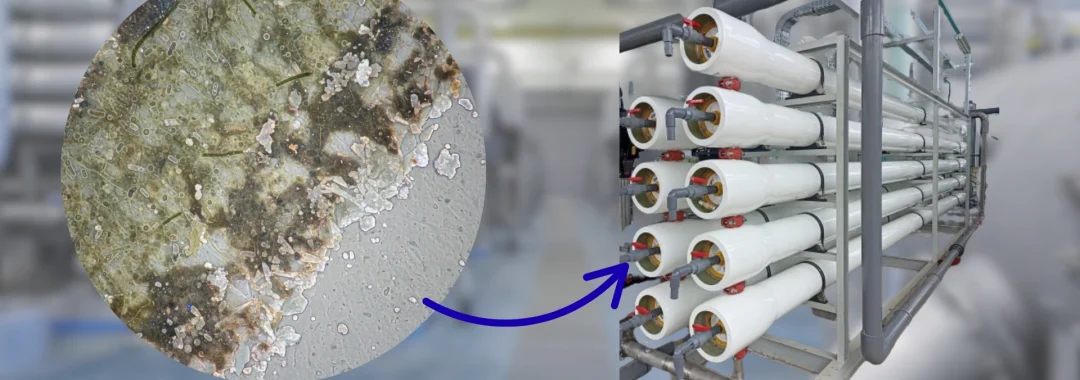
Banyak pengambil keputusan di sektor industri mencari tahu detail mengenai gangguan teknis ini. Secara teknis, apa itu scaling RO merujuk pada fenomena pengendapan mineral terlarut yang melampaui batas kelarutannya tepat di atas permukaan membran. Akibatnya, kristal keras mulai terbentuk dan menyumbat pori-pori mikroskopis pada elemen filtrasi tersebut.

Proses Pembentukan Kerak Mineral pada Sistem

Pada awalnya, air tanah atau air permukaan selalu mengandung berbagai mineral keras seperti kalsium, magnesium, dan silika. Ketika pompa bertekanan tinggi mendorong air melewati membran, mineral-mineral tersebut akan terkonsentrasi di sisi buangan (reject). Kemudian, apabila konsentrasinya terlalu tinggi, zat-zat ini akan memadat dan mengendap. Oleh sebab itu, kondisi ini sangat rentan terjadi pada pengolahan air bersalinitas menengah. Anda dapat mempelajari lebih jauh tentang performa filtrasi pada kondisi air payau melalui halaman BWRO membrane performance kami.

Dampak Buruk terhadap Kinerja Peralatan

Selanjutnya, penumpukan kerak ini secara langsung akan menghambat aliran air murni. Sebagai respons mekanis, sistem otomatis akan menaikkan tekanan (pressure drop) untuk mencoba mempertahankan target debit air. Tentu saja, lonjakan tekanan kerja ini akan menyebabkan konsumsi energi listrik pabrik membengkak secara drastis. Lebih buruk lagi, kerak keras yang tidak langsung ditangani oleh teknisi dapat merusak struktur fisik elemen penyaring secara permanen.

Solusi Pencegahan Kerak untuk Keandalan Operasional

Setelah menyadari ancamannya, manajemen utilitas harus segera menerapkan strategi mitigasi yang efektif. Sebaliknya dari sekadar memperbaiki alat yang rusak, mencegah terbentuknya kerak jauh lebih menghemat biaya dan mengamankan produksi.

Optimalisasi Sistem Pre-Treatment Pabrik

Pertama-tama, setiap fasilitas harus memastikan bahwa tahap pre-treatment beroperasi secara maksimal. Sistem penyaringan awal ini bertugas menghilangkan partikel tersuspensi dan menurunkan beban mineral sebelum air mencapai ruang reverse osmosis. Melalui penyaringan awal yang optimal, umur pakai komponen hilir akan jauh lebih panjang. Untuk memahami teknologi modern di balik efisiensi ini, silakan baca panduan teknis kami mengenai keunggulan sistem air RO.

Penggunaan Elemen Membran Berkualitas

Selain memaksimalkan penyaringan awal, pemilihan elemen filtrasi yang tangguh sangat menentukan ketahanan sistem pabrik Anda. Industri berat sangat disarankan untuk selalu menggunakan Reverse Osmosis Membrane yang dirancang khusus untuk memiliki resistensi tinggi terhadap penumpukan mineral. Selain itu, teknisi wajib melakukan injeksi bahan kimia antiscalant dengan takaran presisi agar mineral keras tetap berada dalam wujud terlarut.

Keunggulan Bermitra dengan Gapura Liqua Solutions

Mengelola infrastruktur air membutuhkan penguasaan teknis tingkat tinggi serta jam terbang lapangan yang teruji. Oleh karena itu, PT. Gapura Liqua Solutions (GLS) menawarkan layanan Engineering, Procurement, and Construction (EPC) yang dirancang khusus untuk menunjang industri di Indonesia. Kami telah membuktikan kualitas sistem kami melalui berbagai portofolio berskala masif, yang dapat Anda saksikan pada pembaruan proyek kami di LinkedIn.

Lebih lanjut, kami juga siap menjamin kelancaran aktivitas harian fasilitas Anda. Untuk memfasilitasi tim purchasing dalam pengadaan suku cadang pemeliharaan yang cepat, divisi Anda dapat berbelanja secara aman di toko resmi Tokopedia kami. Melalui jalur ini, proses pengadaan barang industri menjadi sangat transparan dan efisien.

Kesimpulan

Kesimpulannya, setiap manajer fasilitas manufaktur dituntut untuk menyadari bahaya kerak mineral terhadap keberlangsungan pabrik. Dengan mengetahui secara pasti apa itu scaling RO, Anda dapat segera mengambil langkah preventif yang terukur untuk menghindari kerusakan sistem filtrasi yang amat mahal harganya.

Pada akhirnya, PT. Gapura Liqua Solutions hadir sebagai mitra rekayasa ideal yang secara ahli mengintegrasikan teknologi desalinasi air laut (SWRO), pemulihan sumber daya (resource recovery), serta manajemen operasional jangka panjang. Kami berdedikasi tinggi untuk menjaga keandalan pasokan utilitas Anda secara konsisten. Oleh sebab itu, jangan tunda lagi proses pengamanan aset pabrik Anda. Silakan hubungi PT. Gapura Liqua Solutions sekarang juga untuk merancang instalasi pengolahan air paling tangguh di industri Anda.

FAQ

Q: Apa perbedaan antara scaling dan fouling pada sistem RO? A: Meskipun sering dianggap sama, keduanya berbeda. Scaling terjadi ketika mineral anorganik terlarut (seperti kalsium dan silika) mengkristal dan mengeras di permukaan membran. Sementara itu, fouling merujuk pada penyumbatan yang disebabkan oleh partikel padat tersuspensi, zat organik, maupun koloni bakteri (biofouling).

Q: Bagaimana cara teknisi mengetahui jika sistem mulai mengalami scaling? A: Indikator utama yang paling mudah diamati adalah penurunan debit air produksi (permeate) sebesar 10-15% dari standar desain pabrik, diiringi dengan kenaikan tekanan operasional (pressure drop) pada tabung membran. Operator harus mencatat log ini setiap hari untuk tindakan preventif.

Q: Apakah injeksi bahan kimia antiscalant bisa membersihkan kerak yang sudah mengeras? A: Tidak bisa. Fungsi utama antiscalant adalah mencegah pembentukan kristal mineral. Jika membran sudah terlanjur dipenuhi kerak keras, teknisi harus melakukan prosedur Clean in Place (CIP) menggunakan formula pembersih berbasis asam ber-pH rendah, atau mengganti membran jika kerusakan fisiknya sudah sangat parah.

Q: Berapa nilai Recovery Rate aman agar membran terhindar dari scaling berlebih? A: Nilai recovery rate (rasio air bersih yang dihasilkan terhadap air baku) sangat bergantung pada hasil analisis laboratorium air umpan. Untuk air payau bersalinitas menengah, sistem biasanya diatur antara 50% hingga 75%. Memaksakan nilai recovery terlalu tinggi tanpa injeksi kimia yang tepat akan memicu kerak secara masif.

Follow us on Social Media

Facebook Gapura Liqua - apa itu scaling RO Instagram Gapura Liqua - apa itu scaling RO LinkedIn Gapura Liqua - apa itu scaling RO
An industrial facility manager inspecting the pressure vessels of high-efficiency industrial brackish water solutions designed by Gapura Liqua Solutions.

Top Industrial Brackish Water Solutions

Securing Plant Utilities with Industrial Brackish Water Solutions

Industrial facility managers in Indonesia constantly battle the challenge of securing consistent, high-quality water supplies. Consequently, as coastal aquifers face seawater intrusion and inland groundwater sources degrade, raw water salinity is steadily increasing. Therefore, relying on standard filtration is no longer sufficient. Implementing advanced industrial brackish water solutions provides a decisive approach to overcoming these utility hurdles. Indeed, this technology separates dissolved salts efficiently, ensuring strict operational compliance while protecting vital plant infrastructure.

Furthermore, integrating advanced desalination is not merely a reactive measure. Instead, it serves as the foundational step toward sustainable resource recovery and long-term operational longevity.

The Problem with High Salinity Groundwater

Factories across the manufacturing, food, and petrochemical sectors require pristine water to operate properly. Therefore, managing brackish water streams effectively becomes a top priority for procurement and facility teams.

Scaling, Corrosion, and Equipment Failure

Brackish water contains moderate levels of dissolved salts, typically ranging between 1,000 and 10,000 parts per million (ppm) of Total Dissolved Solids (TDS). Because these minerals do not settle via gravity, they easily pass through conventional media filters. Subsequently, these hard minerals create severe scaling inside boilers, cooling towers, and heat exchangers.

Furthermore, high chloride concentrations accelerate pipeline corrosion. Thus, facilities face a high risk of catastrophic equipment failure and skyrocketing maintenance costs if these parameters remain unchecked.

How Industrial Brackish Water Solutions Provide the Answer

To resolve these contamination issues, engineers utilize membrane-based separation technologies. Specifically, highly engineered industrial brackish water solutions force pressurized water through microscopic barriers to remove dissolved impurities.

The Mechanics of Reverse Osmosis (RO)

The core technology driving these solutions is Reverse Osmosis (RO). First, high-pressure pumps push the saline feed water against a semi-permeable membrane. Next, the membrane allows pure water molecules to pass through while rejecting up to 99% of dissolved salts and organics.

Ultimately, this process produces a highly purified permeate stream ready for industrial use. To fully understand the operational benefits, you can explore the advantages of RO systems on our dedicated technical page.

Pre-Treatment and Membrane Protection

By removing heavy particulate loads early, comprehensive pre-treatment effectively protects downstream filtration assets. For instance, feeding correctly pre-treated water significantly enhances BWRO membrane performance. Additionally, utilizing properly specified Reverse Osmosis Membrane elements prevents premature fouling and ensures maximum lifecycle value. Should your facility require immediate consumable replacements, securing high-quality components is critical for maintaining flow rates.

Ensuring Long-Term Reliability and Efficiency

Environmental compliance and operational efficiency go hand in hand. Thus, utilizing robust industrial brackish water solutions helps facilities avoid sudden production halts. Moreover, integrating this separation technology promotes resource recovery. Facilities can safely recycle polished effluent or recover concentrated brines, drastically lowering daily water consumption and aligning with green industry standards.

Partnering with PT. Gapura Liqua Solutions

Sourcing reliable equipment and expert engineering remains a top priority for decision-makers. Therefore, PT. Gapura Liqua Solutions (GLS) offers comprehensive engineering, procurement, and construction (EPC) services. We tailor every installation to meet your specific water chemistry and production demands.

Additionally, we provide easy access to critical spare parts and consumables via our official Tokopedia store. Furthermore, you can view our successful, real-world implementations through our recent LinkedIn project updates, showcasing our deep commitment to engineering excellence.

Conclusion

Ultimately, establishing modern industrial brackish water solutions secures your facility’s operational future and process stability. PT. Gapura Liqua Solutions acts as your ideal expert partner in this critical journey. We explicitly link our expertise in seawater desalination (SWRO), advanced resource recovery, and long-term operations to guarantee your facility’s success. Therefore, do not leave your water supply to chance. Contact PT. Gapura Liqua Solutions today to discuss your next water treatment project and achieve total operational peace of mind.

FAQ

Q: What defines water as “brackish” in an industrial context? A: Brackish water possesses a salinity level between fresh water and seawater. Typically, it contains Total Dissolved Solids (TDS) ranging from 1,000 to 10,000 parts per million (ppm). Because it is highly corrosive and causes scaling, it requires specialized membrane treatment before industrial use.

Q: How do industrial brackish water solutions differ from seawater systems (SWRO)? A: While both utilize reverse osmosis, brackish water systems operate at significantly lower pressures because the incoming water has a lower osmotic pressure than seawater. Consequently, BWRO systems consume much less energy and utilize different membrane specifications compared to SWRO plants.

Q: Can a BWRO system help my facility achieve zero liquid discharge (ZLD)? A: Yes. Integrating a BWRO system is a highly effective step in resource recovery. By purifying and recycling wastewater or brackish sources, the system drastically reduces liquid waste volume, which represents a crucial phase in achieving full Zero Liquid Discharge (ZLD) objectives.

Q: Does GLS provide long-term maintenance for these treatment plants? A: Absolutely. PT. Gapura Liqua Solutions provides comprehensive Operations and Maintenance (O&M) contracts. Specifically, we handle everything from routine chemical dosing and membrane cleaning to full facility operation, ensuring your system runs optimally for decades.

Follow us on Social Media

Facebook Gapura Liqua - industrial brackish water solutions Instagram Gapura Liqua - industrial brackish water solutions LinkedIn Gapura Liqua - industrial brackish water solutions