An industrial technician inspecting a high-efficiency chiller unit protected by sustainable HVAC scale prevention water treatment.

Sustainable HVAC Scale Prevention Experts

Sustainable HVAC Scale Prevention: The Key to Cooling Efficiency and Asset ROI

In the intensive cooling environments of Indonesia’s luxury hospitality and industrial sectors, facility managers often view water as an unavoidable utility bill. However, treating water as a passive expense is a strategic mistake. Water quality dictates the performance of your entire air conditioning network, acting either as a seamless heat-exchange medium or as a destructive force. Implementing sustainable HVAC scale prevention is the most effective way to transform this “hidden cost” into a controllable operational expense (OPEX). By addressing water purity at the source, facilities can protect their most expensive assets while achieving significant energy savings.

Traditional water management is often a “leaking bucket” for profits. Specifically, inefficient filtration and untreated mineral loads waste water, consume excessive chemicals, and slowly destroy downstream equipment such as chillers and cooling towers.

The Hidden Cost of Water: Why Poor Quality Destroys HVAC Performance

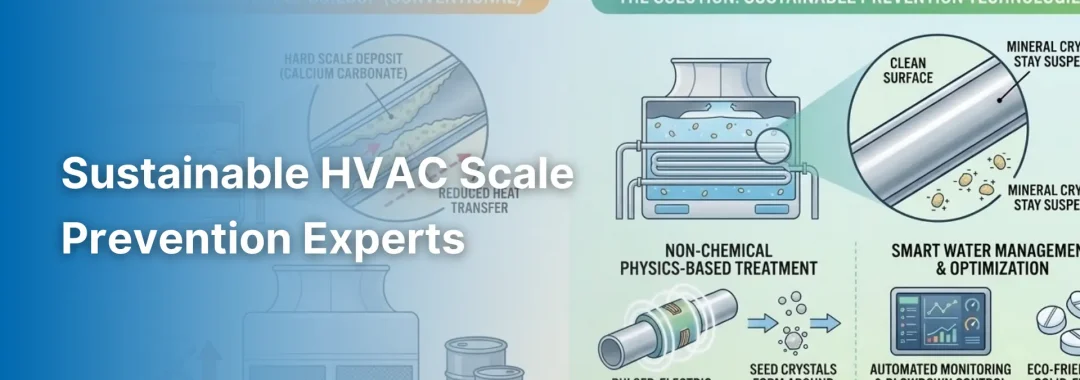
Scale is an invisible thief of energy. In cooling towers and chillers, minerals such as calcium carbonate and silica precipitate out of the water, forming a rock-hard layer on heat-exchange surfaces. Consequently, this layer acts as a thermal insulator, forcing the HVAC system to consume significantly more electricity to achieve the same cooling effect.

Scaling as an Insulator: The “Leaking Bucket” of Energy Waste

Even a thin layer of scale can reduce heat transfer efficiency by over 10%. For a large-scale resort or manufacturing plant, this inefficiency results in thousands of dollars of wasted energy every month. Furthermore, mineral deposits harbor bacteria and accelerate localized corrosion, leading to premature equipment failure. Therefore, relying on standard treatment methods often proves insufficient for modern luxury hospitality standards, where 100% uptime is expected.

Implementing Sustainable HVAC Scale Prevention Strategies

To stop “washing money away,” facilities must transition toward an advanced sustainability architecture. This involves moving beyond basic sand filtration toward high-performance, bioactive systems.

Transitioning from Traditional Sand to Activated Filter Media (AFM)

Most facilities rely on mined silica sand, which is prone to bio-fouling and “channeling.” In contrast, a modern approach involves using AFM S vs NG Media. This upcycled glass media is bio-resistant, preventing the bacterial growth that leads to uneven water flow and scale precursors bypassing the filter. By using AFM, hotels can cut backwash water waste by 50% while providing the ultra-clean water necessary for sustainable HVAC scale prevention.

High-Recovery RO for Superior Heat Exchange Protection

Following primary filtration, high-purity Reverse Osmosis (RO) water provides the ultimate defense against scale. By removing up to 99% of dissolved solids, RO water ensures that heat-exchange surfaces remain pristine. To achieve this, selecting a high-quality Reverse Osmosis Membrane is essential. Moreover, maintaining optimal BWRO membrane performance ensures that the system provides high-quality permeate with minimal energy consumption. Understanding the keunggulan sistem air RO is the first step for any facility manager looking to eliminate scaling emergency calls.

The Economic Logic: Calculating ROI and Facility OPEX Reduction

Transitioning to advanced water systems is not just an environmental choice; it is a high-yield investment. A well-engineered water loop typically delivers a clear ROI within 18 to 24 months. These savings are realized through reduced electricity bills, lower chemical consumption, and the extended lifespan of chillers and boilers. By focusing on sustainable HVAC scale prevention, procurement heads can shift budgets from “emergency repairs” to “preventative optimization,” significantly strengthening the company’s bottom line.

Partnering with PT. Gapura Liqua Solutions for Operational Continuity

Managing complex utility networks requires a partner who understands the total water cycle. PT. Gapura Liqua Solutions (GLS) provides end-to-end engineering, procurement, and long-term operations. We integrate seawater desalination and resource recovery into a seamless loop, ensuring your facility remains compliant and efficient. Our commitment to excellence is showcased in our latest project updates on LinkedIn, where we demonstrate utility savings for Indonesia’s premier properties.

For immediate maintenance needs, we provide professional-grade components through our official Tokopedia store. Additionally, we offer a Management Service Agreement to ensure your systems are maintained by experts, guaranteeing operational continuity.

Conclusion: Securing Long-Term Reliability and Resource Recovery

Ultimately, the performance of your cooling network is only as good as the water within it. By adopting sustainable HVAC scale prevention, you protect your physical assets, reduce utility waste, and ensure the long-term reliability of your facility. PT. Gapura Liqua Solutions remains the ideal partner for the Indonesian industrial and hospitality sectors, explicitly linking seawater desalination, resource recovery, and expert operations to your business success.

Stop letting scale drain your profits. Contact PT. Gapura Liqua Solutions today to audit your cooling network and implement a high-efficiency water strategy.

FAQ

Q: Can sustainable HVAC scale prevention really lower my electricity bill? A: Absolutely. By preventing scale buildup on heat-exchange surfaces, the chillers can operate at peak efficiency. Even a 1mm layer of scale can increase energy consumption by 10% or more.

Q: Why is AFM better than sand for HVAC pre-filtration? A: Specifically, Activated Filter Media (AFM) is bio-resistant and prevents the formation of biofilm. This eliminates “channeling” and ensures that minerals and organics are captured before they enter the cooling loop, providing superior sustainable HVAC scale prevention.

Q: How often should we audit our cooling tower water quality? A: For optimal performance, water quality should be monitored continuously with automated sensors. However, a comprehensive laboratory audit should be performed at least quarterly to adjust chemical dosing and filtration settings.

Q: Does GLS provide operational support for existing HVAC systems? A: Yes. PT. Gapura Liqua Solutions offers Management Service Agreements to optimize both new and existing water treatment infrastructure, ensuring long-term reliability.

Follow us on Social Media

Facebook Instagram LinkedIn
A technical installation of a reliable hotel water filtration system using AFM media and RO technology in a clean resort utility room.

Reliable Hotel Water Filtration for Resorts

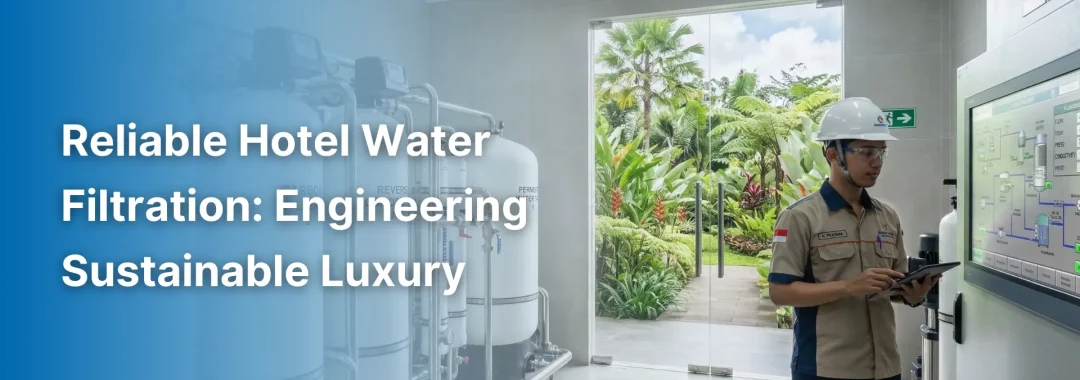
Reliable Hotel Water Filtration: Engineering Sustainable Luxury

In the luxury hospitality sector of Indonesia, sustainability has transitioned from a marketing buzzword to a critical operational standard. Resorts in Bali and Jakarta are now evaluated by their “water intensity,” making reliable hotel water filtration a top priority for facility managers. Traditional systems often waste thousands of liters of treated water during cleaning cycles. Consequently, implementing a robust, circular water loop is the most effective way to meet zero-waste goals while maintaining the crystal-clear water quality that elite guests expect.

Furthermore, a professional water strategy acts as a high-yield investment. By treating water as a recoverable resource rather than a disposable utility, hotels can significantly reduce their monthly operational expenditure (OPEX).

The Hidden Risks of Traditional Sand Filtration

Many 5-star properties still rely on decades-old silica sand technology for their primary filtration. While functional, these systems are fundamentally incompatible with modern efficiency standards and often pose a risk to operational continuity.

Why Silica Sand Is a “Leaking Bucket” for Profits

Silica sand filters suffer from a major biological flaw: they allow bacteria to grow and form a biofilm. This biofilm glues the sand together, leading to “channeling,” where water bypasses the media entirely. As a result, the system must backwash more frequently to maintain clarity, wasting up to 50% more water than necessary. Specifically, this “leaking bucket” approach drains hotel profits through wasted water, excessive electricity, and high chemical consumption. Transitioning to reliable hotel water filtration solves this biological instability at the source.

Transitioning to Reliable Hotel Water Filtration

To achieve true reliability, engineers must focus on advanced sustainability architecture. Integrating bioactive media with high-recovery membranes creates a system that produces superior water with minimal waste.

Activated Filter Media (AFM) and Backwash Reduction

The cornerstone of reliable hotel water filtration is Activated Filter Media (AFM). Unlike mined sand, AFM is an upcycled glass media that is 100% bio-resistant. Because bacteria cannot grow on the AFM surface, it prevents channeling and the formation of “mud balls.” Moreover, AFM requires significantly less water for backwashing. For a detailed technical look at why this media is the superior choice, you can read our AFM S vs NG Media comparison.

Protecting Chillers, Boilers, and RO Membranes

Precision filtration does more than save water; it acts as a shield for your most expensive mechanical assets. By removing fine particulates as small as 1 micron, AFM prevents the scale buildup and organic fouling that destroy chillers and boilers. Furthermore, it safeguards your Reverse Osmosis Membrane, ensuring consistent BWRO membrane performance. Understanding the keunggulan sistem air RO is key to justifying the ROI of these advanced setups.

Achieving Zero-Waste Goals and Green Certifications

For modern hotel owners, ROI is not just about bills; it is about brand positioning. Implementing reliable hotel water filtration contributes directly to points for EarthCheck or Green Globe certifications. By reducing water intensity and chemical usage by up to 30%, your facility secures a competitive edge. This level of precision is especially vital for specialized needs, such as a sistem filtrasi air hotel in areas with high water hardness.

Partnering with Gapura Liqua Solutions for Operational Continuity

Successful utility management requires a partner who understands engineering, procurement, and long-term operations. PT. Gapura Liqua Solutions (GLS) provides end-to-end systems that allow our clients to focus on their core hospitality business. We integrate seawater desalination and resource recovery into a seamless, high-reliability loop. Our track record is visible in our latest project updates on LinkedIn, showcasing utility savings for iconic resorts like The Jewel of Seminyak – W Hotel.

For hotels needing immediate support, we provide premium components through our official Tokopedia store. This ensures your team has access to professional-grade tools for maintaining reliable hotel water filtration standards.

Conclusion: Securing ROI and Brand Reputation

Ultimately, a sustainable water strategy is the most robust insurance policy for your hotel’s operational future. By adopting reliable hotel water filtration, you reduce OPEX, earn prestigious certifications, and deliver an unparalleled guest experience. PT. Gapura Liqua Solutions remains the ideal partner for the Indonesian hospitality sector, explicitly linking resource recovery with long-term reliability.

Ensure your resort is a leader in sustainable luxury. Contact PT. Gapura Liqua Solutions today to audit your utility room and implement a bioactive, circular water strategy.

FAQ

Q: Can reliable hotel water filtration save money on electricity? A: Yes. By preventing scale buildup in heat exchangers, chillers, and boilers, the equipment operates at peak efficiency. This can reduce facility-wide energy consumption by up to 10–15%.

Q: How long does Activated Filter Media (AFM) last compared to sand? A: Silica sand typically requires replacement every 2-3 years due to bio-fouling and attrition. However, AFM is bio-resistant and extremely durable, meaning it often lasts for the entire lifespan of the filtration system.

Q: Is it possible to retrofit AFM into my existing sand filter tanks? A: Absolutely. Reliable hotel water filtration using AFM acts as a “drop-in” replacement. You simply remove the old sand and replace it with AFM without needing to modify your existing tanks or pumps.

Q: Does GLS provide operational support for remote resort locations? A: Yes. PT. Gapura Liqua Solutions offers Management Service Agreements and long-term O&M support for resorts across the entire Indonesian archipelago.

Follow us on Social Media

Facebook Instagram LinkedIn
An industrial technician inspecting a high-efficiency AFM filtration tank designed for reducing backwash water volume in a luxury resort

Reducing Backwash Water Volume Guide

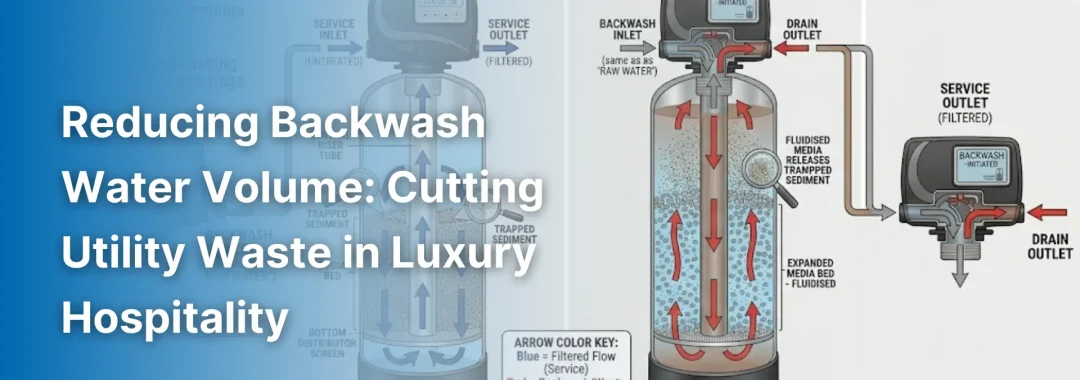
Reducing Backwash Water Volume: Cutting Utility Waste in Luxury Hospitality

For many luxury resorts and industrial facilities in Indonesia, water is often viewed as an unavoidable operational expense. However, facility managers frequently overlook the massive inefficiencies hidden within their filtration rooms. Traditional silica sand filters are essentially “leaking buckets” for hotel profits. Specifically, every time a technician initiates a cleaning cycle, the facility loses thousands of liters of treated, heated, and chemically dosed water. Therefore, focusing on reducing backwash water volume has become the single most effective strategy for optimizing utility expenditure (OPEX) and improving the facility’s bottom line.

By moving away from traditional mined sand and embracing advanced “Precision Water” technology, hotels can stop washing money away. Indeed, transitioning to a circular hospitality water loop is no longer just an environmental goal; it is a financial necessity.

The Hidden Cost of Sand: Why You are Washing Money Away

Standard silica sand filtration has a fundamental biological flaw. Within days of installation, bacteria colonize the sand grains and create a protective layer known as biofilm. This biofilm essentially glues the sand together, leading to a phenomenon called “channeling.”

The Biofilm and Channeling Dilemma

When channeling occurs, water finds the path of least resistance, bypassing the filter media entirely. Consequently, the filter loses its efficiency, and the system must backwash more frequently to compensate. This cycle results in excessive water waste. Furthermore, these bacteria react with chlorine to create trichloramines, which cause the unpleasant “pool smell” and skin irritation that lead to guest complaints. Achieving high standards in luxury hospitality requires a bioactive solution that addresses the root of this biological problem.

Reducing Backwash Water Volume with Activated Filter Media (AFM)

The most effective solution for modern facility managers is the implementation of Activated Filter Media (AFM). Unlike sand, AFM is an upcycled, activated glass media that is 100% bio-resistant. Because bacteria cannot grow on the surface of AFM, the media remains clean and free-flowing for years.

50% Less Water, 30% Fewer Chemicals

By preventing biofilm and channeling, AFM makes the filtration process significantly more efficient. Specifically, reducing backwash water volume by up to 50% is a standard outcome when switching from sand to AFM. Since the media does not stick to itself, the backwash process is shorter and requires a lower flow rate to be effective. Additionally, because the filter removes more organic precursors, facilities typically see a 30% reduction in chlorine and other chemical consumption. This dramatic reduction helps hotels secure prestigious certifications such as EarthCheck or Green Globe.

Beyond Savings: Protecting Your Downstream RO Assets

A filter is more than just a cleaning tool; it is a shield for your facility’s most expensive machinery. When primary filtration allows fine particles or biological matter to pass through, your downstream assets suffer. For instance, poor filtration is a leading cause of premature fouling in a Reverse Osmosis Membrane.

Maintaining superior BWRO membrane performance requires consistent, ultra-clean feed water. By successfully reducing backwash water volume and increasing filtration precision, you protect your chillers, boilers, and RO units from the scaling and organic load that cause emergency downtime. Understanding the keunggulan sistem air RO alongside precision media filtration ensures a high-yield investment for your property.

Partnering with Gapura Liqua Solutions for Long-Term Reliability

Successful utility management requires an expert partner who understands the total water cycle. PT. Gapura Liqua Solutions (GLS) provides end-to-end engineering, procurement, and long-term operations. We integrate seawater desalination and resource recovery into a seamless loop, ensuring your facility remains compliant and efficient. Our commitment to operational continuity is visible in our latest project updates on LinkedIn, where we demonstrate real-world utility savings for major Indonesian resorts.

For facilities looking for immediate maintenance support, we offer professional-grade filtration components through our official Tokopedia store. This ensures your technical team has the reliable parts needed to prevent utility loss.

Conclusion: Securing ROI and Operational Continuity

Ultimately, the goal of any facility manager is to achieve maximum reliability at the lowest possible cost. Reducing backwash water volume is the cornerstone of this objective. By adopting Activated Filter Media, you protect your physical assets, earn green certifications, and achieve a clear ROI within 18 to 24 months. PT. Gapura Liqua Solutions remains the ideal partner for the Indonesian hospitality and industrial sectors, explicitly linking resource recovery with long-term reliability.

Stop washing your facility’s profits away with outdated sand technology. Contact PT. Gapura Liqua Solutions today to audit your utility room and implement a bioactive, circular water strategy.

FAQ

Q: How does reducing backwash water volume improve my chiller’s efficiency? A: Precision filtration with AFM removes the fine particles that cause scale buildup in chillers and boilers. By keeping these heat-exchange surfaces clean, the equipment operates at peak efficiency, lowering your overall energy bill.

Q: Is Activated Filter Media (AFM) more expensive than sand? A: While the initial cost of AFM is higher than mined sand, the ROI is achieved rapidly. Specifically, the savings in water, electricity, and chemicals, along with the extended life of your RO membranes, typically cover the investment within 24 months.

Q: Can AFM be used in seawater desalination systems (SWRO)? A: Absolutely. Reducing backwash water volume in SWRO systems is critical because the intake water has already been treated and pressurized. AFM provides superior pre-filtration that protects expensive high-pressure pumps and membranes.

Q: Does GLS provide maintenance services for these systems? A: Yes. PT. Gapura Liqua Solutions offers Management Service Agreements to ensure that your filtration and desalination systems remain optimized for decades.

Follow us on Social Media

Facebook Instagram LinkedIn
A technical cross-section of sub-5 micron filtration units utilizing AFM to provide crystal-clear water for a luxury resort.

Sub-5 Micron Filtration Units for Hotels

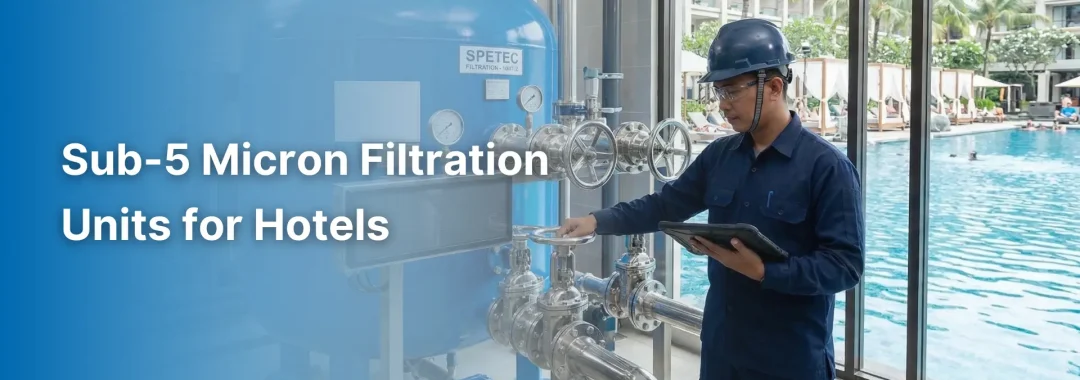
Sub-5 Micron Filtration Units: Why Modern Luxury Hospitality Demands Precision

In the competitive landscape of luxury hospitality, “perfection” is a standard, not a goal. While high-end resorts focus heavily on interior aesthetics and service, the silent engine of the guest experience—the water utility—is often overlooked. Unfortunately, many 5-star properties still rely on 50-year-old sand filtration technology. This reliance creates a significant vulnerability. Transitioning to professional sub-5 micron filtration units is no longer a luxury; it is a critical necessity to protect assets and maintain brand prestige.

Standard silica sand filters generally capture particles down to 20 or 40 microns. Consequently, millions of microscopic particles and biological precursors pass through the system, eventually damaging expensive downstream infrastructure.

The Failure of Standard Sand Filtration in Luxury Standards

The hospitality sector in Indonesia, particularly in high-demand areas like Bali and Jakarta, faces unique raw water challenges. Traditional sand filters create a “leaking bucket” for hotel profits.

The 20-Micron Barrier and Bio-fouling Risks

Sand is not just physically limited; it is biologically unstable. Within weeks, bacteria colonize the sand grains, creating a biofilm that leads to “channeling.” This allows unfiltered water to bypass the media entirely. Specifically, sand cannot capture the fine particles that cause cloudy water or the organic precursors that react with chlorine to create trichloramines. Therefore, hotels using sand often suffer from that unpleasant “pool smell” and skin irritation among guests. By contrast, implementing sub-5 micron filtration units provides a bioactive, precise barrier that standard sand simply cannot match.

Precision Water: The Power of Sub-5 Micron Filtration Units

To achieve truly “Precision Water,” facility managers must utilize media that is physically and chemically superior. The shift toward Activated Filter Media (AFM) represents the current gold standard in the industry.

Activated Filter Media (AFM) vs. Traditional Mined Sand

AFM is an upcycled, activated glass media that possesses a permanent negative surface charge. While sand traps dirt mechanically, AFM attracts it electrostatically. Consequently, sub-5 micron filtration units utilizing AFM can remove up to 95% of all particles down to 1 micron. This level of purity is virtually impossible for silica sand. For a deeper technical analysis of these differences, you can review our AFM S vs NG Media comparison.

Protecting High-Value Assets: Chillers, Boilers, and RO Membranes

Effective filtration is the most robust insurance policy for your hotel’s mechanical room. When fine particulates bypass primary filtration, they cause scale buildup in chillers and boilers, leading to massive energy inefficiency. Moreover, they cause rapid fouling of your Reverse Osmosis Membrane. Ensuring consistent BWRO membrane performance requires the ultra-clean feed water that only sub-5 micron filtration units can provide. By removing the load before it hits the RO, you drastically extend the life of your membranes and reduce the frequency of expensive chemical cleanings.

Enhancing the Guest Experience: Beyond Aesthetics

In a luxury setting, water must be more than “safe”—it must be “superior.” Sub-5 micron filtration results in water with significantly lower turbidity, creating a crystal-clear appearance in pools and spas. Furthermore, because these units remove more organic matter, the demand for chlorine drops by up to 30%. This reduces the chemical smell and provides a gentler experience for guests. Understanding the keunggulan sistem air RO alongside precision filtration ensures that every touchpoint, from the shower to the swimming pool, reflects 5-star quality.

Partnering with Gapura Liqua Solutions for Operational Continuity

Managing a modern resort requires a partner who understands the total water loop. PT. Gapura Liqua Solutions (GLS) provides end-to-end engineering and long-term operations to ensure your facility remains compliant and efficient. We specialize in high selective filter media that protects your ROI and enhances guest satisfaction.

Our proven expertise is visible in our latest project updates on LinkedIn, where we showcase the transformation of hospitality utilities across Indonesia. Additionally, for immediate maintenance needs, we offer premium filtration components through our official Tokopedia store.

Conclusion: The Future of Hospitality Water Management

Ultimately, the choice of filtration technology determines the lifespan of your facility’s most expensive assets. By adopting sub-5 micron filtration units, you protect your physical infrastructure, reduce water and chemical waste, and deliver a guest experience that meets modern luxury standards. PT. Gapura Liqua Solutions remains the ideal partner for the Indonesian hospitality sector, explicitly linking advanced resource recovery with long-term reliability.

Stop washing your hotel’s profits away with outdated sand technology. Contact PT. Gapura Liqua Solutions today to audit your utility room and implement a precision water solution.

FAQ

Q: Can sub-5 micron filtration units save money on electricity? A: Yes. By preventing fine particulates and scale from reaching your chillers and boilers, the equipment operates at peak heat-exchange efficiency, reducing energy consumption by up to 10–15%.

Q: Is it difficult to switch from sand to AFM in our hotel? A: Not at all. Sub-5 micron filtration units using AFM act as a “drop-in” replacement. You simply remove the old sand and replace it with the activated glass media without needing to change your existing filter tanks or pumps.

Q: How does this technology help with “Green Hotel” certifications? A: Advanced media reduces backwash water waste by up to 50% and chemical usage by 30%. These metrics contribute directly to EarthCheck or Green Globe certification requirements.

Q: Does GLS provide maintenance for these filtration systems? A: Absolutely. PT. Gapura Liqua Solutions offers Management Service Agreements to ensure your systems perform optimally year-round.

Teknisi sedang melakukan audit sistem pengolahan air sebagai bagian dari strategi optimasi utility cost untuk efisiensi operasional pabrik

Strategi Optimasi Utility Cost Industri & Hotel

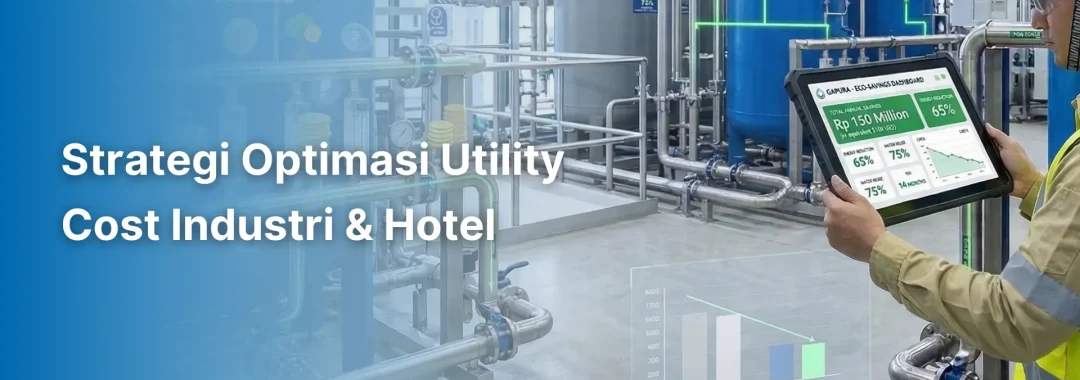
Strategi Optimasi Utility Cost: Mengubah Biaya Air Menjadi Profit

Dalam manajemen fasilitas industri dan perhotelan di Indonesia, biaya utilitas sering kali dipandang sebagai angka mati di dalam neraca keuangan. Namun, bagi pengambil keputusan yang visioner, air seharusnya tidak lagi diperlakukan sebagai tagihan bulanan yang pasif. Sebaliknya, air adalah pengeluaran operasional (OPEX) yang sangat bisa dikendalikan. Melalui strategi optimasi utility cost yang tepat, perusahaan dapat mengidentifikasi inefisiensi tersembunyi yang selama ini menggerus profitabilitas.

Banyak fasilitas masih mengandalkan sistem filtrasi pasir tradisional yang sebenarnya merupakan “ember bocor” bagi keuangan perusahaan. Sistem lama ini tidak hanya memboroskan air melalui siklus backwash yang sering, tetapi juga merusak peralatan hilir yang mahal.

Biaya Air: Pengeluaran Tetap atau OPEX yang Bisa Dikendalikan?

Langkah awal dalam strategi optimasi utility cost adalah menyadari bahwa kualitas air yang buruk meningkatkan beban kerja mesin lain. Ketika sistem filtrasi utama gagal menyaring kontaminan secara optimal, peralatan seperti boiler, chiller, dan unit desalinasi harus bekerja lebih keras.

Masalah Tersembunyi pada Filtrasi Pasir Tradisional

Pasir silika murni memiliki kelemahan biologis yang serius. Bakteri dapat tumbuh di permukaan pasir dan membentuk biofilm yang menyebabkan channeling. Fenomena ini memaksa sistem untuk melakukan backwash lebih sering, yang berarti membuang air bersih dan energi secara percuma. Selain itu, partikel halus yang lolos dari filter pasir akan mempercepat pembentukan kerak pada Reverse Osmosis Membrane, yang berujung pada biaya penggantian aset yang sangat tinggi.

Implementasi Strategi Optimasi Utility Cost Melalui Teknologi Modern

Solusi nyata untuk menekan biaya utilitas terletak pada transisi ke Arsitektur Keberlanjutan Tingkat Lanjut. Teknologi ini menggabungkan media filtrasi berkinerja tinggi dengan sistem pemurnian air yang cerdas.

Mengganti Pasir Silika dengan AFM untuk Efisiensi Maksimal

Salah satu strategi optimasi utility cost yang paling efektif adalah mengganti pasir silika dengan Activated Filter Media (AFM). AFM terbuat dari kaca daur ulang yang telah diaktivasi secara kimia untuk mencegah pertumbuhan bakteri. Hasilnya, kebutuhan air untuk backwash dapat berkurang hingga 50%, dan konsumsi bahan kimia pembersih turun sekitar 30%. Penghematan ini secara langsung akan memperbaiki struktur biaya operasional fasilitas Anda.

Peran Membran RO dalam Menekan Biaya Jangka Panjang

Setelah tahap filtrasi awal yang bersih, penggunaan sistem Reverse Osmosis (RO) menjadi jauh lebih efisien. Dengan air umpan yang berkualitas, keunggulan sistem air RO akan terlihat pada rendahnya biaya energi dan jarangnya frekuensi pembersihan membran. Oleh karena itu, memastikan BWRO membrane performance tetap stabil adalah kunci untuk menjaga ketersediaan air tanpa gangguan operasional.

Menghitung ROI dari Investasi Arsitektur Air Berkelanjutan

Banyak manajer fasilitas khawatir mengenai biaya awal pembaruan sistem. Namun, investasi pada teknologi filtrasi canggih bukanlah sekadar biaya, melainkan aset yang menghasilkan yield tinggi. Secara rata-rata, transisi ke sistem filtrasi AFM dan RO yang dioptimalkan memberikan Return on Investment (ROI) dalam waktu 18 hingga 24 bulan. Penghematan dari pengurangan limbah air, efisiensi energi, dan perlindungan aset mesin (Boiler dan Chiller) jauh melampaui biaya modal awal.

Kemitraan Strategis dengan PT. Gapura Liqua Solutions

Menangani kompleksitas air industri membutuhkan mitra yang memiliki keahlian teknis mendalam. PT. Gapura Liqua Solutions (GLS) hadir sebagai penyedia solusi end-to-end yang memungkinkan klien berfokus pada bisnis inti mereka. Kami tidak hanya menyediakan alat, tetapi juga membantu merancang strategi optimasi utility cost yang disesuaikan dengan kebutuhan spesifik fasilitas Anda di Indonesia.

Dedikasi kami dalam mengelola utilitas air telah terbukti melalui berbagai proyek skala besar, mulai dari sektor perhotelan hingga industri berat. Anda dapat melihat rekam jejak keberhasilan kami melalui update proyek di LinkedIn. Untuk kebutuhan suku cadang dan media filtrasi cepat, kami juga menyediakan layanan melalui toko resmi Tokopedia.

Kesimpulan: Memastikan Keandalan Operasional dan Efisiensi Finansial

Sebagai penutup, efisiensi utilitas adalah fondasi dari daya saing bisnis di era modern. Dengan menerapkan strategi optimasi utility cost yang berfokus pada teknologi berkelanjutan seperti desalinasi air laut dan pemulihan sumber daya, perusahaan Anda tidak hanya berkontribusi pada lingkungan, tetapi juga memperkuat fundamental keuangan. PT. Gapura Liqua Solutions siap menjadi mitra ahli Anda dalam mewujudkan keandalan operasional jangka panjang. Hubungi PT. Gapura Liqua Solutions hari ini untuk konsultasi dan audit sistem utilitas air Anda.

FAQ

Q: Apakah mengganti pasir silika dengan AFM memerlukan perubahan desain tangki? A: Tidak perlu. AFM didesain untuk menggantikan pasir silika secara langsung (drop-in replacement) pada tangki filtrasi yang sudah ada tanpa perlu modifikasi besar pada infrastruktur perpipaan.

Q: Bagaimana strategi optimasi utility cost berdampak pada umur mesin chiller? A: Dengan filtrasi yang lebih baik, air yang masuk ke sistem pendingin memiliki beban organik dan mineral yang jauh lebih rendah. Hal ini mencegah korosi dan penumpukan kerak pada kondensor, sehingga mesin beroperasi lebih efisien dan awet.

Q: Apa bedanya AFM dibandingkan dengan media filter kaca biasa? A: AFM adalah media teraktivasi yang memiliki muatan negatif untuk menarik partikel halus dan bersifat bio-resisten. Kaca daur ulang biasa tanpa aktivasi tidak memiliki kemampuan untuk mencegah biofilm, sehingga kinerjanya mirip dengan pasir silika biasa.


    Follow us on Social Media  

                       
An industrial filter cross-section showcasing sustainable media filter solutions like AFM glass media used in luxury hotel water treatment.

Sustainable Media Filter Solutions Water Savings

Sustainable Media Filter Solutions: The Circular Water Loop for Luxury Hospitality

Most hotels are literally washing money down the drain during every backwash cycle. While silica sand has served as the industry standard for decades, it poses significant operational risks and hidden costs. For procurement heads and facility managers in Indonesia, the shift toward sustainable media filter solutions is no longer just an environmental preference; it is a financial necessity. Specifically, Activated Filter Media (AFM) technology allows resorts to transition toward a circular hospitality water loop. This transition simultaneously protects expensive utility assets and reduces the hotel’s environmental footprint.

Why Silica Sand Is Draining Your Resort’s Profits

Traditionally, hotels rely on mined silica sand for their filtration needs. However, sand filtration has a critical flaw: bio-fouling. Consequently, bacteria colonize the sand grains, secreting an alginate “glue” that binds particles together. This process leads to channeling, where water finds the path of least resistance without being filtered. Therefore, your system must backwash more frequently to maintain water quality. This frequency wastes thousands of liters of treated water and increases the chemical load required to keep pools and utilities sanitary.

The Hidden Operational Risks of Bio-Fouling and Channeling

Furthermore, bio-fouling in sand filters creates trichloramines—the chemical responsible for the unpleasant “pool smell” and skin irritation. In contrast, implementing sustainable media filter solutions prevents the initial colonization of bacteria. By using upcycled, activated glass media, hotels eliminate the biological breeding ground found in sand. Specifically, this prevents the formation of “mud balls” in the filter bed, ensuring that every drop of water passes through a bioactive, efficient barrier.

High-Performance Protection: How Sustainable Media Filter Solutions Guard Your Assets

A filter should do more than just clean water; it must act as a high-performance shield for your most expensive equipment. In a luxury hotel, the chillers, boilers, and reverse osmosis units represent massive capital investments. When filtration fails, these assets suffer.

Optimizing RO Membrane Lifespan and Chiller Efficiency

If your primary filtration allows fine particles or biological matter through, your Reverse Osmosis Membrane will foul prematurely. Consequently, you will face higher pressures and energy consumption. Moreover, ensuring optimal BWRO membrane performance requires consistent, high-purity feed water. By switching to sustainable media filter solutions, you provide a superior level of pre-filtration. This effectively prevents the scaling and organic fouling that lead to emergency repairs in boilers and chillers. Furthermore, understanding the keunggulan sistem air RO highlights how high-quality filtration acts as the foundation for energy-efficient utility management.

The Circular Hospitality Advantage: Saving Water and Chemicals

The financial impact of advanced filtration is immediate. Specifically, Activated Filter Media (AFM) requires up to 50% less water for backwashing compared to sand. Because the media is bio-resistant, it does not “stick” to contaminants as aggressively as sand does. Therefore, the backwash cycle is shorter and more effective. Additionally, hotels typically see a 30% reduction in chemical consumption. This is because the filter removes more organic precursors before they react with chlorine.

Achieving EarthCheck and Green Globe Certifications

For the modern hotel owner, ROI is not just about bills; it is about brand positioning. Many luxury travelers now prioritize properties with verified environmental credentials. Implementing sustainable media filter solutions contributes directly to points for EarthCheck or Green Globe certifications. By proving a reduction in water intensity and chemical usage, your facility secures a competitive edge in the global hospitality market.

Why Engineering Expertise Matters for Long-Term Reliability

Successful water management requires more than just high-quality media. It requires a partner who understands engineering, procurement, and long-term operations. PT. Gapura Liqua Solutions (GLS) provides end-to-end systems that allow clients to focus on their core business. We integrate seawater desalination and resource recovery into a seamless loop, ensuring that your facility never faces a water shortage or a compliance crisis. Our commitment to excellence is visible in our latest project updates on LinkedIn, where we showcase real-world water savings across Indonesia.

For hotels looking for immediate maintenance support, we offer high-performance filtration components through our official Tokopedia store. This ensures your facility manager has access to professional-grade tools for operational continuity.

Conclusion: Partnering for Operational Continuity with GLS

Ultimately, the choice of filter media determines the health of your entire water system. By adopting sustainable media filter solutions, you protect your physical assets, earn prestigious green certifications, and significantly reduce operational expenditure. PT. Gapura Liqua Solutions remains the ideal partner for the Indonesian hospitality sector, explicitly linking resource recovery with long-term reliability.

Ensure your hotel is not “washing money away” with outdated sand technology. Contact PT. Gapura Liqua Solutions today to audit your filtration system and implement a bioactive, circular water loop.

FAQ Section

Q: Can I replace my existing sand with a sustainable media filter without changing my tanks? A: Yes, in most cases. Sustainable media filter solutions like AFM are designed to fit into standard pressure vessels. You simply remove the sand and replace it with the upgraded media.

Q: How long does Activated Filter Media (AFM) last compared to sand? A: While sand usually needs replacing every 2-3 years due to bio-fouling and attrition, AFM is bio-resistant and much harder. Therefore, it can last for the entire lifespan of the filtration system without losing its efficiency.

Q: Does switching to AFM help with legionella prevention? A: Specifically, yes. Because sustainable media filters do not allow the formation of a biofilm, they significantly reduce the breeding ground for pathogens like Legionella in the filter bed.

Q: Is there an ROI for switching if our water costs are low? A: Absolutely. The ROI comes not just from water savings, but from reduced chemical costs and the extended lifespan of your RO membranes, boilers, and chillers.

Follow us on Social Media

Facebook Gapura Liqua - sustainable media filter solutions Instagram Gapura Liqua - sustainable media filter solutions LinkedIn Gapura Liqua - sustainable media filter solutions
Industrial self sterilizing media filter installation

Self Sterilizing Media Filter for Industrial Water | GLS

Enhancing Industrial Water Pre-treatment with Self Sterilizing Media Filter Technology

In the demanding environment of Indonesian industrial utilities, the efficiency of pre-treatment systems dictates the lifespan of the entire water circuit. As facilities strive for higher operational uptime, many are pivoting toward the self sterilizing media filter, specifically utilizing Activated Filter Media (AFM). This shift is driven by the need to combat the persistent threat of biological growth within filtration beds, which often compromises downstream reverse osmosis membranes.

The Biofouling Challenge in Industrial Filtration

Traditional filtration methods often become breeding grounds for bacteria. When organic matter is trapped in standard media, it creates a biofilm that leads to “channeling.” This reduces the quality of the water and increases the frequency of backwashing.

Why Conventional Sand Filters Fail in Industrial Utilities

Sand is silica-based and chemically inert, allowing bacteria to colonize the surface of the grains. This biofilm acts as a “glue,” sticking grains together and increasing the pressure drop across the vessel. For a Facility Manager, this means higher energy costs and inconsistent water quality.

The AFM Advantage: A True Self Sterilizing Media Filter

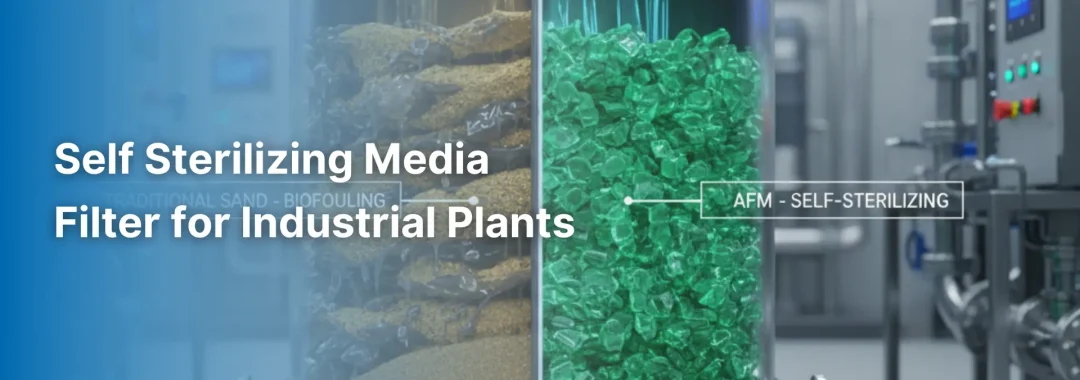
Activated Filter Media (AFM) is a direct replacement for sand, manufactured from green glass and activated through a unique chemical and thermal process. This results in a self sterilizing media filter that prevents bacteria from ever attaching to the surface.

Performance MetricStandard Silica SandAFM (Self-Sterilizing)
Filtration Grade20 microns< 5 microns
Bio-ResistanceNone (Biofilm forms)High (Self-sterilizing)
Backwash WaterHigh volume required50% less water used
Lifespan2–3 yearsOver 15 years

Catalytic Oxidation and Bio-Resistance Explained

The surface of AFM has a high negative charge and catalytic properties. When water flows through, it creates small amounts of free radicals (OH) on the surface, which act as a disinfectant. This is what makes it a self sterilizing media filter. By removing the biological load at the pre-treatment stage, you significantly improve BWRO membrane performance and reduce the need for aggressive chemical cleaning.

Why PT. Gapura Liqua Solutions Integrates AFM in Systems

At PT. Gapura Liqua Solutions (GLS), we specialize in end-to-end engineering that prioritizes long-term reliability. We integrate self sterilizing media filter technology into our SWRO and BWRO systems because it allows our clients to focus on their core business without worrying about sudden utility failures.

By utilizing the keunggulan sistem air RO equipped with AFM, industrial plants in Indonesia can achieve lower TDS levels and superior permeate quality while reducing their environmental footprint.

Conclusion: Sustainable Water Reliability for Indonesian Industry

Investing in a self sterilizing media filter is a strategic decision for any technical director aiming for resource recovery and efficiency. AFM technology provides the stability required for modern industrial processes, ensuring that your water supply remains a silent partner in your success, not a constant maintenance headache.

To upgrade your current filtration system or design a new utility plant, Contact us at GLS.

FAQ Section

Q: How does a self sterilizing media filter reduce chemical costs?

A: Since the media prevents biofilm formation, there is less organic matter reaching the RO membranes. This reduces the frequency of CIP (Cleaning In Place) and the volume of biocides required.

Q: Can I replace my existing sand with AFM?

A: Yes, AFM is a 1:1 replacement for sand in existing pressure vessels, though we recommend a system audit to optimize backwash flow rates.

Q: Is this technology effective for seawater desalination?

A: Absolutely. In seawater applications, biofouling is the leading cause of membrane failure. AFM provides a critical protective barrier.

Follow us on Social Media

Facebook Instagram LinkedIn