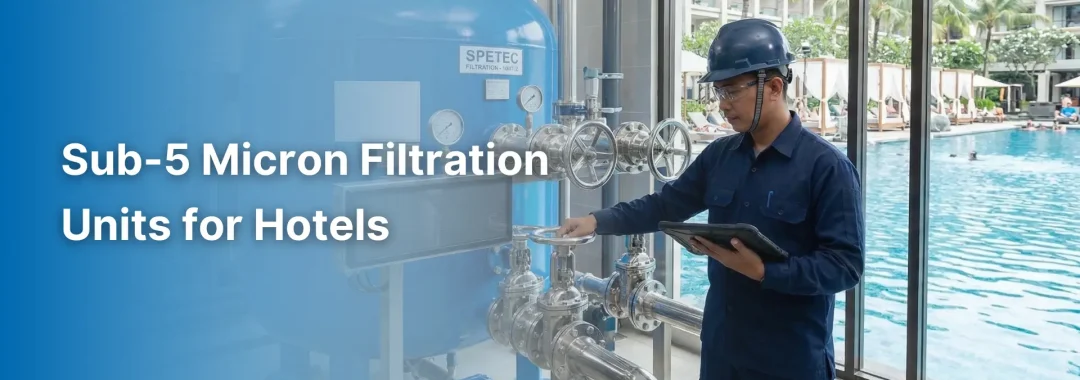
A technical cross-section of sub-5 micron filtration units utilizing AFM to provide crystal-clear water for a luxury resort.

Sub-5 Micron Filtration Units for Hotels

Sub-5 Micron Filtration Units: Why Modern Luxury Hospitality Demands Precision

In the competitive landscape of luxury hospitality, “perfection” is a standard, not a goal. While high-end resorts focus heavily on interior aesthetics and service, the silent engine of the guest experience—the water utility—is often overlooked. Unfortunately, many 5-star properties still rely on 50-year-old sand filtration technology. This reliance creates a significant vulnerability. Transitioning to professional sub-5 micron filtration units is no longer a luxury; it is a critical necessity to protect assets and maintain brand prestige.

Standard silica sand filters generally capture particles down to 20 or 40 microns. Consequently, millions of microscopic particles and biological precursors pass through the system, eventually damaging expensive downstream infrastructure.

The Failure of Standard Sand Filtration in Luxury Standards

The hospitality sector in Indonesia, particularly in high-demand areas like Bali and Jakarta, faces unique raw water challenges. Traditional sand filters create a “leaking bucket” for hotel profits.

The 20-Micron Barrier and Bio-fouling Risks

Sand is not just physically limited; it is biologically unstable. Within weeks, bacteria colonize the sand grains, creating a biofilm that leads to “channeling.” This allows unfiltered water to bypass the media entirely. Specifically, sand cannot capture the fine particles that cause cloudy water or the organic precursors that react with chlorine to create trichloramines. Therefore, hotels using sand often suffer from that unpleasant “pool smell” and skin irritation among guests. By contrast, implementing sub-5 micron filtration units provides a bioactive, precise barrier that standard sand simply cannot match.

Precision Water: The Power of Sub-5 Micron Filtration Units

To achieve truly “Precision Water,” facility managers must utilize media that is physically and chemically superior. The shift toward Activated Filter Media (AFM) represents the current gold standard in the industry.

Activated Filter Media (AFM) vs. Traditional Mined Sand

AFM is an upcycled, activated glass media that possesses a permanent negative surface charge. While sand traps dirt mechanically, AFM attracts it electrostatically. Consequently, sub-5 micron filtration units utilizing AFM can remove up to 95% of all particles down to 1 micron. This level of purity is virtually impossible for silica sand. For a deeper technical analysis of these differences, you can review our AFM S vs NG Media comparison.

Protecting High-Value Assets: Chillers, Boilers, and RO Membranes

Effective filtration is the most robust insurance policy for your hotel’s mechanical room. When fine particulates bypass primary filtration, they cause scale buildup in chillers and boilers, leading to massive energy inefficiency. Moreover, they cause rapid fouling of your Reverse Osmosis Membrane. Ensuring consistent BWRO membrane performance requires the ultra-clean feed water that only sub-5 micron filtration units can provide. By removing the load before it hits the RO, you drastically extend the life of your membranes and reduce the frequency of expensive chemical cleanings.

Enhancing the Guest Experience: Beyond Aesthetics

In a luxury setting, water must be more than “safe”—it must be “superior.” Sub-5 micron filtration results in water with significantly lower turbidity, creating a crystal-clear appearance in pools and spas. Furthermore, because these units remove more organic matter, the demand for chlorine drops by up to 30%. This reduces the chemical smell and provides a gentler experience for guests. Understanding the keunggulan sistem air RO alongside precision filtration ensures that every touchpoint, from the shower to the swimming pool, reflects 5-star quality.

Partnering with Gapura Liqua Solutions for Operational Continuity

Managing a modern resort requires a partner who understands the total water loop. PT. Gapura Liqua Solutions (GLS) provides end-to-end engineering and long-term operations to ensure your facility remains compliant and efficient. We specialize in high selective filter media that protects your ROI and enhances guest satisfaction.

Our proven expertise is visible in our latest project updates on LinkedIn, where we showcase the transformation of hospitality utilities across Indonesia. Additionally, for immediate maintenance needs, we offer premium filtration components through our official Tokopedia store.

Conclusion: The Future of Hospitality Water Management

Ultimately, the choice of filtration technology determines the lifespan of your facility’s most expensive assets. By adopting sub-5 micron filtration units, you protect your physical infrastructure, reduce water and chemical waste, and deliver a guest experience that meets modern luxury standards. PT. Gapura Liqua Solutions remains the ideal partner for the Indonesian hospitality sector, explicitly linking advanced resource recovery with long-term reliability.

Stop washing your hotel’s profits away with outdated sand technology. Contact PT. Gapura Liqua Solutions today to audit your utility room and implement a precision water solution.

FAQ

Q: Can sub-5 micron filtration units save money on electricity? A: Yes. By preventing fine particulates and scale from reaching your chillers and boilers, the equipment operates at peak heat-exchange efficiency, reducing energy consumption by up to 10–15%.

Q: Is it difficult to switch from sand to AFM in our hotel? A: Not at all. Sub-5 micron filtration units using AFM act as a “drop-in” replacement. You simply remove the old sand and replace it with the activated glass media without needing to change your existing filter tanks or pumps.

Q: How does this technology help with “Green Hotel” certifications? A: Advanced media reduces backwash water waste by up to 50% and chemical usage by 30%. These metrics contribute directly to EarthCheck or Green Globe certification requirements.

Q: Does GLS provide maintenance for these filtration systems? A: Absolutely. PT. Gapura Liqua Solutions offers Management Service Agreements to ensure your systems perform optimally year-round.
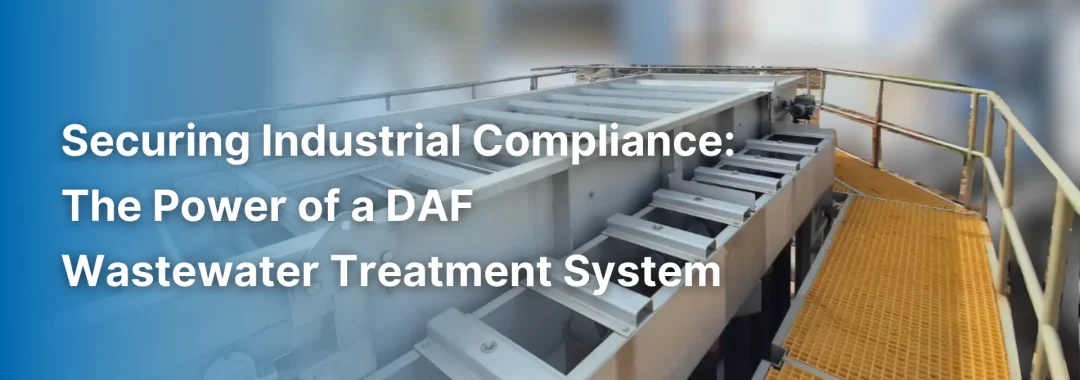
An industrial engineer inspecting a highly efficient DAF wastewater treatment system to ensure proper removal of suspended solids and fats.

DAF Wastewater Treatment System Experts

Securing Industrial Compliance: The Power of a DAF Wastewater Treatment System

Industrial facility managers constantly face the challenge of meeting stringent effluent discharge limits. Consequently, managing fats, oils, and grease (FOG) alongside heavy total suspended solids (TSS) requires robust technology. Implementing a reliable DAF wastewater treatment system provides an effective, solution-driven answer to these operational hurdles. Indeed, this specialized technology separates contaminants efficiently, ensuring strict environmental compliance while optimizing overall plant performance.

Furthermore, integrating advanced primary treatment is no longer a luxury for modern factories. Instead, it serves as the foundational step toward sustainable resource recovery and operational longevity.

Overcoming Industrial Effluent Challenges

Factories across the food, beverage, and petrochemical sectors generate heavily polluted water. Therefore, managing this waste stream effectively becomes a top priority for procurement and facility teams.

The Burden of High TSS and FOG

Conventional settling clarifiers often fail to remove lighter particles and emulsified oils. Because these contaminants do not settle via gravity, they easily pass through standard settling tanks. Subsequently, heavy organic loads disrupt downstream biological processes. High concentrations of FOG can coat biological flocs, essentially starving the beneficial bacteria of oxygen. Thus, facilities face a high risk of regulatory failure and environmental penalties if these parameters remain unchecked.

How a DAF Wastewater Treatment System Drives Efficiency

To resolve these settling issues, engineers utilize Dissolved Air Flotation (DAF). Specifically, a DAF wastewater treatment system floats contaminants to the surface rather than waiting for them to sink.

The Science of Microbubble Flotation

The mechanics behind this process are highly efficient. First, the system dissolves air into a recycled stream of water under high pressure. Next, releasing this pressurized water into the main flotation tank creates millions of microscopic bubbles. These tiny bubbles attach directly to the chemically dosed suspended particles. Ultimately, the buoyancy of the bubbles floats the flocculated sludge to the surface, where mechanical skimmers easily remove it. For further technical reading, we detail exactly how DAF system works for wastewater on our dedicated resources page.

Protecting Downstream Membrane Assets

By removing heavy particulate loads early, the DAF unit effectively protects downstream filtration assets. For instance, feeding cleaner water significantly enhances BWRO membrane performance. Additionally, understanding the advantages of RO systems highlights the absolute necessity of excellent pre-treatment to prevent premature fouling. Should your facility require maintenance, securing high-quality Reverse Osmosis Membrane elements is critical for maintaining flow rates.

Guaranteeing Regulatory Compliance and Operational Continuity

Environmental agencies in Indonesia strictly monitor industrial discharge. Thus, utilizing a proper DAF unit wastewater treatment for compliance helps facilities avoid heavy fines and operational shutdowns. Moreover, integrating this robust separation technology promotes resource recovery. Facilities can safely recycle polished effluent back into cooling towers or washing stations, drastically lowering daily water consumption.

Partnering with Gapura Liqua Solutions

Sourcing reliable equipment and expert engineering remains a top priority for decision-makers. Therefore, PT. Gapura Liqua Solutions (GLS) offers comprehensive engineering, procurement, and construction (EPC) services. We tailor every installation to meet your specific effluent chemistry.

Additionally, we provide easy access to critical spare parts and consumables via our official Tokopedia store. Furthermore, you can view our successful, real-world implementations through our recent LinkedIn project updates, showcasing our commitment to engineering excellence.

Conclusion

Ultimately, establishing a modern DAF wastewater treatment system secures your facility’s operational future and environmental standing. PT. Gapura Liqua Solutions acts as your ideal expert partner in this critical journey. We explicitly link our expertise in seawater desalination, advanced resource recovery, and long-term operations to guarantee your facility’s success. Therefore, contact PT. Gapura Liqua Solutions today to discuss your next water treatment project and achieve total operational peace of mind.

FAQ

Q: What types of contaminants does a DAF system remove most effectively? A: A DAF system excels at removing low-density particulates that do not settle easily via gravity. Specifically, it highly effectively removes Fats, Oils, and Grease (FOG), total suspended solids (TSS), and light biological sludges from industrial effluent.

Q: How does a DAF system protect my Reverse Osmosis (RO) membranes? A: By acting as a robust primary pre-treatment step, the DAF unit drastically reduces the particulate and organic load in the water. Consequently, this prevents premature clogging and organic fouling of downstream ultrafiltration and RO membranes, saving significant maintenance costs.

Q: Do I need chemical dosing for a DAF system to work? A: Yes, in most industrial applications. Adding coagulants and flocculants binds smaller particles together into larger flocs. Subsequently, the microbubbles can easily attach to these larger flocs, significantly increasing the overall removal efficiency of the system.

Q: Can GLS integrate a DAF unit into my existing wastewater treatment plant? A: Absolutely. PT. Gapura Liqua Solutions specializes in upgrading existing infrastructure. We can seamlessly integrate a DAF unit into your current flow path to solve specific compliance issues or increase your overall treatment capacity.

Follow us on Social Media

Facebook Gapura Liqua - DAF wastewater treatment system Instagram Gapura Liqua - DAF wastewater treatment system LinkedIn Gapura Liqua - DAF wastewater treatment system