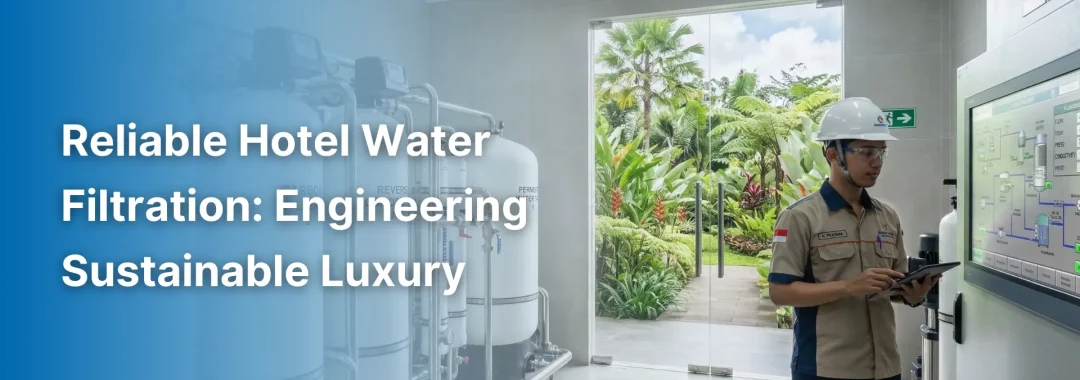
A technical installation of a reliable hotel water filtration system using AFM media and RO technology in a clean resort utility room.

Reliable Hotel Water Filtration for Resorts

Reliable Hotel Water Filtration: Engineering Sustainable Luxury

In the luxury hospitality sector of Indonesia, sustainability has transitioned from a marketing buzzword to a critical operational standard. Resorts in Bali and Jakarta are now evaluated by their “water intensity,” making reliable hotel water filtration a top priority for facility managers. Traditional systems often waste thousands of liters of treated water during cleaning cycles. Consequently, implementing a robust, circular water loop is the most effective way to meet zero-waste goals while maintaining the crystal-clear water quality that elite guests expect.

Furthermore, a professional water strategy acts as a high-yield investment. By treating water as a recoverable resource rather than a disposable utility, hotels can significantly reduce their monthly operational expenditure (OPEX).

The Hidden Risks of Traditional Sand Filtration

Many 5-star properties still rely on decades-old silica sand technology for their primary filtration. While functional, these systems are fundamentally incompatible with modern efficiency standards and often pose a risk to operational continuity.

Why Silica Sand Is a “Leaking Bucket” for Profits

Silica sand filters suffer from a major biological flaw: they allow bacteria to grow and form a biofilm. This biofilm glues the sand together, leading to “channeling,” where water bypasses the media entirely. As a result, the system must backwash more frequently to maintain clarity, wasting up to 50% more water than necessary. Specifically, this “leaking bucket” approach drains hotel profits through wasted water, excessive electricity, and high chemical consumption. Transitioning to reliable hotel water filtration solves this biological instability at the source.

Transitioning to Reliable Hotel Water Filtration

To achieve true reliability, engineers must focus on advanced sustainability architecture. Integrating bioactive media with high-recovery membranes creates a system that produces superior water with minimal waste.

Activated Filter Media (AFM) and Backwash Reduction

The cornerstone of reliable hotel water filtration is Activated Filter Media (AFM). Unlike mined sand, AFM is an upcycled glass media that is 100% bio-resistant. Because bacteria cannot grow on the AFM surface, it prevents channeling and the formation of “mud balls.” Moreover, AFM requires significantly less water for backwashing. For a detailed technical look at why this media is the superior choice, you can read our AFM S vs NG Media comparison.

Protecting Chillers, Boilers, and RO Membranes

Precision filtration does more than save water; it acts as a shield for your most expensive mechanical assets. By removing fine particulates as small as 1 micron, AFM prevents the scale buildup and organic fouling that destroy chillers and boilers. Furthermore, it safeguards your Reverse Osmosis Membrane, ensuring consistent BWRO membrane performance. Understanding the keunggulan sistem air RO is key to justifying the ROI of these advanced setups.

Achieving Zero-Waste Goals and Green Certifications

For modern hotel owners, ROI is not just about bills; it is about brand positioning. Implementing reliable hotel water filtration contributes directly to points for EarthCheck or Green Globe certifications. By reducing water intensity and chemical usage by up to 30%, your facility secures a competitive edge. This level of precision is especially vital for specialized needs, such as a sistem filtrasi air hotel in areas with high water hardness.

Partnering with Gapura Liqua Solutions for Operational Continuity

Successful utility management requires a partner who understands engineering, procurement, and long-term operations. PT. Gapura Liqua Solutions (GLS) provides end-to-end systems that allow our clients to focus on their core hospitality business. We integrate seawater desalination and resource recovery into a seamless, high-reliability loop. Our track record is visible in our latest project updates on LinkedIn, showcasing utility savings for iconic resorts like The Jewel of Seminyak – W Hotel.

For hotels needing immediate support, we provide premium components through our official Tokopedia store. This ensures your team has access to professional-grade tools for maintaining reliable hotel water filtration standards.

Conclusion: Securing ROI and Brand Reputation

Ultimately, a sustainable water strategy is the most robust insurance policy for your hotel’s operational future. By adopting reliable hotel water filtration, you reduce OPEX, earn prestigious certifications, and deliver an unparalleled guest experience. PT. Gapura Liqua Solutions remains the ideal partner for the Indonesian hospitality sector, explicitly linking resource recovery with long-term reliability.

Ensure your resort is a leader in sustainable luxury. Contact PT. Gapura Liqua Solutions today to audit your utility room and implement a bioactive, circular water strategy.

FAQ

Q: Can reliable hotel water filtration save money on electricity? A: Yes. By preventing scale buildup in heat exchangers, chillers, and boilers, the equipment operates at peak efficiency. This can reduce facility-wide energy consumption by up to 10–15%.

Q: How long does Activated Filter Media (AFM) last compared to sand? A: Silica sand typically requires replacement every 2-3 years due to bio-fouling and attrition. However, AFM is bio-resistant and extremely durable, meaning it often lasts for the entire lifespan of the filtration system.

Q: Is it possible to retrofit AFM into my existing sand filter tanks? A: Absolutely. Reliable hotel water filtration using AFM acts as a “drop-in” replacement. You simply remove the old sand and replace it with AFM without needing to modify your existing tanks or pumps.

Q: Does GLS provide operational support for remote resort locations? A: Yes. PT. Gapura Liqua Solutions offers Management Service Agreements and long-term O&M support for resorts across the entire Indonesian archipelago.

Follow us on Social Media

Facebook Instagram LinkedIn
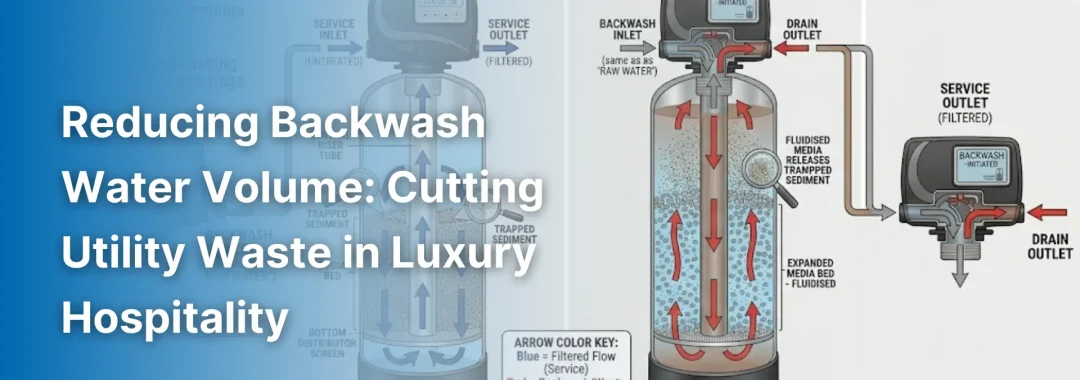
An industrial technician inspecting a high-efficiency AFM filtration tank designed for reducing backwash water volume in a luxury resort

Reducing Backwash Water Volume Guide

Reducing Backwash Water Volume: Cutting Utility Waste in Luxury Hospitality

For many luxury resorts and industrial facilities in Indonesia, water is often viewed as an unavoidable operational expense. However, facility managers frequently overlook the massive inefficiencies hidden within their filtration rooms. Traditional silica sand filters are essentially “leaking buckets” for hotel profits. Specifically, every time a technician initiates a cleaning cycle, the facility loses thousands of liters of treated, heated, and chemically dosed water. Therefore, focusing on reducing backwash water volume has become the single most effective strategy for optimizing utility expenditure (OPEX) and improving the facility’s bottom line.

By moving away from traditional mined sand and embracing advanced “Precision Water” technology, hotels can stop washing money away. Indeed, transitioning to a circular hospitality water loop is no longer just an environmental goal; it is a financial necessity.

The Hidden Cost of Sand: Why You are Washing Money Away

Standard silica sand filtration has a fundamental biological flaw. Within days of installation, bacteria colonize the sand grains and create a protective layer known as biofilm. This biofilm essentially glues the sand together, leading to a phenomenon called “channeling.”

The Biofilm and Channeling Dilemma

When channeling occurs, water finds the path of least resistance, bypassing the filter media entirely. Consequently, the filter loses its efficiency, and the system must backwash more frequently to compensate. This cycle results in excessive water waste. Furthermore, these bacteria react with chlorine to create trichloramines, which cause the unpleasant “pool smell” and skin irritation that lead to guest complaints. Achieving high standards in luxury hospitality requires a bioactive solution that addresses the root of this biological problem.

Reducing Backwash Water Volume with Activated Filter Media (AFM)

The most effective solution for modern facility managers is the implementation of Activated Filter Media (AFM). Unlike sand, AFM is an upcycled, activated glass media that is 100% bio-resistant. Because bacteria cannot grow on the surface of AFM, the media remains clean and free-flowing for years.

50% Less Water, 30% Fewer Chemicals

By preventing biofilm and channeling, AFM makes the filtration process significantly more efficient. Specifically, reducing backwash water volume by up to 50% is a standard outcome when switching from sand to AFM. Since the media does not stick to itself, the backwash process is shorter and requires a lower flow rate to be effective. Additionally, because the filter removes more organic precursors, facilities typically see a 30% reduction in chlorine and other chemical consumption. This dramatic reduction helps hotels secure prestigious certifications such as EarthCheck or Green Globe.

Beyond Savings: Protecting Your Downstream RO Assets

A filter is more than just a cleaning tool; it is a shield for your facility’s most expensive machinery. When primary filtration allows fine particles or biological matter to pass through, your downstream assets suffer. For instance, poor filtration is a leading cause of premature fouling in a Reverse Osmosis Membrane.

Maintaining superior BWRO membrane performance requires consistent, ultra-clean feed water. By successfully reducing backwash water volume and increasing filtration precision, you protect your chillers, boilers, and RO units from the scaling and organic load that cause emergency downtime. Understanding the keunggulan sistem air RO alongside precision media filtration ensures a high-yield investment for your property.

Partnering with Gapura Liqua Solutions for Long-Term Reliability

Successful utility management requires an expert partner who understands the total water cycle. PT. Gapura Liqua Solutions (GLS) provides end-to-end engineering, procurement, and long-term operations. We integrate seawater desalination and resource recovery into a seamless loop, ensuring your facility remains compliant and efficient. Our commitment to operational continuity is visible in our latest project updates on LinkedIn, where we demonstrate real-world utility savings for major Indonesian resorts.

For facilities looking for immediate maintenance support, we offer professional-grade filtration components through our official Tokopedia store. This ensures your technical team has the reliable parts needed to prevent utility loss.

Conclusion: Securing ROI and Operational Continuity

Ultimately, the goal of any facility manager is to achieve maximum reliability at the lowest possible cost. Reducing backwash water volume is the cornerstone of this objective. By adopting Activated Filter Media, you protect your physical assets, earn green certifications, and achieve a clear ROI within 18 to 24 months. PT. Gapura Liqua Solutions remains the ideal partner for the Indonesian hospitality and industrial sectors, explicitly linking resource recovery with long-term reliability.

Stop washing your facility’s profits away with outdated sand technology. Contact PT. Gapura Liqua Solutions today to audit your utility room and implement a bioactive, circular water strategy.

FAQ

Q: How does reducing backwash water volume improve my chiller’s efficiency? A: Precision filtration with AFM removes the fine particles that cause scale buildup in chillers and boilers. By keeping these heat-exchange surfaces clean, the equipment operates at peak efficiency, lowering your overall energy bill.

Q: Is Activated Filter Media (AFM) more expensive than sand? A: While the initial cost of AFM is higher than mined sand, the ROI is achieved rapidly. Specifically, the savings in water, electricity, and chemicals, along with the extended life of your RO membranes, typically cover the investment within 24 months.

Q: Can AFM be used in seawater desalination systems (SWRO)? A: Absolutely. Reducing backwash water volume in SWRO systems is critical because the intake water has already been treated and pressurized. AFM provides superior pre-filtration that protects expensive high-pressure pumps and membranes.

Q: Does GLS provide maintenance services for these systems? A: Yes. PT. Gapura Liqua Solutions offers Management Service Agreements to ensure that your filtration and desalination systems remain optimized for decades.

Follow us on Social Media

Facebook Instagram LinkedIn
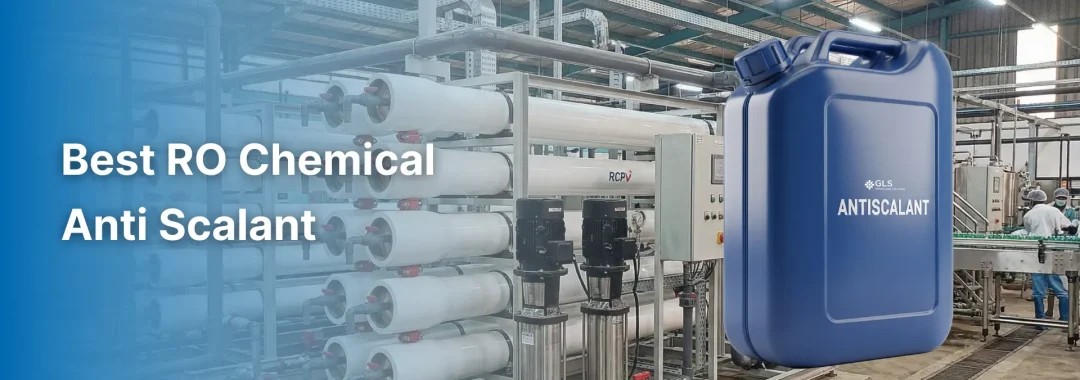
An industrial facility technician calibrating an injection pump for an RO chemical anti scalant system to prevent membrane scaling.

Best RO Chemical Anti Scalant

Securing Your Plant with an RO Chemical Anti Scalant

For industrial facility managers in Indonesia, maintaining a reliable and continuous water supply presents a constant challenge. Consequently, as advanced systems extract pure water from saline sources, the remaining dissolved minerals concentrate rapidly. Therefore, utilizing a high-quality RO chemical anti scalant becomes a non-negotiable requirement for operational success. Indeed, this specific chemical intervention actively prevents hard minerals from crystallizing, ensuring continuous production and protecting your most expensive equipment.

Furthermore, integrating a precise chemical dosing strategy is not merely a maintenance task. Instead, it serves as the foundational step toward sustainable resource recovery and long-term facility longevity.

The Threat of Mineral Scaling in Desalination

Industrial feed water—whether from deep wells or the ocean—often contains high levels of calcium, magnesium, barium, and reactive silica. Specifically, when these minerals exceed their natural solubility limits inside a pressure vessel, they form a hard, destructive scale directly on the membrane surface.

Operational Disruptions and Rising OPEX

This mineral scaling creates a severe physical barrier. Consequently, high-pressure feed pumps must work significantly harder to push water through the clogged microscopic pores. As a result, electrical energy consumption spikes immediately. Furthermore, frequent scaling forces technicians to perform harsh, acidic cleanings (CIP). Ultimately, these aggressive cleaning cycles chemically degrade the membrane material, leading to premature asset failure and skyrocketing operational expenditure (OPEX).

How an RO Chemical Anti Scalant Solves the Problem

To combat this expensive issue, utility engineers deploy precision chemical dosing. Specifically, a well-formulated RO chemical anti scalant interferes with the crystal growth process long before solid scale can form.

The Science of Threshold Inhibition

These advanced chemicals primarily utilize a mechanism called threshold inhibition. Basically, the active polymer molecules attach themselves to the newly forming mineral crystals. By doing so, they completely halt further crystalline growth. Therefore, the minerals remain safely suspended in the water phase and exit the system harmlessly through the brine reject stream.

Selecting the Right Dosing Strategy

However, choosing the correct formulation requires deep technical knowledge and precision. Facilities must base their chemical selection on a comprehensive laboratory water analysis. For instance, high-silica feed water demands a completely different polymer blend than high-calcium water. Understanding the distinct advantages of RO systems helps operators appreciate the absolute necessity of this precise pre-treatment stage.

Advanced Membrane Protection for Indonesian Industries

Incorporating the correct dosing strategy extends asset life dramatically. For example, maintaining optimal BWRO membrane performance relies entirely on preventing mineral buildup from day one. Moreover, you must pair your chemical strategy with a robust, industrial-grade Reverse Osmosis Membrane to achieve maximum separation efficiency.

Additionally, facilities experiencing uniquely high production demands can explore specific engineering strategies to handle high RO flow and membrane scaling safely.

Partnering with Gapura Liqua Solutions

Managing complex water chemistry demands expert, hands-on support. Therefore, PT. Gapura Liqua Solutions (GLS) provides comprehensive Engineering, Procurement, and Construction (EPC) services tailored exactly to your facility’s needs. We guarantee that your RO chemical anti scalant program perfectly matches your unique feed water profile.

Additionally, we ensure quick, reliable access to essential dosing consumables via our official Tokopedia store. Furthermore, you can review our proven track record of industrial excellence through our recent LinkedIn project updates.

Conclusion

Ultimately, proactive maintenance represents the key to sustainable, profitable manufacturing operations. Integrating a highly effective RO chemical anti scalant strategy protects your vital water infrastructure and drastically lowers your total cost of ownership.

Therefore, do not let unseen mineral scaling disrupt your critical business processes. Contact PT. Gapura Liqua Solutions today to secure expert chemical management and ensure total operational peace of mind for your facility.

FAQ

Q: What is the main difference between an RO chemical anti scalant and a water softener? A: A water softener physically removes hardness minerals (calcium and magnesium) by exchanging them with sodium ions, which requires massive amounts of regeneration salt and space. Conversely, an RO chemical anti scalant is simply injected in tiny doses (ppm) to prevent those minerals from crystallizing, making it far more cost-effective and space-efficient for large industrial plants.

Q: How do I know the correct dosage for my system? A: You calculate the exact dosage using specialized projection software provided by the chemical manufacturer. Specifically, this software analyzes your raw water laboratory results (pH, temperature, TDS, specific ions) alongside your system’s design recovery rate to determine the precise parts per million (ppm) required.

Q: Can injecting too much anti scalant harm my RO system? A: Yes. While under-dosing leads to hard mineral scaling, over-dosing can cause the chemical polymers themselves to foul the membrane. Furthermore, excessive organic-based antiscalants can act as food for bacteria, leading to severe biofouling. Therefore, precise calibration of the dosing pump is mandatory.

Q: Will an anti scalant remove existing scale from my membranes? A: No. These chemicals are strictly preventive. If your membranes are already severely scaled, you must perform a Clean-in-Place (CIP) procedure using low-pH acidic cleaners to dissolve the existing minerals before resuming normal anti scalant dosing.

Follow us on Social Media

Facebook Gapura Liqua - RO chemical anti scalant Instagram Gapura Liqua - RO chemical anti scalant LinkedIn Gapura Liqua - RO chemical anti scalant

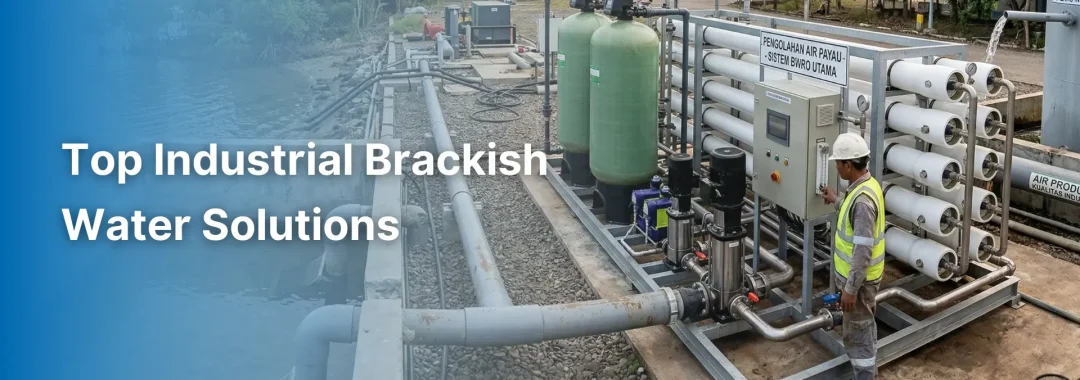
An industrial facility manager inspecting the pressure vessels of high-efficiency industrial brackish water solutions designed by Gapura Liqua Solutions.

Top Industrial Brackish Water Solutions

Securing Plant Utilities with Industrial Brackish Water Solutions

Industrial facility managers in Indonesia constantly battle the challenge of securing consistent, high-quality water supplies. Consequently, as coastal aquifers face seawater intrusion and inland groundwater sources degrade, raw water salinity is steadily increasing. Therefore, relying on standard filtration is no longer sufficient. Implementing advanced industrial brackish water solutions provides a decisive approach to overcoming these utility hurdles. Indeed, this technology separates dissolved salts efficiently, ensuring strict operational compliance while protecting vital plant infrastructure.

Furthermore, integrating advanced desalination is not merely a reactive measure. Instead, it serves as the foundational step toward sustainable resource recovery and long-term operational longevity.

The Problem with High Salinity Groundwater

Factories across the manufacturing, food, and petrochemical sectors require pristine water to operate properly. Therefore, managing brackish water streams effectively becomes a top priority for procurement and facility teams.

Scaling, Corrosion, and Equipment Failure

Brackish water contains moderate levels of dissolved salts, typically ranging between 1,000 and 10,000 parts per million (ppm) of Total Dissolved Solids (TDS). Because these minerals do not settle via gravity, they easily pass through conventional media filters. Subsequently, these hard minerals create severe scaling inside boilers, cooling towers, and heat exchangers.

Furthermore, high chloride concentrations accelerate pipeline corrosion. Thus, facilities face a high risk of catastrophic equipment failure and skyrocketing maintenance costs if these parameters remain unchecked.

How Industrial Brackish Water Solutions Provide the Answer

To resolve these contamination issues, engineers utilize membrane-based separation technologies. Specifically, highly engineered industrial brackish water solutions force pressurized water through microscopic barriers to remove dissolved impurities.

The Mechanics of Reverse Osmosis (RO)

The core technology driving these solutions is Reverse Osmosis (RO). First, high-pressure pumps push the saline feed water against a semi-permeable membrane. Next, the membrane allows pure water molecules to pass through while rejecting up to 99% of dissolved salts and organics.

Ultimately, this process produces a highly purified permeate stream ready for industrial use. To fully understand the operational benefits, you can explore the advantages of RO systems on our dedicated technical page.

Pre-Treatment and Membrane Protection

By removing heavy particulate loads early, comprehensive pre-treatment effectively protects downstream filtration assets. For instance, feeding correctly pre-treated water significantly enhances BWRO membrane performance. Additionally, utilizing properly specified Reverse Osmosis Membrane elements prevents premature fouling and ensures maximum lifecycle value. Should your facility require immediate consumable replacements, securing high-quality components is critical for maintaining flow rates.

Ensuring Long-Term Reliability and Efficiency

Environmental compliance and operational efficiency go hand in hand. Thus, utilizing robust industrial brackish water solutions helps facilities avoid sudden production halts. Moreover, integrating this separation technology promotes resource recovery. Facilities can safely recycle polished effluent or recover concentrated brines, drastically lowering daily water consumption and aligning with green industry standards.

Partnering with PT. Gapura Liqua Solutions

Sourcing reliable equipment and expert engineering remains a top priority for decision-makers. Therefore, PT. Gapura Liqua Solutions (GLS) offers comprehensive engineering, procurement, and construction (EPC) services. We tailor every installation to meet your specific water chemistry and production demands.

Additionally, we provide easy access to critical spare parts and consumables via our official Tokopedia store. Furthermore, you can view our successful, real-world implementations through our recent LinkedIn project updates, showcasing our deep commitment to engineering excellence.

Conclusion

Ultimately, establishing modern industrial brackish water solutions secures your facility’s operational future and process stability. PT. Gapura Liqua Solutions acts as your ideal expert partner in this critical journey. We explicitly link our expertise in seawater desalination (SWRO), advanced resource recovery, and long-term operations to guarantee your facility’s success. Therefore, do not leave your water supply to chance. Contact PT. Gapura Liqua Solutions today to discuss your next water treatment project and achieve total operational peace of mind.

FAQ

Q: What defines water as “brackish” in an industrial context? A: Brackish water possesses a salinity level between fresh water and seawater. Typically, it contains Total Dissolved Solids (TDS) ranging from 1,000 to 10,000 parts per million (ppm). Because it is highly corrosive and causes scaling, it requires specialized membrane treatment before industrial use.

Q: How do industrial brackish water solutions differ from seawater systems (SWRO)? A: While both utilize reverse osmosis, brackish water systems operate at significantly lower pressures because the incoming water has a lower osmotic pressure than seawater. Consequently, BWRO systems consume much less energy and utilize different membrane specifications compared to SWRO plants.

Q: Can a BWRO system help my facility achieve zero liquid discharge (ZLD)? A: Yes. Integrating a BWRO system is a highly effective step in resource recovery. By purifying and recycling wastewater or brackish sources, the system drastically reduces liquid waste volume, which represents a crucial phase in achieving full Zero Liquid Discharge (ZLD) objectives.

Q: Does GLS provide long-term maintenance for these treatment plants? A: Absolutely. PT. Gapura Liqua Solutions provides comprehensive Operations and Maintenance (O&M) contracts. Specifically, we handle everything from routine chemical dosing and membrane cleaning to full facility operation, ensuring your system runs optimally for decades.

Follow us on Social Media

Facebook Gapura Liqua - industrial brackish water solutions Instagram Gapura Liqua - industrial brackish water solutions LinkedIn Gapura Liqua - industrial brackish water solutions

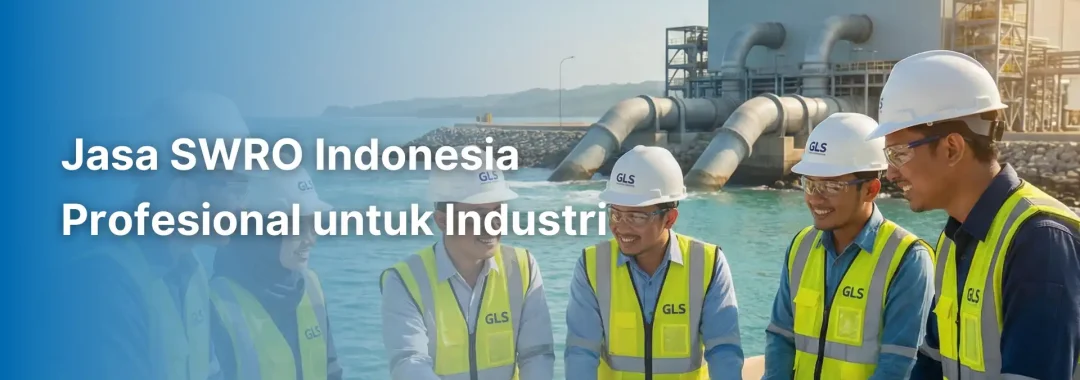
Tim teknisi memberikan jasa SWRO Indonesia profesional di lokasi pabrik tepi pantai.

Jasa SWRO Indonesia Profesional untuk Industri

Jasa SWRO Indonesia Profesional: Solusi Air Bersih Industri

Bagi Manajer Fasilitas dan Kepala Pengadaan di sektor industri, air adalah aset strategis. Di negara kepulauan seperti Indonesia, mengubah air laut menjadi air tawar melalui desalinasi (Seawater Reverse Osmosis) adalah solusi paling logis. Namun, kompleksitas teknologi ini menuntut Anda untuk memilih penyedia jasa SWRO Indonesia profesional.

PT. Gapura Liqua Solutions (GLS) memahami bahwa kegagalan sistem air berarti terhentinya produksi. Oleh karena itu, artikel ini akan membahas pentingnya memilih mitra teknis yang kompeten untuk menjamin investasi Anda menghasilkan air berkualitas secara konsisten.

Mengapa Anda Membutuhkan Jasa SWRO Indonesia Profesional?

Banyak industri mencoba membangun sistem desalinasi dengan vendor umum, namun sering kali berakhir dengan biaya operasional yang membengkak. Air laut bersifat sangat korosif dan memiliki karakteristik biologis yang dinamis. Tanpa penanganan dari penyedia jasa SWRO Indonesia profesional, sistem Anda rentan terhadap kerusakan dini.

Menghindari Risiko Kegagalan Sistem Desalinasi

Sistem yang dirancang secara amatir sering gagal mengantisipasi fluktuasi kualitas air laut. Akibatnya, membran cepat mampet (fouling) dan pompa bertekanan tinggi mengalami kerusakan. Kerugian finansial akibat downtime produksi ini jauh melebihi penghematan awal saat memilih vendor murah.

Sebaliknya, penyedia layanan profesional melakukan analisis mendalam terhadap air baku sebelum mendesain sistem. Pendekatan ini memastikan bahwa unit desalinasi mampu beroperasi 24 jam sehari tanpa gangguan berarti.

Standar Teknis dalam Layanan SWRO Profesional

Sebuah jasa SWRO Indonesia profesional tidak hanya menjual alat, tetapi menawarkan efisiensi. GLS menerapkan standar rekayasa tinggi untuk memastikan Operating Expenditure (OPEX) Anda tetap rendah.

Efisiensi Energi dengan Teknologi ERD

Salah satu tantangan terbesar desalinasi adalah konsumsi listrik. Namun, GLS mengintegrasikan Energy Recovery Device (ERD) dalam setiap desainnya. Teknologi ini menangkap kembali energi tekanan dari air buangan (brine) dan menggunakannya kembali untuk memompa air masuk.

Hasilnya, konsumsi energi dapat turun drastis hingga 50%. Ini adalah salah satu keunggulan sistem air RO modern yang kami tawarkan, menjadikan desalinasi solusi yang ekonomis bagi industri.

Manajemen Membran dan Pre-Treatment

Jantung dari sistem SWRO adalah membran. Untuk menjaga performanya, sistem pre-treatment harus bekerja sempurna menyaring partikel mikroskopis. Pemahaman mendalam mengenai BWRO membrane performance dan SWRO sangat krusial di sini.

Layanan profesional mencakup jadwal perawatan rutin dan penggunaan bahan kimia antiscalant yang tepat. Kami memastikan Reverse Osmosis Membrane Anda memiliki umur pakai yang panjang, sehingga menunda biaya penggantian aset (CAPEX) di masa depan.

Keunggulan Bermitra dengan PT. Gapura Liqua Solutions

Mengapa industri terkemuka memilih GLS sebagai penyedia jasa SWRO Indonesia profesional mereka? Jawabannya terletak pada pendekatan Total Water Solutions.

Kami mendampingi Anda mulai dari tahap studi kelayakan, rekayasa, pengadaan, hingga konstruksi dan operasional jangka panjang.

  1. Keahlian Lokal & Global: Kami menggabungkan teknologi dunia dengan pemahaman kondisi perairan lokal Indonesia.
  2. Dukungan Logistik: Ketersediaan suku cadang adalah prioritas kami. Komponen vital dapat Anda akses dengan mudah, bahkan melalui toko resmi kami di Tokopedia.
  3. Rekam Jejak Terbukti: Proyek-proyek kami berjalan dengan standar keandalan tinggi, memberikan ketenangan pikiran bagi para manajer pabrik.

Anda dapat melihat dedikasi tim kami dalam menangani proyek-proyek strategis melalui pembaruan aktivitas terbaru di LinkedIn GLS.

Kesimpulan

Memilih jasa SWRO Indonesia profesional adalah keputusan investasi terpenting untuk keamanan utilitas pabrik Anda. Dengan mitra yang tepat, air laut yang melimpah dapat menjadi sumber air bersih yang andal dan hemat biaya.

PT. Gapura Liqua Solutions siap membantu Anda merancang, membangun, dan mengelola sistem desalinasi kelas dunia. Jangan biarkan masalah air menghambat pertumbuhan bisnis Anda.

Siap untuk solusi air yang lebih baik? Hubungi Kami untuk Konsultasi Gratis

FAQ Section

Q: Apa yang membedakan jasa SWRO profesional dengan vendor biasa? A: Jasa SWRO Indonesia profesional menawarkan solusi terintegrasi (EPC + O&M), jaminan kinerja (performance guarantee), dan penggunaan teknologi efisiensi energi seperti ERD, sedangkan vendor biasa seringkali hanya menjual peralatan lepas tanpa dukungan teknis jangka panjang.

Q: Berapa lama waktu yang dibutuhkan untuk instalasi sistem SWRO? A: Waktu instalasi bervariasi tergantung kapasitas, biasanya antara 3 hingga 6 bulan mulai dari desain hingga commissioning. GLS memastikan jadwal proyek yang ketat agar operasional Anda tidak terganggu.

Q: Apakah GLS bisa memperbaiki sistem SWRO lama yang rusak? A: Ya, kami menyediakan layanan audit dan revamping (perbaikan/peningkatan) untuk sistem yang sudah ada agar kembali bekerja optimal dan lebih hemat energi.

Q: Apakah air hasil SWRO aman untuk kebutuhan proses industri makanan? A: Tentu saja. Dengan desain yang tepat, sistem SWRO dapat menghasilkan air dengan kemurnian tinggi (food grade) yang memenuhi standar industri makanan dan minuman.


    Follow us on Social Media  

                       
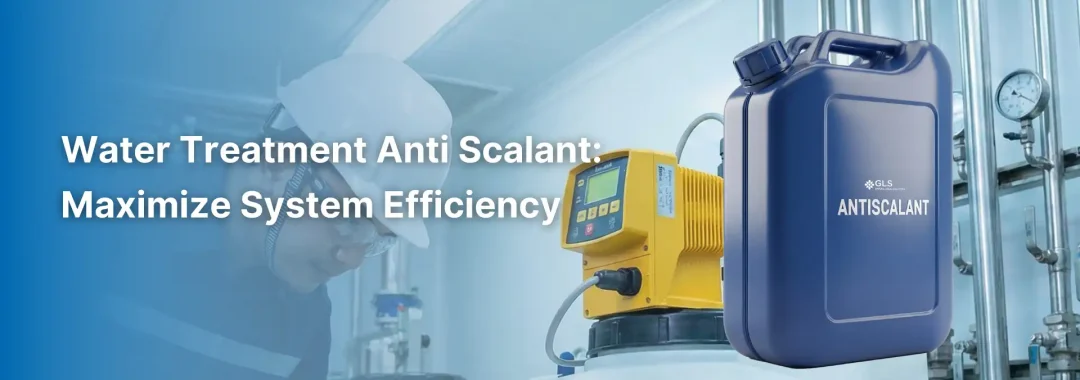
Industrial engineer inspecting a water treatment anti scalant dosing tank at a manufacturing plant.

Water Treatment Anti Scalant: Maximize System Efficiency

Water Treatment Anti Scalant: Maximizing Industrial Efficiency in Indonesia

For Facility Managers and Heads of Procurement across Indonesia, maintaining the longevity of industrial assets is a daily challenge. Whether operating cooling towers, boilers, or advanced desalination units, the threat of mineral deposition is constant. Implementing a robust water treatment anti scalant program is not merely a maintenance task; it is a strategic necessity to ensure operational continuity and cost control.

PT. Gapura Liqua Solutions (GLS) recognizes that in the competitive B2B landscape, unplanned downtime is unacceptable. This article explores how the correct chemical strategy protects your infrastructure and why choosing the right partner matters.

The Critical Role of Anti Scalant in Facility Management

Raw water sources in Indonesia often contain high levels of dissolved minerals, including calcium, magnesium, and silica. When water is heated in boilers or pressurized in Reverse Osmosis (RO) systems, these minerals precipitate out of the solution. Without a reliable water treatment anti scalant, these precipitates form hard scale deposits on heat transfer surfaces and membrane pores.

Understanding the Physics of Mineral Scaling

Scaling acts as an insulator. In boilers, even a thin layer of scale can drastically reduce heat transfer efficiency, forcing the system to burn more fuel to achieve the same output. In membrane systems, scale blocks the flow of water.

A high-performance water treatment anti scalant works by interfering with the crystal growth process. It utilizes mechanisms such as threshold inhibition to keep supersaturated salts dissolved in the water, allowing them to pass through the system without adhering to surfaces. This protection is vital for maintaining BWRO membrane performance over long operational periods.

The Financial Impact of Untreated Water

The cost of neglecting chemical treatment is two-fold:

  1. Energy Waste: Scaled systems require significantly more energy (electricity or fuel) to operate.
  2. Asset Depreciation: Heavy scaling can lead to overheating in boilers or irreversible fouling in membranes, necessitating expensive premature replacements.

By investing in a quality water treatment anti scalant, companies can convert unpredictable repair costs into manageable, planned operational expenses (OPEX).

Selecting the Right Water Treatment Anti Scalant

Not all chemicals are created equal. The effectiveness of a water treatment anti scalant depends heavily on the specific water chemistry of your site.

Tailoring Chemistry to Water Quality

A “one-size-fits-all” chemical often fails to address specific contaminants like silica or iron. For example, the Reverse Osmosis Membrane used in seawater desalination requires a different chemical profile than a low-pressure brackish water system.

GLS conducts thorough water analysis to recommend the precise formulation required. This ensures that the chemical acts effectively against the specific scaling potential of your feed water, aligning with the operational advantages of RO water systems designed by experts.

Dosing Precision and Monitoring

Applying the correct dosage is just as important as selecting the right chemical. Under-dosing leads to scaling, while over-dosing can be wasteful and cause bio-fouling issues. Modern dosing systems, supported by GLS technical teams, ensure that the water treatment anti scalant is injected at the optimal rate, maximizing protection while minimizing waste.

Why Procurement Leaders Partner with Gapura Liqua Solutions

In the industrial sector, supply chain reliability is paramount. PT. Gapura Liqua Solutions offers more than just products; we provide “Total Water Solutions.”

  • Technical Expertise: Our engineers understand the entire water cycle, from intake to discharge.
  • Availability: We ensure a steady supply of critical chemicals to prevent stock-outs. For quick procurement of standard components, you can also visit our Tokopedia store.
  • Trust: We are trusted by major industries to protect their critical utilities.

You can view our latest projects and technical updates on our LinkedIn Activity, demonstrating our commitment to excellence in the field.

Conclusion

The efficiency of your plant is directly tied to the quality of your water treatment program. A superior water treatment anti scalant is the guardian of your expensive machinery, preventing the silent accumulation of scale that drains profits and energy.

PT. Gapura Liqua Solutions is ready to audit your system and provide a tailored chemical strategy that guarantees results. Don’t wait for scale to stop your production.

Are you ready to secure your facility’s efficiency? Contact Us for a Consultation

FAQ Section

Q: Can water treatment anti scalant remove existing scale? A: Generally, anti scalants are designed to prevent new scale from forming. To remove existing hard scale, an acid cleaning or specialized descaling procedure (CIP) is usually required before restarting the preventative dosing program.

Q: Is water treatment anti scalant safe for all membrane types? A: Most modern formulations are compatible with standard composite membranes. However, it is crucial to verify compatibility with your specific membrane manufacturer (e.g., cellulose acetate vs. polyamide) to avoid damage. GLS experts can assist with this verification.

Q: How do I determine the correct dosage rate? A: Dosage is calculated based on water analysis (specifically hardness, alkalinity, and silica levels), pH, temperature, and system recovery rate. GLS uses specialized software to calculate the precise dosing required to prevent scaling without wastage.

Follow us on Social Media
Facebook Instagram LinkedIn
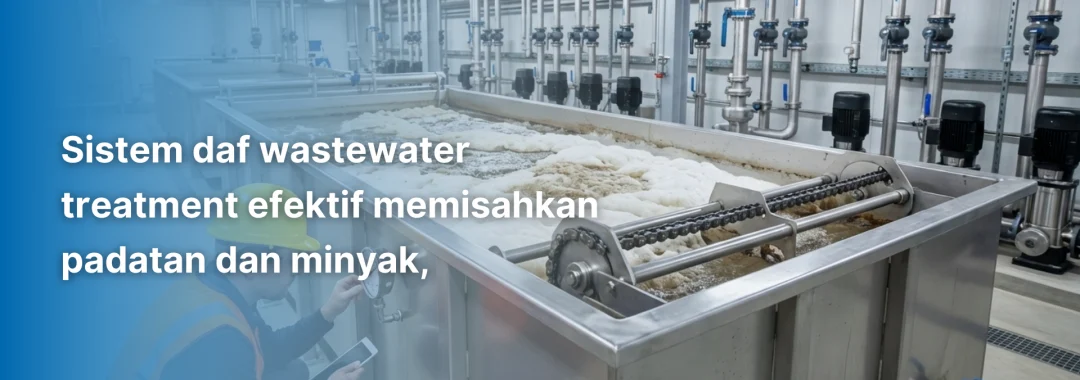
Teknisi memeriksa unit sistem daf wastewater treatment di fasilitas industri.

Sistem DAF Wastewater Treatment untuk Industri Indonesia

Sistem DAF Wastewater Treatment: Kunci Efisiensi Pengolahan Limbah Industri

Bagi para Head of Procurement dan Manajer Fasilitas di sektor industri, efisiensi Instalasi Pengolahan Air Limbah (IPAL) adalah prioritas non-negosiabel. Di tengah ketatnya regulasi lingkungan dan kebutuhan untuk menekan biaya operasional, penerapan sistem daf wastewater treatment (Dissolved Air Flotation) menjadi solusi strategis yang kian relevan, terutama bagi industri dengan beban pencemar organik dan padatan tinggi.

Artikel ini akan membahas secara mendalam urgensi teknologi DAF dalam rantai pengolahan air dan bagaimana PT. Gapura Liqua Solutions (GLS) mengintegrasikannya untuk menjamin keberlanjutan operasional Anda.

Tantangan Padatan Tersuspensi dan Minyak dalam Air Limbah

Limbah cair industri, khususnya dari sektor makanan-minuman, tekstil, dan minyak kelapa sawit, sering kali mengandung kadar Total Suspended Solids (TSS) serta lemak dan minyak (Fats, Oils, Grease – FOG) yang sangat tinggi. Tanpa penanganan awal yang tepat menggunakan sistem daf wastewater treatment, polutan ini menjadi ancaman serius bagi keseluruhan sistem utilitas pabrik.

Risiko Kerusakan pada Sistem Filtrasi Lanjut

Banyak industri kini beralih ke teknologi penggunaan kembali air (water reuse) menggunakan membran. Namun, membran Reverse Osmosis (RO) sangat sensitif terhadap fouling atau penyumbatan. TSS dan minyak yang lolos dari tahap awal akan menutupi pori-pori membran dengan cepat.

Hal ini menyebabkan penurunan kinerja yang drastis, seperti yang sering dibahas dalam analisis BWRO membrane performance. Tanpa perlindungan dari unit DAF yang andal, biaya penggantian membran akan melonjak dan frekuensi downtime untuk pencucian kimia (chemical cleaning) akan meningkat, mengganggu jadwal produksi.

Kepatuhan Regulasi Lingkungan di Indonesia

Pemerintah Indonesia, melalui Kementerian Lingkungan Hidup dan Kehutanan (KLHK), menerapkan standar baku mutu air limbah yang ketat. Kegagalan dalam memisahkan kontaminan fisik seperti TSS dan FOG tidak hanya berisiko merusak peralatan, tetapi juga membawa risiko hukum dan sanksi administratif. Implementasi sistem daf wastewater treatment yang terkalibrasi memastikan effluent pabrik Anda selalu berada dalam ambang batas aman sebelum dibuang atau diolah lebih lanjut.

Cara Kerja dan Keunggulan Teknologi DAF

Berbeda dengan sedimentasi konvensional yang mengandalkan gaya gravitasi untuk mengendapkan partikel berat, Dissolved Air Flotation (DAF) menggunakan prinsip pengapungan.

Mekanisme Pengapungan dengan Gelembung Mikro

Dalam proses ini, air yang telah dijenuhkan dengan udara bertekanan dilepaskan ke dalam tangki flotasi. Pelepasan tekanan ini menghasilkan jutaan gelembung mikro (microbubbles) yang menempel pada partikel padatan tersuspensi dan flok minyak. Gabungan gelembung-partikel ini memiliki densitas lebih ringan dari air, sehingga mengapung ke permukaan membentuk lapisan lumpur (sludge blanket) yang kemudian disapu bersih oleh mekanisme skimmer.

Teknologi ini sangat efektif untuk memisahkan partikel ringan yang sulit mengendap, menjadikan proses klarifikasi jauh lebih cepat dibandingkan clarifier konvensional.

Peran DAF sebagai Pre-Treatment Vital untuk RO

Dalam konteks desalinasi air laut (SWRO) atau daur ulang air limbah, DAF berfungsi sebagai benteng pertahanan pertama. Dengan mereduksi beban TSS dan organik secara signifikan, DAF melindungi unit Reverse Osmosis Membrane di hilir.

Integrasi ini adalah contoh nyata dari keunggulan sistem air RO yang didesain dengan benar: umur membran lebih panjang, konsumsi energi lebih rendah, dan kualitas air produk yang konsisten.

Mengapa Memilih PT. Gapura Liqua Solutions?

Memilih vendor untuk instalasi pengolahan air bukan sekadar membeli tangki besi; ini adalah kemitraan jangka panjang untuk keamanan utilitas. PT. Gapura Liqua Solutions (GLS) menawarkan keahlian end-to-end yang membedakan kami di pasar.

Kami tidak hanya menyediakan sistem daf wastewater treatment, tetapi mengintegrasikannya ke dalam solusi Total Water Management.

  • Rekayasa Presisi: Tim engineering kami mendesain sistem DAF yang disesuaikan dengan karakteristik spesifik limbah cair pabrik Anda (custom-engineered).
  • Dukungan Operasional: Kami menawarkan layanan Engineering, Procurement, and Construction (EPC) serta kontrak operasional jangka panjang, memastikan sistem berjalan optimal 24/7.
  • Ketersediaan Suku Cadang: Akses mudah ke komponen dan bahan kimia pengolahan air melalui toko resmi kami di Tokopedia.

Komitmen kami terhadap inovasi dan transparansi proyek dapat Anda pantau melalui pembaruan rutin di LinkedIn Gapura Liqua Solutions.

Kesimpulan

Investasi pada sistem daf wastewater treatment yang berkualitas adalah langkah proaktif untuk melindungi aset produksi dan mematuhi regulasi lingkungan. Dengan kemampuan memisahkan kontaminan membandel secara efisien, teknologi ini menjadi pondasi bagi sistem pengelolaan air industri yang berkelanjutan.

PT. Gapura Liqua Solutions siap menjadi mitra strategis Anda, mengubah tantangan limbah menjadi keunggulan operasional melalui solusi teknis yang teruji dan terpercaya.

Jangan biarkan masalah limbah menghambat pertumbuhan bisnis Anda. Hubungi Kami untuk Konsultasi Gratis

FAQ Section

Q: Apakah sistem DAF cocok untuk semua jenis air limbah industri? A: Sistem DAF sangat efektif untuk limbah yang mengandung padatan ringan, minyak, dan lemak (FOG) seperti pada industri makanan, sawit, dan tekstil. Untuk limbah dengan padatan berat yang mudah mengendap, sedimentasi konvensional mungkin lebih cocok. GLS dapat melakukan audit untuk menentukan solusi terbaik bagi Anda.

Q: Seberapa besar penghematan lahan jika menggunakan DAF dibandingkan clarifier biasa? A: DAF memiliki loading rate yang jauh lebih tinggi, sehingga footprint (kebutuhan lahan) instalasinya bisa lebih kecil dan kompak dibandingkan kolam sedimentasi gravitasi, sangat cocok untuk pabrik dengan lahan terbatas.

Q: Apakah GLS menyediakan bahan kimia koagulan dan flokulan untuk proses DAF? A: Ya, kami menyediakan paket lengkap termasuk pemilihan bahan kimia (chemical treatment) yang tepat untuk memaksimalkan pembentukan flok dan efisiensi pemisahan dalam unit DAF.

Q: Bagaimana sistem DAF membantu proses desalinasi air laut (SWRO)? A: Pada desalinasi, air laut sering mengandung alga dan residu organik yang bersifat ringan. DAF efektif mengangkat kontaminan ini sebelum air masuk ke sistem ultrafiltrasi atau RO, mencegah biofouling yang parah pada membran.

Follow us on Social Media

Facebook Instagram LinkedIn

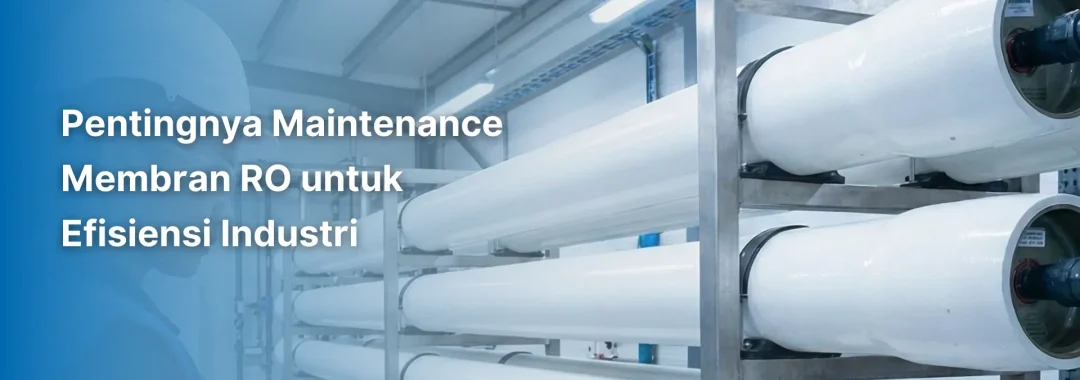
Teknisi industri melakukan maintenance membran RO dan pengecekan sistem desalinasi.

Pentingnya Maintenance Membran RO untuk Efisiensi Industri

Pentingnya Maintenance Membran RO untuk Keandalan Operasional Industri

Dalam ekosistem industri modern, air bukan sekadar utilitas pendukung, melainkan komponen kritis yang menentukan kelancaran produksi. Bagi perusahaan yang mengandalkan teknologi desalinasi atau pengolahan air payau, memahami pentingnya maintenance membran RO (Reverse Osmosis) adalah langkah strategis untuk mengamankan aset dan efisiensi biaya.

PT. Gapura Liqua Solutions (GLS) memahami bahwa tantangan utama bagi manajer fasilitas dan kepala pengadaan saat ini bukan hanya tentang membeli peralatan, tetapi memastikan peralatan tersebut beroperasi secara kontinyu tanpa gangguan. Artikel ini akan membahas secara mendalam risiko pengabaian perawatan dan solusi teknis untuk menjaga performa sistem air Anda.

Risiko Fatal Akibat Mengabaikan Perawatan Membran

Sistem RO bekerja dengan prinsip filtrasi tingkat tinggi yang sangat sensitif terhadap kotoran. Tanpa jadwal perawatan yang ketat, kinerja sistem akan menurun drastis dalam waktu singkat. Oleh karena itu, kesadaran akan pentingnya maintenance membran RO harus dimiliki oleh setiap tim operasional.

Ancaman Fouling dan Scaling pada Kualitas Air

Musuh utama dari membran RO adalah fouling (penumpukan materi organik/biologis) dan scaling (kerak mineral). Ketika kontaminan ini menutupi permukaan membran, pori-pori mikroskopis akan tersumbat. Akibatnya, kualitas air hasil olahan (permeate) akan menurun dan tidak memenuhi standar industri yang ketat.

Kondisi ini sering kali diperparah oleh fluktuasi kualitas air baku. Pemahaman mendalam mengenai BWRO membrane performance sangat diperlukan untuk mengidentifikasi gejala awal penurunan kinerja sebelum terjadi kerusakan permanen pada elemen membran.

Dampak Finansial: Lonjakan Energi dan Umur Aset Pendek

Mengabaikan perawatan tidak hanya berdampak pada kualitas air, tetapi juga pada neraca keuangan perusahaan. Membran yang kotor membutuhkan tekanan pompa yang jauh lebih tinggi untuk mendorong air melewatinya. Hal ini secara langsung menyebabkan lonjakan konsumsi listrik yang signifikan.

Selain itu, penggantian membran secara dini akibat kerusakan permanen memakan biaya investasi (CAPEX) yang besar. Padahal, dengan memahami pentingnya maintenance membran RO, umur pakai membran dapat diperpanjang hingga bertahun-tahun, mengubah biaya tak terduga menjadi pengeluaran operasional (OPEX) yang terencana dan efisien.

Strategi Pemeliharaan untuk Memaksimalkan Kinerja BWRO dan SWRO

Untuk menjaga keandalan sistem, pendekatan reaktif (memperbaiki saat rusak) harus ditinggalkan. Industri harus beralih ke pendekatan preventif dan prediktif.

Implementasi Cleaning-in-Place (CIP) yang Efektif

Salah satu metode perawatan utama adalah Cleaning-in-Place (CIP). Proses ini melibatkan sirkulasi bahan kimia pembersih khusus ke dalam sistem membran untuk melarutkan kerak dan kotoran tanpa perlu membongkar unit.

Keberhasilan CIP sangat bergantung pada ketepatan pemilihan bahan kimia, suhu, dan pH. Prosedur ini krusial untuk mengembalikan flux (laju alir) ke titik optimal. Anda dapat mempelajari lebih lanjut mengenai spesifikasi teknis komponen ini di halaman produk Reverse Osmosis Membrane kami.

Monitoring Rutin sebagai Langkah Preventif

Selain pembersihan fisik, pemantauan data operasional harian seperti tekanan, konduktivitas, dan laju alir adalah wajib. Data ini berfungsi sebagai indikator kesehatan sistem. Deteksi dini terhadap anomali tekanan (differential pressure) memungkinkan teknisi untuk mengambil tindakan korektif sebelum terjadi telescoping atau kerusakan fisik pada membran.

Pendekatan sistematis ini merupakan salah satu keunggulan sistem air RO yang dikelola dengan standar profesional, menjamin pasokan air yang stabil untuk kebutuhan pabrik.

Mengapa Memilih PT. Gapura Liqua Solutions sebagai Mitra Anda?

Memilih mitra untuk perawatan sistem air industri adalah keputusan jangka panjang. PT. Gapura Liqua Solutions (GLS) hadir bukan sekadar sebagai vendor, tetapi sebagai mitra ahli yang memberikan solusi end-to-end.

Kami mengintegrasikan teknologi desalinasi air laut (SWRO) dan pengolahan air payau dengan fokus pada keandalan jangka panjang. Berikut adalah alasan mengapa profesional industri mempercayakan sistem mereka kepada kami:

  1. Keahlian Teknis Mendalam: Tim kami terdiri dari insinyur berpengalaman yang memahami karakteristik air di Indonesia.
  2. Solusi Resource Recovery: Kami tidak hanya memurnikan air, tetapi juga membantu klien mengeksplorasi potensi pemulihan sumber daya dari limbah cair.
  3. Ketersediaan Suku Cadang: Kami menjamin ketersediaan komponen vital untuk meminimalkan downtime. Anda bahkan dapat mengecek ketersediaan komponen pendukung melalui kanal resmi kami di Tokopedia.

Komitmen kami terhadap inovasi dan layanan pelanggan juga tercermin dalam aktivitas proyek terbaru kami, yang dapat Anda lihat melalui pembaruan di LinkedIn Gapura Liqua Solutions. Kepercayaan klien adalah bukti nyata dedikasi kami.

Kesimpulan

Pada akhirnya, keberlanjutan operasional industri sangat bergantung pada keandalan utilitas pendukungnya. Menyadari pentingnya maintenance membran RO adalah langkah awal untuk mencegah kerugian besar di masa depan. Dengan perawatan yang tepat, Anda tidak hanya menghemat biaya energi dan penggantian suku cadang, tetapi juga memastikan lini produksi berjalan tanpa henti.

PT. Gapura Liqua Solutions siap membantu Anda merancang strategi perawatan yang komprehensif, mulai dari audit sistem, penyediaan bahan kimia, hingga kontrak servis berkala. Jangan biarkan masalah air menghambat target produksi Anda.

Apakah Anda siap meningkatkan efisiensi sistem water treatment Anda? Hubungi Kami untuk Konsultasi Gratis

FAQ Section

Q: Seberapa sering maintenance membran RO harus dilakukan? A: Frekuensi perawatan bergantung pada kualitas air baku. Namun, Cleaning-in-Place (CIP) umumnya disarankan ketika terjadi penurunan aliran (flux) sebesar 10-15% atau kenaikan tekanan operasional sebesar 10-15% dari kondisi awal.

Q: Apa tanda-tanda membran RO perlu segera diganti? A: Tanda utamanya adalah ketika proses pembersihan (CIP) tidak lagi mampu mengembalikan performa aliran atau kualitas air (rejection rate) ke standar yang diinginkan, atau terjadi kerusakan fisik pada membran.

Q: Apakah GLS menyediakan layanan kontrak servis untuk perawatan membran? A: Ya, PT. Gapura Liqua Solutions menyediakan layanan Operation & Maintenance (O&M) jangka panjang untuk memastikan sistem Anda dikelola oleh tenaga ahli, sehingga Anda bisa fokus pada bisnis inti.

Q: Mengapa biaya energi sistem RO saya meningkat tajam? A: Peningkatan biaya energi biasanya disebabkan oleh fouling atau scaling pada membran. Pompa harus bekerja lebih keras (tekanan lebih tinggi) untuk menembus membran yang tersumbat, sehingga konsumsi listrik meningkat.

Follow us on Social Media

Facebook Instagram LinkedIn
Industrial water technician inspecting the V-notch weir of a clarifier to ensure the clarifier weir loading rate is within optimal limits.

Clarifier Weir Loading Rate

Clarifier Weir Loading Rate: The Key to Sedimentation Success

In industrial water treatment, the primary clarifier is the workhorse that removes the bulk of suspended solids. However, facility managers often overlook a critical hydraulic parameter: the clarifier weir loading rate. This metric, which measures the volume of water flowing over a specific length of the weir per day, determines whether your system settles solids effectively or allows them to escape.

Ignoring the clarifier weir loading rate can lead to turbulent exit velocities. This turbulence pulls settled sludge back into the clean water stream, compromising the entire treatment chain.

Dangers of Exceeding the Design Weir Loading

When the clarifier weir loading rate is too high, the suction velocity at the outlet exceeds the settling velocity of the particles. Instead of sinking, light flocs are drawn out of the tank. This “carryover” results in high turbidity effluent that fails to meet design specifications.

Impact on Downstream Filtration Assets

The consequences of poor clarification cascade downstream. Excess solids rapidly clog media filters and foul cartridge filters. Ultimately, this load reaches the Reverse Osmosis Membrane. Particulate fouling significantly degrades BWRO membrane performance, necessitating frequent cleaning and shortening asset life.

For facilities managing sludge, efficient upstream separation is also vital for downstream processes like dewatering. You can learn more about this in our guide on sludge dewatering equipment.

Optimizing Clarifier Weir Loading Rate for Industry

Standard engineering practices typically recommend a clarifier weir loading rate between 120 and 370 m³/m·day for conventional settling tanks. Keeping the rate within this range ensures a laminar, gentle flow that allows gravity to do its work.

Importance of Weir Leveling and V-Notch Design

A common issue in Indonesian factories is uneven weirs due to ground settling or poor installation. If a weir is not level, flow concentrates in low spots, creating localized high-velocity zones that far exceed the design clarifier weir loading rate.

To mitigate this, V-notch weirs are the industry standard. They provide a predictable discharge profile and maintain uniform flow distribution around the tank perimeter, even if the tank level fluctuates slightly.

Retrofitting Strategies for Better Hydraulics

If your facility is struggling with carryover, you may not need a new tank. Often, correcting the clarifier weir loading rate can be achieved by installing Stamford baffles or extending the weir length using inboard launders.

Additionally, ensuring proper separation in the initial stages reduces the load on secondary systems. For industries handling heavy solids, reviewing applications like industrial decant tanks can provide insights into managing batch settling effectively.

Partnering with Gapura Liqua Solutions

Hydraulic design requires precision. PT. Gapura Liqua Solutions (GLS) offers expert engineering services to audit and optimize your weir loading rate. We analyze your current flow conditions and implement modifications to ensure peak performance.

From hydraulic troubleshooting to supplying essential components via our official Tokopedia store, GLS is your partner in water security. See our engineering teams in action via our project updates on LinkedIn.

Conclusion

Ultimately, clear water starts with calm hydraulics. Managing your weir loading rate is the most cost-effective way to prevent solids carryover and protect your expensive membranes.

Therefore, ensure your primary treatment is up to the task. Contact PT. Gapura Liqua Solutions today for a hydraulic assessment of your clarifier system.

FAQ

Q: How do you calculate clarifier weir loading rate? A: It is calculated by dividing the total daily flow (m³/day) by the total length of the overflow weir (meters). The formula is: Clarifier Weir Loading Rate = Q / L.

Q: What is the typical limit for weir loading? A: For most industrial settling tanks, we aim for a weir loading rate below 370 m³/m·day. If light flocs like alum or biological sludge are present, a lower rate (e.g., <250 m³/m·day) is recommended to prevent carryover.

Q: Can I increase the capacity of my clarifier without building a new one? A: Potentially. You can increase the effective weir length by installing “finger weirs” or serpentine weirs inside the tank. This reduces the weir loading rate per meter, allowing you to push more flow through the system without increasing exit velocity.

Q: Why is my weir flow uneven? A: Uneven flow usually means the weir plate is not level. Even a few millimeters of difference can cause water to rush to the low side, creating a high-velocity current that pulls sludge with it. Re-leveling the V-notch plates is the solution.

Follow us on Social Media

Facebook Gapura Liqua - clarifier weir loading rate Instagram Gapura Liqua - clarifier weir loading rate LinkedIn Gapura Liqua - clarifier weir loading rate
Large industrial manufacturing plant with smoke stacks, illustrating the operational scale that benefits from an Industrial Management Service Agreement by Gapura Liqua Solutions.

Industrial Management Service Agreement Value

Industrial Management Service Agreement: Securing Your Water Operations

For facility managers and procurement heads in Indonesia, the stability of utilities is non-negotiable. However, managing a complex Seawater Reverse Osmosis (SWRO) plant or a wastewater treatment facility in-house often becomes a distraction from core business activities. This is where an Industrial Management Service Agreement becomes a critical strategic asset.

Rather than struggling with fluctuating maintenance costs and technical staffing issues, forward-thinking companies are leveraging MSAs to ensure reliability. An Industrial Management Service Agreement is not just a contract; it is a partnership that guarantees water availability while optimizing operational expenses.

Understanding the Industrial Management Service Agreement

An Industrial Management Service Agreement (MSA) defines a long-term relationship between a facility owner and a specialized service provider. In the context of water treatment, this agreement transfers the responsibility for day-to-day operations, maintenance, and performance monitoring to experts.

Unlike simple ad-hoc repair services, an MSA focuses on comprehensive asset management. It encompasses everything from routine monitoring to complex troubleshooting, ensuring that the water treatment plant operates at peak efficiency. By adopting an Industrial Management Service Agreement, companies effectively shift the burden of operational risk to a partner equipped to handle it.

Why Implement an Industrial Management Service Agreement?

The decision to outsource operations through an MSA is often driven by the need for financial stability and risk mitigation.

Transforming Variable Costs into Fixed Costs

One of the most significant advantages of an Industrial Management Service Agreement is financial predictability. In-house management often faces unexpected spikes in costs due to emergency repairs, sudden spare part requirements, or inefficient chemical usage.

An MSA typically structures these costs into a fixed monthly fee. This allows procurement departments to forecast budgets accurately, eliminating unpleasant surprises at the end of the fiscal year. Furthermore, professional management often reduces energy and chemical consumption, lowering the overall Total Cost of Ownership (TCO).

Mitigating Technical and Compliance Risks

Water treatment standards in Indonesia are becoming increasingly stringent. Failure to meet effluent standards can result in severe penalties, including a downgrade in PROPER ratings. An Industrial Management Service Agreement includes strict Service Level Agreements (SLAs) regarding water quality.

This means the service provider is contractually obligated to deliver water that meets specific parameters. Consequently, the risk of non-compliance is shifted from the facility owner to the specialist partner, ensuring peace of mind regarding environmental regulations.

The Value of Specialized Expertise

Modern water treatment technologies, such as high-pressure SWRO and Ultrafiltration, require specialized knowledge. Maintaining a team of certified engineers in-house is both difficult and expensive.

Through an Industrial Management Service Agreement, your facility gains immediate access to a pool of experts. These professionals stay updated with the latest technologies, such as advanced Reverse Osmosis Membrane cleaning techniques and energy recovery optimization. This expertise ensures that your assets are not just running, but are being optimized to extend their lifespan.

Partnering with Gapura Liqua Solutions

PT. Gapura Liqua Solutions (GLS) understands that every facility has unique needs. We do not offer a one-size-fits-all solution. Instead, we tailor every Industrial Management Service Agreement to align with your specific operational goals and risk appetite.

From full comprehensive operations to supervision-only contracts, GLS provides the technical backbone your business needs. We manage the supply chain for critical consumables and spare parts, many of which are readily available through our official store on Tokopedia, ensuring minimal downtime.

Conclusion

In a competitive industrial landscape, operational reliability is the foundation of success. An Industrial Management Service Agreement offers the most effective path to securing your water supply, controlling costs, and managing risks.

Do not let water utility challenges hinder your production targets. Partner with a trusted expert who prioritizes your operational continuity. Contact PT. Gapura Liqua Solutions today to discuss how we can structure an MSA that drives value for your business.

FAQ

Q: What is the primary difference between a warranty and an MSA?

A: A warranty covers equipment defects for a limited time. In contrast, an Industrial Management Service Agreement covers the ongoing performance, labor, and maintenance of the entire system, ensuring it operates correctly throughout the contract duration.

Q: Can an MSA help with environmental compliance in Indonesia?

A: Yes. A robust MSA includes performance guarantees that align with Indonesian environmental regulations (such as PROPER). The service provider assumes the responsibility for maintaining effluent quality within legal limits.

Q: Does GLS provide spare parts under the MSA?

A: This depends on the specific contract structure. We offer comprehensive MSAs that include all spare parts and chemicals, as well as “labor-plus-supervision” models where parts are billed separately.

Q: Is an MSA suitable for older water treatment plants?

A: Absolutely. In fact, older plants often benefit most from an Industrial Management Service Agreement. Our experts can optimize aging assets, perform necessary retrofits, and extend the remaining useful life of the equipment.

Two engineers in safety gear reviewing a clipboard in front of a water treatment plant, symbolizing the reliability of an Industrial Management Service Agreement.

Secure your operations and transfer risk. An Industrial Management Service Agreement ensures your water systems are managed by experts, allowing you to focus on production.

Follow us on Social Media

Facebook Instagram LinkedIn