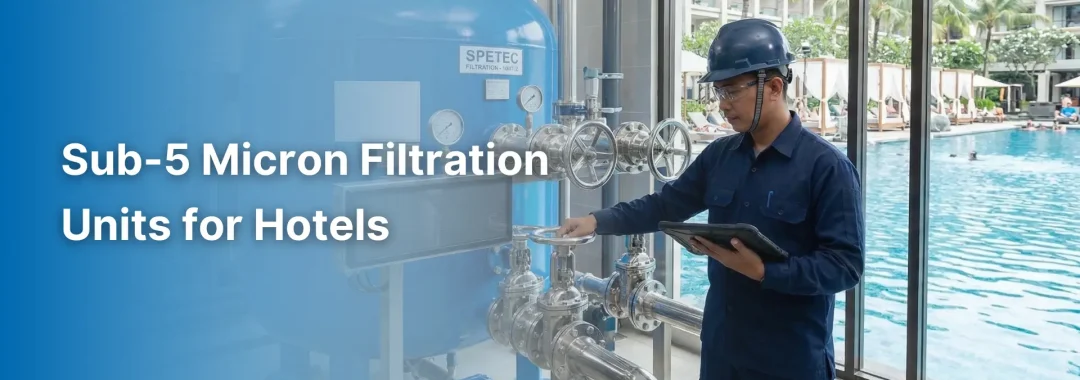
A technical cross-section of sub-5 micron filtration units utilizing AFM to provide crystal-clear water for a luxury resort.

Sub-5 Micron Filtration Units for Hotels

Sub-5 Micron Filtration Units: Why Modern Luxury Hospitality Demands Precision

In the competitive landscape of luxury hospitality, “perfection” is a standard, not a goal. While high-end resorts focus heavily on interior aesthetics and service, the silent engine of the guest experience—the water utility—is often overlooked. Unfortunately, many 5-star properties still rely on 50-year-old sand filtration technology. This reliance creates a significant vulnerability. Transitioning to professional sub-5 micron filtration units is no longer a luxury; it is a critical necessity to protect assets and maintain brand prestige.

Standard silica sand filters generally capture particles down to 20 or 40 microns. Consequently, millions of microscopic particles and biological precursors pass through the system, eventually damaging expensive downstream infrastructure.

The Failure of Standard Sand Filtration in Luxury Standards

The hospitality sector in Indonesia, particularly in high-demand areas like Bali and Jakarta, faces unique raw water challenges. Traditional sand filters create a “leaking bucket” for hotel profits.

The 20-Micron Barrier and Bio-fouling Risks

Sand is not just physically limited; it is biologically unstable. Within weeks, bacteria colonize the sand grains, creating a biofilm that leads to “channeling.” This allows unfiltered water to bypass the media entirely. Specifically, sand cannot capture the fine particles that cause cloudy water or the organic precursors that react with chlorine to create trichloramines. Therefore, hotels using sand often suffer from that unpleasant “pool smell” and skin irritation among guests. By contrast, implementing sub-5 micron filtration units provides a bioactive, precise barrier that standard sand simply cannot match.

Precision Water: The Power of Sub-5 Micron Filtration Units

To achieve truly “Precision Water,” facility managers must utilize media that is physically and chemically superior. The shift toward Activated Filter Media (AFM) represents the current gold standard in the industry.

Activated Filter Media (AFM) vs. Traditional Mined Sand

AFM is an upcycled, activated glass media that possesses a permanent negative surface charge. While sand traps dirt mechanically, AFM attracts it electrostatically. Consequently, sub-5 micron filtration units utilizing AFM can remove up to 95% of all particles down to 1 micron. This level of purity is virtually impossible for silica sand. For a deeper technical analysis of these differences, you can review our AFM S vs NG Media comparison.

Protecting High-Value Assets: Chillers, Boilers, and RO Membranes

Effective filtration is the most robust insurance policy for your hotel’s mechanical room. When fine particulates bypass primary filtration, they cause scale buildup in chillers and boilers, leading to massive energy inefficiency. Moreover, they cause rapid fouling of your Reverse Osmosis Membrane. Ensuring consistent BWRO membrane performance requires the ultra-clean feed water that only sub-5 micron filtration units can provide. By removing the load before it hits the RO, you drastically extend the life of your membranes and reduce the frequency of expensive chemical cleanings.

Enhancing the Guest Experience: Beyond Aesthetics

In a luxury setting, water must be more than “safe”—it must be “superior.” Sub-5 micron filtration results in water with significantly lower turbidity, creating a crystal-clear appearance in pools and spas. Furthermore, because these units remove more organic matter, the demand for chlorine drops by up to 30%. This reduces the chemical smell and provides a gentler experience for guests. Understanding the keunggulan sistem air RO alongside precision filtration ensures that every touchpoint, from the shower to the swimming pool, reflects 5-star quality.

Partnering with Gapura Liqua Solutions for Operational Continuity

Managing a modern resort requires a partner who understands the total water loop. PT. Gapura Liqua Solutions (GLS) provides end-to-end engineering and long-term operations to ensure your facility remains compliant and efficient. We specialize in high selective filter media that protects your ROI and enhances guest satisfaction.

Our proven expertise is visible in our latest project updates on LinkedIn, where we showcase the transformation of hospitality utilities across Indonesia. Additionally, for immediate maintenance needs, we offer premium filtration components through our official Tokopedia store.

Conclusion: The Future of Hospitality Water Management

Ultimately, the choice of filtration technology determines the lifespan of your facility’s most expensive assets. By adopting sub-5 micron filtration units, you protect your physical infrastructure, reduce water and chemical waste, and deliver a guest experience that meets modern luxury standards. PT. Gapura Liqua Solutions remains the ideal partner for the Indonesian hospitality sector, explicitly linking advanced resource recovery with long-term reliability.

Stop washing your hotel’s profits away with outdated sand technology. Contact PT. Gapura Liqua Solutions today to audit your utility room and implement a precision water solution.

FAQ

Q: Can sub-5 micron filtration units save money on electricity? A: Yes. By preventing fine particulates and scale from reaching your chillers and boilers, the equipment operates at peak heat-exchange efficiency, reducing energy consumption by up to 10–15%.

Q: Is it difficult to switch from sand to AFM in our hotel? A: Not at all. Sub-5 micron filtration units using AFM act as a “drop-in” replacement. You simply remove the old sand and replace it with the activated glass media without needing to change your existing filter tanks or pumps.

Q: How does this technology help with “Green Hotel” certifications? A: Advanced media reduces backwash water waste by up to 50% and chemical usage by 30%. These metrics contribute directly to EarthCheck or Green Globe certification requirements.

Q: Does GLS provide maintenance for these filtration systems? A: Absolutely. PT. Gapura Liqua Solutions offers Management Service Agreements to ensure your systems perform optimally year-round.
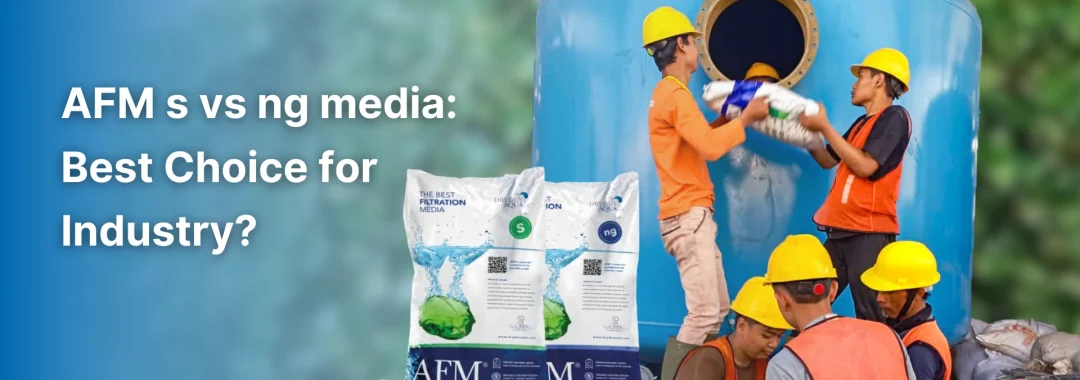
Gapura Liqua Solutions technicians loading AFM s vs ng media bags into an industrial filtration tank, showcasing the difference between standard and next-generation activated filter media.

AFM s vs ng media: Best Choice for Industry?

AFM s vs ng media: Selecting the Right Activated Filter Media for Industrial Use

For industrial facility managers in Indonesia, water treatment is not just about clarity; it is about operational continuity. The failure of a pre-treatment system often leads to rapid fouling of Reverse Osmosis (RO) membranes, resulting in unplanned downtime and skyrocketing operational costs. As the industry moves away from silica sand, the debate now centers on AFM s vs ng media.

Choosing the correct grade of Activated Filter Media (AFM) is critical for optimizing your Water Treatment Plant (WTP) or Desalination (SWRO) system. This article breaks down the technical differences to help you make an informed procurement decision.

Understanding the Core Technology: What is AFM?

Before diving into the AFM s vs ng media comparison, it is essential to understand why AFM outperforms traditional sand. Unlike crushed glass or silica sand, AFM is manufactured from processed green and brown glass that undergoes a specific chemical activation process.

This process increases the surface area up to 300 times compared to sand and creates a “self-sterilizing” surface. This feature prevents the growth of biofilm—the slimy bacterial layer that causes channeling and inconsistent filtration in standard sand filters.

Detailed Breakdown: AFM s vs ng media

The manufacturer, Dryden Aqua, produces two distinct types of activated media. While both offer superior filtration over sand, they serve different technical requirements.

AFM Grade s (Standard): The Negatively Charged Defender

AFM ‘s’ (Standard) is the established benchmark for high-performance filtration. During manufacturing, the glass surface acquires a strong negative zeta potential.

  • Mechanism: The negative charge repels bacteria, preventing them from adhering to the media. This prevents biofilm formation, ensuring that the filter bed remains clean and predictable.
  • Performance: It effectively removes heavy metals and reduces turbidity.
  • Best Use: Swimming pools, aquaculture, and standard pre-filtration where biofouling control is the primary concern.

AFM Grade ng (Next Generation): The Hydrophobic Specialist

The ‘ng’ stands for “Next Generation.” This media undergoes a different activation process to make the surface hydrophobic (water-repelling) while maintaining a neutral charge.

  • Mechanism: Because organic contaminants and microplastics are typically non-polar (hydrophobic), they are attracted to the hydrophobic surface of AFM ng like a magnet.
  • Performance: It offers a finer filtration rating. While AFM s filters down to 4 microns, AFM ng achieves a filtration rating of 1 micron.
  • Best Use: Industrial wastewater, tertiary treatment, and protection of high-value SWRO membranes where removing organics and microplastics is non-negotiable.

Comparative Performance: The Verdict

To visualize the AFM s vs ng media difference, consider this comparison of capabilities relevant to Indonesian industrial standards:

FeatureAFM s (Standard)AFM ng (Next Gen)
Surface ChemistryNegatively ChargedHydrophobic (Neutral)
Filtration Rating~4 Microns1 Micron
Organic RemovalGoodExcellent
Microplastic RemovalModerateSuperior
Bio-ResistanceHighHigh
ApplicationGeneral Water TreatmentCritical RO Pre-treatment

Why Your Choice Matters for RO Protection

For plants utilizing Seawater Reverse Osmosis (SWRO) or Brackish Water Reverse Osmosis (BWRO), the Silt Density Index (SDI) is a key performance indicator. High SDI values effectively kill RO membranes.

By utilizing AFM ng, you can significantly lower the SDI compared to sand or standard glass. The removal of sub-micron particles and organics means your RO membranes require less frequent Chemical Cleaning (CIP). This directly extends the lifespan of your membranes, which you can source directly through our Reverse Osmosis Membrane catalog.

Furthermore, reliable pre-treatment reduces the energy load on high-pressure pumps, contributing to lower operational expenses (OPEX).

Case Application: When to Upgrade to ng?

If your facility faces strict environmental regulations regarding microplastics or deals with high organic loads (TOC), the upgrade to AFM ng is justified. For example, textile or pharmaceutical plants in Java often struggle with complex wastewater streams. In these scenarios, the superior adsorption capacity of AFM ng provides the necessary buffer to ensure compliant effluent discharge.

However, procurement involves more than just buying media; it requires engineering the system for backwash efficiency and flow rates.

Sustainable Partnership with Gapura Liqua Solutions

At PT. Gapura Liqua Solutions, we do not just supply media; we engineer solutions. Whether you are retrofitting an existing sand filter or designing a new desalination plant, our team ensures that the AFM s vs ng media decision aligns with your long-term commercial goals.

We provide end-to-end support, from selecting the right media grade to full-scale engineering and maintenance. For urgent replacements or pilot tests, you can also view our ready stock components on Tokopedia.

Conclusion

The debate of AFM s vs ng media ultimately depends on your water quality targets. AFM s offers robust bio-resistance for general applications, while AFM ng delivers precision filtration for critical industrial processes and RO protection.

Do not gamble with water quality. Secure your operation’s reliability today. Contact PT. Gapura Liqua Solutions for a technical consultation and ensure your filtration system is built for the future.

Q: Can I mix AFM s and AFM ng in the same filter vessel?

A: Generally, it is recommended to use a single grade for consistent performance. However, layered configurations exist. Consult with GLS engineers to determine if a mixed bed is suitable for your specific vessel design.

Q: How often does AFM media need to be replaced?

A: Unlike silica sand, which requires replacement every 3–5 years, AFM can last over 10 years due to its resistance to biofouling and mechanical attrition, offering a better long-term ROI.

Q: Does AFM ng require special backwashing procedures?

A: AFM ng utilizes standard backwash protocols but is more efficient than sand. It requires significantly less water to clean—up to 50% less backwash water consumption is common, saving valuable process water.

Q: Is AFM suitable for seawater desalination pre-treatment?

A: Yes, it is ideal. AFM ng is specifically used in SWRO plants to lower SDI (Silt Density Index) below 3, which significantly protects sensitive RO membranes from particulate fouling.

Follow us on Social Media

Facebook Instagram LinkedIn