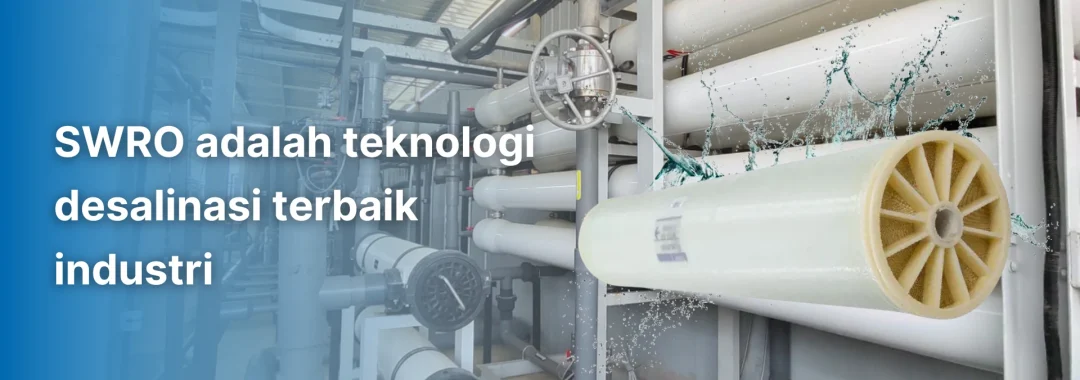
Industrial SWRO system featuring white pressure vessels and a cutaway reverse osmosis membrane element, illustrating why SWRO adalah teknologi desalinasi (SWRO is desalination technology) for modern industry by Gapura Liqua Solutions.

SWRO adalah teknologi desalinasi terbaik industri

SWRO adalah Teknologi Desalinasi Modern untuk Industri Indonesia

Indonesia adalah negara maritim dengan garis pantai terpanjang kedua di dunia. Namun, ironisnya, banyak fasilitas industri, resort, dan pembangkit listrik di pesisir yang masih kesulitan mendapatkan akses air tawar yang layak. Di sinilah relevansi teknologi Sea Water Reverse Osmosis (SWRO) meningkat tajam. Secara sederhana, SWRO adalah teknologi desalinasi yang memanfaatkan proses osmosis balik untuk memisahkan garam dari air laut, menghasilkan air bersih yang siap pakai.

Bagi Head of Procurement maupun Facility Manager, memahami definisi dan mekanisme SWRO bukan sekadar wawasan teknis, melainkan langkah awal strategis untuk mengamankan utilitas perusahaan dan menekan biaya operasional jangka panjang.

Memahami Cara Kerja SWRO Secara Teknis

Untuk memahami mengapa sistem ini begitu efektif, kita harus melihat melampaui definisi dasarnya. SWRO adalah teknologi desalinasi yang bekerja dengan membalikkan fenomena alam osmosis.

Peran Membran Semipermeabel

Dalam proses osmosis alami, air murni akan mengalir ke larutan yang lebih pekat (air asin) untuk menyeimbangkan konsentrasi. Sistem SWRO bekerja sebaliknya. Dengan menggunakan pompa tekanan tinggi (High Pressure Pump), air laut didorong paksa melewati membran semipermeabel.

Membran ini memiliki pori-pori mikroskopis (sekitar 0,0001 mikron) yang hanya memungkinkan molekul air lolos, sementara garam terlarut, bakteri, dan partikel organik tertahan. Hasilnya adalah dua aliran terpisah: permeate (air tawar murni) dan brine (air garam konsentrat). Kualitas output ini sangat bergantung pada pemilihan Reverse Osmosis Membrane yang tepat.

Mengapa SWRO adalah Teknologi Desalinasi Paling Efisien?

Di masa lalu, desalinasi dianggap sebagai opsi terakhir karena boros energi. Namun, persepsi tersebut sudah usang. Saat ini, SWRO adalah teknologi desalinasi dengan jejak karbon terendah dibandingkan metode distilasi termal.

Penghematan Energi dengan ERD

Kunci efisiensi modern terletak pada perangkat yang disebut Energy Recovery Device (ERD). Alat ini menangkap energi tekanan dari aliran brine yang dibuang dan mentransfernya kembali ke aliran air laut yang masuk. Akibatnya, konsumsi listrik dapat ditekan hingga 30-50%.

Inovasi ini menjadikan biaya produksi per meter kubik air SWRO jauh lebih kompetitif dibandingkan biaya membeli air tangki curah yang harganya fluktuatif dan suplainya tidak menentu.

Kualitas Air yang Konsisten dan Terukur

Selain efisiensi, SWRO adalah teknologi desalinasi yang menawarkan konsistensi. Tidak seperti air tanah yang kualitasnya bisa berubah akibat intrusi air laut atau pencemaran musim hujan, sistem SWRO menghasilkan air dengan parameter TDS (Total Dissolved Solids) yang stabil dan dapat diatur sesuai kebutuhan industri, baik untuk air proses, air umpan boiler, maupun kebutuhan domestik resort.

Tantangan Operasional dan Solusi Mitigasi

Meskipun canggih, sistem SWRO memiliki musuh alami: fouling dan korosi. Kegagalan dalam mengantisipasi hal ini sering kali berujung pada kerusakan aset yang mahal.

Mencegah Fouling pada Membran

Air laut mengandung mikroorganisme dan partikel koloid yang dapat menyumbat pori-pori membran, fenomena yang disebut biofouling. Oleh karena itu, tahap pre-treatment menjadi krusial. Sistem yang dirancang oleh PT. Gapura Liqua Solutions selalu mengintegrasikan filtrasi bertahap untuk memastikan air yang masuk ke membran RO sudah memenuhi syarat Silt Density Index (SDI) yang aman.

Ketahanan Material Terhadap Korosi

Karena berurusan dengan air asin bertekanan tinggi, risiko korosi sangat besar. Sistem SWRO standar industri harus menggunakan material khusus seperti Super Duplex Stainless Steel untuk pipa tekanan tinggi. Penggunaan material murah mungkin menghemat CAPEX di awal, namun akan melambungkan OPEX akibat kebocoran dan penggantian komponen yang sering.

Bermitra dengan Ahli Desalinasi Terpercaya

Mengimplementasikan sistem desalinasi adalah investasi strategis. Kesalahan dalam desain engineering atau pemilihan material dapat berakibat fatal pada kontinuitas bisnis Anda.

PT. Gapura Liqua Solutions (GLS) memahami bahwa SWRO adalah teknologi desalinasi yang membutuhkan presisi. Sebagai penyedia solusi Total Water Solutions, kami tidak hanya menjual alat. Kami memberikan layanan end-to-end, mulai dari desain sistem, instalasi, hingga kontrak pemeliharaan jangka panjang. Selain itu, untuk kebutuhan suku cadang mendesak, kami menyediakan akses mudah melalui toko resmi kami di Tokopedia.

Kesimpulan

Kemandirian air adalah fondasi operasional yang kuat. Dengan kemajuan teknologi saat ini, SWRO adalah teknologi desalinasi yang paling logis dan ekonomis untuk diterapkan di Indonesia.

Jangan biarkan ketidakpastian pasokan air menghambat potensi bisnis Anda. Pastikan Anda bermitra dengan ahli yang mengerti seluk-beluk air laut Indonesia. Hubungi PT. Gapura Liqua Solutions sekarang untuk konsultasi teknis dan solusi air bersih yang terpercaya.

Q: Apa perbedaan utama antara SWRO dan BWRO?

A: Perbedaan utamanya terletak pada kadar garam (salinitas) air baku. SWRO adalah teknologi desalinasi untuk air laut dengan TDS tinggi (>30.000 ppm) dan memerlukan tekanan sangat tinggi (55-70 bar). BWRO (Brackish Water Reverse Osmosis) digunakan untuk air payau dengan TDS lebih rendah dan tekanan operasional yang lebih rendah.

Q: Apakah air hasil SWRO aman untuk diminum?

A: Air permeate dari proses SWRO sangat murni, bahkan mineralnya sangat minim. Untuk dijadikan air minum yang sehat dan enak, air tersebut harus melalui proses pasca-pengolahan (post-treatment) atau remineralisasi untuk menyeimbangkan pH dan menambahkan mineral penting.

Q: Berapa lama masa pakai membran SWRO?

A: Dengan perawatan yang tepat, termasuk pre-treatment yang baik dan prosedur pembersihan kimia (CIP) rutin, membran SWRO biasanya bertahan antara 3 hingga 5 tahun sebelum perlu diganti.

Q: Apakah sistem SWRO boros listrik?

A: Tidak lagi. Dengan penggunaan Energy Recovery Device (ERD), sistem SWRO modern sangat efisien. Konsumsi energinya kini berkisar antara 3-4 kWh per meter kubik air yang dihasilkan, jauh lebih rendah dibandingkan teknologi satu dekade lalu.

Follow us on Social Media

Facebook Instagram LinkedIn

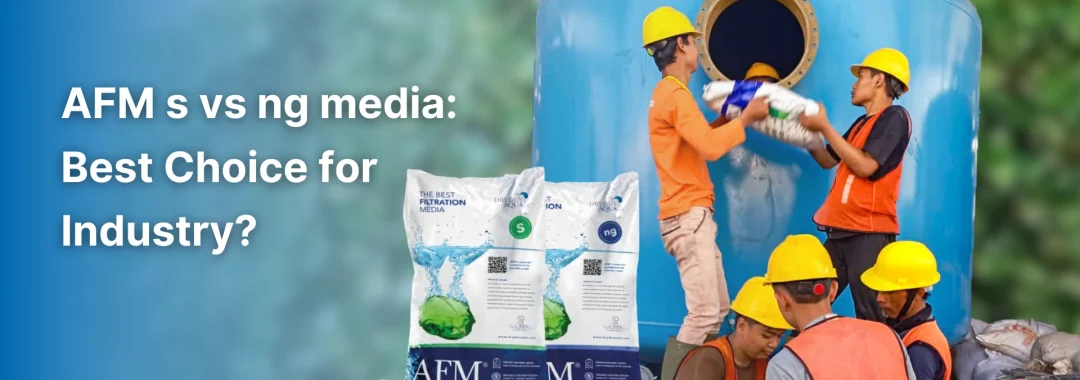
Gapura Liqua Solutions technicians loading AFM s vs ng media bags into an industrial filtration tank, showcasing the difference between standard and next-generation activated filter media.

AFM s vs ng media: Best Choice for Industry?

AFM s vs ng media: Selecting the Right Activated Filter Media for Industrial Use

For industrial facility managers in Indonesia, water treatment is not just about clarity; it is about operational continuity. The failure of a pre-treatment system often leads to rapid fouling of Reverse Osmosis (RO) membranes, resulting in unplanned downtime and skyrocketing operational costs. As the industry moves away from silica sand, the debate now centers on AFM s vs ng media.

Choosing the correct grade of Activated Filter Media (AFM) is critical for optimizing your Water Treatment Plant (WTP) or Desalination (SWRO) system. This article breaks down the technical differences to help you make an informed procurement decision.

Understanding the Core Technology: What is AFM?

Before diving into the AFM s vs ng media comparison, it is essential to understand why AFM outperforms traditional sand. Unlike crushed glass or silica sand, AFM is manufactured from processed green and brown glass that undergoes a specific chemical activation process.

This process increases the surface area up to 300 times compared to sand and creates a “self-sterilizing” surface. This feature prevents the growth of biofilm—the slimy bacterial layer that causes channeling and inconsistent filtration in standard sand filters.

Detailed Breakdown: AFM s vs ng media

The manufacturer, Dryden Aqua, produces two distinct types of activated media. While both offer superior filtration over sand, they serve different technical requirements.

AFM Grade s (Standard): The Negatively Charged Defender

AFM ‘s’ (Standard) is the established benchmark for high-performance filtration. During manufacturing, the glass surface acquires a strong negative zeta potential.

  • Mechanism: The negative charge repels bacteria, preventing them from adhering to the media. This prevents biofilm formation, ensuring that the filter bed remains clean and predictable.
  • Performance: It effectively removes heavy metals and reduces turbidity.
  • Best Use: Swimming pools, aquaculture, and standard pre-filtration where biofouling control is the primary concern.

AFM Grade ng (Next Generation): The Hydrophobic Specialist

The ‘ng’ stands for “Next Generation.” This media undergoes a different activation process to make the surface hydrophobic (water-repelling) while maintaining a neutral charge.

  • Mechanism: Because organic contaminants and microplastics are typically non-polar (hydrophobic), they are attracted to the hydrophobic surface of AFM ng like a magnet.
  • Performance: It offers a finer filtration rating. While AFM s filters down to 4 microns, AFM ng achieves a filtration rating of 1 micron.
  • Best Use: Industrial wastewater, tertiary treatment, and protection of high-value SWRO membranes where removing organics and microplastics is non-negotiable.

Comparative Performance: The Verdict

To visualize the AFM s vs ng media difference, consider this comparison of capabilities relevant to Indonesian industrial standards:

FeatureAFM s (Standard)AFM ng (Next Gen)
Surface ChemistryNegatively ChargedHydrophobic (Neutral)
Filtration Rating~4 Microns1 Micron
Organic RemovalGoodExcellent
Microplastic RemovalModerateSuperior
Bio-ResistanceHighHigh
ApplicationGeneral Water TreatmentCritical RO Pre-treatment

Why Your Choice Matters for RO Protection

For plants utilizing Seawater Reverse Osmosis (SWRO) or Brackish Water Reverse Osmosis (BWRO), the Silt Density Index (SDI) is a key performance indicator. High SDI values effectively kill RO membranes.

By utilizing AFM ng, you can significantly lower the SDI compared to sand or standard glass. The removal of sub-micron particles and organics means your RO membranes require less frequent Chemical Cleaning (CIP). This directly extends the lifespan of your membranes, which you can source directly through our Reverse Osmosis Membrane catalog.

Furthermore, reliable pre-treatment reduces the energy load on high-pressure pumps, contributing to lower operational expenses (OPEX).

Case Application: When to Upgrade to ng?

If your facility faces strict environmental regulations regarding microplastics or deals with high organic loads (TOC), the upgrade to AFM ng is justified. For example, textile or pharmaceutical plants in Java often struggle with complex wastewater streams. In these scenarios, the superior adsorption capacity of AFM ng provides the necessary buffer to ensure compliant effluent discharge.

However, procurement involves more than just buying media; it requires engineering the system for backwash efficiency and flow rates.

Sustainable Partnership with Gapura Liqua Solutions

At PT. Gapura Liqua Solutions, we do not just supply media; we engineer solutions. Whether you are retrofitting an existing sand filter or designing a new desalination plant, our team ensures that the AFM s vs ng media decision aligns with your long-term commercial goals.

We provide end-to-end support, from selecting the right media grade to full-scale engineering and maintenance. For urgent replacements or pilot tests, you can also view our ready stock components on Tokopedia.

Conclusion

The debate of AFM s vs ng media ultimately depends on your water quality targets. AFM s offers robust bio-resistance for general applications, while AFM ng delivers precision filtration for critical industrial processes and RO protection.

Do not gamble with water quality. Secure your operation’s reliability today. Contact PT. Gapura Liqua Solutions for a technical consultation and ensure your filtration system is built for the future.

Q: Can I mix AFM s and AFM ng in the same filter vessel?

A: Generally, it is recommended to use a single grade for consistent performance. However, layered configurations exist. Consult with GLS engineers to determine if a mixed bed is suitable for your specific vessel design.

Q: How often does AFM media need to be replaced?

A: Unlike silica sand, which requires replacement every 3–5 years, AFM can last over 10 years due to its resistance to biofouling and mechanical attrition, offering a better long-term ROI.

Q: Does AFM ng require special backwashing procedures?

A: AFM ng utilizes standard backwash protocols but is more efficient than sand. It requires significantly less water to clean—up to 50% less backwash water consumption is common, saving valuable process water.

Q: Is AFM suitable for seawater desalination pre-treatment?

A: Yes, it is ideal. AFM ng is specifically used in SWRO plants to lower SDI (Silt Density Index) below 3, which significantly protects sensitive RO membranes from particulate fouling.

Follow us on Social Media

Facebook Instagram LinkedIn
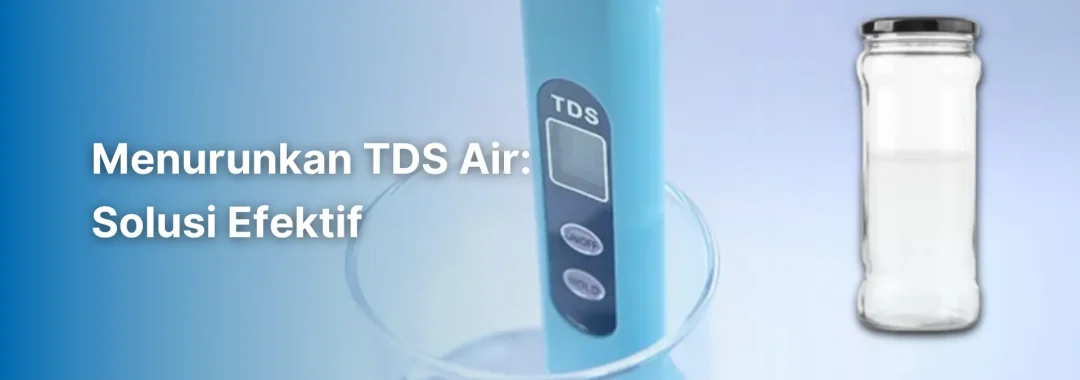
Alat TDS meter untuk mengukur kualitas air dan membantu proses menurunkan TDS air

Menurunkan TDS Air: Solusi Efektif

Cara Efektif Menurunkan TDS Air untuk Kualitas Air yang Lebih Baik

TDS (Total Dissolved Solids) adalah jumlah total zat padat terlarut dalam air, seperti mineral, garam, logam berat, dan senyawa organik. Ketika TDS terlalu tinggi, kualitas air menurun—baik dalam hal rasa, kejernihan, maupun keamanan untuk dikonsumsi atau dipakai dalam proses industri.
Oleh karena itu, memahami cara menurunkan TDS air menjadi hal yang sangat penting.


Apa Penyebab TDS Tinggi?

Air dengan TDS tinggi umumnya dipengaruhi oleh:

  • Kandungan mineral alamiah seperti kalsium, magnesium, dan natrium
  • Kontaminasi dari industri atau limbah rumah tangga
  • Sistem perpipaan yang korosif
  • Garam terlarut pada air tanah atau air payau
  • Bahan organik dan anorganik terlarut

Menurut laporan dari WHO tentang kualitas air minum, TDS yang tinggi dapat memengaruhi rasa air, efektivitas sabun, dan bahkan tingkat korosi pada peralatan.


Cara Menurunkan TDS Air yang Paling Efektif

Ada beberapa metode yang dapat digunakan untuk menurunkan TDS secara signifikan, bergantung pada kebutuhan rumah tangga, komersial, maupun industri.


1. Reverse Osmosis (RO) — Metode Paling Efektif

Teknologi Reverse Osmosis mampu menurunkan TDS hingga lebih dari 95%, menggunakan membran semipermeabel untuk menyaring zat terlarut.

RO umum digunakan pada:

  • Air minum rumah tangga
  • Industri makanan dan minuman
  • Industri farmasi
  • Air umpan boiler

Untuk menjaga performa membran RO tetap optimal, penting menggunakan bahan kimia seperti Reverse Osmosis Cleaning Agent agar membran tidak tersumbat oleh scaling dan fouling.


2. Menggunakan Resin Ion Exchange

Metode ini bekerja dengan menukar ion dalam air—misalnya kalsium dan magnesium—dengan ion natrium atau hidrogen.
Paling efektif untuk:

  • Air industri
  • Softening (pelunakan air)
  • Pre-treatment sebelum membran RO

3. Distilasi

Distilasi menguapkan air kemudian mengembunkan uap tersebut, sehingga meninggalkan zat padat terlarut.
Metode ini efektif tetapi memerlukan energi lebih besar.


4. Filtrasi Multi-Stage

Filtrasi berlapis (sand filter, carbon filter, AFM filter) dapat membantu menurunkan beberapa jenis TDS, terutama partikel padat dan organik.

AFM sangat efektif meningkatkan kualitas filtrasi sebelum proses RO. Lihat juga produk internal seperti Liqua-Zen Z468 yang berfungsi meningkatkan performa sistem pengolahan air.


5. Chemical Treatment untuk Menurunkan TDS Air

Penggunaan bahan kimia tertentu dapat menurunkan TDS dengan mengikat mineral dan kontaminan sehingga lebih mudah disaring. Contohnya:

  • Coagulant
  • Flocculant
  • Scale inhibitor

Anda dapat melihat beberapa opsi bahan kimia pendukung sistem water treatment pada laman Chemicals & Filter Media GLS.


Batasan TDS yang Disarankan

Mengacu pada SNI dan WHO, batas TDS air minum yang direkomendasikan adalah:

  • < 500 mg/L — ideal untuk air minum
  • 500–1000 mg/L — masih dapat diterima, tetapi rasa mungkin berubah
  • > 1000 mg/L — tidak direkomendasikan

Untuk air boiler atau industri tertentu, batas TDS bahkan harus jauh lebih rendah.


Menurunkan TDS Air Penting untuk Kualitas Hidup & Industri

Menurunkan TDS air adalah langkah krusial untuk meningkatkan kualitas air dan mencegah masalah pada peralatan, proses industri, maupun kesehatan. Teknologi paling efektif tetap Reverse Osmosis, dan performanya dapat ditingkatkan menggunakan chemical treatment seperti yang tersedia di PT. Gapura Liqua Solutions.

Teknologi filtrasi yang tepat memastikan air lebih bersih, aman, dan sesuai standar.

Follow us on Social Media

Facebook Instagram LinkedIn
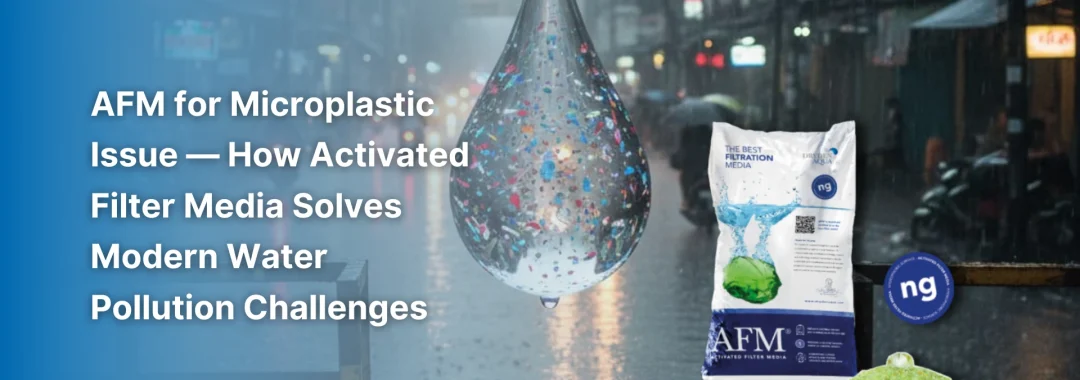
AFM filtration media for solving microplastic pollution in modern water treatment systems

AFM for Microplastic Issue — How AFM Solves Microplastic

AFM for Microplastic Issue — How Activated Filter Media Solves Modern Water Pollution Challenges

Microplastic pollution has become one of the most concerning environmental challenges in recent years. These tiny plastic fragments, often smaller than 5 millimeters, are now found in rivers, lakes, groundwater, and even rainwater. To address this problem, many industries and water treatment facilities are turning to AFM for microplastic issue as a high-performance filtration solution.

AFM, or Activated Filter Media, is an engineered glass filtration media designed to outperform traditional sand filters, especially when dealing with extremely fine particles like microplastics.


Why the Microplastic Issue Matters

Microplastics enter the water cycle through:

  • Degradation of plastic waste
  • Laundry fibers (synthetic textiles)
  • Tire wear particles
  • Industrial discharge
  • Urban runoff

Studies have shown that microplastics are now found even in rainwater and urban air. One widely discussed study from Indonesia highlights microplastics being detected in rainwater samples in Jakarta, raising questions about long-term environmental and health impacts.
(reference source: U.S. EPA discusses microplastic pollution in water systems.)

This situation demands more advanced filtration methods than traditional sedimentation or sand bed media.


What Is AFM and Why It Works for Microplastic Removal?

AFM (Activated Filter Media) is an advanced filtration media made from processed green glass, engineered to deliver:

  • Better filtration performance
  • Reduced biofouling
  • Higher removal of microscopic particles
  • Chemical-free operation

Compared to traditional sand, AFM has enhanced surface activation that traps smaller particles more efficiently. It can filter down to 5 microns, making it effective at capturing microfibers and microplastic fragments that conventional media would allow to pass through.

You can explore other filtration products such as Liqua-Zen Z468 which are often paired with AFM for optimized system performance.


How AFM Removes Microplastics from Water

1. Enhanced Surface Activation

AFM has a negative surface charge that attracts positively charged microplastic particles, improving adsorption.

2. Superior Filtration Depth

Its uniform particle shape and activated surface create deeper filtration zones, trapping particles as small as 5 microns.

3. Less Biofouling

AFM resists bacterial growth, preventing mudballs and channeling—problems that reduce sand filter performance over time.

4. Self-Sterilizing Properties

AFM contains free radicals that continuously disinfect the media surface, maintaining consistent filtration efficiency.

5. No Chemical Additives Needed

AFM works effectively even without flocculants, though systems using coagulants such as Special Coagulant often achieve even better microplastic removal rates.


Advantages of Using AFM for Microplastic Issue

✔ Removes Microplastics Down to 5 Microns

Ensures cleaner, safer, and more sustainable water.

✔ Long-Term Media Stability

AFM does not degrade like sand and can last indefinitely when properly backwashed.

✔ Reduces Chlorine Demand

Due to its bio-resistant surface, AFM minimizes organic contamination.

✔ Improves Water Clarity

Ideal for drinking water treatment, industrial wastewater, resort filtration, and municipal utilities.

✔ Environmentally Friendly

Made from recycled glass and requires no chemical treatment.


Applications of AFM in Indonesia

Industries across Indonesia are now transitioning to AFM in the following areas:

  • Drinking water treatment plants
  • Resort filtration systems
  • Industrial wastewater treatment
  • Hotel water filtration
  • Swimming pool systems
  • Municipal water utilities

For advanced process stages such as polishing or membrane systems, AFM helps protect downstream technologies like RO units. Learn more in Reverse Osmosis Cleaning Agent.


External Sources for Microplastic & Filtration Research (Linked to Keywords)

Leading organizations have published studies confirming the severity of microplastic pollution:

These sources highlight the need for advanced filtration methods such as AFM.


Conclusion: AFM for Microplastic Issue Is the Modern Solution

The increasing presence of microplastics in Indonesia’s water supply demands innovative and reliable filtration solutions. AFM for microplastic issue is a proven and sustainable technology that surpasses conventional sand filters in removing microscopic contaminants.

With support from PT. Gapura Liqua Solutions (GLS), industries and utilities can implement AFM solutions that ensure cleaner, safer, and microplastic-free water.